
 4.9
4.9 4.5
4.5Creative professionals face a unique challenge when it comes to writing resumes. Unlike traditional professions that rely heavily on straightforward lists of experience and responsibilities, creative careers thrive on originality, visual storytelling, and personality. Whether you’re a graphic designer, content writer, video editor, photographer, or UX designer, your resume should reflect both your skills and your creative identity.
The good news is that there are many innovative ways to make your resume stand out while still keeping it professional and easy for hiring managers to understand. Below are 20 resume ideas for creative professionals that can help showcase your talent and improve your chances of landing your next opportunity.
1. Visual Resume Design

A visual resume incorporates design elements such as icons, color schemes, and layout structure to make information easier to digest. This type of resume is especially popular among graphic designers, marketing professionals, and creatives who work with visual media.
Rather than presenting everything as plain text, visual resumes use design to guide the reader’s attention. For example, icons can represent skills, timelines can illustrate work experience, and color blocks can separate sections.
The key is balance. While it’s tempting to go all out with graphics and colors, readability should always remain the priority. Recruiters often spend only a few seconds scanning resumes, so a clean layout is still essential.
A well-designed visual resume demonstrates both creativity and communication skills—two qualities that creative employers value highly.
2. Portfolio-Integrated Resume

Creative work is best shown rather than described. That’s why many professionals integrate portfolio previews directly into their resumes.
Instead of simply listing projects, you can include:
- Small project thumbnails
- Short case study summaries
- Links to online portfolios
For example, a UX designer might include a brief description of a mobile app redesign along with a QR code linking to the full case study.
This approach allows recruiters to instantly see your work without searching for it elsewhere. It also demonstrates that you understand how to present your projects professionally.
3. Infographic Resume

An infographic resume transforms traditional resume sections into visually engaging charts, graphs, and icons.
For instance:
- Skill proficiency can be shown with bars or circles
- Career timelines can be illustrated visually
- Achievements can be highlighted through icons
This style works particularly well for marketing specialists, designers, social media managers, and data-driven creatives.
However, infographic resumes should still be accompanied by a traditional text version. Some applicant tracking systems (ATS) may struggle to read graphic-heavy documents.
4. Personal Branding Resume

Many creative professionals build a personal brand, and your resume can reflect that identity.
A personal branding resume might include:
- A personal logo
- Consistent color palette
- Custom typography
- A brand statement
For example, a freelance illustrator may include a logo that appears on their website, portfolio, and resume. This consistency helps build recognition and professionalism.
Personal branding also communicates confidence and helps you stand out in crowded creative industries.
5. Minimalist Resume Design

Sometimes less is more.
Minimalist resumes use clean typography, generous spacing, and simple layout structures. This approach works especially well for creative professionals who want their work—not their resume—to do the talking.
Benefits of minimalist resumes include:
- Easy readability
- Professional appearance
- Compatibility with ATS systems
A clean resume can still be creative by using subtle design elements like line dividers, elegant fonts, and structured layouts.
6. Interactive Digital Resume
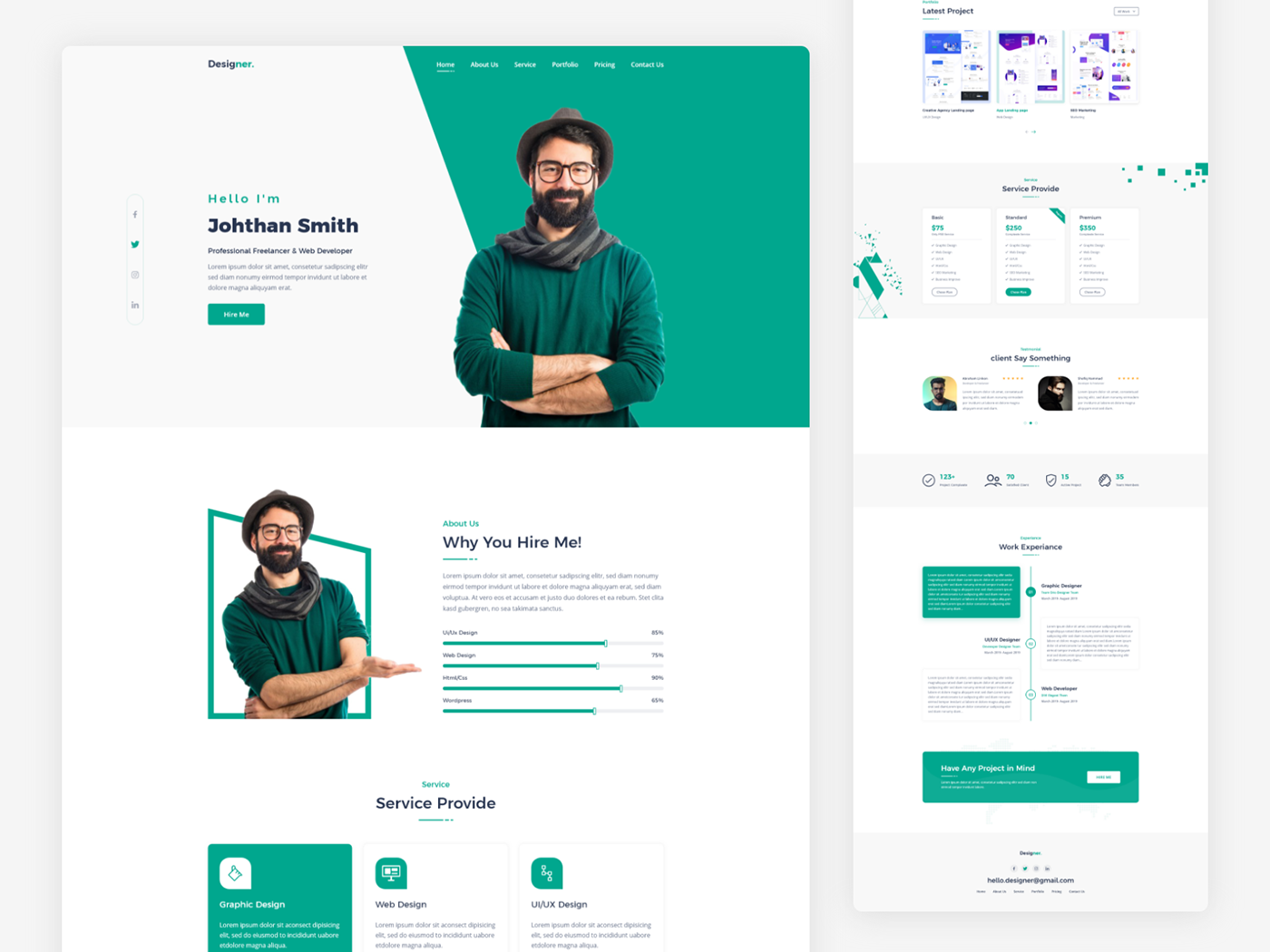
Many creatives are now using interactive digital resumes, often hosted on personal websites.
Instead of a static document, your resume becomes an experience that may include:
- Clickable sections
- Animated elements
- Embedded videos
- Interactive project galleries
This approach works particularly well for web designers, developers, animators, and multimedia professionals.
An interactive resume also allows you to showcase technical skills while presenting your professional story in a dynamic way.
7. Storytelling Resume

A storytelling resume focuses on your career journey rather than simply listing job roles.
Instead of bullet points alone, you can frame your experience as a narrative:
- The challenge you faced
- The creative solution you implemented
- The impact of your work
For example, a content strategist might describe how they transformed a brand’s blog into a major traffic source through a content strategy initiative.
This approach humanizes your resume and makes it more memorable.
8. Creative Timeline Resume

A timeline resume visually represents your career path.
Instead of listing jobs in plain text, your experience is shown as a chronological visual timeline that includes:
- Roles
- Major projects
- Key achievements
This format works well for professionals with progressive career growth, such as designers who have moved from junior roles to creative leadership positions.
9. QR Code Resume

Adding a QR code to your resume allows recruiters to instantly access your portfolio, LinkedIn profile, or website.
This small addition can make a big difference, especially during in-person networking events or printed resume submissions.
For creative professionals, a QR code can link directly to:
- Online portfolio
- Demo reel
- Design gallery
- Professional website
It provides instant access to the work that truly showcases your skills.
10. Color-Coded Skills Resume

Color-coded resumes highlight skills and expertise using visual indicators.
For instance:
- Green for advanced skills
- Yellow for intermediate
- Blue for tools and software
This design helps hiring managers quickly scan your capabilities.
Creative professionals often work with multiple tools—such as design software, editing platforms, and marketing tools—so visually organizing these skills can make your resume more effective.
11. Project-Based Resume

Instead of focusing on job titles, a project-based resume highlights your best work.
Each project section can include:
- Project name
- Client or company
- Your role
- Key results
This format works especially well for freelancers, consultants, and creative professionals who work on multiple short-term projects.
12. Hybrid Resume (Skills + Experience)
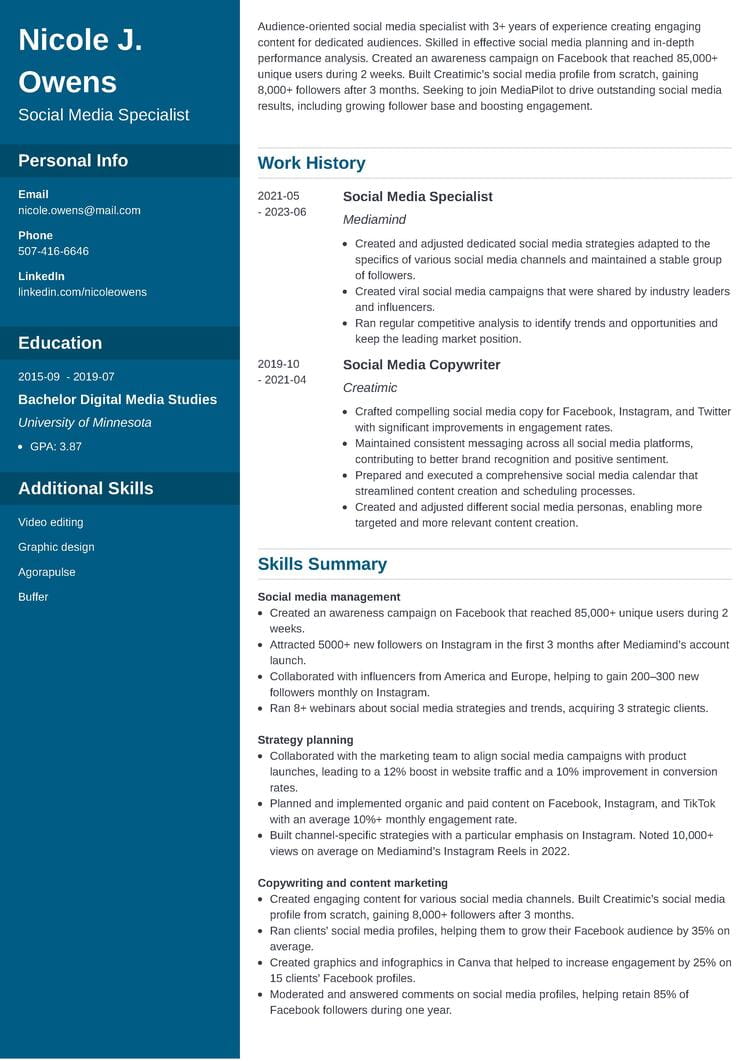
A hybrid resume combines the strengths of functional and chronological formats.
It starts with a strong skills section followed by a detailed work history.
This format works well for creative professionals who want to highlight expertise such as:
- Design tools
- Creative strategy
- Content creation
- Digital marketing
Recruiters can quickly understand your capabilities while still seeing your career progression.
13. Social Media Resume

For digital creators and marketers, a social media-style resume can be very effective.
This type of resume may highlight:
- Social media campaigns
- Engagement metrics
- Follower growth
- Content strategy results
Icons from platforms like Instagram, TikTok, or LinkedIn can be used to visually organize this information.
14. Video Resume
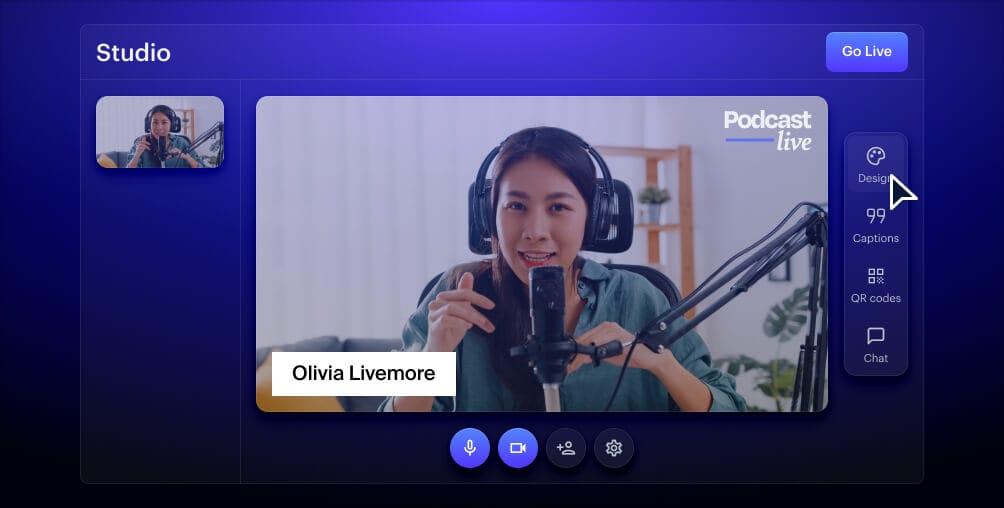
A video resume allows you to present yourself directly to employers.
This format is particularly useful for professionals in:
- Media production
- Content creation
- Broadcasting
- Marketing
A short video (usually 60–90 seconds) can introduce your personality, experience, and portfolio highlights.
The video should complement—not replace—your written resume.
15. Creative Typography Resume

Typography can be a powerful design element.
A typography-focused resume uses creative font combinations and hierarchy to guide readers through your experience.
Large headings, bold section titles, and clean body text can create a visually appealing yet professional document.
This resume format is particularly popular among graphic designers and branding specialists.
16. Personal Website Resume
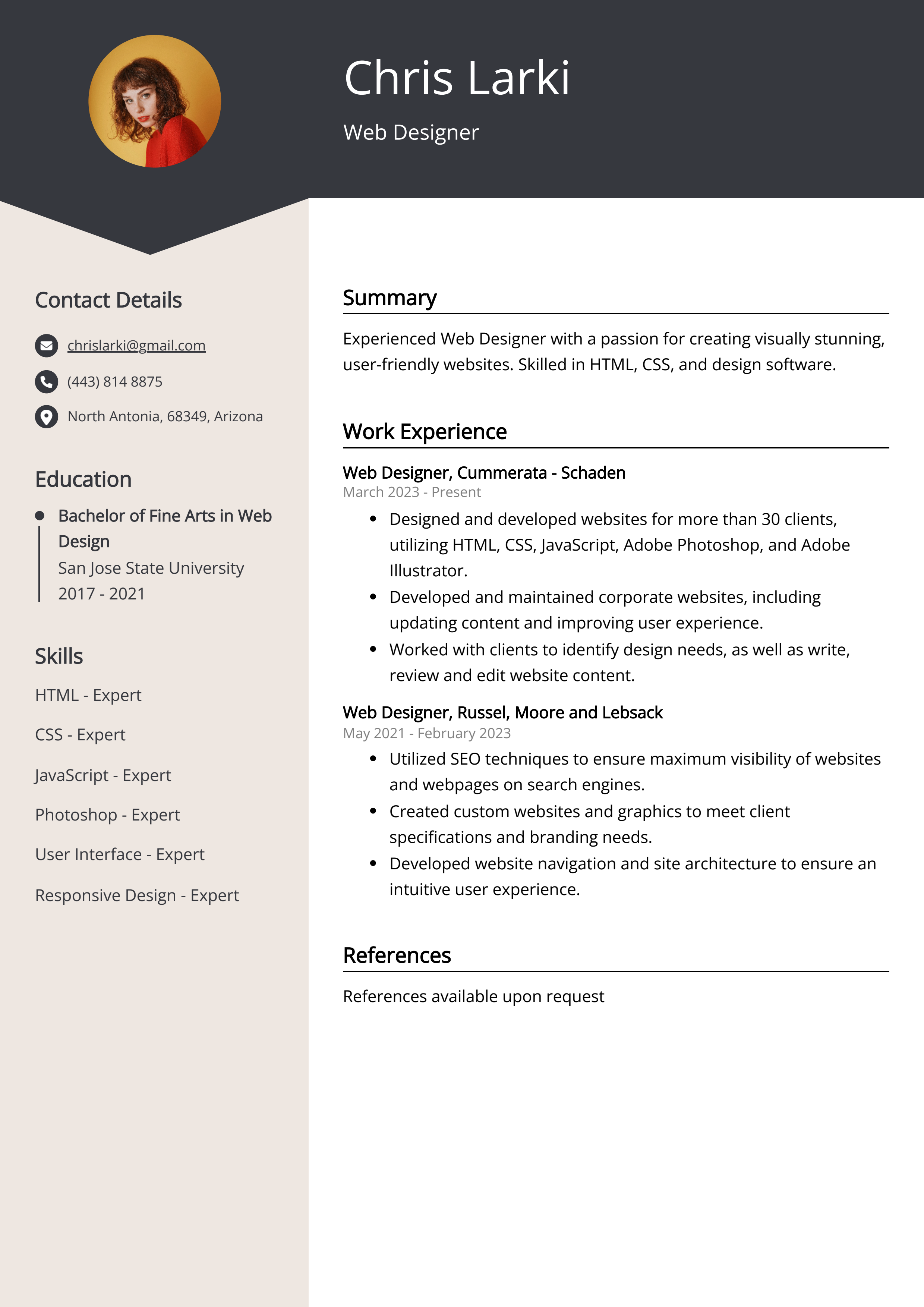
Many creative professionals now treat their personal website as their primary resume.
A resume page on your website can include:
- Work history
- Portfolio projects
- Testimonials
- Contact information
Unlike traditional resumes, a website allows unlimited space and multimedia elements.
This approach is highly recommended for designers, photographers, writers, and developers.
17. Case Study Resume
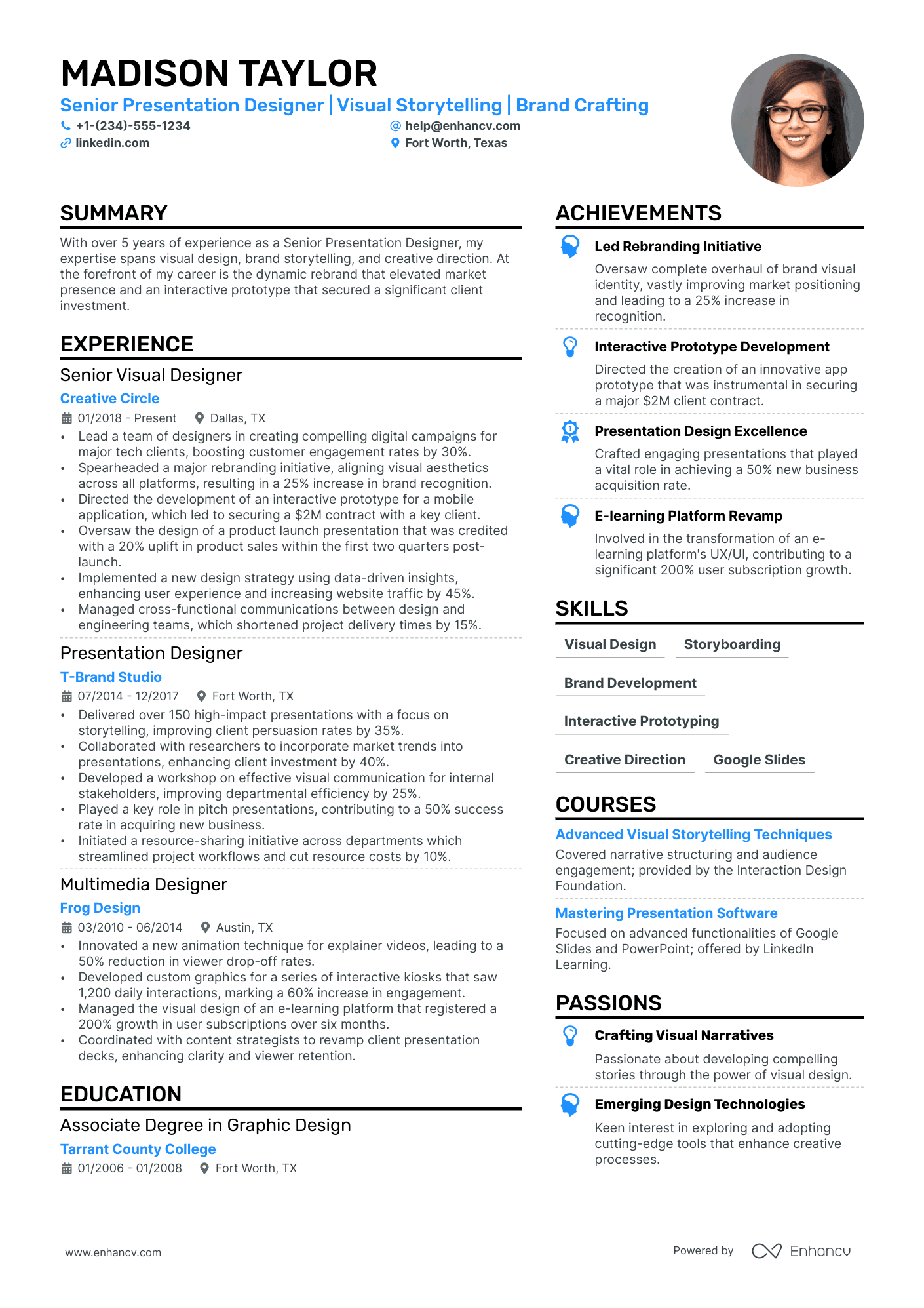
A case study resume dives deeper into specific projects.
Instead of simply stating responsibilities, you outline:
- The problem
- Your creative process
- The final outcome
This format works especially well for UX designers, product designers, and creative strategists.
It shows employers how you think and solve problems.
18. Freelance Resume Format
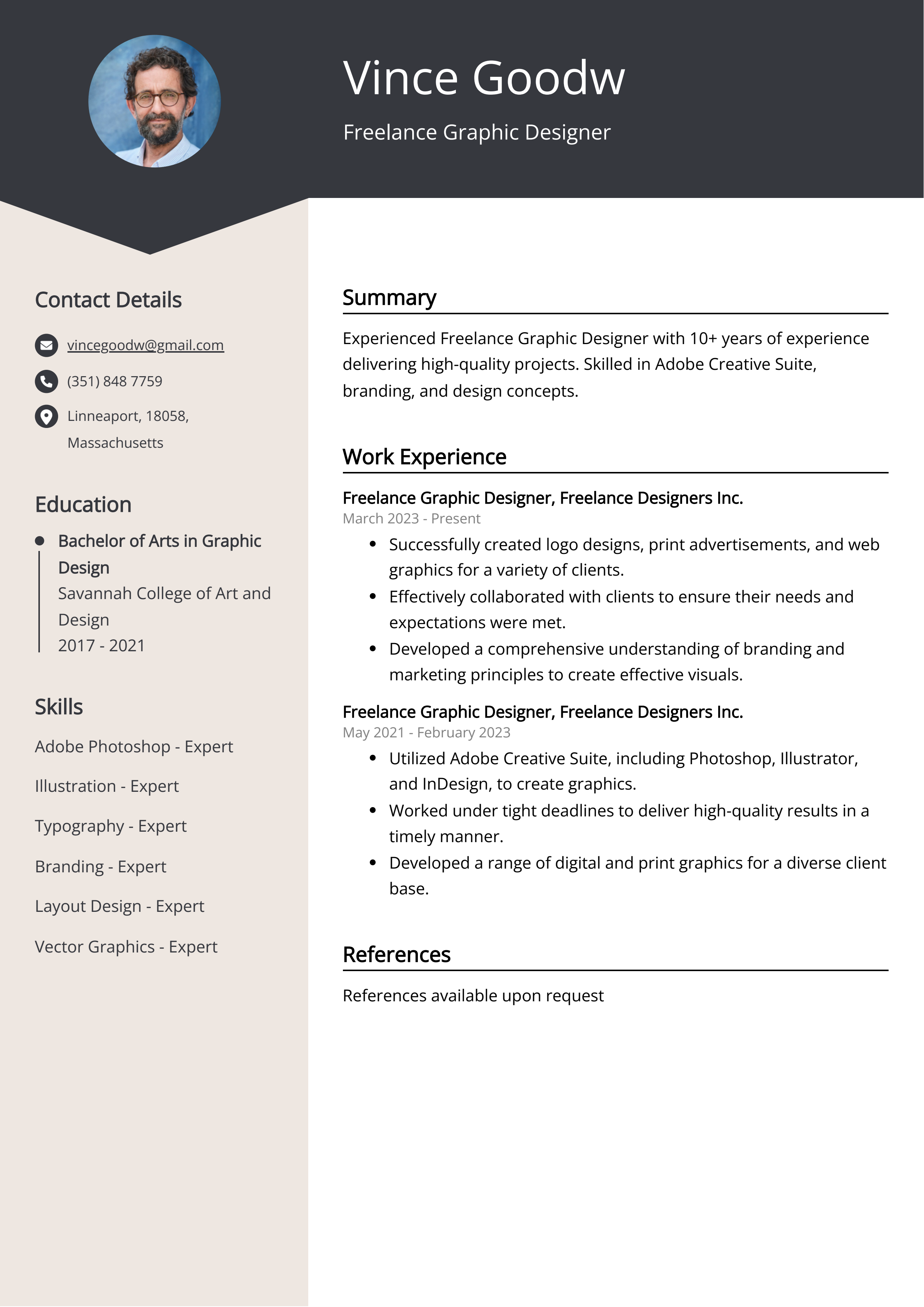
Freelancers often work with multiple clients rather than traditional employers.
A freelance resume groups projects under categories like:
- Brand design
- Marketing campaigns
- Website development
You can also highlight well-known clients or industries you’ve worked with.
This format shows versatility and real-world experience.
19. Achievement-Focused Resume
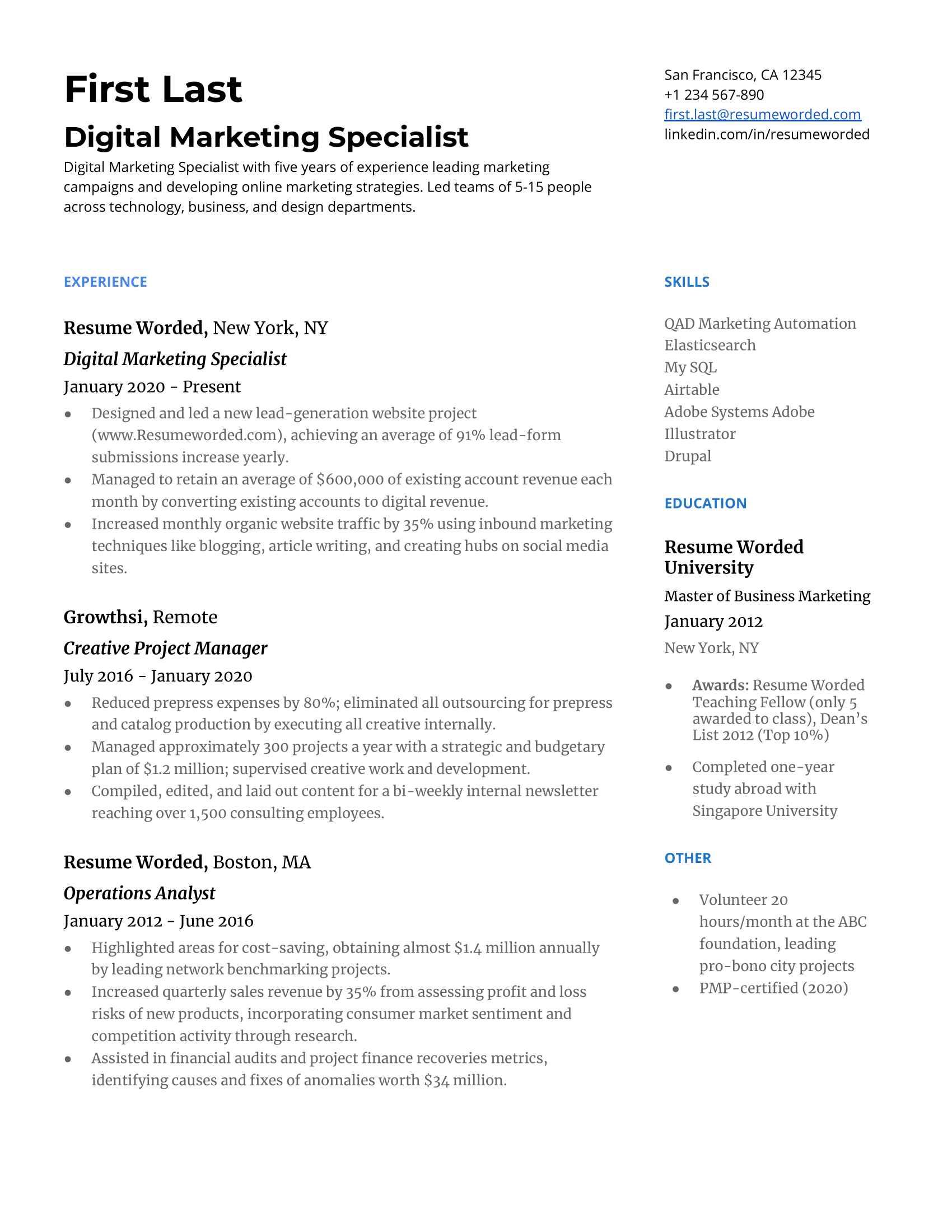
Employers care about results. An achievement-focused resume emphasizes measurable accomplishments rather than duties.
Examples include:
- “Increased website traffic by 120% through content strategy.”
- “Designed branding for product launch, generating 10K sales in the first month.”
Adding numbers makes your contributions clearer and more impactful.
20. Creative Personal Profile Resume

The personal profile section at the top of your resume can immediately capture attention.
Instead of a generic objective, write a short summary that highlights:
- Your creative specialization
- Your unique approach
- Your career goals
For example:
“Multidisciplinary designer passionate about building meaningful digital experiences that blend creativity, storytelling, and user-centered design.”
A compelling profile helps employers quickly understand what you bring to the table.
Final Thoughts
Creative professionals have a unique advantage when it comes to resumes: the ability to turn a traditional document into a reflection of their creative identity. Whether you choose a minimalist layout, an infographic resume, or a portfolio-integrated design, the goal is to present your skills in a way that feels authentic and engaging.
The most effective resumes combine creativity with clarity. Hiring managers still need to quickly understand your experience, skills, and achievements, so structure and readability remain crucial.
By experimenting with the ideas above, you can create a resume that not only communicates your qualifications but also demonstrates the creativity that makes you stand out in your field.