

 4.9
4.9 4.5
4.5AI-driven career coaching platforms generated $5.48 billion in revenue in 2025 and will reach $6.69 billion this year, a 22% annual increase that reflects growing corporate adoption and workforce upskilling initiatives, according to market analysis cited by organizational psychologist Tomas Chamorro-Premuzic in Forbes. The sector could approach $15 billion by 2030.
The expansion is driven by increased investment in AI analytics, software-as-a-service delivery models, and mobile-first platforms that make coaching accessible beyond traditional corporate programs. Harvard Business Review data shows “therapy” has become the most popular use case for generative AI platforms, signaling a shift in how professionals view machine-generated guidance.
Chamorro-Premuzic’s analysis frames AI coaching not as a single product but as a spectrum spanning five distinct layers, each serving different functions and requiring different evaluation criteria.
Five Layers of AI Coaching Systems
The most basic implementation acts as a passive assistant, transcribing Zoom coaching sessions and generating summaries, action points, and sentiment analysis. The value remains administrative—reducing friction and freeing human coaches to focus on interaction rather than documentation.
A second layer applies natural language processing to extract patterns across multiple sessions: recurring themes, tone shifts, evidence of progress, and blind spots in a coachee’s thinking. This mode positions AI as a meta-observer, offering both coach and client a more objective mirror and augmenting judgment beyond simple memory enhancement.
Third-layer systems introduce continuity between formal coaching sessions by acting as always-on companions that deliver reminders, micro-interventions, and adaptive prompts. The goal is translating insight into habit formation, addressing what behavioral science research identifies as the point where most change efforts fail.
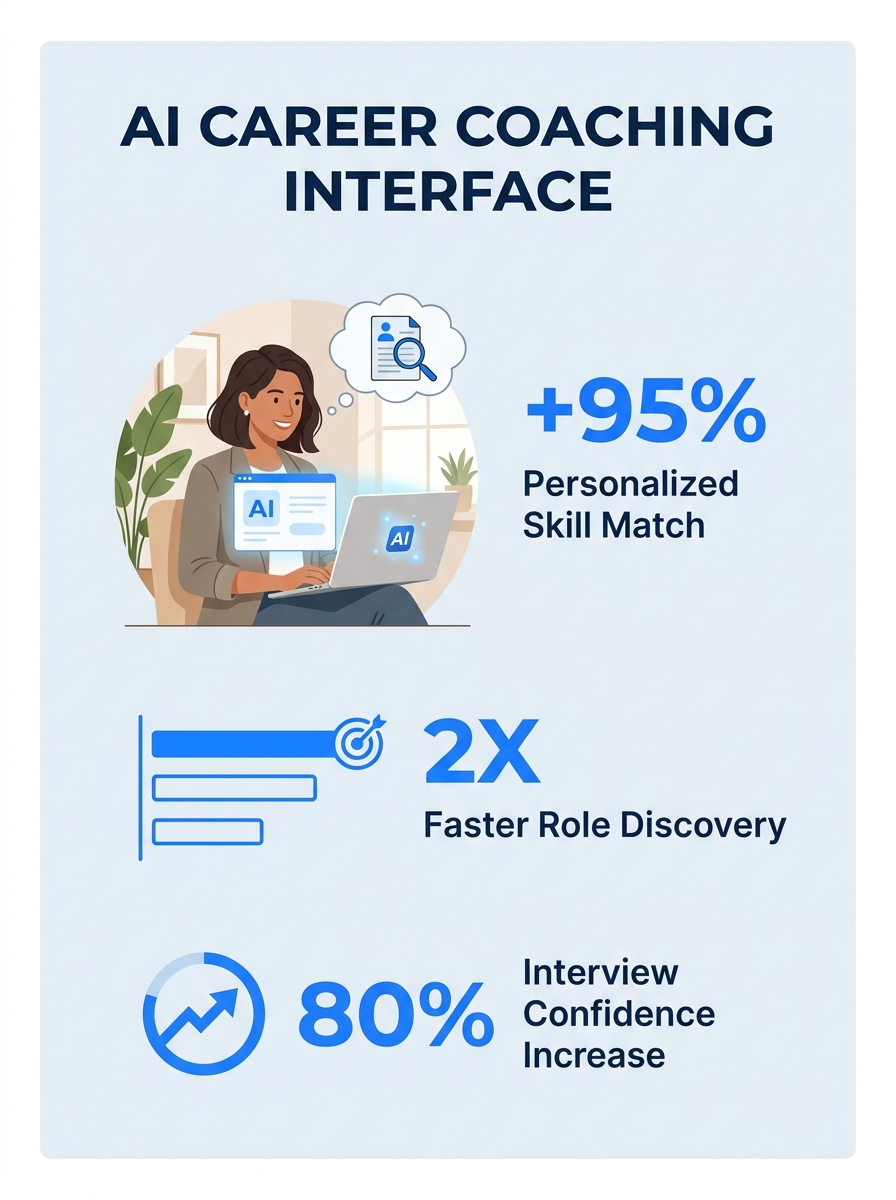
Fourth-layer adoption removes the human coach entirely. Individuals already use large language models such as ChatGPT, Claude, and Gemini as de facto coaches, asking for career advice, rehearsing difficult conversations, and reflecting on professional dilemmas. The approach offers scalability and immediacy but lacks accountability and contextual depth, with quality dependent on model training and user self-awareness.
The most advanced fifth layer features embodied AI coaches—avatars or synthetic agents that simulate human interaction using conversational AI combined with voice, facial expressions, and biometric feedback. These systems remain nascent but point toward futures where surface-level distinctions between human and machine coaching blur.
Research Findings on Effectiveness
Randomized and longitudinal studies comparing human and AI coaching show measurable outcomes, according to Chamorro-Premuzic’s review of emerging academic literature. The evidence indicates AI coaching works but functions differently from human coaching, with effectiveness varying based on the specific task being optimized.
The findings parallel broader debates about AI tools augmenting versus replacing human expertise in job search contexts, where automation delivers efficiency gains but may miss nuance in relationship-driven processes.
The distinction between technological sophistication and actual coaching role—tool, advisor, agent, or replacement—determines outcomes more than computational power. This spectrum mirrors patterns seen in career coaching services generally, where delivery model matters as much as content expertise.
The Forbes analysis notes the key question is not whether AI coaching works in abstract terms but what type of coaching gets delegated to machines and what professionals gain or lose through that delegation.
Why This Matters Now
Job seekers and mid-career professionals face a practical decision as AI coaching platforms proliferate: whether to invest limited career development budgets in human coaches, AI tools, or hybrid approaches. The 22% annual growth rate suggests peers are choosing increasingly, but market expansion does not equal effectiveness for individual career transitions.
The evidence base remains thinner than marketing claims imply, particularly for job search contexts that require relationship navigation, industry-specific credibility assessment, and negotiation strategy. A $15 billion market by 2030 means more platforms competing for user attention, not necessarily more platforms delivering interview callbacks or promotion outcomes.
Professionals evaluating AI coaching tools should assess which of the five layers matches their specific need. Passive transcription and pattern analysis may augment existing career coaching relationships effectively, while full AI substitution works better for structured skill practice than strategic career pivots requiring human judgment about organizational politics and market positioning.