
 4.9
4.9 4.5
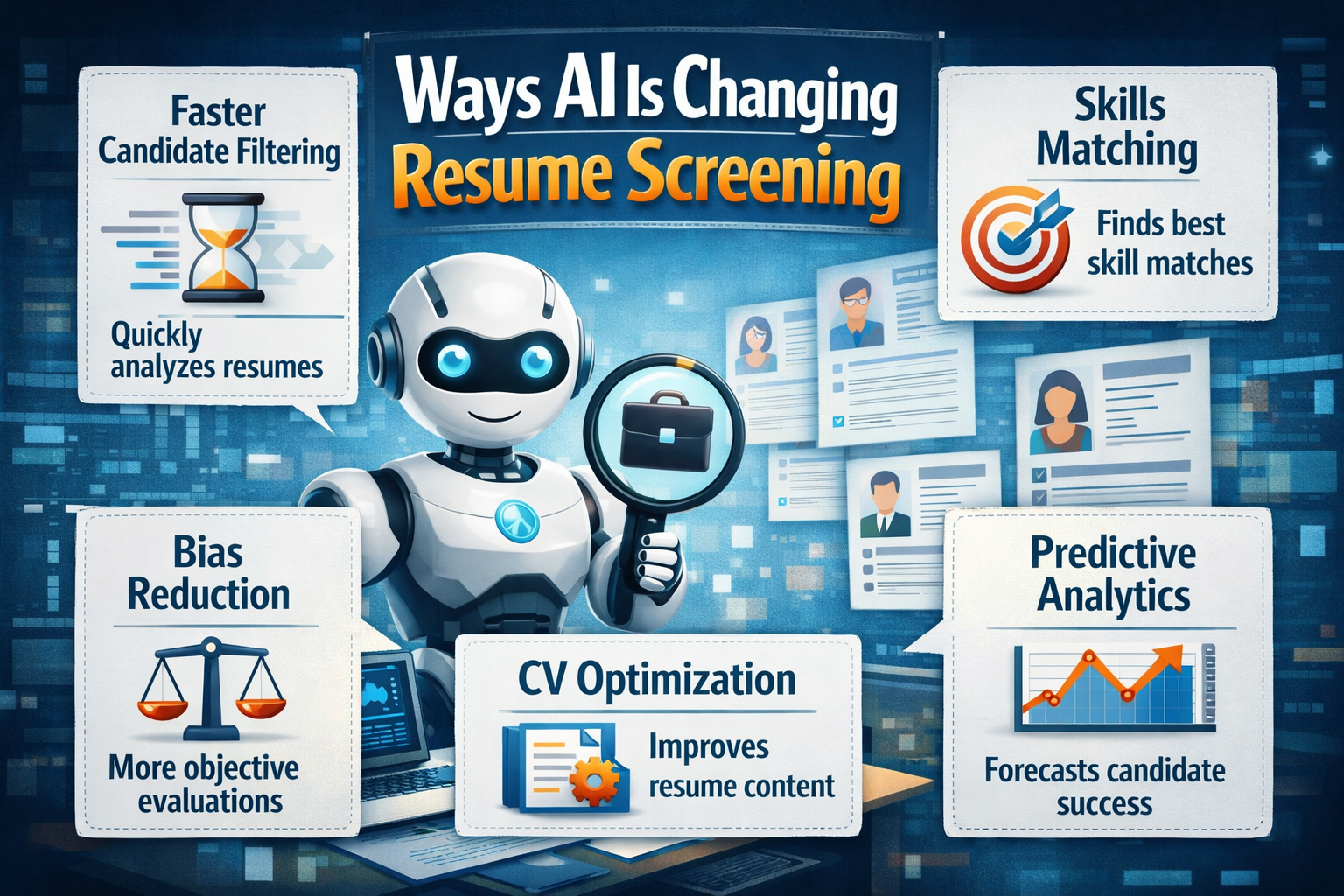
4.5The job market is evolving faster than ever, and so is the way companies find the right talent. In 2026, artificial intelligence (AI) has become a major force in recruitment, fundamentally changing how resumes are screened. Gone are the days when a recruiter manually sifted through hundreds of resumes. Now, AI-powered tools can analyze applications in seconds, identifying the most suitable candidates and even predicting future performance.
If you’re job hunting this year, understanding how AI impacts resume screening isn’t just helpful—it’s essential. In this guide, we’ll explore 12 ways AI is reshaping resume screening and what you need to know to stay ahead.
1. AI Screens Resumes Faster Than Humans
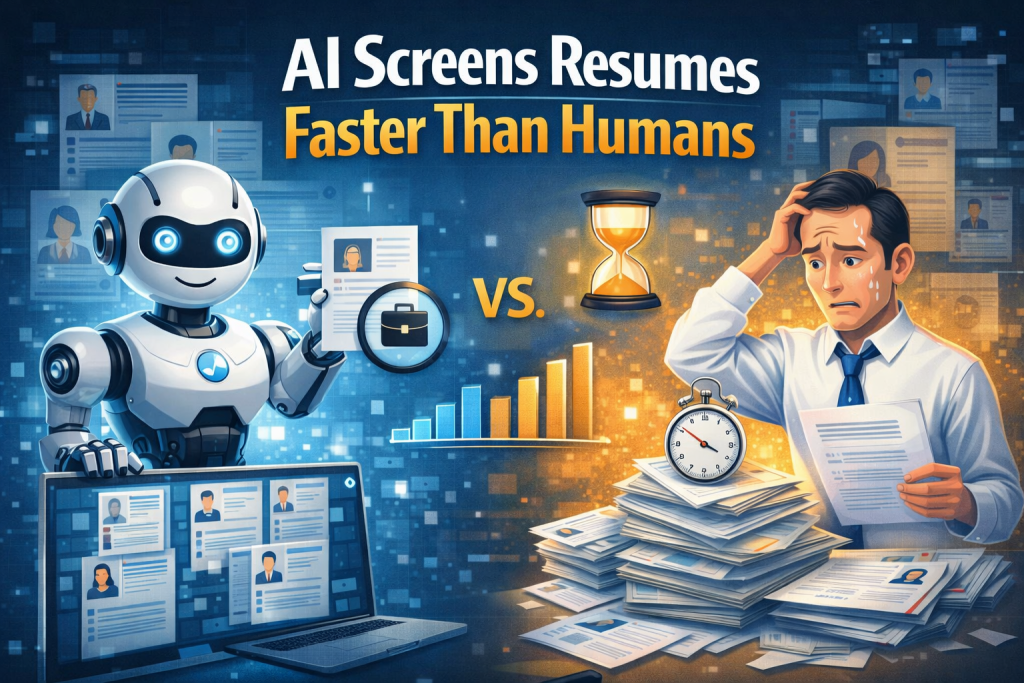
The most immediate impact of AI in hiring is its speed. A recruiter may take hours—or even days—to review a batch of resumes for a single role, especially for in-demand positions. AI-powered systems, however, can scan thousands of resumes in minutes, extracting key data such as skills, education, experience, and certifications.
For example, an AI system can automatically identify candidates with experience in “project management” or “data analysis” and rank them based on relevance. This means qualified applicants are fast-tracked to interviews, while less relevant candidates are filtered out quickly.
What this means for job seekers:
- Use clear, standard headings like Experience, Education, and Skills.
- Avoid using images, unusual fonts, or graphics that could confuse parsing software.
- Ensure all critical information is easy for both AI and human eyes to read.
Pro tip: If you’re applying for a high-volume job like customer service or IT support, AI could be the first checkpoint—make sure your resume is formatted for clarity.
2. Keyword Optimization Is More Important Than Ever
AI systems rely heavily on keywords to match candidates with job descriptions. Keywords include technical skills, certifications, software knowledge, and industry-specific terms. If your resume lacks these terms, you might never be seen by a human recruiter—even if you’re highly qualified.
For instance, if a job description lists “Python, SQL, Tableau,” and your resume only mentions “programming” and “data analysis,” AI may score your resume lower. On the other hand, keyword stuffing—overloading your resume with terms—can trigger AI algorithms that detect unnatural or inflated language.
Actionable tips:
- Carefully read job descriptions and naturally incorporate the main keywords.
- Use both exact terms and variations (e.g., “digital marketing” and “online marketing”).
- Integrate keywords in context rather than as a list; AI looks for meaningful connections between skills and experience.
Example: Instead of writing “Responsible for digital marketing”, say “Developed digital marketing campaigns using Google Ads and social media analytics tools, increasing engagement by 35%.” This naturally includes key terms while demonstrating achievement.
3. AI Can Predict Cultural Fit
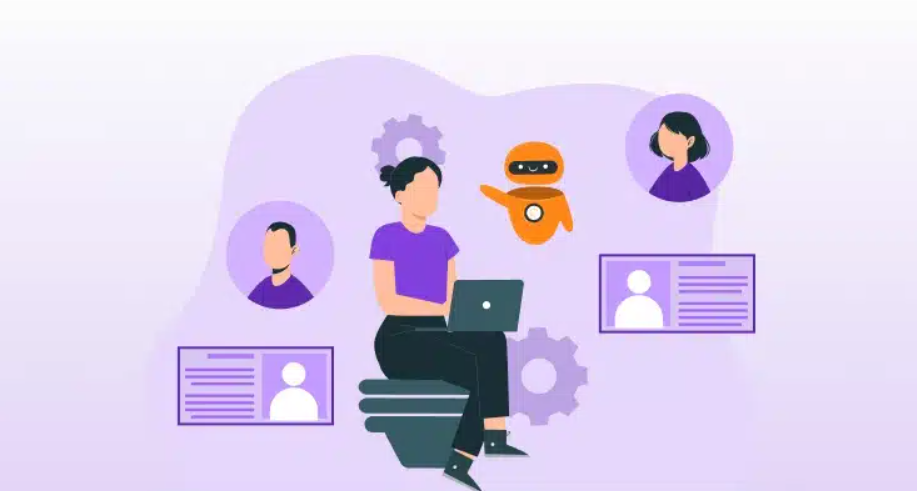
Some advanced AI platforms go beyond skills and experience—they evaluate cultural fit. By analyzing language patterns in resumes, cover letters, and even public professional profiles, AI can predict how well a candidate aligns with a company’s values and work style.
For instance, a resume that emphasizes collaboration, mentorship, or cross-functional projects may indicate a candidate fits a team-oriented environment. Conversely, resumes highlighting independent accomplishments and leadership might align better with entrepreneurial or fast-paced companies.
Tips for job seekers:
- Highlight soft skills that reflect your working style, like teamwork, problem-solving, and adaptability.
- Include examples of successful projects in collaborative environments.
- Avoid generic buzzwords like “hardworking” or “team player” without context—AI looks for evidence, not just words.
Pro tip: Customize your resume for the company’s culture by researching mission statements, values, and recent initiatives. Use language that mirrors their approach.
4. Skills Assessment Before Interviews
AI is increasingly integrated with automated skills assessments. Instead of relying solely on self-reported skills, companies may send candidates pre-interview tests or challenges. These can range from coding exercises for IT roles to case studies for marketing or finance positions.
Why it matters: AI uses these assessments to validate your resume claims. Inflated or vague descriptions may be flagged. For example, claiming “advanced Excel skills” without being able to complete a data modeling test can disqualify you instantly.
Tips:
- Be honest and precise about your skill level.
- If possible, practice standard assessments relevant to your field.
- Include examples of measurable results that demonstrate your proficiency, e.g., “Automated weekly reporting in Excel, reducing preparation time by 50%.”
5. AI Reduces Human Bias
One of AI’s biggest selling points is its potential to reduce unconscious bias in hiring. By evaluating resumes based on objective data rather than subjective impressions, AI can help promote fairness. Some platforms even anonymize resumes by removing names, ages, and gender indicators.
However: AI isn’t perfect. If trained on biased historical data, AI can unintentionally replicate human biases. For example, if past hiring data favors candidates from certain universities, AI might prioritize similar profiles.
Advice for job seekers:
- Focus on quantifiable achievements, certifications, and relevant experience.
- Avoid unnecessary personal details (like age or marital status) that may be misinterpreted by AI or recruiters.
Example: Instead of writing “Graduated at age 25”, simply list your degree and graduation year. Let your achievements speak for themselves.
6. Tailored Job Matching
AI doesn’t just filter resumes—it actively recommends roles that match a candidate’s skills and experience. Some AI platforms analyze career trajectory and suggest positions the candidate may not have considered.
Benefit for job seekers:
- Demonstrates the importance of highlighting transferable skills.
- A software engineer who also has project management experience could be matched to technical lead roles.
Tip: Optimize your resume for multiple potential roles. Emphasize both core expertise and transferable skills, like leadership, problem-solving, and cross-functional collaboration.
7. Emphasis on Continuous Learning
AI can identify candidates who invest in continuous learning, such as professional certifications, online courses, or workshops. Showing that you are actively developing your skills signals motivation and adaptability—qualities highly valued by employers.
Actionable tips:
- Include certifications, MOOCs, or training programs in a separate Professional Development section.
- Highlight relevant achievements or projects from these courses.
- Even small updates, like an Excel or coding certificate, can boost your AI score.
Example:
“Completed Google Analytics Certification and applied insights to improve campaign ROI by 20%.”
8. Enhanced Resume Parsing
Modern AI systems parse resumes into structured data, extracting job titles, dates, skills, and achievements. The clearer your resume, the more accurately AI can assess your qualifications.
Formatting tips:
- Use chronological or hybrid resume formats.
- Avoid images, tables, or creative designs that may confuse parsing software.
- Use standard headings like Experience, Education, Skills, and Certifications.
Pro tip: Think of your resume as a data source for AI—it needs to be readable by machines before humans.
9. Real-Time Analytics for Recruiters
AI provides recruiters with real-time insights into applicant pools. They can identify trends, such as which skills are most common, where candidate gaps exist, and which resumes score highest. This allows companies to refine job postings, adjust requirements, and make faster decisions.
Implication for job seekers: Understanding AI priorities helps you tailor your resume. Highlight measurable results, in-demand skills, and industry-relevant certifications. For example, if “Python” is a frequently sought skill, mentioning a project that uses Python will improve your match score.
10. Integration with Social Profiles
AI may supplement resume data with information from social and professional profiles. Platforms like LinkedIn, GitHub, or personal portfolios can validate your experience and skills. AI may even consider recommendations, endorsements, or content you’ve shared professionally.
Tips for job seekers:
- Keep your LinkedIn profile updated and consistent with your resume.
- Ensure public posts and content reflect professionalism.
- Highlight accomplishments on your social profiles, such as project portfolios or case studies.
Example: A marketing candidate showcasing a successful campaign on LinkedIn reinforces their resume claim and improves AI scoring.
11. Personalized Candidate Feedback
Some AI platforms now offer feedback to candidates, such as missing keywords, unclear formatting, or weak quantifiable results. This feedback can help applicants refine their resumes and increase their chances of success in future applications.
Job seeker advantage: Treat AI suggestions as actionable guidance:
- Incorporate missing skills naturally.
- Add measurable achievements.
- Adjust formatting to improve readability.
Pro tip: Even small tweaks based on AI feedback can significantly increase your visibility to recruiters.
12. Preparing for the Future of AI Recruitment
AI isn’t a temporary trend—it’s the future of hiring. Candidates who adapt to AI-driven recruitment processes gain a competitive edge. Here’s how to prepare for 2026 and beyond:
- Clarity is key: Use clear headings, simple formatting, and concise descriptions.
- Quantify results: Numbers and metrics stand out to both AI and human recruiters.
- Continuous learning: List certifications, courses, and training.
- Customize each application: Tailor your resume for the specific role and keywords.
- Maintain an online presence: Keep LinkedIn and other professional profiles updated and aligned with your resume.
By embracing AI-friendly strategies, job seekers can turn technology from a potential obstacle into an advantage.
Conclusion
AI is revolutionizing resume screening in 2026, making speed, accuracy, and data-driven decision-making central to hiring. While this technology can feel intimidating, it also presents opportunities for candidates to optimize resumes, showcase skills, and stand out in competitive markets.
By understanding AI processes and tailoring your applications, you increase the likelihood of passing automated screenings and getting in front of human recruiters. The future of hiring rewards those who adapt—and being AI-savvy is no longer optional; it’s essential.