
 4.9
4.9 4.5
4.5Job searching today is more competitive than ever. You can submit dozens—or even hundreds—of applications and still hear nothing back. It’s frustrating, draining, and sometimes discouraging.
But here’s something many job seekers don’t realize: a huge percentage of jobs are never publicly advertised. They’re filled through referrals, internal recommendations, or casual conversations.
That’s why networking isn’t optional anymore—it’s essential.
The good news? Networking doesn’t have to feel forced or uncomfortable. With the right mindset and strategies, it can become a natural and even enjoyable part of your job search.
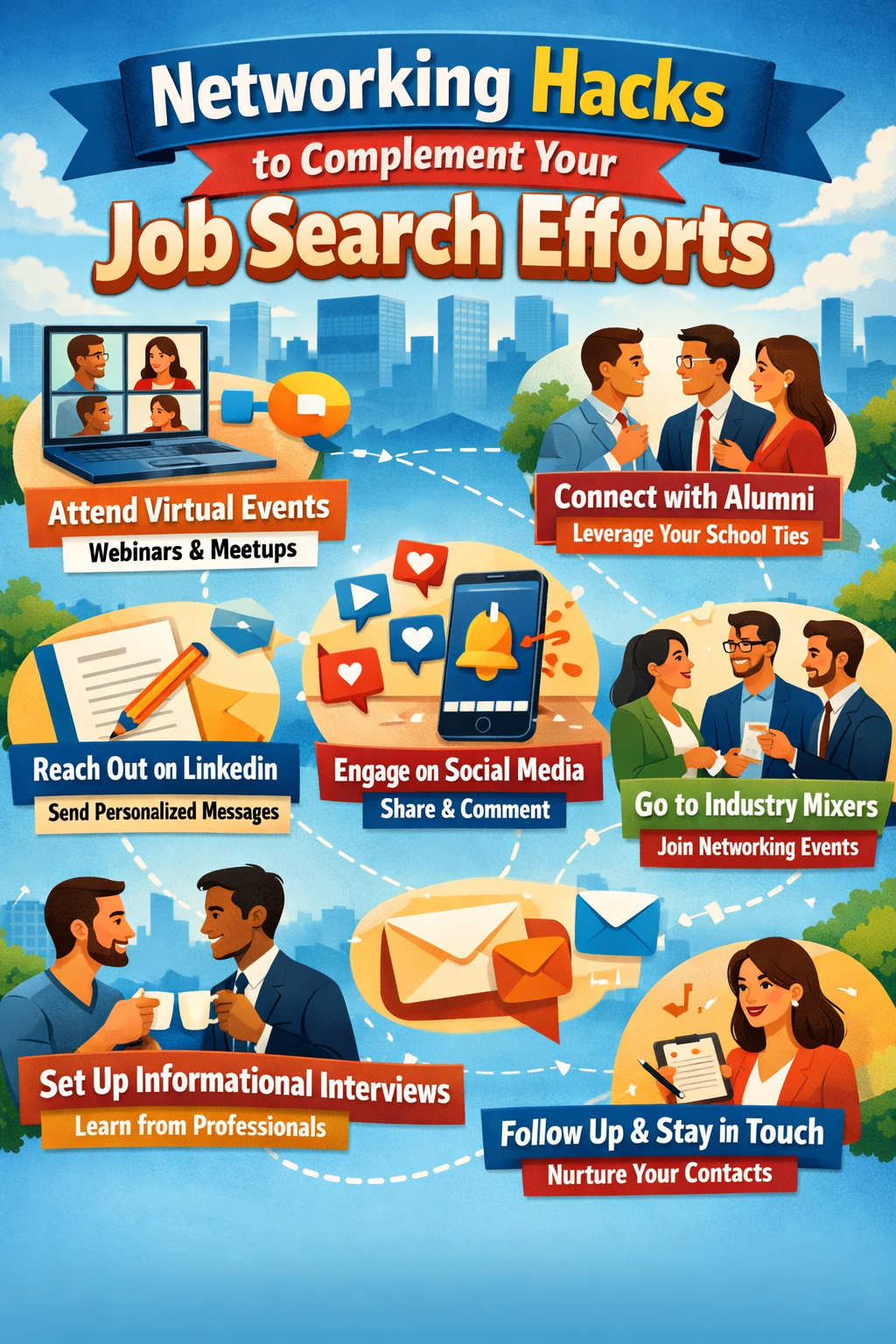
Let’s dive into 15 powerful networking hacks that can give you a real advantage.
1. Optimize Your LinkedIn Profile First
Before you start connecting with others, make sure your LinkedIn profile is ready to impress. Think of it as your personal landing page—anyone you reach out to will likely check it.
Start with a clear, professional profile photo. Profiles with photos get significantly more engagement. Next, upgrade your headline—don’t just list your job title. Instead, highlight your value, such as:
“Digital Marketer | Helping Brands Grow Through SEO & Content Strategy”

Your “About” section should tell your story. Focus on what you’ve achieved, what you’re passionate about, and what you’re currently looking for.
Also, include:
- Skills and endorsements
- Work experience with measurable results
- A custom LinkedIn URL
- Featured projects or portfolio links
The more complete and polished your profile is, the more confident people will feel about connecting with you.
2. Start with People You Already Know
Networking doesn’t always mean reaching out to strangers. In fact, your existing network is often your strongest asset.
Think about:
- Former coworkers
- College classmates
- Friends and family
- Past clients or managers
Let them know you’re currently exploring opportunities. You don’t need to ask directly for a job—instead, say something like:
“I’m currently looking for roles in digital marketing. If you hear of anything or know someone I should connect with, I’d really appreciate it.”
This approach feels natural and non-pushy.
People are generally more willing to help than you think—you just have to let them know.
3. Personalize Every Connection Request

Sending generic connection requests is one of the fastest ways to get ignored.
Instead, take a minute to personalize your message. Mention:
- Where you found them
- What you admire about their work
- Why you want to connect
For example:
“Hi Anna, I came across your profile while researching content marketing leaders. I really liked your recent post about SEO trends—would love to connect and learn more from your insights.”
This shows effort, respect, and genuine interest—three things that instantly improve your chances of getting accepted.
4. Engage Before You Ask
A common mistake is reaching out only when you need something.
Instead, build a relationship first. Spend a few days engaging with their content:
- Like their posts
- Leave thoughtful comments
- Share their content with your own insights
This warms up the connection. When you eventually message them, you’re no longer a stranger—you’re someone they recognize.
5. Join Industry-Specific Groups

Online communities are underrated networking goldmines.
Search for groups related to your field on LinkedIn or Facebook. Once you join, don’t just observe—participate.
You can:
- Answer questions
- Share insights
- Post helpful resources
- Start discussions
Over time, people will begin to recognize your name and expertise. That familiarity can lead to job leads, collaborations, or referrals.
6. Attend Virtual and Local Events
Events provide a unique opportunity to meet people who share your interests.
Look for:
- Webinars
- Industry conferences
- Local meetups
- Career fairs
If you’re near Manila or nearby cities, there are often networking events happening regularly.
Don’t just attend—participate. Ask questions, introduce yourself, and follow up with people you meet.
Even a single event can lead to valuable connections.
7. Follow Companies You Want to Work For
Instead of waiting for job openings, take initiative by following companies you admire.
Engage with their content:
- Comment on posts
- Share their updates
- Celebrate their milestones
This increases your visibility with their team—and sometimes even hiring managers.
It also helps you stay updated so you can apply quickly when opportunities arise.
8. Use Alumni Networks
Your alumni network is one of the easiest ways to build connections quickly.
People naturally feel more comfortable helping someone from the same school.
When reaching out:
- Mention your shared background
- Keep your message respectful and concise
- Ask for advice rather than a job
For example:
“Hi Mark, I noticed we both graduated from XYZ University. I’m currently exploring opportunities in finance and would love to hear about your career journey.”
9. Ask for Informational Interviews
Informational interviews are one of the most effective yet underused networking strategies.
Instead of asking for a job, you’re simply asking for advice.
You can ask questions like:
- “How did you get started in your career?”
- “What skills are most valuable in your role?”
- “What advice would you give someone entering this field?”
These conversations often lead to:
- Valuable insights
- Stronger relationships
- Potential referrals
10. Be Consistent, Not Pushy
Networking isn’t about quick wins—it’s about long-term relationships.
Stay consistent by:
- Engaging regularly
- Checking in occasionally
- Sharing updates about your progress
But avoid over-messaging or demanding responses.
A good rule: add value more often than you ask for help.
11. Share Valuable Content
Posting content helps you stand out and build your personal brand.
You don’t need to be an expert—just share what you’re learning.
Ideas include:
- Industry insights
- Lessons from your job search
- Tips or tools you’ve discovered
Consistency is key. Over time, your content can attract recruiters and professionals in your field.
12. Volunteer or Freelance
If you lack experience or connections, volunteering or freelancing is a great way to build both.
Platforms like Upwork connect you with clients worldwide.
Even small projects can:
- Expand your network
- Build your portfolio
- Lead to long-term opportunities
13. Follow Up the Right Way
Following up is where most people drop the ball.
After meeting someone, send a short message within 24–48 hours:
“Hi John, it was great meeting you at the webinar. I really enjoyed your insights on digital marketing trends—thanks again for sharing.”
This keeps the connection alive and shows professionalism.
14. Build a Personal Elevator Pitch
Your elevator pitch is your quick introduction.
It should answer:
- Who you are
- What you do
- What you’re looking for
Example:
“I’m a recent graduate specializing in marketing, and I’m currently looking for opportunities where I can help brands grow through content and social media.”
Practice it until it feels natural—not rehearsed.
15. Help Others First
The strongest networks are built on generosity.
If you come across:
- Job opportunities
- Helpful resources
- People who could benefit from an introduction
Share them.
Helping others builds trust and goodwill—and often leads to unexpected opportunities in return.
Final Thoughts
Networking isn’t about collecting contacts—it’s about building relationships.
When you approach it with authenticity, consistency, and a willingness to help others, it becomes one of the most powerful tools in your job search.
Start small. Stay genuine. Keep going.
Because sometimes, the opportunity you’ve been waiting for is just one conversation away.