
 4.9
4.9 4.5
4.5Job hunting can feel exhausting. You spend hours searching, tweaking, applying — only to hear nothing back. It’s frustrating, especially when you know you’re qualified.
But here’s something many job seekers don’t realize: sometimes it’s not your experience holding you back. It’s small, avoidable resume mistakes that quietly knock you out of the running.
Recruiters often scan resumes in less than 10 seconds before deciding whether to continue reading. That means clarity, relevance, and presentation matter more than ever.
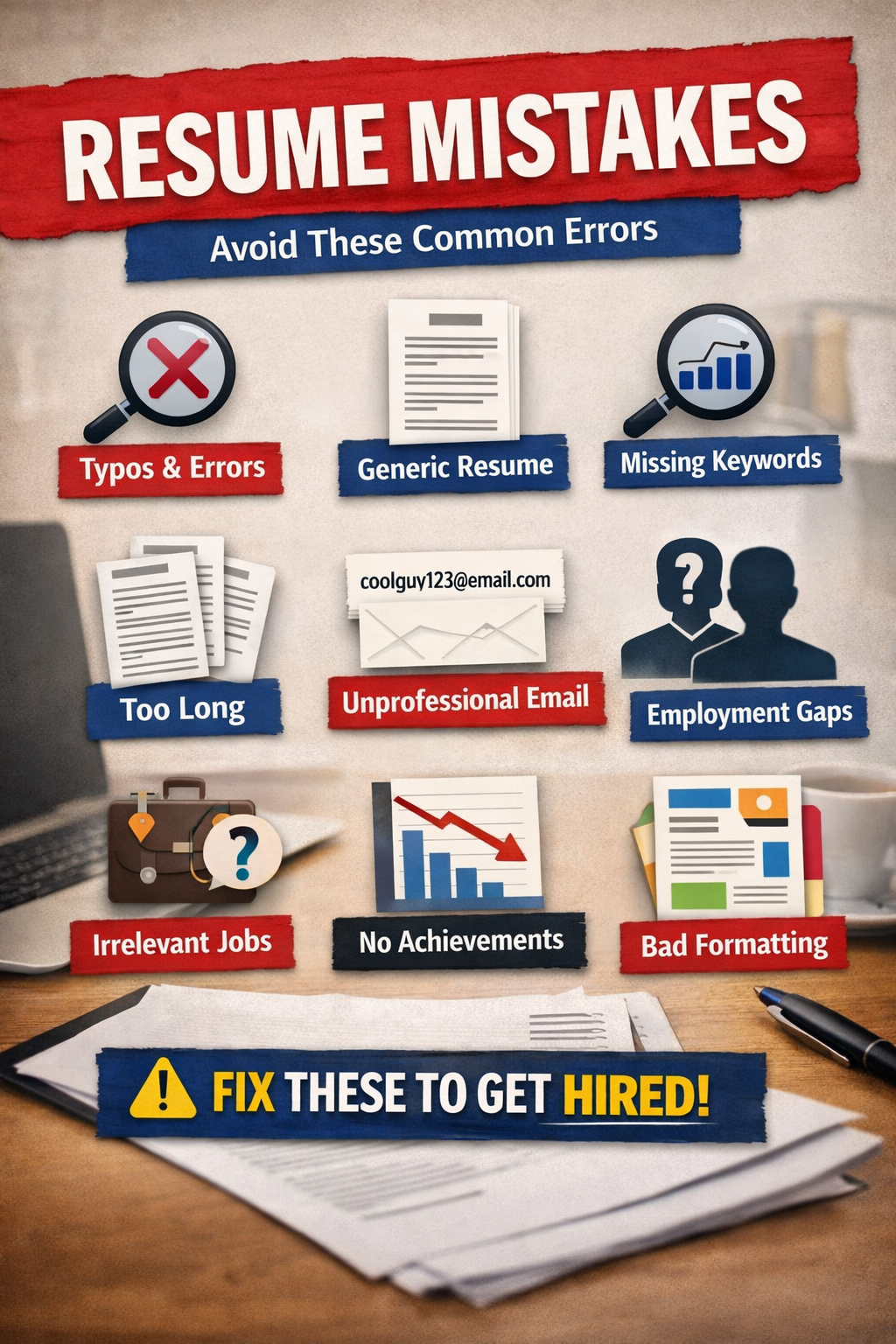
Let’s break down 20 resume mistakes that could be costing you interviews — and how to fix them.
1. Spelling and Grammar Errors
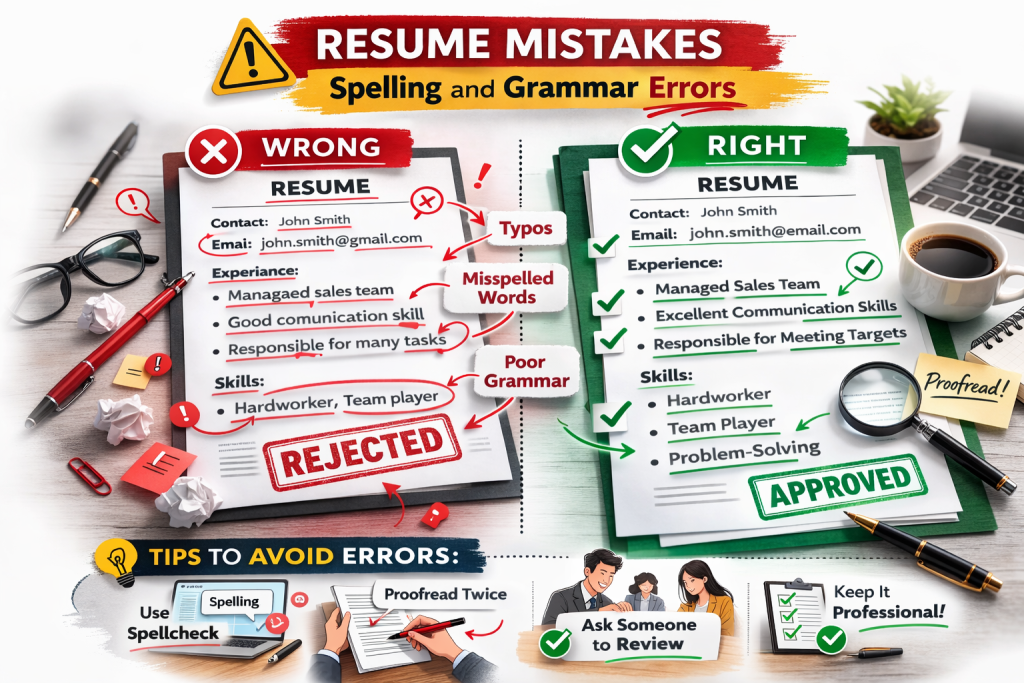
It sounds basic, but it’s still one of the top reasons resumes get rejected. A typo can make you appear careless or rushed — even if you’re highly skilled.
Hiring managers often see your resume as a reflection of how you’ll communicate at work. If it contains errors, they may assume your emails, reports, and client communications will too.
Fix it: Use spellcheck, read your resume out loud, and have someone else review it. Fresh eyes catch what you miss.
2. Using a Generic Resume for Every Job
Sending the same resume to 20 companies may save time — but it reduces your chances dramatically.
Every job description highlights specific skills, tools, and priorities. If your resume doesn’t reflect those, it may look like you’re applying everywhere without intention.
Fix it: Customize your resume for each role. Mirror the language used in the job posting and highlight the experience that directly matches what they’re looking for.
3. Writing a Long, Dense Resume
A resume packed with long paragraphs and no breathing space is overwhelming. Recruiters don’t have time to decode dense blocks of text.
If it feels hard to read, it probably won’t get read.
Fix it: Use bullet points, short sentences, and clean formatting. Make it easy to skim. Ideally, keep it to one page (two if you have significant experience).
4. Including Irrelevant Work Experience
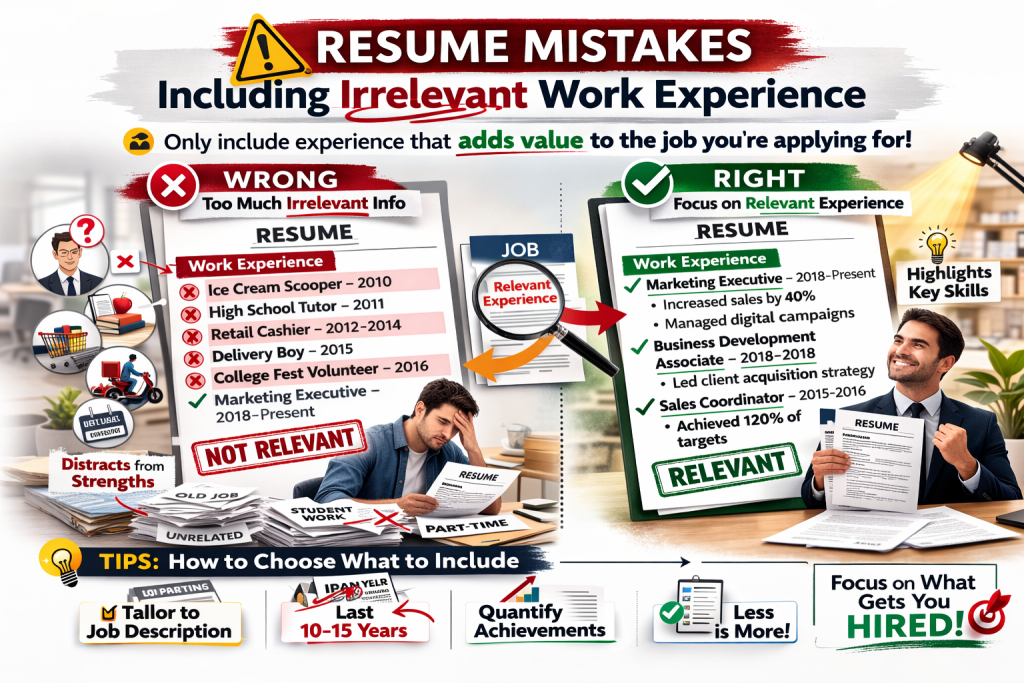
Your resume isn’t a biography — it’s a marketing tool.
Listing every job you’ve ever had, especially those unrelated to the position, distracts from your most valuable experience.
Fix it: Focus on roles that demonstrate skills relevant to the job you’re applying for. If older experience isn’t adding value, remove it.
5. Listing Duties Instead of Achievements
One of the most common mistakes is writing what you were responsible for instead of what you achieved.
Responsibilities show what you were assigned to do. Achievements show what you actually delivered.
Weak example:
Managed a team of sales associates.
Stronger example:
Led a team of 8 sales associates and increased quarterly revenue by 32%.
Fix it: Add measurable results whenever possible — percentages, revenue growth, time saved, efficiency improvements.
6. Using an Unprofessional Email Address
It may seem minor, but your contact information sets the tone.
An email like [email protected] doesn’t send a professional message.
Fix it: Use a simple format such as [email protected]. Create a new email account just for job applications if necessary.
7. Forgetting to Include Keywords
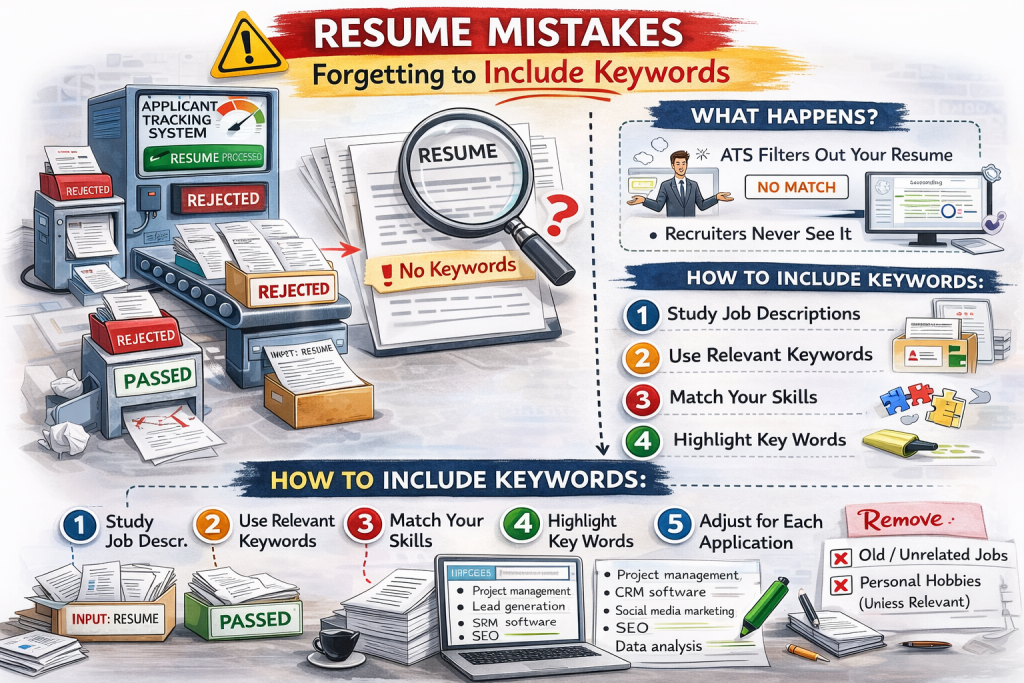
Many companies use Applicant Tracking Systems (ATS) to scan resumes before a human sees them.
If your resume doesn’t contain relevant keywords from the job description, it may never make it past the system — even if you’re qualified.
Fix it: Carefully read the job description and incorporate relevant terms naturally into your resume.
8. Adding Too Much Personal Information
Details like your age, marital status, religion, or national ID number are not only unnecessary — in many cases, they shouldn’t be included at all.
They don’t strengthen your application and may even introduce bias.
Fix it: Stick to professional details: name, contact info, LinkedIn profile (if updated), and relevant experience.
9. Making It All About You — Not the Employer
Your resume shouldn’t focus solely on what you want. Employers care about what you can do for them.
A resume that feels self-centered may fail to demonstrate value.
Fix it: Frame your experience around impact. Show how your skills helped past employers solve problems or achieve goals.
10. Using a Complicated Design
Fancy graphics, unusual fonts, or multiple columns might look impressive — but they can confuse ATS systems and recruiters alike.
Creative designs work for designers. For most roles, clarity wins.
Fix it: Use a clean, professional format with standard fonts and simple layout.
11. Including Buzzwords Without Proof
Words like “motivated,” “passionate,” and “dynamic” are everywhere — and they’ve lost impact.
Anyone can claim they’re a team player. Not everyone can prove it.
Fix it: Replace buzzwords with examples. Show teamwork through collaboration results.
12. Gaps Without Explanation
Employment gaps aren’t automatically negative. Life happens — caregiving, education, health, relocation.
But unexplained gaps can create uncertainty.
Fix it: Be transparent. If you took time off for professional development or personal reasons, briefly address it confidently.
13. Writing a Vague Professional Summary
Your summary is prime real estate. A generic statement wastes that space.
Weak summary example:
Seeking a challenging opportunity to grow professionally.
That doesn’t differentiate you.
Fix it: Write a focused summary highlighting your experience, specialization, and key strengths.
14. Using an Outdated Format
Resumes evolve. If yours still includes outdated sections or formatting trends from decades ago, it may appear neglected.
Fix it: Modern resumes emphasize achievements, measurable results, and concise summaries.
15. Including References
“References available upon request” is unnecessary. Employers assume this.
It takes up valuable space that could be used to showcase skills.
Fix it: Remove it. Provide references only when asked.
16. Ignoring Formatting Consistency
Inconsistent fonts, uneven margins, mismatched bullet points — these small details signal lack of attention.
Recruiters may subconsciously question your organizational skills.
Fix it: Keep formatting consistent throughout. Align dates, standardize font sizes, and maintain clean spacing.
17. Exaggerating or Lying
Stretching the truth might get you an interview — but it can easily end there.
Background checks, skill tests, and interviews often reveal inconsistencies.
Fix it: Be honest. Highlight your strengths confidently without fabricating details.
18. Making It Too Long
More isn’t better.
Recruiters don’t need every detail from your entire career — especially if it’s not relevant.
Fix it: Prioritize quality over quantity. Focus on recent and relevant roles.
19. Not Highlighting Key Skills Clearly
If your core skills are buried in paragraphs, recruiters may miss them.
Clarity increases your chances.
Fix it: Add a clear skills section aligned with the job description.
20. Submitting Without a Final Review
Rushing to apply can lead to mistakes like attaching the wrong file or addressing the wrong company.
These small errors can instantly disqualify you.
Fix it: Pause before submitting. Double-check everything.
Final Thoughts
Your resume isn’t just a document — it’s your personal marketing tool. And small adjustments and adding the right resume elements can dramatically increase your chances of landing interviews.
Before you send your next application, review it carefully. Remove the clutter. Add measurable impact. Tailor it with intention.
Because sometimes, the difference between rejection and a callback isn’t your experience — it’s how you present it.