
 4.9
4.9 4.5
4.5Changing careers can be both exciting and overwhelming. Many professionals reach a point where they realize their current path no longer aligns with their interests, goals, or lifestyle. Whether you’re moving from teaching to corporate training, sales to marketing, or customer service to project management, the transition often begins with one crucial document: your resume.
For career changers, a resume is more than a record of past jobs. It becomes a tool for telling a new story—one that highlights your transferable skills, potential, and readiness to succeed in a different field.
The challenge is that hiring managers may initially see you as someone without direct experience in their industry. Your resume must therefore bridge that gap by showing how your existing skills and achievements translate into value for your new role.
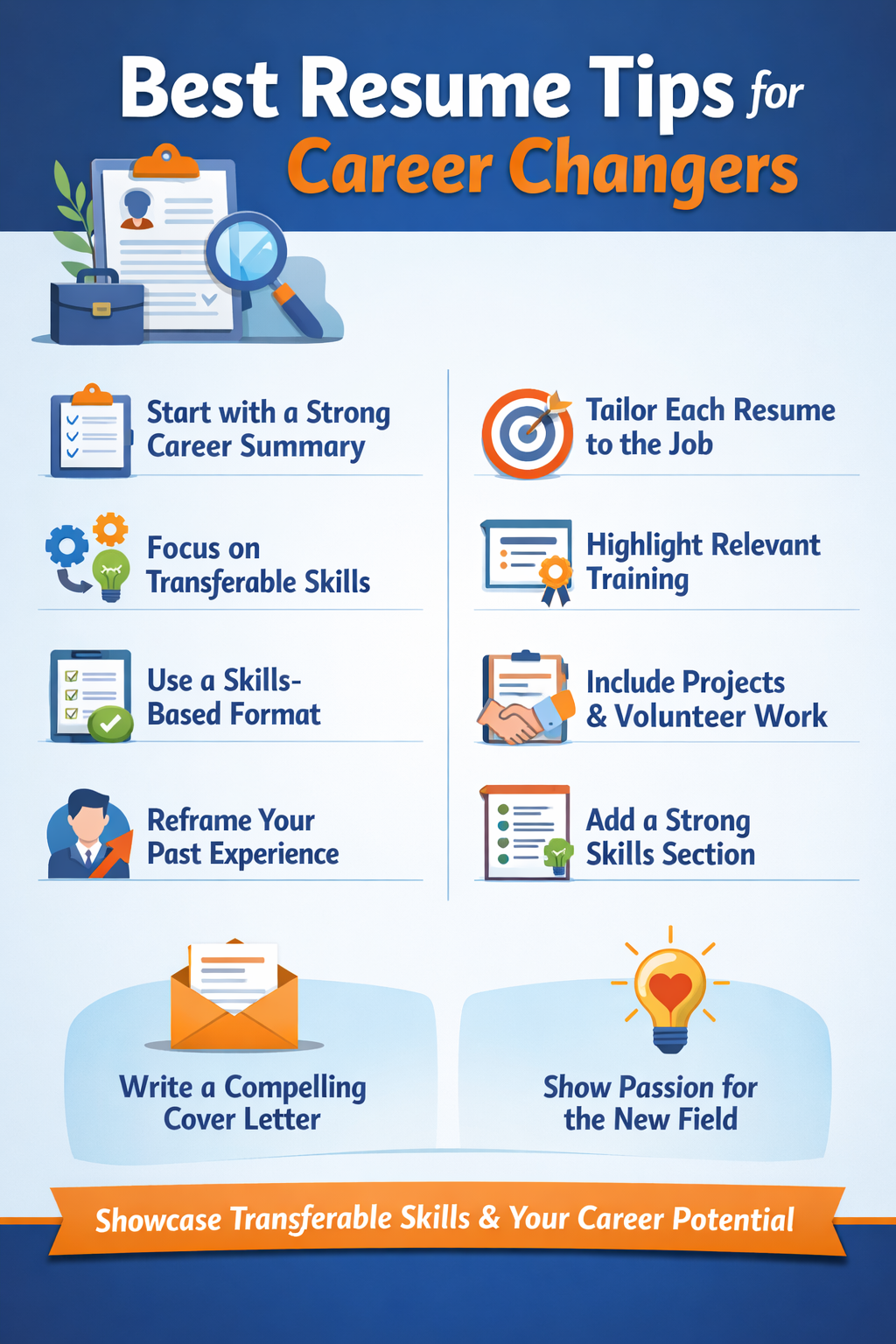
If you’re planning a career transition, here are ten practical resume tips that can help you present yourself confidently and increase your chances of landing interviews.
1. Start with a Clear Career Summary
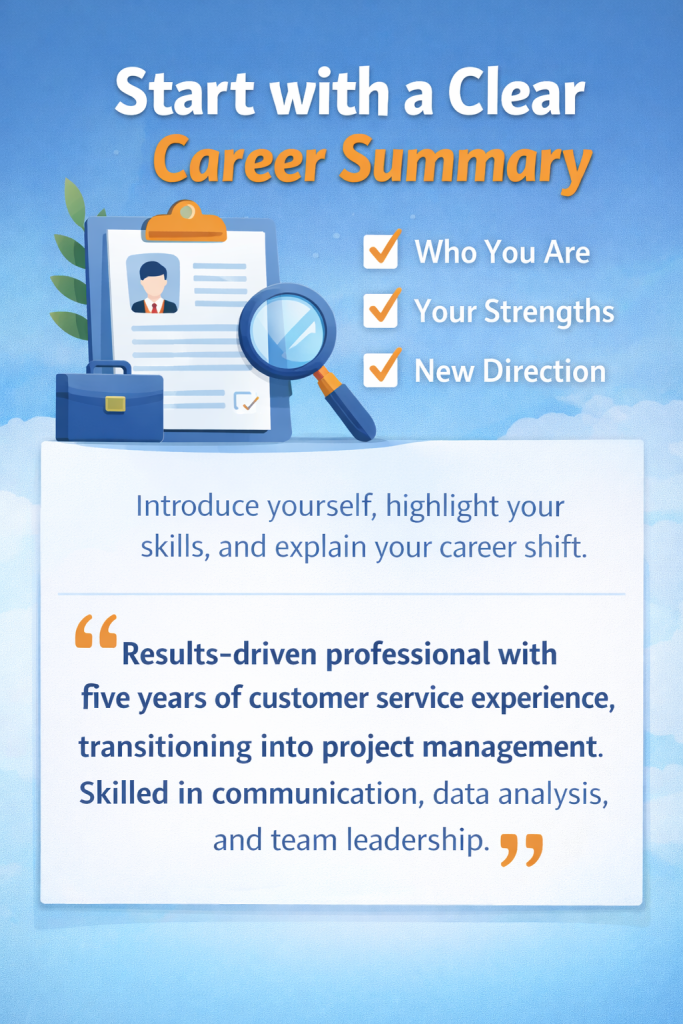
When you’re changing careers, the first few lines of your resume matter more than ever. Instead of jumping straight into your job history, begin with a career summary that introduces who you are and where you’re headed.
This section should be short—usually three to four sentences—but powerful. It should briefly describe your professional background, your key strengths, and the direction you want to move toward.
For example, if someone from customer service wants to move into project management, their summary might say something like:
“Detail-oriented professional with five years of experience managing client relationships and coordinating cross-functional teams. Known for strong organizational skills and the ability to manage multiple priorities. Currently transitioning into project management with additional training in Agile and workflow management.”
This introduction immediately gives recruiters context about your career shift and helps them understand the value you bring.
2. Emphasize Transferable Skills
One of the biggest mistakes career changers make is assuming their previous experience is irrelevant. In reality, many skills are transferable across industries.
Transferable skills are abilities you can apply in different roles and environments. Employers value these skills because they demonstrate adaptability and competence beyond specific job titles.
Common transferable skills include:
- Communication
- Leadership
- Problem-solving
- Time management
- Data analysis
- Customer relationship management
- Project coordination
- Team collaboration
For example, someone who worked in hospitality likely developed strong communication and conflict resolution skills—both of which are valuable in many corporate roles.
Instead of focusing solely on what your job title was, emphasize what you accomplished and what skills you used to achieve those results.
3. Choose the Right Resume Format
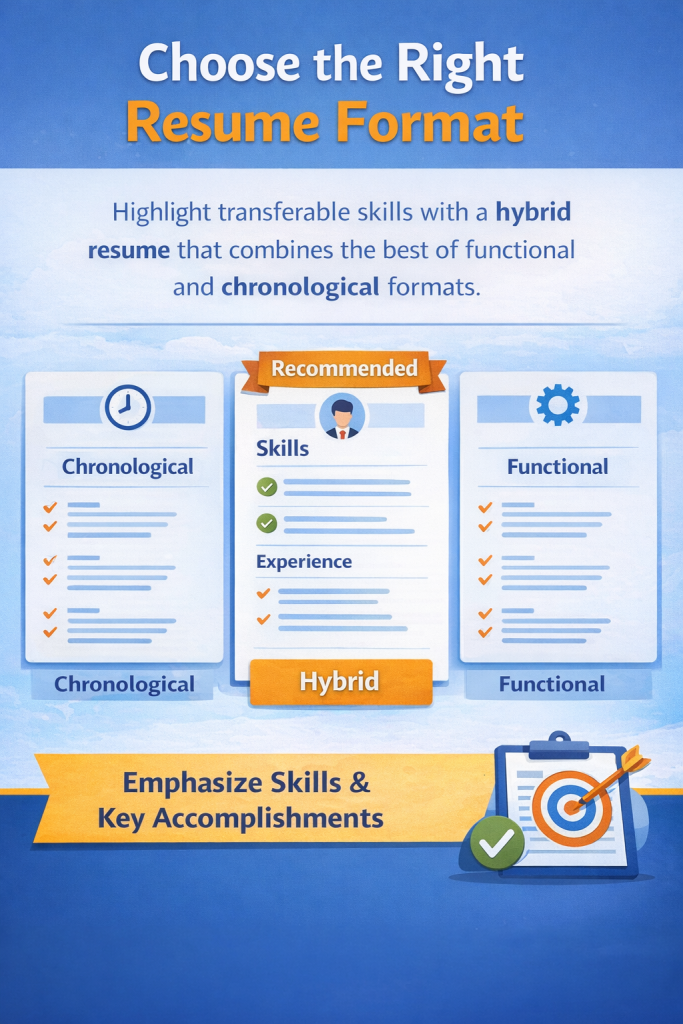
Traditional resumes follow a chronological format that lists job experience in order. While this format works well for professionals staying within the same industry, it may not highlight the strengths of someone changing careers.
Career changers often benefit from using a hybrid resume format, which combines elements of both functional and chronological resumes.
A hybrid resume typically includes:
- A professional summary
- A skills section
- Key accomplishments
- A brief employment history
This structure allows you to showcase relevant skills first, before employers focus on your job titles.
By doing this, hiring managers see your capabilities immediately rather than questioning your career shift.
4. Tailor Your Resume for Every Job Application
A common misconception is that a resume should remain the same for every job application. In reality, customizing your resume is one of the most effective strategies for career changers.
Each job description contains specific skills, qualifications, and keywords that employers are looking for. If your resume reflects those requirements, it signals that you’re a strong match for the role.
Many companies also use Applicant Tracking Systems (ATS) to scan resumes before they reach human recruiters. If your resume lacks the right keywords, it may never be seen by a hiring manager.
Before submitting your application, review the job description carefully and adjust your resume to highlight the skills and experiences that match the employer’s needs.
5. Highlight Relevant Education, Certifications, or Training
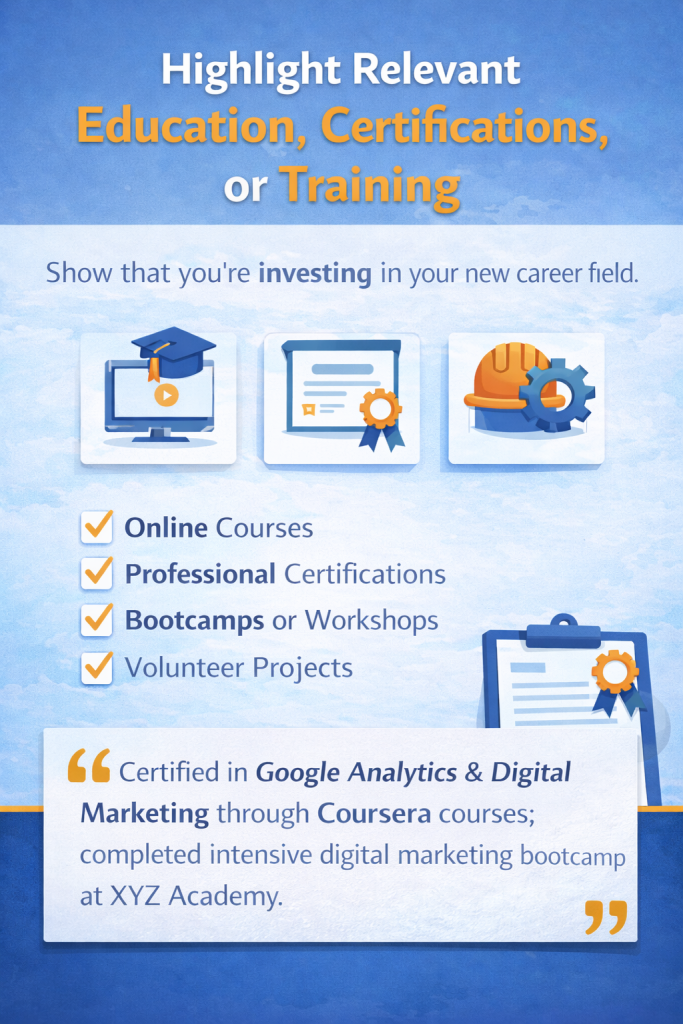
If you’re moving into a new industry, any additional training or education you’ve completed becomes extremely valuable.
This may include:
- Online courses
- Professional certifications
- Bootcamps
- Workshops
- Industry seminars
For example, someone transitioning into digital marketing might list certifications in Google Analytics, social media marketing, or SEO.
These credentials show employers that you’re actively investing in your professional growth and preparing yourself for the new role.
You may even consider placing your education or certification section closer to the top of your resume if it directly relates to your new career.
6. Reframe Your Previous Work Experience
Your past experience may not seem directly related to your new career, but the way you present it can make a big difference.
Instead of listing tasks, focus on achievements and outcomes.
For instance, rather than writing:
“Handled customer inquiries and complaints.”
You could say:
“Resolved customer issues efficiently while maintaining a 95% customer satisfaction rating.”
This approach highlights measurable impact rather than routine responsibilities.
You can also emphasize responsibilities that overlap with your new field. For example, if you’re transitioning into management, highlight experiences where you:
- Led teams
- Coordinated projects
- Trained new employees
- Organized workflows
The goal is to connect your previous experiences to the skills needed in your target role.
7. Add a Strong Skills Section
A well-structured skills section can significantly strengthen a resume for career changers. This section allows hiring managers to quickly identify the abilities you bring to the position.
Consider organizing your skills into categories such as:
Technical Skills
- Data Analysis
- CRM Software
- Microsoft Excel
- Social Media Management
Professional Skills
- Leadership
- Strategic Planning
- Communication
- Conflict Resolution
This layout makes your resume easier to scan and ensures that your most relevant abilities stand out.
Just remember to include only skills you genuinely possess and can demonstrate if asked during an interview.
8. Include Relevant Projects or Volunteer Work
If you lack direct industry experience, projects and volunteer work can fill that gap.
Many career changers build experience through side projects, freelance work, or volunteering. These experiences demonstrate initiative and practical learning.
For example:
- Designing websites for local businesses
- Managing social media pages for community organizations
- Organizing events for nonprofits
- Developing personal projects related to your new field
You can create a section called Relevant Projects or Additional Experience to highlight these efforts.
Employers appreciate candidates who actively build their skills rather than waiting for opportunities to come to them.
9. Keep Your Resume Clear and Concise
Hiring managers often review dozens—or even hundreds—of resumes for a single position. That means your resume should be easy to read and quick to scan.
A few formatting tips include:
- Use clear headings and bullet points
- Avoid long paragraphs
- Stick to professional fonts
- Keep margins balanced
- Limit your resume to one or two pages
Clarity is more important than complexity. A clean, organized resume helps recruiters find the information they need quickly.
Remember that your resume is meant to spark interest and lead to an interview, not tell your entire career story.
10. Demonstrate Genuine Passion for Your New Career
Finally, employers want to see that your career change is intentional and well thought out.
You can demonstrate this by highlighting activities that show commitment to your new field.
Examples include:
- Industry certifications
- Professional memberships
- Conferences or webinars attended
- Relevant reading or research
- Personal projects or blogs
These signals show that you’re not simply experimenting with a new career—you’re dedicated to building expertise in it.
Employers often value passion and motivation just as much as direct experience.
Final Thoughts
Changing careers is a significant step that requires courage, preparation, and persistence. While the process may feel challenging, your resume can become one of your most powerful tools in navigating this transition.
By focusing on transferable skills, highlighting relevant training, and reframing your past experiences, you can create a resume that positions you as a capable and adaptable candidate.
Remember that every professional journey is unique. Many successful individuals have changed careers at some point in their lives, bringing fresh perspectives and valuable skills to their new industries.
Your resume should reflect not just where you’ve been, but where you’re going—and the strengths that will help you succeed along the way.
With the right strategy and a clear narrative, your next career opportunity may be closer than you think.