
 4.9
4.9 4.5
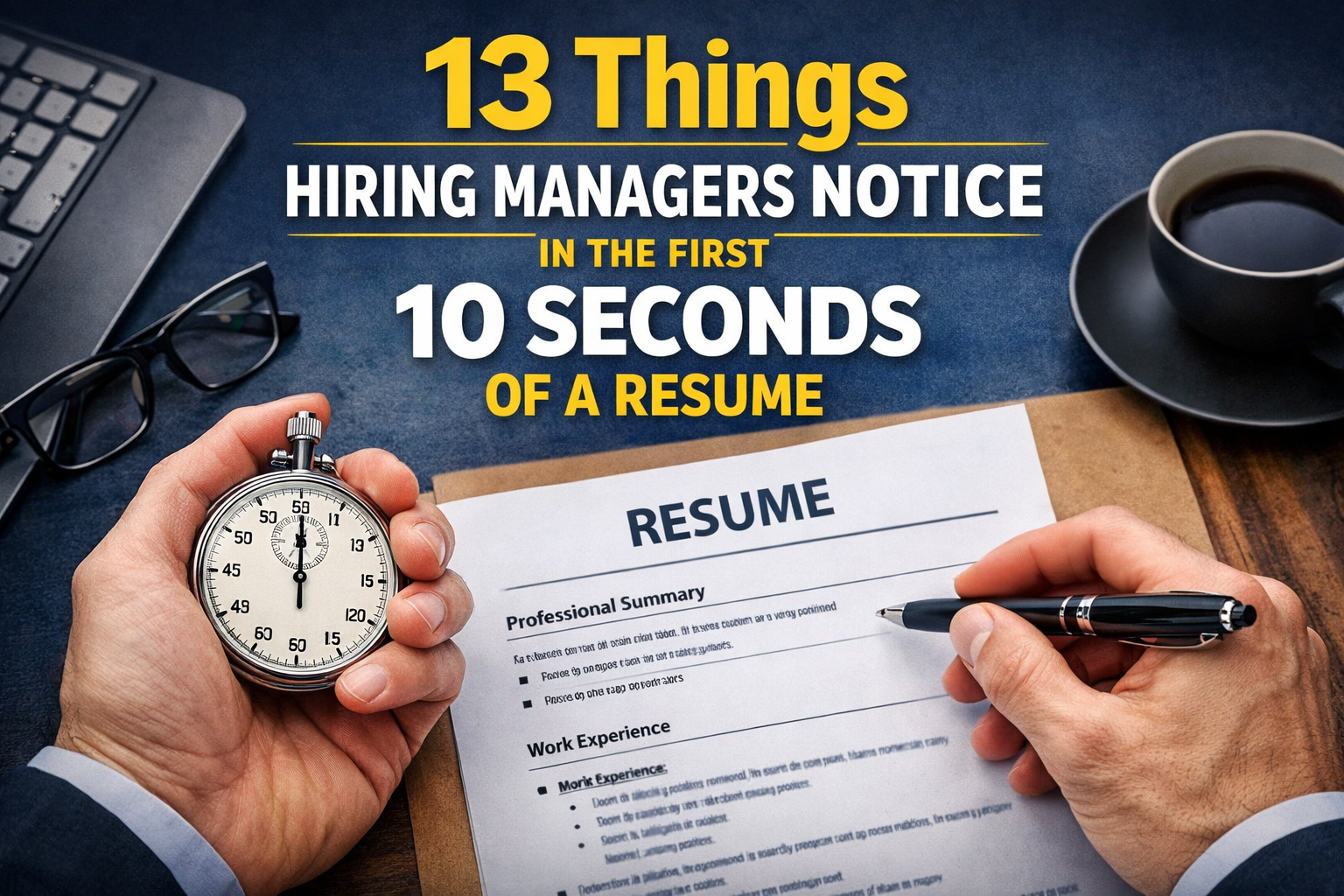
4.5When you submit your resume, you might assume hiring managers carefully read every word. In reality, most recruiters spend just 6 to 10 seconds scanning a resume before deciding whether to continue reading or move on.
That means your resume has a very small window to make a strong first impression. The good news? Once you understand what hiring managers actually look for in those crucial seconds, you can optimize your resume to stand out immediately.
Here are the 13 key things hiring managers notice in the first 10 seconds, and how to get them right.
1. Overall Layout and Visual Appeal
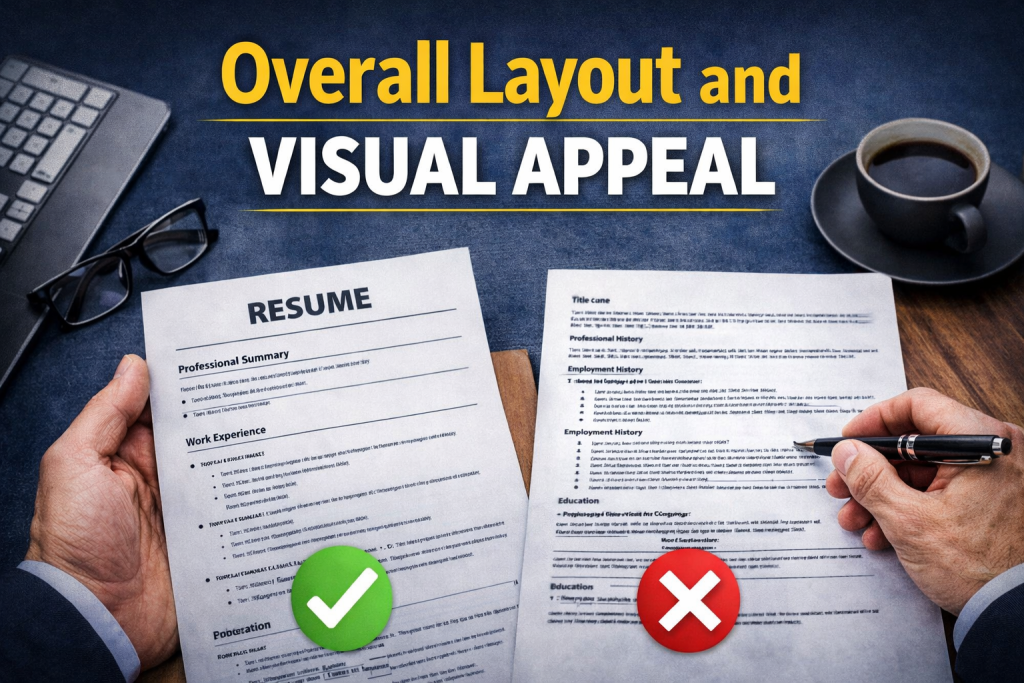
Before reading a single word, hiring managers notice how your resume looks. A cluttered, messy, or overly designed resume can turn them off instantly.
Clean formatting, consistent spacing, and clear sections make your resume easier to scan. White space is your friend—it improves readability and makes important details stand out.
Tip: Use a simple, professional layout with clear headings and bullet points.
2. Your Name and Contact Information
Your name should be one of the most visible elements on the page. Recruiters also quickly check if your contact details are complete and professional.
They’re looking for:
- Full name
- Professional email address
- Phone number
- LinkedIn profile (optional but recommended)
Avoid: Unprofessional email addresses like [email protected].
3. Professional Summary or Headline
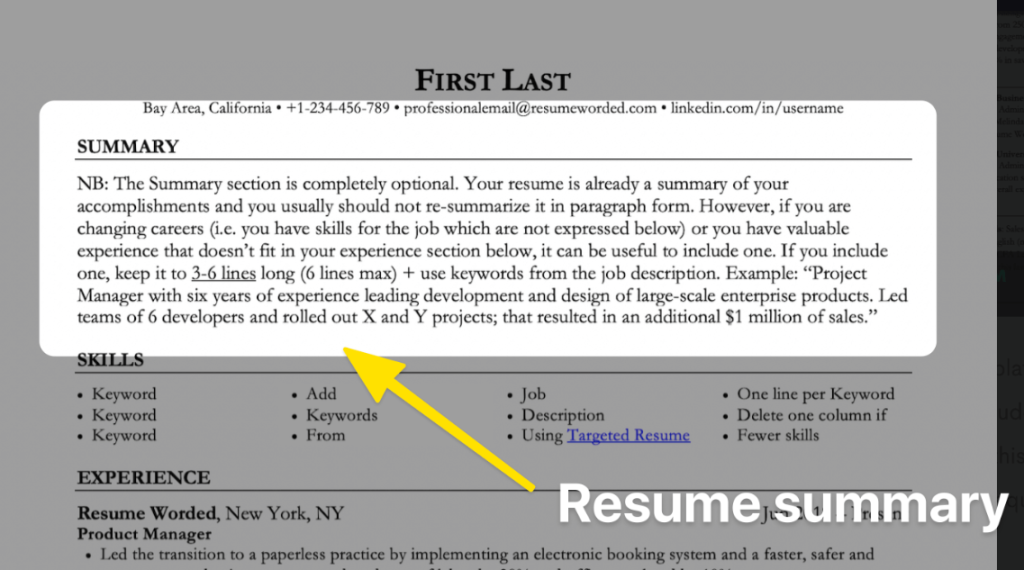
This is often the first section recruiters read. A strong summary tells them immediately who you are and what you bring to the table.
If your summary is vague or missing, they may lose interest quickly.
Tip: Focus on value. Mention your experience, key skills, and a standout achievement.
4. Job Titles and Career Relevance
Hiring managers scan your job titles to see if your experience aligns with the role.
For example, if you’re applying for a “Marketing Manager” role, they’ll quickly check if you’ve held similar positions or responsibilities.
Tip: If your title doesn’t fully reflect your role, clarify it (e.g., “Marketing Specialist (Team Lead Responsibilities)”).
5. Recent Work Experience

Recruiters usually look at your most recent role first. They want to know:
- What you’re doing now
- Where you worked
- How relevant is your experience
If your latest job doesn’t match the role you’re applying for, you’ll need to clearly highlight transferable skills.
6. Keywords That Match the Job Description
Many resumes go through AI screening before reaching a human. Even when they don’t, recruiters still scan for keywords.
They’re looking for specific skills, tools, and qualifications mentioned in the job posting.
Example: If the job requires “SEO” and “Google Analytics,” those terms should appear in your resume.
7. Achievements, Not Just Responsibilities
One of the biggest mistakes job seekers make is listing duties instead of achievements.
Hiring managers want to see impact, not just tasks.
Weak: “Managed social media accounts.”
Strong: “Grew social media engagement by 45% in 6 months.”
Numbers and results instantly grab attention.
8. Skills Section
A clearly defined skills section helps recruiters quickly assess your qualifications.
This is especially important for technical roles where specific tools or platforms are required.
Tip:
- List relevant skills only
- Group them by category (e.g., Technical, Soft Skills)
- Avoid long, overwhelming lists
9. Education and Certifications
Depending on the role, hiring managers may quickly check your educational background or certifications.
For entry-level roles, this may be more important. For experienced professionals, it’s often secondary—but still worth scanning.
Tip: Include relevant certifications that strengthen your credibility.
10. Gaps or Red Flags
Recruiters are trained to spot inconsistencies quickly. They may notice:
- Employment gaps
- Frequent job changes
- Missing dates
These don’t automatically disqualify you, but they may raise questions.
Tip: Be honest and prepared to explain gaps if needed.
11. Resume Length
A resume that’s too long or too short can be a red flag.
- Too long: May suggest a lack of focus
- Too short: May indicate a lack of experience
Best practice:
- 1 page for early-career professionals
- 1–2 pages for experienced candidates
12. Formatting Consistency
Inconsistent fonts, spacing, or bullet styles can make your resume look unprofessional.
Hiring managers notice small details, and formatting errors may suggest a lack of attention to detail.
Tip:
- Use one or two fonts max
- Keep bullet points consistent
- Align text properly
13. Customization for the Role
One of the biggest signals hiring managers look for is whether your resume is tailored to the job.
A generic resume is easy to spot and often ignored. A customized resume shows effort and genuine interest in the role.
Tip:
- Adjust your summary and skills for each application
- Highlight the most relevant experience
- Mirror language from the job description
Bonus: What Makes a Resume Instantly Stand Out
Beyond avoiding mistakes, here are a few elements that can make your resume shine within seconds:
- Strong, results-driven bullet points
- Clear career progression
- Relevant keywords and skills
- Clean, modern formatting
These elements work together to create a powerful first impression.
Conclusion
In today’s competitive job market, your resume doesn’t get much time to make an impact. Hiring managers quickly scan for key details, and those first 10 seconds can determine whether you move forward or get overlooked.
By focusing on what recruiters actually notice, layout, relevance, achievements, and clarity, you can create a resume that grabs attention immediately and encourages deeper review.
Remember, your goal isn’t just to list your experience—it’s to make it easy for hiring managers to see your value at a glance.
Optimize those first 10 seconds, and you’ll dramatically increase your chances of landing interviews in 2026 and beyond.