
 4.9
4.9 4.5
4.5Let’s be honest: most resumes sound the same.
They’re packed with phrases like “responsible for,” “assisted with,” and “worked on.” These aren’t wrong — they’re just forgettable. And when a hiring manager is reviewing dozens (or hundreds) of resumes in a single sitting, forgettable is dangerous.
The difference between landing an interview and being overlooked often comes down to how clearly you communicate your impact.
That’s where strong action verbs come in.
Action verbs immediately position you as someone who drives results, takes initiative, and delivers value. They shift your resume from passive to powerful.
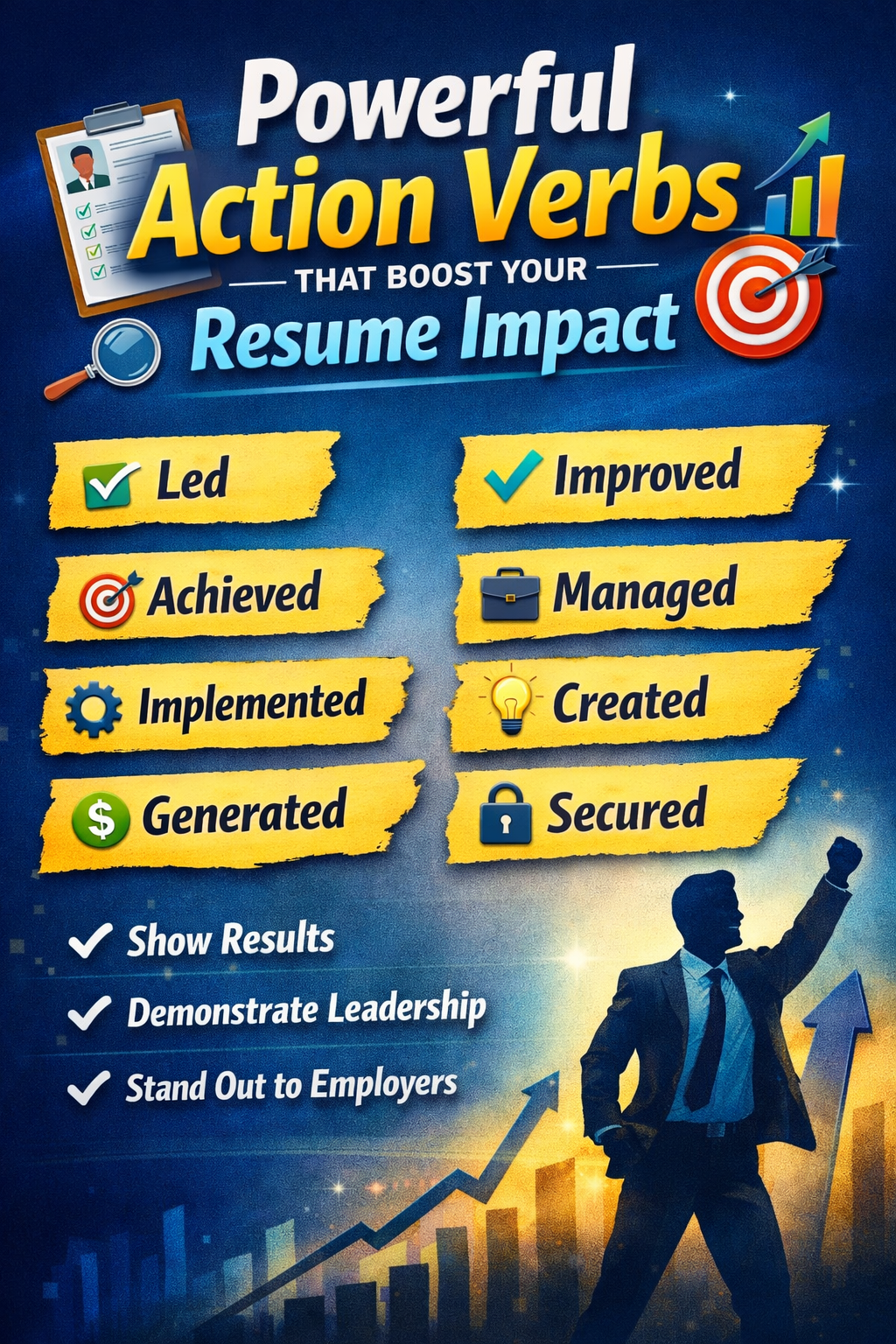
Below are 25 action verbs — expanded with insight and examples — that can dramatically improve your resume.
1. Led

“Led” signals authority, ownership, and accountability. It tells employers you didn’t just participate — you guided.
Use it when you supervised people, directed projects, or took charge of initiatives.
Example:
Led a cross-functional team of 10 to complete a product launch two weeks ahead of schedule, resulting in a 15% revenue increase.
Why it works: It demonstrates leadership and measurable impact.
2. Achieved
“Achieved” focuses on outcomes. It highlights success rather than effort.
This verb works especially well when paired with numbers or percentages.
Example:
Achieved 125% of annual sales quota, ranking #1 in the region.
Why it works: It clearly shows performance above expectations.
3. Implemented
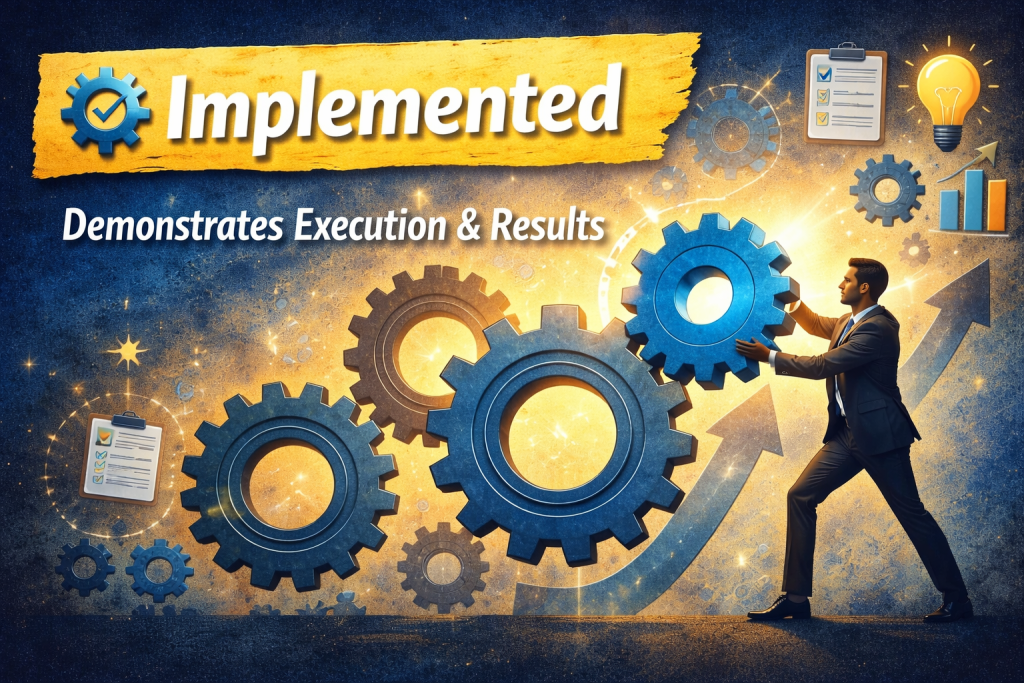
“Implemented” communicates execution. It shows that you turned ideas into action.
Great for process improvements, systems, or new strategies.
Example:
Implemented a new CRM system that improved lead tracking accuracy by 40%.
Why it works: It shows initiative and operational impact.
4. Developed
“Developed” highlights creativity and problem-solving. It implies building something from the ground up.
Example:
Developed a training program that reduced employee turnover by 18%.
Why it works: It positions you as someone who creates solutions.
5. Increased
“Increased” is powerful because it signals growth.
Revenue, engagement, productivity — this verb demonstrates upward momentum.
Example:
Increased monthly website traffic by 60% through targeted content marketing strategies.
Why it works: Growth is something every employer values.
6. Reduced

Employers love efficiency. “Reduced” shows cost savings, time savings, or risk reduction.
Example:
Reduced operational costs by $90,000 annually through vendor renegotiations.
Why it works: Saving money is just as valuable as making money.
7. Generated
“Generated” communicates proactive contribution.
It works especially well in sales, marketing, fundraising, or business development roles.
Example:
Generated $300K in new revenue by securing strategic partnerships.
Why it works: It makes your impact tangible.
8. Designed
“Designed” suggests intentional planning and creativity.
It’s excellent for marketing, UX, engineering, event planning, and operations.
Example:
Designed a customer onboarding experience that improved retention by 22%.
Why it works: It shows thoughtful creation, not random execution.
9. Optimized
“Optimized” implies improvement without starting from scratch.
It suggests refinement, analysis, and strategic thinking.
Example:
Optimized supply chain processes, reducing delivery delays by 30%.
Why it works: It signals continuous improvement.
10. Streamlined
This verb emphasizes efficiency and simplification.
Example:
Streamlined internal reporting procedures, cutting administrative time in half.
Why it works: Employers value clarity and efficiency.
11. Negotiated
“Negotiated” demonstrates communication, persuasion, and strategic thinking.
Example:
Negotiated vendor contracts that lowered annual expenses by 12%.
Why it works: It reflects both financial and interpersonal skill.
12. Launched
“Launched” signals initiative and ownership.
Example:
Launched a new digital campaign that increased lead conversions by 35%.
Why it works: It shows courage and forward movement.
13. Managed
“Managed” communicates responsibility, oversight, and accountability.
Use it for teams, budgets, or complex projects.
Example:
Managed a $2M project budget while delivering milestones ahead of schedule.
Why it works: It shows trust and competence.
14. Coordinated
“Coordinated” highlights collaboration and organization.
Example:
Coordinated cross-departmental efforts to deliver a company-wide rebrand.
Why it works: It shows teamwork and communication skills.
15. Analyzed
“Analyzed” emphasizes critical thinking and data-driven decisions.
Example:
Analyzed customer behavior data to identify trends that increased upsell rates by 20%.
Why it works: It demonstrates strategic thinking.
16. Improved
“Improved” signals measurable enhancement.
Example:
Improved client satisfaction scores from 78% to 92% within one year.
Why it works: It shows progression and commitment to excellence.
17. Spearheaded
“Spearheaded” adds energy and leadership.
Example:
Spearheaded a company-wide automation initiative that saved 500+ labor hours annually.
Why it works: It positions you as proactive.
18. Facilitated
“Facilitated” works well for leadership without direct authority.
Example:
Facilitated workshops to improve team collaboration and productivity.
Why it works: It demonstrates influence and soft skills.
19. Trained
“Trained” highlights mentorship and knowledge sharing.
Example:
Trained and mentored 12 new employees, reducing onboarding time by 25%.
Why it works: It shows leadership beyond your own performance.
20. Executed
“Executed” signals precision and follow-through.
Example:
Executed multi-channel marketing campaigns with a 4:1 ROI.
Why it works: It conveys reliability.
21. Delivered
“Delivered” focuses on results and accountability.
Example:
Delivered complex IT projects under budget and ahead of schedule.
Why it works: It signals dependability.
22. Secured
“Secured” shows acquisition and success.
Example:
Secured $750K in funding through investor presentations.
Why it works: It highlights persuasion and achievement.
23. Enhanced
“Enhanced” suggests improvement without implying failure.
Example:
Enhanced internal communication systems to improve response time by 35%.
Why it works: It shows refinement.
24. Established
“Established” signals building something foundational.
Example:
Established new compliance standards adopted company-wide.
Why it works: It shows long-term impact.
25. Transformed
“Transformed” is one of the strongest verbs available.
Use it for major improvements or turnarounds.
Example:
Transformed an underperforming territory into the top-performing region within 12 months.
Why it works: It communicates dramatic, measurable change.
Why Strong Verbs Make a Real Difference
Recruiters don’t hire job descriptions.
They hire results, leadership, and measurable impact.
Strong action verbs:
- Create energy in your resume
- Make your contributions clear
- Show ownership instead of participation
- Position you as proactive, not reactive
And most importantly, they make your resume easier to skim.
Final Advice: Pair Verbs with Metrics
An action verb without context is just a strong word.
But when paired with results? It becomes proof.
Instead of:
Managed customer accounts
Try:
Managed 40+ customer accounts, increasing retention by 18% year-over-year
Specifics build credibility.
Your resume is not a list of responsibilities.
It’s a marketing document.
Choose words that market you well.