


 4.9
4.9 4.5
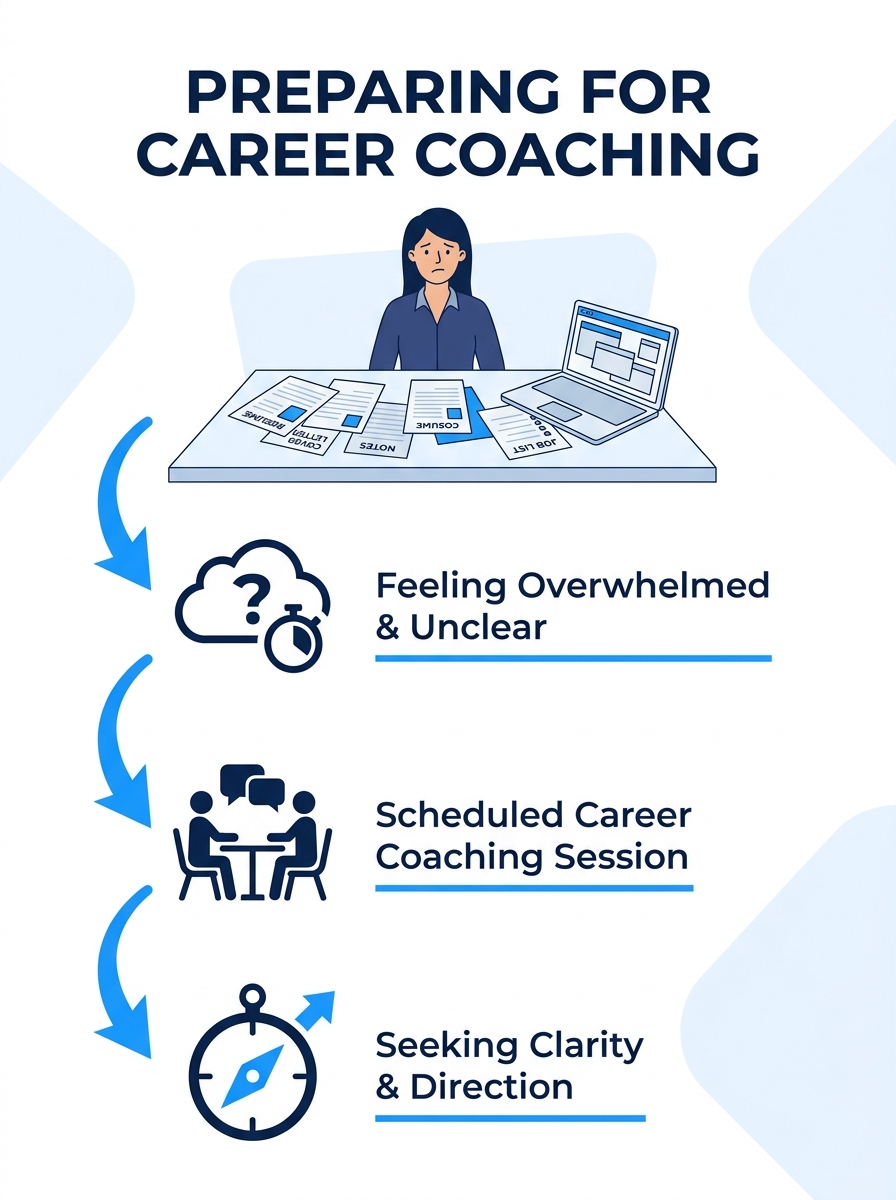
4.5Georgetown University’s Graduate Career Center asks clients to upload their resume before the first coaching meeting. Most people do exactly that and consider themselves prepared. They walk into the session with a single document, a vague sense that something in their career needs to change, and a hope that the coach will figure out the rest. The resulting conversation tends to circle for thirty or forty minutes before the coach even understands what the client actually does for a living, let alone where they want to go next.
Your career coaching preparation determines more about the outcome than the coach’s credentials, their methodology, or how many certifications hang on their wall. Four specific documents, assembled before you ever sit down for that first session, are what separate the clients who get measurable results from the ones who walk away wondering what they paid for.
Why a Resume by Itself Creates a Ceiling
A resume tells a coach what you’ve done. It doesn’t tell them what you wanted to be doing instead, which parts of your career felt like progress and which parts felt like drifting, or what specific obstacles have kept you from making a move. When a coaching session starts with nothing but a resume on the table, the coach spends most of the hour doing intake work, asking background questions, probing for context, trying to assemble a picture of your professional life that you could have given them in writing beforehand. That’s billable time spent on information transfer rather than strategy.
The pattern is remarkably consistent. Career.io’s preparation guide recommends that clients define their objectives, assess areas for improvement, gather relevant documents, reflect on past experiences, and prepare questions before their session. Indiana University Bloomington’s coaching program similarly asks clients to bring a copy of their resume, the job or internship description if they have one, and additional research about positions they’re considering. These programs have learned through repetition that underprepared clients plateau quickly, and that the most productive sessions happen when the client does a significant amount of thinking before the clock starts.
And the financial math matters here. Career coaching sessions typically run between $150 and $350 per hour. If your first session is mostly spent getting the coach up to speed, you’ve effectively paid full price for an orientation meeting. If you want to maximize career coaching ROI, the preparation work you do before the session is where the real returns begin, not during the session itself. The coaching hour should be reserved for the work that requires a coach: pattern recognition, strategic guidance, and the kind of honest feedback you can’t get from your friends or your LinkedIn network.
The Four Documents That Reshape a Coaching Conversation
The coaching session checklist that actually works goes well beyond “bring your resume.” It includes four distinct documents, each serving a different function in giving your coach what they need to move fast.
Your updated resume is the baseline, and yes, this one is obvious and universally recommended. But “updated” means genuinely current, not the version you last touched when you applied for your current role three years ago. If your resume still describes accomplishments from a position you left in 2022, your coach will spend time reconstructing your recent career history instead of planning your next move. Before any session, revisit your bullets and make sure they reflect what you’re doing now. If you need help converting vague accomplishments into measurable outcomes, do that work first. The resume is the document your coach reads before you ever meet, and it shapes their first impression of your candidacy and their initial read on where you might be stuck.
Two or three job descriptions for roles you actually want is where most clients fall short. Coaches consistently report that the most frustrating version of a first session is one where the client says “I want something better” without being able to articulate what “better” looks like. Pulling real job postings forces you to confront your own preferences in concrete terms. Do you want more management responsibility, or less? Are you chasing a title bump, a salary jump, or a completely different type of work? When you hand a coach three job descriptions, they can immediately see patterns: the skills that keep appearing, the seniority level you’re targeting, the industries that attract you. They can also spot disconnects between what you say you want and what the postings actually require. This is where the conversation gets genuinely productive, because now you’re working from shared reference points rather than abstract desires.
A written self-assessment document is the piece that feels uncomfortable to create but generates the most value per coaching minute. This doesn’t need to be formal. A page of honest notes answering three questions works: What in your current role do you want to keep? What do you want to leave behind? And what’s the real reason you haven’t made a change yet? The Muse’s guidance on first coaching sessions makes this point clearly: your coach needs to understand not just your professional timeline, but what drew you to your field in the first place, what parts of your career you want to carry forward, and what you’re willing to let go. Writing this down before the session means you’ve already done the hard reflective work that otherwise eats up half your meeting. You arrive having already identified your own sticking points, and the coach can start helping you work through them instead of helping you discover them.
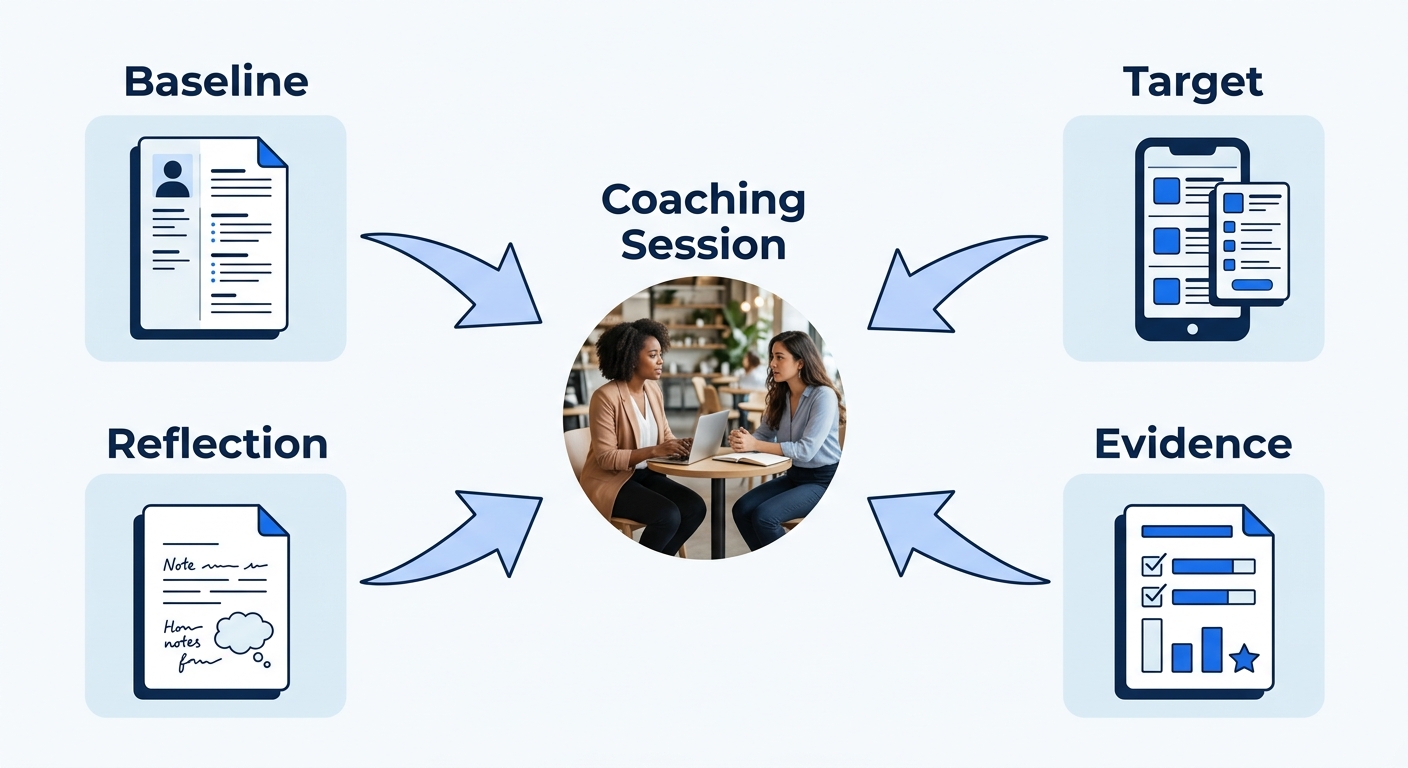
Performance reviews or written feedback from colleagues and managers round out the picture. This is the document that most coaches never explicitly request, and it’s the one that prevents the single biggest coaching pitfall: a session built entirely on your self-perception. You might believe your weakness is technical depth when three consecutive performance reviews point to communication as the real gap. You might think you’re ready for a director-level role when your manager’s feedback consistently flags delegation as an area for growth. Performance reviews introduce an external perspective into the coaching relationship, and that external perspective often reveals blind spots that neither you nor the coach would otherwise catch in conversation. If you don’t have formal reviews, any written feedback works: emails from managers praising specific work, notes from 360-degree reviews, even Slack messages where someone thanked you for a particular contribution. The point is giving your coach evidence of how others perceive your professional strengths and gaps, so the session can address reality rather than narrative.
If your first session is mostly spent getting the coach up to speed, you’ve effectively paid full price for an orientation meeting.
These four documents together give a coach everything they need to skip the discovery phase and start working on strategy from minute one. That shift, from spending the first session gathering information to spending it generating actionable plans, is what separates coaching that produces results from coaching that produces pleasant conversations.
Why Coaches Rarely Ask for This Upfront
If this preparation is so effective, the obvious question is why most coaches don’t require it. The answer has more to do with the coaching industry’s business model than with coaching methodology itself.
Career coaches operate in a market where clients are often ambivalent about committing. Someone thinking about hiring a coach is usually anxious, uncertain, and easily discouraged. If the intake process feels like homework (“please complete these four documents before we can schedule your first session”), a meaningful percentage of potential clients will simply not book. Coaches know this. Many have learned through experience that lowering the barrier to entry, even at the cost of session quality, keeps their calendars full. The result is an industry where preparation is recommended in blog posts and pre-session emails but rarely enforced as a prerequisite.
There’s also a philosophical tension within coaching practice. The International Coach Federation’s core competencies emphasize active listening and evoking client-generated solutions, which creates a culture where many coaches believe the discovery process itself is the work. In this framing, spending forty-five minutes helping you articulate what you want from your career isn’t wasted time. It’s the coaching. And sometimes that’s genuinely true. For clients in the early stages of a career clarity crisis, the reflective conversation is the deliverable they need most. But for clients who already know they want to make a specific move and need help executing it, an unprepared first session represents a real waste of money and momentum.
The tension is worth acknowledging because it means your career coaching preparation shouldn’t be identical for every situation. If you’re exploring whether to stay in your field or leave entirely, the self-assessment document matters more than the job descriptions. If you’ve been displaced from a tech role and need to rebuild quickly, the job descriptions and resume carry more weight. Tailoring what to bring to a coaching session based on where you actually are in your career decision-making process is what turns a generic checklist into a specific plan.

Where This Framework Falls Short
There’s an uncomfortable limit to what preparation can do. You can walk into a coaching session with four perfectly organized documents and still get very little out of it if you’re not willing to be honest about the parts of your career that embarrass you, the opportunities you turned down out of fear, or the promotions you didn’t get and still don’t understand why. Documents create structure. They don’t create vulnerability.
The best coaching sessions share a common quality: the client arrived prepared enough that the coach didn’t have to spend time on logistics, and open enough that the conversation could go somewhere unexpected. Those two conditions exist in tension with each other. Preparation implies control. Coaching works best when you’re willing to temporarily surrender some of it. The four documents give you a foundation so that surrendering control doesn’t mean surrendering direction. You know where you’re starting from. You know where you think you want to go. And you have evidence, from your own reflection and from external feedback, about what’s actually true about your professional capabilities. With all of that on the table, the coach can do what coaches are genuinely good at: asking the question you didn’t think to ask yourself.
Whether this preparation framework applies equally to every coaching engagement is something I’m genuinely unsure about. A career pivot into an entirely new industry might require a different set of documents than a push for promotion within your current company. Some clients, particularly those who process their thinking verbally rather than in writing, might find the written self-assessment more paralyzing than useful. The checklist above is built on the assumption that more information delivered earlier leads to better outcomes. That assumption is well-supported by coaching research, but it probably has exceptions that don’t show up in best-practice guides. Bring the four documents. But hold the framework loosely enough that your coach can adjust it once the real conversation starts.