


 4.9
4.9 4.5
4.5Professionals who land exploratory meetings with senior executives should articulate specific requests and share their own accomplishments rather than defaulting to interview mode, according to Forbes contributor Caroline Ceniza-Levine in career guidance published June 29 responding to a reader who felt they underperformed during a dinner with a target company’s president. The column marks the third recent installment Ceniza-Levine has published addressing networking with busy executives, reflecting heightened demand for executive-access strategies as AI tools make resume-spray tactics easier and networking more essential in competitive hiring markets.
TL;DR: A career coach advises that professionals meeting with senior executives should state what they want explicitly and share their own background, rather than conducting an interview-style conversation that leaves busy decision-makers unclear about next steps.
The reader’s situation involved a mentor-arranged dinner with the president of a company they hoped to join. The professional prepared discussion topics but shifted into “journalist mode” once they realized the executive preferred discussing their own career journey. The mentor intervened multiple times during the dinner to redirect attention to the candidate’s background, Ceniza-Levine reported. Post-dinner feedback from the mentor indicated the meeting felt more like an interview than a mutual conversation, and that the candidate had not shared enough about themselves or articulated a clear request.
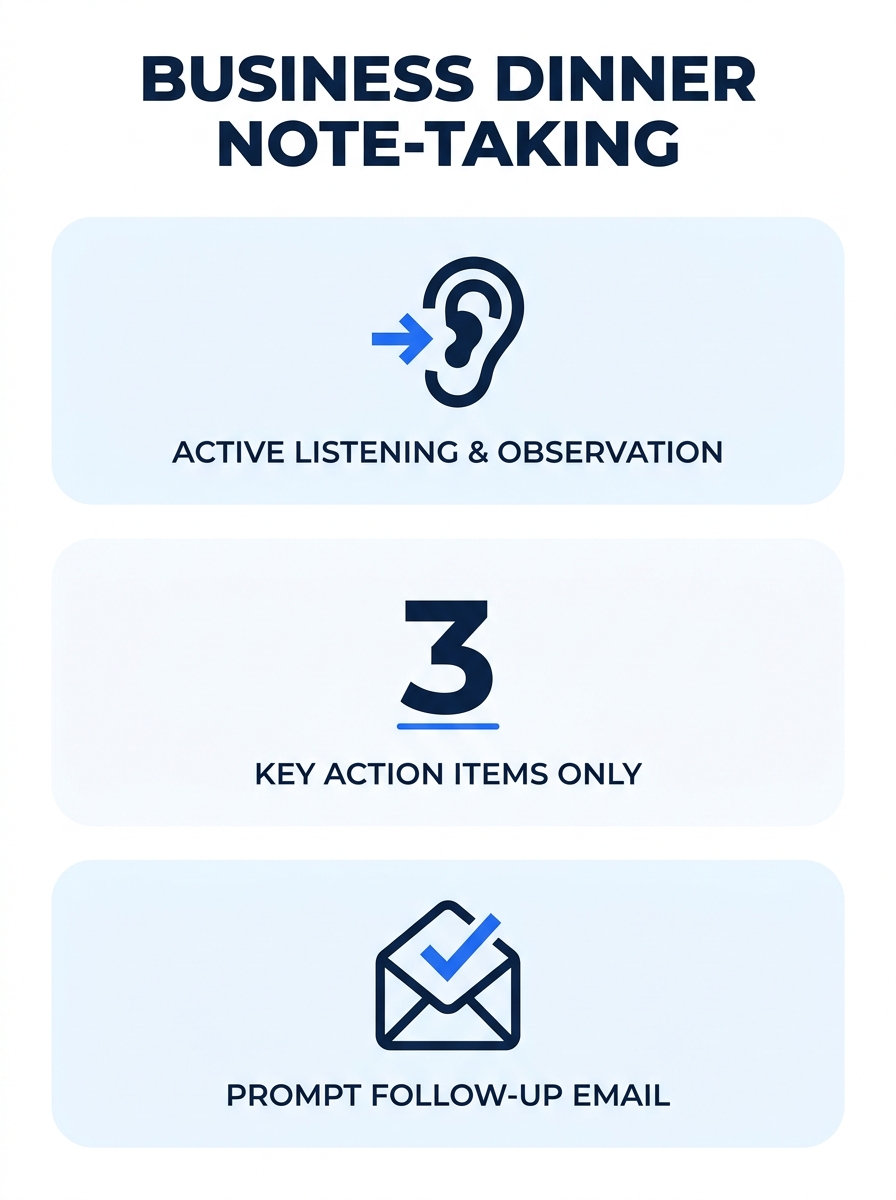
The candidate sent a follow-up email the next day summarizing ways they could help the president, adding a brief mention of their own work and interest in future hiring opportunities. Ceniza-Levine confirmed the mentor’s assessment that busy senior leaders need explicit requests because vague outreach makes candidates forgettable when executives juggle multiple constituents.
Preparation and Listening Skills Outweighed Self-Promotion Deficit
The candidate demonstrated strong preparation by arriving with discussion topics and displayed active listening by pivoting to questions when the executive showed preference for sharing their own story, according to Ceniza-Levine’s analysis. The professional prioritized rapport-building over making an immediate pitch, which the career coach validated as a sound foundation. Ceniza-Levine instructed readers to identify strengths from high-stakes meetings before diagnosing weaknesses, both to maintain confidence during job searches and to surface repeatable tactics for future networking conversations.
The shift toward question-asking reflected emotional intelligence that recognized the executive’s communication style in real time, Ceniza-Levine noted. However, the approach left the candidate without sufficient airtime to establish their own credentials or articulate what collaboration they sought from the relationship.
Long-Game Follow-Up Strategy Matters More Than Single Meeting
One meeting with a senior executive rarely produces professional collaboration outcomes such as contract roles, full-time positions, or collegial relationships, Ceniza-Levine stated. She advised planning follow-up contact over multiple months or years with key decision-makers. The candidate gained firsthand knowledge of the president’s career journey during the dinner, positioning them to tailor subsequent outreach to the executive’s personal interests and business challenges rather than sending generic check-ins.
“Your networking follow-up should also be tailored to the people you’re trying to cultivate,” Ceniza-Levine wrote, recommending that professionals share conference highlights, industry trends, or insights relevant to contacts’ situations. Including original analysis gives decision-makers visibility into how candidates think and approach problems. Demonstrating how insights apply to the contact’s specific business challenges increases the value of each touchpoint, according to the guidance.
Ceniza-Levine instructed candidates to use initial meetings to set up subsequent conversations by asking how executives prefer to keep in touch and proposing a follow-up meeting tied to a business challenge the candidate can address. The strategy moves relationships from courtesy introductions toward professional collaboration discussions where hiring becomes a natural outcome.
Professionals navigating similar high-stakes networking opportunities can reference structured approaches to converting interview conversations into productive relationships and positioning expertise during career transitions.
Context and Outlook
The guidance reflects structural shifts in job-search dynamics as generative AI tools enable candidates to submit applications at scale, making relationship-driven pathways to hiring more valuable. Ceniza-Levine’s third column on executive networking in recent weeks signals sustained reader demand for strategies that bypass crowded applicant pools. The mentor-arranged dinner scenario illustrates a recurring challenge for mid-career professionals and career changers who secure rare access to decision-makers but lack frameworks for converting conversations into tangible outcomes.
The career coach’s emphasis on explicit request-making addresses a common misstep where candidates assume executives will infer their goals or remember them among competing contacts. Busy leaders operate with limited attention for speculative relationships, requiring candidates to package their value proposition and desired next steps clearly during initial contact windows. The long-game follow-up strategy Ceniza-Levine outlined positions networking as a multi-touch cultivation process rather than a single-meeting pitch, aligning with research showing professional relationships require sustained engagement before producing collaboration opportunities.