


 4.9
4.9 4.5
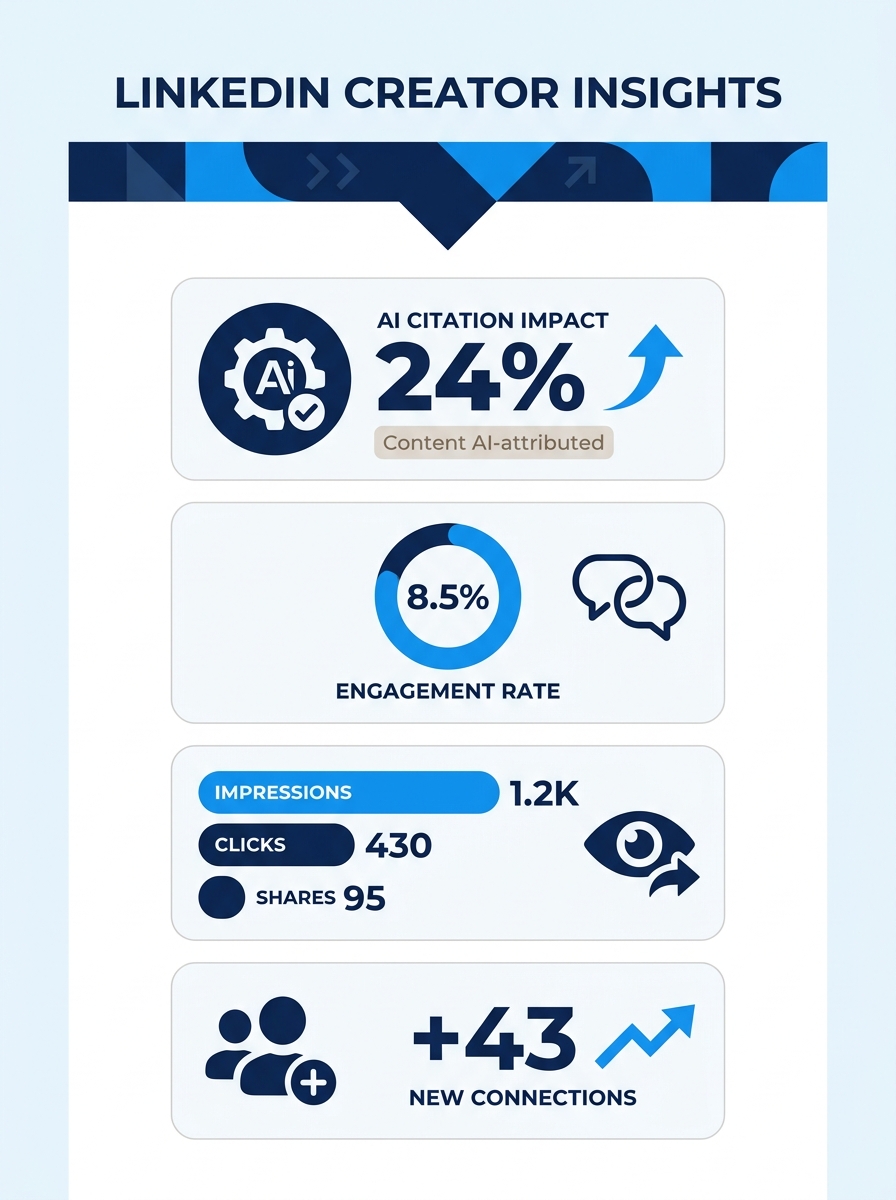
4.5LinkedIn emerged as the second most cited domain across ChatGPT, Perplexity, and Google AI Mode, appearing in 11 percent of all AI-generated answers, according to Forbes contributor Jodie Cook in a June 28 analysis that positions LinkedIn optimization as a critical strategy for professionals competing for AI visibility. Original LinkedIn content drives 95 percent of AI citations, while reshared posts generate no citation value, the analysis found.
TL;DR: LinkedIn ranks as the second most cited domain across major AI platforms, with original posts driving 95% of citations—making LinkedIn optimization essential for professionals seeking AI-driven client referrals.
Cook, who grew her LinkedIn following from 7,000 to 56,000 connections through consistent posting strategy, outlined five tactics for professionals aiming to appear in AI-generated expert recommendations: claim ownership of a single term or concept, verify profile messaging through AI analysis, build a unique vocabulary through regular original posts, craft a results-focused summary paragraph, and grow account reach through daily engagement.
The guidance arrives as AI search interfaces increasingly replace traditional search engines for professional recommendations, with users asking ChatGPT to identify experts, coaches, and consultants by specialty. “When someone wants a coach, a consultant, or an expert in your field, the model decides who to mention,” Cook wrote in the Forbes analysis.
LinkedIn’s Rising Role as AI Citation Source
The 11 percent citation rate positions LinkedIn behind only one other domain across the three major AI platforms analyzed. The citation advantage stems from LinkedIn’s structured professional profiles, which large language models parse for credibility markers including work history, published content, awards, and engagement metrics.
Cited authors post at least five times per month, according to Cook’s analysis. The posting frequency threshold establishes a baseline for professionals seeking AI visibility, separating active content creators from dormant profile holders across LinkedIn’s one billion member base.
The citation mechanism favors original content over engagement tactics. Professionals who comment on others’ posts without publishing their own material generate no citation value, regardless of engagement volume. The 95 percent original-content citation rate reflects how AI models prioritize authored work when building expert recommendations.
The Single-Term Strategy
Cook’s primary tactic centers on term ownership—selecting one phrase or concept and reinforcing it through consistent use across posts, profile sections, and published content. The strategy mirrors traditional public relations positioning but targets AI parsing rather than human editorial decision-making.
“Choose the term you want attached to your name for the next decade, then say it everywhere,” Cook advised. She cited her own 15-year identification as a “social media expert” following a 2011 agency launch, noting that journalists continue requesting commentary on that topic despite her subsequent business sale.
The single-term approach addresses AI summarization challenges. Large language models struggle to categorize professionals who discuss multiple topics without clear hierarchy, defaulting to generic descriptions or omitting the profile from recommendations entirely. Concentrated expertise around one term creates unambiguous training data for AI citation logic.
Professionals should test their current positioning by copying their full LinkedIn profile into ChatGPT with the prompt: “Analyze this information from my LinkedIn profile and tell me the number one topic you would expect me to talk about most,” according to Cook’s method. Discrepancies between the AI assessment and intended positioning signal needed profile revisions.
Original Content Drives 95 Percent of Citations
The citation breakdown reveals a binary divide: original posts generate nearly all AI mentions, while reshared content contributes nothing to visibility regardless of engagement metrics. The finding contradicts common LinkedIn growth tactics that emphasize curation and commentary over original authorship.
Cook recommended building a proprietary vocabulary through consistent posting around chosen terms. “Write your posts around the terms you want to own, the beliefs your audience comes to you for, and what a day in your world looks like,” she wrote. The vocabulary repetition trains AI models to associate specific language patterns with individual professionals.
The approach aligns with broader shifts in LinkedIn content moderation that now flags generic AI-generated posts, forcing professionals to develop distinct voices rather than rely on templated language. Professionals must balance original thinking with strategic keyword repetition to achieve both human engagement and AI citation.
Profile and Summary Optimization Tactics
Cook outlined two profile sections that disproportionately influence AI citations: the summary paragraph and credibility stacking. The summary should open with a single outcome-focused sentence identifying the specific result delivered to a defined client group, followed by a paragraph listing awards, training, experience, and client wins without “false modesty.”
She provided a ChatGPT prompt for summary generation: “Using everything you know about me, create a simple one-line outcome I create for a specific group of people (my dream clients). This is going to be in my summary.” The prompt uses AI to craft the exact language that AI models prioritize in citation decisions.
Account size influences citation weight, according to the analysis. Cook recommended connecting with ten new professionals daily, each with personalized messages, and maintaining a commenting strategy that positions professionals in front of target audiences. The growth tactic increases profile authority signals that AI models reference when determining expert credibility.
The optimization framework assumes AI models evaluate LinkedIn profiles similarly to how traditional search engines assess website authority—through content volume, update frequency, network size, and engagement patterns. Professionals who treat LinkedIn as a publication platform rather than a networking tool gain citation advantages.
Why This Matters Now
Job seekers and mid-career professionals face a fundamental shift in how potential employers, clients, and collaborators discover expertise. Traditional recruitment channels—job boards, referrals, and LinkedIn Recruiter searches—now compete with AI-driven discovery, where ChatGPT and similar tools field questions like “Who should I hire for [specialty]?” and return named recommendations based on parsed LinkedIn content.
The 95 percent original-content citation rate creates immediate action items for professionals who have built LinkedIn presence through commenting, liking, and resharing without publishing original posts. Those engagement tactics—while valuable for network building—contribute zero weight to AI visibility. Professionals must shift to authorship, publishing at least five posts monthly around a clearly defined expertise area to qualify for AI citations.
The single-term positioning strategy conflicts with common career advice encouraging professionals to highlight diverse skills and experiences. But AI summarization rewards focused expertise over breadth. A professional known for “career transition coaching” will rank in relevant ChatGPT queries; one who discusses “leadership, productivity, wellness, and networking” may rank in none. The choice between human recruiter appeal and AI discoverability will define LinkedIn strategy for the next several years as both channels mature simultaneously.