
 4.9
4.9 4.5
4.5When it comes to creating a resume, most job seekers focus on the essentials: work experience, education, and skills. While these sections are necessary, including additional strategic sections can set you apart from other applicants. Even if recruiters don’t specifically ask for them, these sections can provide context, highlight your unique value, and demonstrate that you’re a proactive, well-rounded candidate.
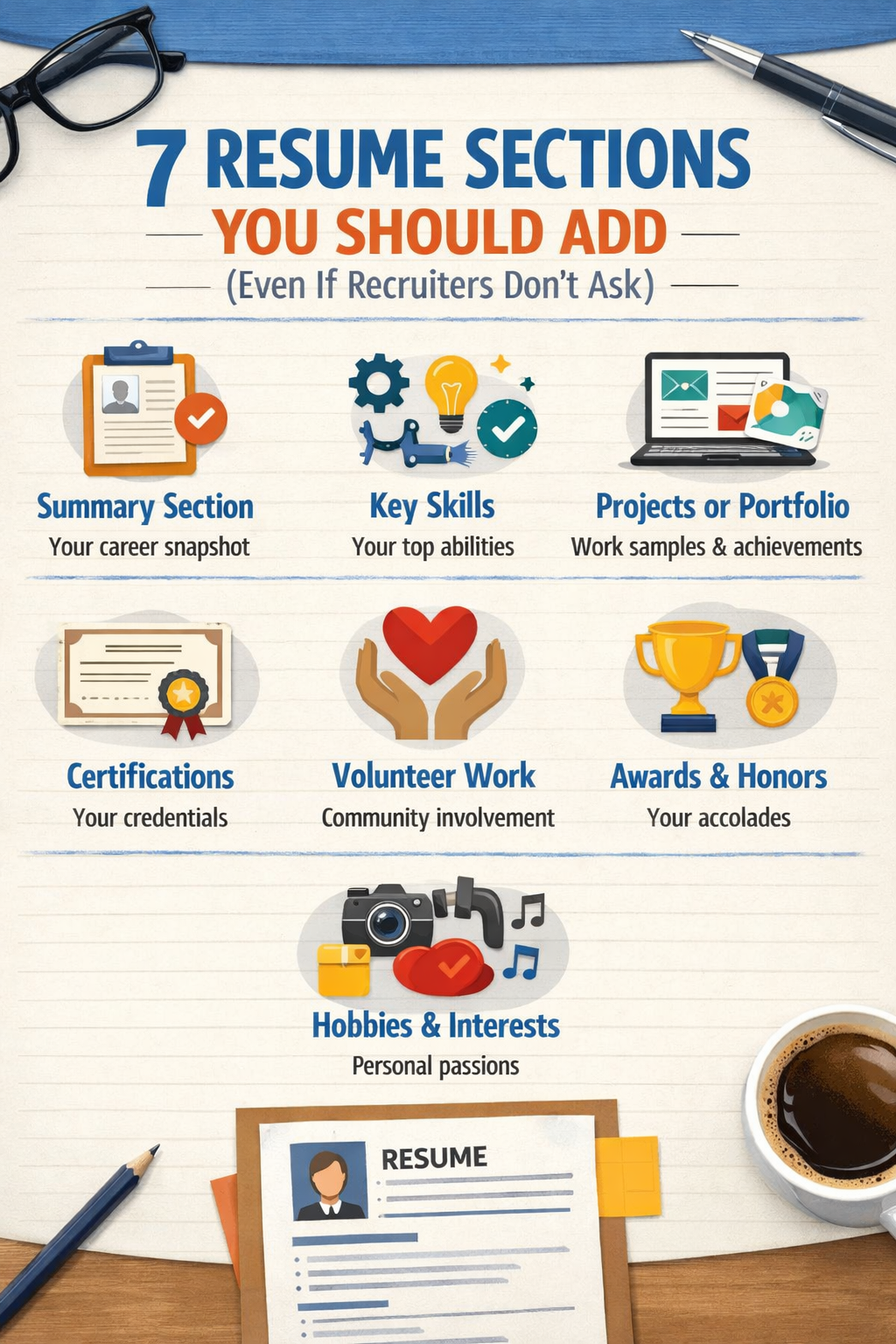
Here, we’ll explore 7 resume sections you should consider adding, why they matter, and how to optimize them for 2026.
1. Professional Summary or Profile
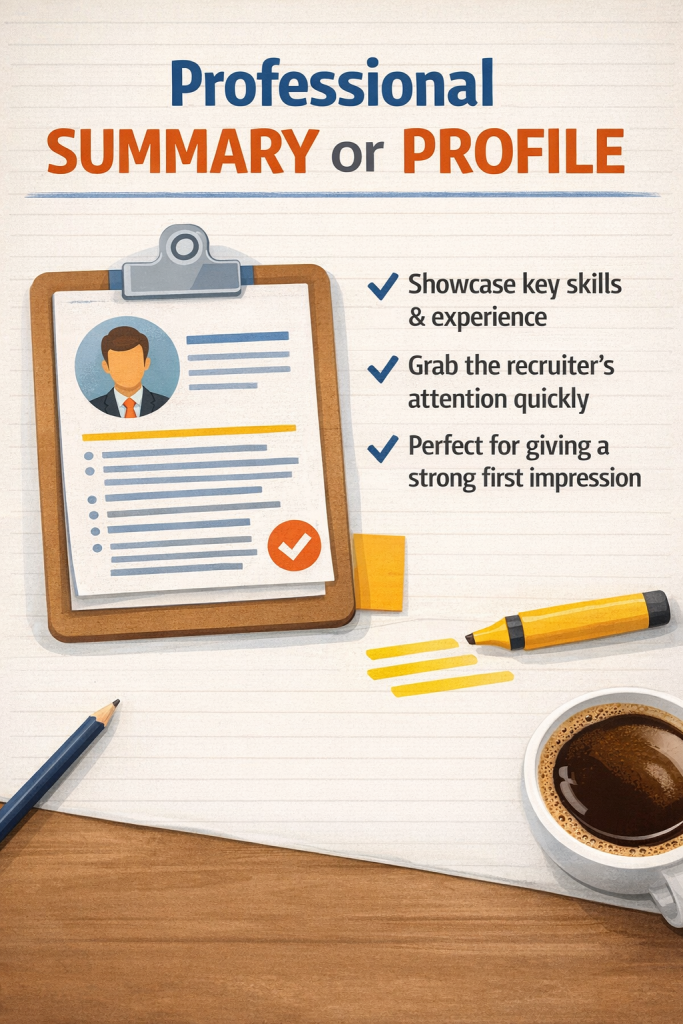
A professional summary is a brief, high-impact section at the top of your resume that introduces who you are, what you do, and the value you bring. Unlike an objective statement, which often focuses on what you want, a summary emphasizes what you can offer to the employer.
Why it matters:
- Captures attention immediately; recruiters often spend only 6–10 seconds on a first pass.
- Highlights your top skills, years of experience, and key achievements.
- Tailors your resume to the job, signaling relevance from the start.
Tips:
- Keep it concise: 3–5 sentences or bullet points.
- Include measurable achievements where possible.
- Use industry-specific keywords to pass AI screenings.
Example:
“Data analyst with 5+ years of experience in healthcare analytics. Skilled in SQL, Python, and Tableau. Successfully led projects improving patient outcomes by 20% through predictive modeling and reporting.”
2. Key Skills or Competencies
A dedicated skills section gives recruiters and AI tools a clear snapshot of your expertise. This goes beyond the skills mentioned in your work experience, allowing you to highlight technical proficiencies, soft skills, and niche abilities.
Why it matters:
- Makes your resume AI-friendly; automated screening often scans for key skills.
- Quickly communicates your areas of expertise to human readers.
- Helps recruiters match you to roles you may not have explicitly applied for.
Tips:
- Organize skills into categories (e.g., Technical, Analytical, Soft Skills).
- Prioritize skills mentioned in the job description.
- Avoid generic terms like “hardworking” without context.
Example:
Technical Skills: SQL, Python, Tableau, Excel
Soft Skills: Leadership, Communication, Problem Solving
3. Certifications and Professional Development

Certifications demonstrate that you’re committed to continuous learning and staying up-to-date with industry standards. Even if recruiters don’t request them, this section signals that you’re proactive and skilled.
Why it matters:
- Adds credibility to your resume and validates your skills.
- Shows initiative and dedication to professional growth.
- Can differentiate you from other candidates with similar experience.
Tips:
- Include completion dates and issuing organizations.
- Prioritize certifications relevant to the role.
- Include both formal and online certifications (Coursera, Udemy, LinkedIn Learning).
Example:
- Google Analytics Certified – 2025
- PMP Certification – Project Management Institute, 2024
4. Projects or Portfolio Highlights
Including a section on key projects or portfolio work allows you to showcase practical experience beyond your job titles. This is particularly valuable for roles in tech, marketing, design, and consulting.
Why it matters:
- Demonstrates real-world application of your skills.
- Provides evidence of measurable impact and problem-solving abilities.
- Offers talking points for interviews.
Tips:
- Include the project title, your role, and key results or outcomes.
- Use numbers or percentages to quantify impact.
- Link to an online portfolio, GitHub, or case studies if applicable.
Example:
“Developed a marketing automation workflow that increased lead conversion by 25% in 6 months.”
5. Volunteer Work or Community Involvement

Volunteer experience isn’t just a nice-to-have; it can highlight leadership, teamwork, and social responsibility. Many recruiters value candidates who contribute outside of work, as it demonstrates initiative and well-roundedness.
Why it matters:
- Provides insight into your values and character.
- Highlights transferable skills such as project management, coordination, and communication.
- Can fill gaps in your professional history.
Tips:
- Focus on roles and responsibilities that demonstrate relevant skills.
- Quantify impact whenever possible.
- Include notable achievements, awards, or recognitions.
Example:
“Organized a community fundraising event raising $10,000 for local food banks, leading a team of 15 volunteers.”
6. Awards and Recognitions
A dedicated section for awards, honors, or recognitions can boost credibility and demonstrate excellence in your field. Even minor recognitions can make a difference if they showcase initiative or outstanding performance.
Why it matters:
- Differentiates you from other candidates with similar qualifications.
- Shows that your contributions have been recognized by peers or supervisors.
- Reinforces achievements mentioned elsewhere in your resume.
Tips:
- Include the awarding body and year received.
- Highlight awards relevant to your industry or role.
- Avoid listing too many minor accolades; focus on those that add value.
Example:
- Employee of the Month – ABC Corp, 2024
- Best Innovation Award – XYZ Marketing Team, 2023
7. Interests and Hobbies
While optional, including relevant interests or hobbies can humanize your resume and show that you have a balanced life. For creative or customer-facing roles, this section can also demonstrate traits like creativity, leadership, or teamwork.
Why it matters:
- Gives recruiters talking points during interviews.
- Shows personality and cultural fit.
- Can highlight transferable skills, e.g., leadership in sports or event organization.
Tips:
- Keep it professional and relevant.
- Avoid generic statements like “reading” or “traveling” without context.
- Emphasize activities that show skills applicable to the role.
Example:
- Amateur photographer – organized and led local photo exhibitions
- Volunteer coach for youth soccer league – teamwork and leadership
Bonus Tips for Adding Extra Sections
- Tailor sections per application: Not every extra section will be relevant to every job.
- Be concise: Additional sections should enhance your resume, not overwhelm it.
- Quantify achievements: Numbers, percentages, and outcomes make your resume stand out.
- Stay AI-friendly: Use standard headings so automated systems can parse your resume easily.
Conclusion
Adding strategic sections to your resume—even when recruiters don’t request them—can make you stand out in a crowded applicant pool. Sections like professional summaries, skills, certifications, projects, volunteer work, awards, and hobbies provide a more complete picture of who you are, what you can do, and why you’re a strong fit for the role.
Remember, the goal is to make your resume both AI-friendly and human-friendly, showcasing your accomplishments, transferable skills, and unique value. By thoughtfully including these sections, you increase your chances of getting noticed, landing interviews, and ultimately securing the job you want in 2026 and beyond.