


 4.9
4.9 4.5
4.5Jennifer Walton, founder of Sky Nile Consulting and former brand strategy leader at Fortune 100 organizations, published guidance on July 16 arguing that single-company, decades-long tenure no longer defines career success and that professionals navigating the modern workforce best favor breadth of experience over traditional loyalty, according to Forbes.
TL;DR: Jennifer Walton of Sky Nile Consulting says modern career success requires abandoning the single-company tenure model in favor of breadth over depth, addressing a generational standoff over whether hardship should be a prerequisite for legitimacy.
Expertise Without Three-Decade Commitment
Walton’s framework centers on a shift she observed across her decade-plus advising leaders through reinvention: professionals who build lasting careers have stopped chasing the decades-long tenure at one employer that once signaled commitment. “Expertise is still very real and necessary, it just doesn’t require 30 years to build anymore,” Walton said in the Forbes piece.
The Sky Nile founder attributes the change to professionals operating with more information than any prior generation while facing an unstable world. She described breadth over depth as “a rational response” rather than a lack of commitment, though she cautioned that the information flood strips away context even as it expands access. “You cannot always trust the perspectives feeding you information, and life is best lived personally, not vicariously,” Walton told Forbes.
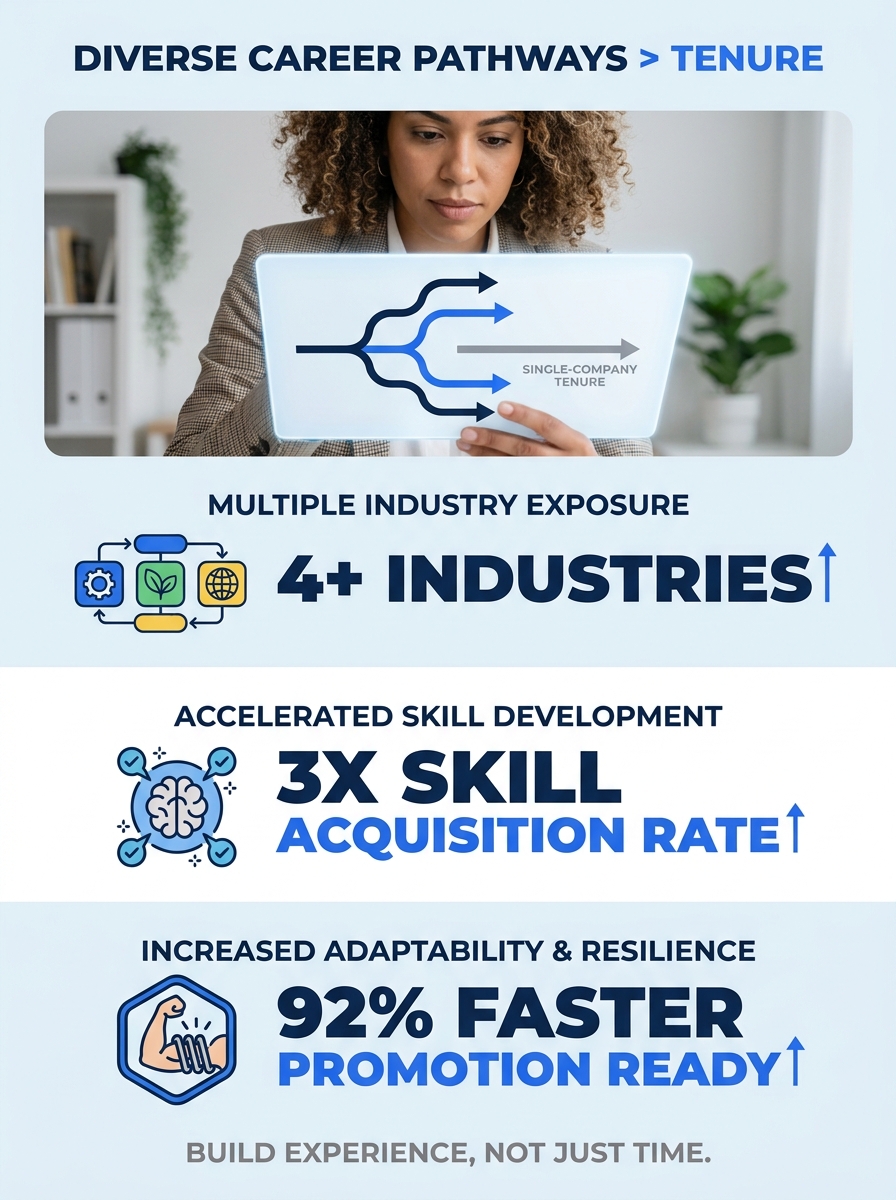
The framework addresses what Walton characterized as confusion rather than crisis: five generations sharing one workplace with no consensus on what successful careers look like anymore. Professionals who learn to navigate that condition rather than resist it build careers that last, she argued.
Generational Standoff Over Suffering as Prerequisite
Walton identified a conflict playing out across leadership teams: tenured executives who credit difficult career climbs for their success, and younger professionals no longer willing to accept hardship as the price of legitimacy. Leaders who endured tough rises—often tougher for those with marginalized identities—tend to view that struggle as formative, Walton observed. Younger workers are asking why suffering should be a prerequisite for growth at all.
“They’re imagining careers built around fair compensation, meaningful contribution, and a version of work-life balance rooted not in negotiated hours, but in genuine harmony between output and personal freedom,” Walton said. She emphasized that professionals navigating this shift best are not rejecting ambition but redefining success with boundaries rooted in mutual respect.
Research supports the friction Walton described while complicating it. A study on generational diversity and shared leadership found that teams spanning multiple generations experience real misunderstanding from differences in values and communication norms, reducing cohesion. The same research showed that shared leadership structures—which distribute decision-making rather than concentrating it with the most senior voice—consistently offset that friction.
A meta-analysis in the Journal of Business and Psychology pooling nearly 20,000 workers found that generational membership itself weakly predicted job satisfaction, organizational commitment, or intent to leave once other factors were controlled. The research suggested much of what appears as generational clash reflects differences in career stage, role, or personal values unrelated to birth year.
Psychological Pivots and Internal Metrics
Walton stressed that career pivots are often psychological, urging professionals to prioritize internal success metrics over external validation. Her framework argues that true influence now stems from driving meaningful action rather than traditional authority or social media metrics. “The professionals doing this best aren’t rejecting ambition,” she said.
Future-critical skills in Walton’s model include discernment and genuine human connection, as artificial intelligence accelerates work without replacing human understanding. This aligns with guidance career changers receive about translating experience across industries, where the psychological barrier of reframing prior accomplishments often matters more than skill gaps.
Walton’s core advice: plan flexibly and maintain an open mind, recognizing that careers are inherently non-linear. The Sky Nile founder built her consulting practice after leading brand strategy across public and private sector organizations, applying the same discipline she used turning fractured brand narratives into competitive advantage to the stories individuals tell about their own careers.
Strategy Implications
Walton’s framework lands as employment gaps lose stigma and professionals face extended job searches averaging beyond 11 weeks. Her emphasis on breadth over loyalty validates what mid-career changers already experience: that translating value across industries matters more than accumulating years at a single employer.
For job seekers, the practical implication centers on how to present non-linear career paths. Walton’s framing of breadth as rational rather than uncommitted provides language for explaining moves that might once have signaled instability. Résumés and interviews should emphasize what diverse experience builds—discernment, adaptability, cross-functional fluency—rather than apologize for missing the decades-long tenure story.
The generational friction Walton identified affects how hiring managers read applications. Younger candidates who frame boundaries as mutual respect rather than demands may find better reception with interviewers who share Walton’s view that suffering shouldn’t be prerequisite. Meanwhile, mid-career professionals switching fields can position pivots as psychological recalibrations toward internal success metrics, not external validation hunting—a narrative that separates strategic reinvention from reactive flight.