


 4.9
4.9 4.5
4.5Executive-level job candidates should prepare five core leadership stories and tailor their messaging to each stakeholder rather than relying on traditional interview strategies, according to Dr. Kyle Elliott, a tech career coach who published guidance through Forbes Coaches Council on June 30, 2026. Elliott’s framework addresses preparation gaps for senior leaders navigating six-or-more-interview processes that often include formal presentations and board conversations.
TL;DR: Career coach Dr. Kyle Elliott released a four-step executive interview framework on June 30 emphasizing pre-prepared leadership stories, audience-specific tailoring, and external coaching support for C-suite candidates.
The Five-Story Preparation Method
Executive candidates should develop and memorize five specific narratives before entering the interview cycle, Elliott advises. The stories should cover a candidate’s biggest accomplishment, a failure and recovery, an instance of influencing without authority, a process improvement, and handling an underperforming employee. Elliott describes the approach as “preparing like a politician”, returning to core talking points regardless of how questions are phrased.
The five-story structure allows candidates to appear calmer and more confident by reducing on-the-spot scrambling, according to Elliott, who specializes in working with senior leaders at hyper-growth startups and large technology companies. The stories remain consistent across multiple stakeholder conversations, but candidates adjust emphasis and company-specific connections based on each audience.
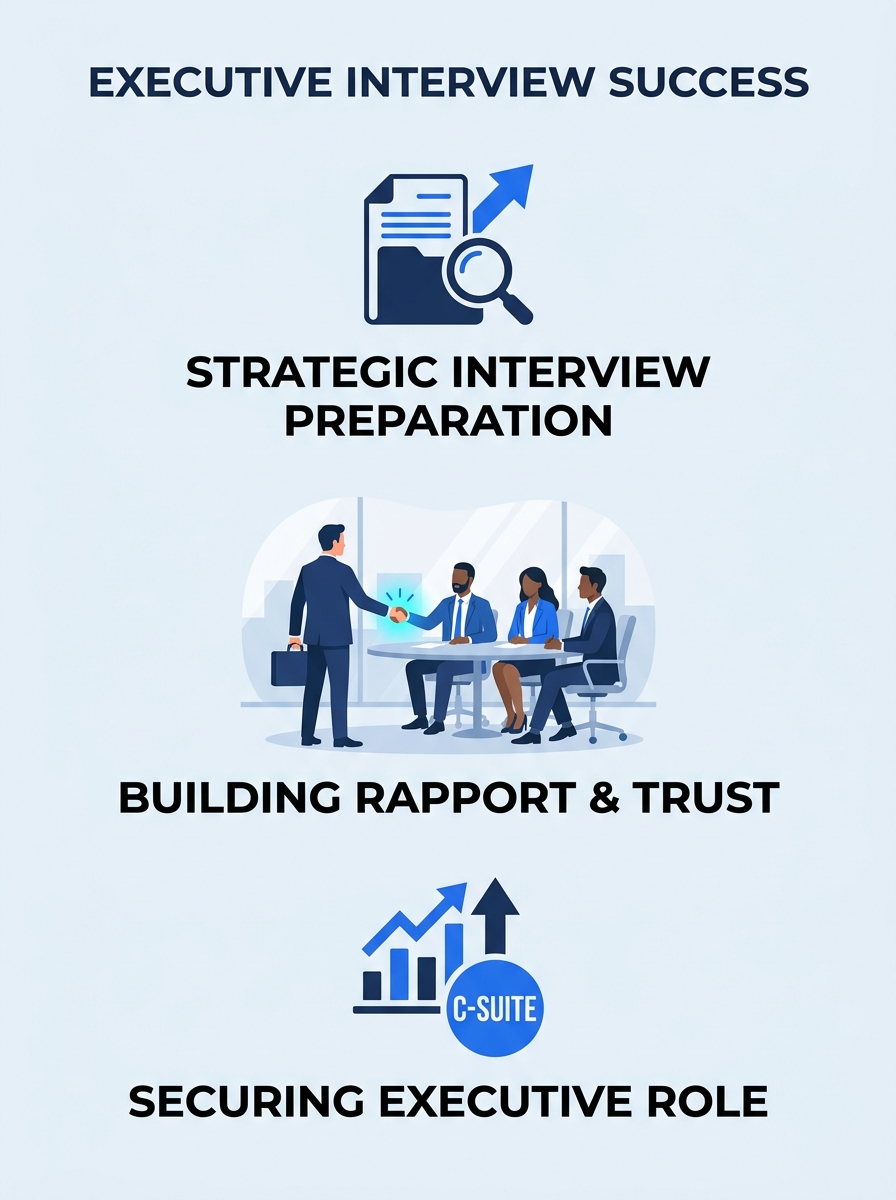
Stakeholder-Specific Message Tailoring
Executive interviews typically involve conversations with executive recruiters, hiring managers, skip-level leaders, direct reports, executive peers, and in some cases board members, Elliott notes. Each stakeholder evaluates different attributes: recruiters focus on career trajectory and cultural fit, direct reports want to understand day-to-day leadership style, and executive peers assess collaboration potential.
Elliott illustrates the tailoring approach with a product launch example. When speaking with an executive recruiter, a candidate might emphasize industry experience and complexity level. The same story told to future direct reports would highlight team building, roadblock removal, and motivation tactics during the launch chaos. The core narrative remains unchanged, but the angle shifts to address what each audience member “actually cares about,” Elliott said in the June 30 post.
Articulating Unique Value Propositions
At the executive level, competence is assumed across all candidates in the interview pool, Elliott writes. Candidates must articulate what he calls their “fabulousness”, a unique value proposition that differentiates them from other qualified leaders. Elliott recommends reviewing recent performance evaluations, letters of recommendation, and LinkedIn recommendations to identify recurring themes.
Candidates uncertain about their differentiators should ask trusted colleagues, “What makes me fabulous? Can you share a specific example of my strengths in action?” according to Elliott. Patterns that surface across multiple feedback sources should be woven into the five core stories prepared in step one. The approach shifts the interview objective from proving competence to “making it easy for them to choose you,” Elliott advises.
External Coaching and Objectivity
Elliott recommends executive candidates partner with a mentor or interview coach who has specific experience with C-suite-level processes. Executive interviews typically involve six or more conversations, a formal presentation, and sometimes board discussions, a rigor that requires specialized preparation support beyond generic interview coaching, Elliott notes.
The external support provides objective feedback on presence and performance while helping candidates focus energy appropriately. Elliott cautions that the supporting coach or mentor must understand executive-level interview dynamics, not simply offer guidance on answering “Tell me about yourself.” Candidates get only one first impression at the executive level, Elliott emphasizes, making preparation intensity critical.
Context and Outlook
The four-step framework arrives as executive hiring processes stretch longer and involve more stakeholders than in previous cycles. Elliott’s emphasis on pre-prepared narratives addresses a structural challenge: senior leaders often default to case-by-case storytelling during interviews, which can appear scattered across six-plus conversations with different audiences. The politician-style talking-point approach creates consistency while allowing tactical flexibility.
The “fabulousness” framing reflects an executive hiring market where technical qualifications are table stakes. Differentiation now depends on articulating leadership philosophy, team-building approach, and strategic thinking style, softer attributes that require practice to communicate clearly under interview pressure. Elliott’s recommendation for specialized coaching support signals that generic interview preparation strategies built for mid-level roles no longer translate effectively to C-suite searches, where presentation rigor and board-level scrutiny demand higher preparation standards.