

 4.9
4.9 4.5
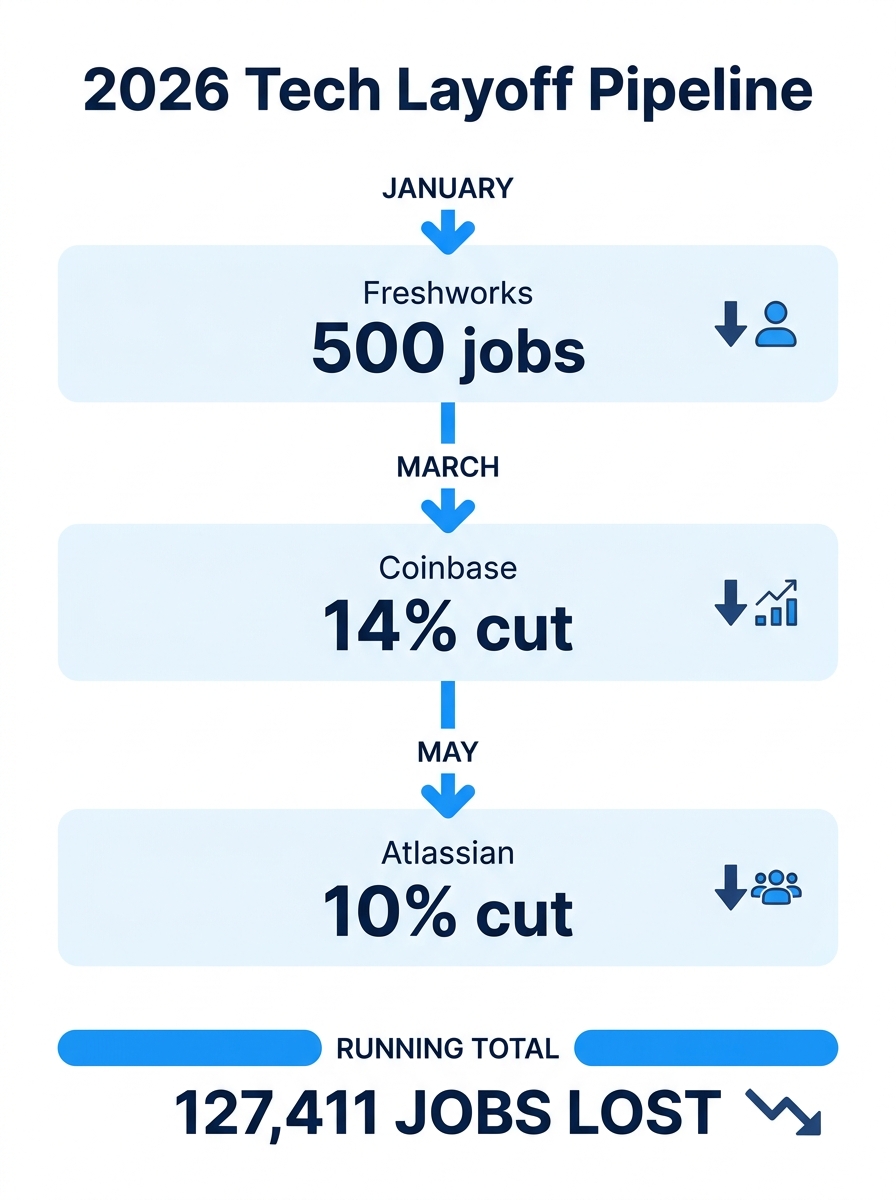
4.5Freshworks cut 500 employees on May 6, eliminating 11% of its global workforce, while posting $228.6 million in Q1 revenue and a 16% year-on-year growth rate. The company isn’t in trouble. CEO Dennis Woodside told investors that over half of Freshworks’ code is now written by AI, and the eliminated roles were redundant because of that shift, not because of shrinking demand. Atlassian made a similar 10% cut in April. Coinbase dropped 14% of staff in early May. According to TrueUp’s layoff tracker, 283 tech companies have cut 127,411 jobs so far this year, averaging 1,003 people per day.
And here’s the thing that should matter to you if you’re job-searching right now: the resumes those displaced workers are sending out were built for a hiring ecosystem that’s dissolving underneath them. AI is simultaneously the reason they lost their jobs and the system screening their applications for new ones. That double bind creates a specific, addressable problem. The rules below are designed for it.
Always lead with what AI cannot replicate on your resume
The roles Freshworks cut tell you exactly what AI is replacing: junior and mid-level developers writing routine code, QA engineers running standard test suites, IT support staff handling first-line tickets, and technical writers producing documentation from templates. The roles they’re hiring for tell you what AI can’t touch yet: senior systems architects, product strategists who connect business goals to technical execution, and AI/ML engineers who build the tools doing the replacing.
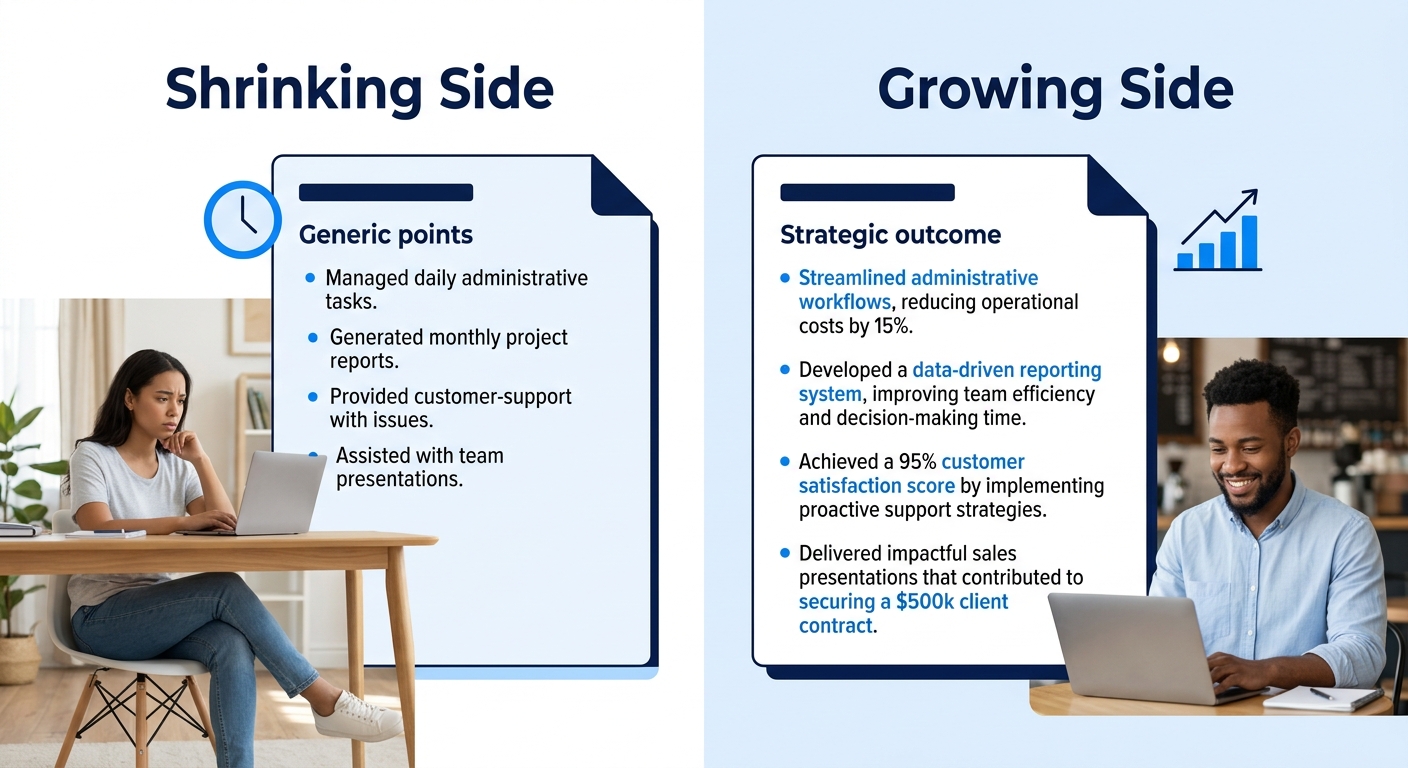
Your resume needs to reflect this distinction clearly. If your bullet points describe work that a well-prompted language model could do (write unit tests, respond to Tier 1 support tickets, generate API documentation), you need to reframe those bullets around the judgment, context-switching, and stakeholder negotiation that made your version of that work human. “Wrote API documentation” becomes “Designed the documentation architecture for a 14-endpoint API serving three distinct developer audiences, reducing onboarding support tickets by 40%.” The specificity, the audience awareness, the measured outcome: those are the things screening systems can’t generate on their own.
If your resume currently reads like a task list, the resume specificity formula for developers walks through the conversion process step by step.
Treat every layoff announcement as a market signal for your resume
When CBS News reported this week that AI accounted for 26% of April’s job cuts, that number is a resume-writing input, not just a headline. Each major layoff announcement reveals which skills a company considers replaceable and which it’s protecting. Freshworks is reinvesting its restructuring savings into its Freshservice IT service management platform and its Employee Experience division. That tells you where they see growth, and it tells you what language to use when applying to companies in the same sector.
A career resilience strategy in this market means updating your resume’s keyword emphasis every time a major company announces AI-driven cuts. The pattern across Freshworks, Atlassian, and Coinbase is consistent: pure execution roles are disappearing, while roles that require cross-functional coordination, customer empathy, and strategic thinking about AI integration are expanding. A survey of 1,000 U.S. hiring managers by Resume.org found that 44% anticipate AI will be the top driver of layoffs going forward.
So when you see those announcements, don’t just feel anxious. Open your resume and ask: does this document position me on the growing side or the shrinking side of that divide? If you need help distinguishing between the two, working with professional resume writers who track these market shifts can save you weeks of guesswork.
Show AI fluency through outcomes, not buzzwords
Employers are now demanding AI skills. But there’s an enormous gap between claiming “proficiency in AI tools” in a skills section and demonstrating that you’ve used those tools to produce measurable results. Hiring managers at companies going through AI transformations are deeply skeptical of vague AI claims because they’ve seen what real AI integration looks like inside their own organizations.
The better approach: describe specific workflows where you used AI tools and what happened because of it. “Used GitHub Copilot to accelerate development of a payment processing module, reducing sprint delivery time from 10 days to 6 while maintaining zero critical bugs across three release cycles” is a resume bullet that survives scrutiny. “Experienced with AI development tools” is a bullet that gets skimmed past.
This matters doubly because of how AI hiring bias operates at the screening stage. Research from Brookings has documented that AI resume screening tools show measurable bias based on perceived race and gender when ranking applicants. The screening systems don’t understand nuance; they pattern-match. Vague AI claims blend into the noise. Specific, quantified outcomes stand out to both algorithms and the humans who review what the algorithms surface. And if your resume is being rewritten by AI tools before submission, be aware of how that can create its own authenticity problems down the line.
Stop optimizing your resume for a single screening layer
The resume screening limitations in the current market are stacking up in ways they never have before. Your resume now passes through an ATS keyword filter, then potentially an AI-powered ranking system (which may use a large language model to score your application against the job description), and then a human reviewer who spends an average of six to eight seconds on a first pass. Each layer has different criteria, and optimizing for one can hurt you with another.
Keyword-stuffing to beat the ATS, for example, often produces resumes that read terribly to the human who receives them. Conversely, a beautifully written narrative resume with no keyword alignment will never reach that human in the first place. The practical answer is layered optimization: use a clean, ATS-compatible format with strong keyword alignment in your skills section and job titles, then write your bullet points in clear, human-readable prose that tells a story of impact. The AI keyword matching approach to resume customization covers this balance in detail.
AI is simultaneously the reason people lost their jobs and the system screening their applications for new ones. That double bind creates a specific, addressable problem.
Yale Insights published research this week showing that AI-driven job market disruption is hitting hardest among recent graduates, who can’t get that critical first role. For experienced workers, the screening mismatch is different but equally frustrating: you have the skills, but the document representing those skills was designed for a hiring pipeline that no longer exists.
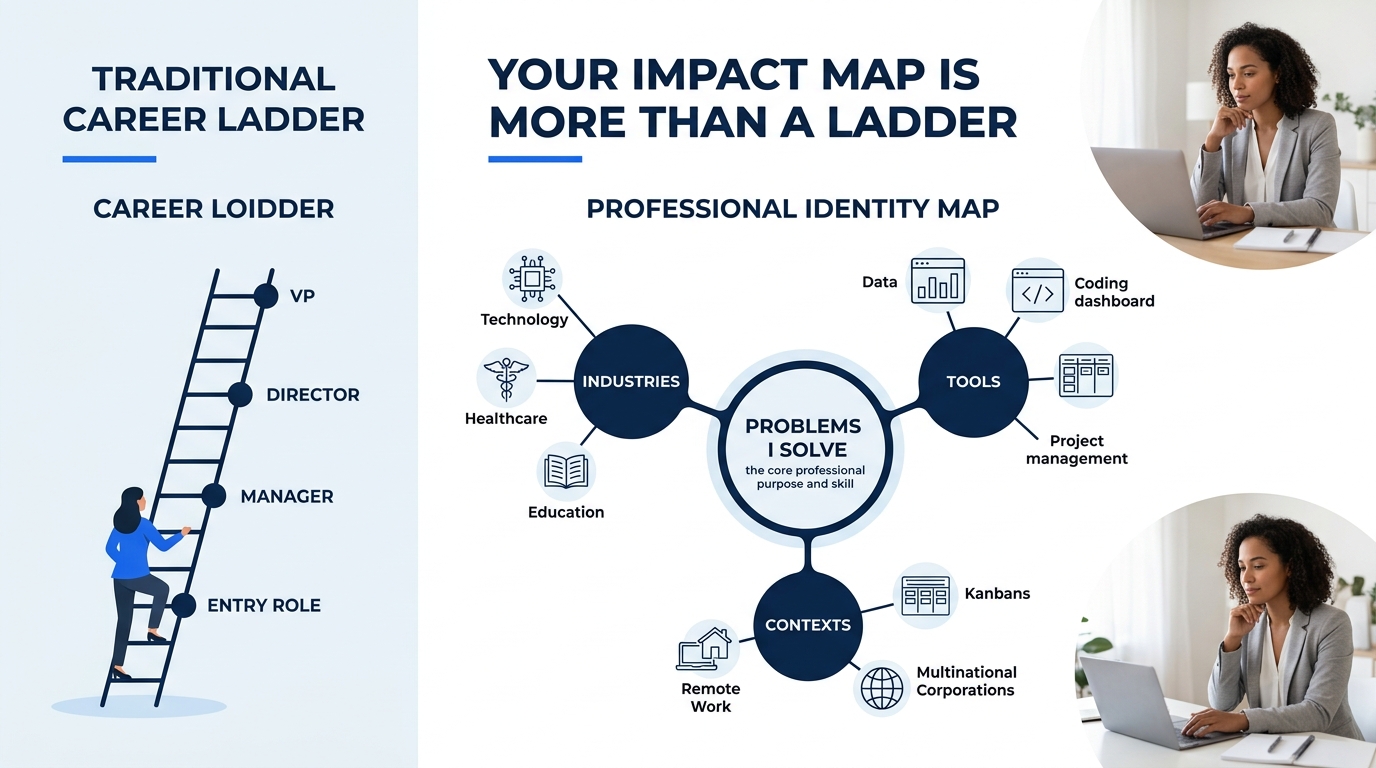
Build your professional identity around problems, not titles
Freshworks didn’t eliminate “Software Engineers.” They eliminated specific functions that AI now performs. The job title survived; the work behind it changed. This distinction matters enormously for how you position yourself on a resume.
When your title is the anchor of your professional identity, every AI-driven restructuring threatens to erase you. When the problems you solve are the anchor, you’re portable. A QA engineer whose resume centers on “ensuring software quality” is competing with automated testing suites. A QA engineer whose resume centers on “identifying the failure modes that automated testing misses in complex distributed systems” is describing a problem that still requires human judgment.
For workers displaced by tech industry layoffs 2026, this reframing is the single highest-leverage change you can make to your resume. The guidance we’ve published on career rebuilding for displaced tech workers goes deeper into this identity shift, including how to talk about layoffs in interviews without sounding defensive. And if your job title has never quite captured what you actually do, a skills-based resume structure can close that gap.
Keep a running inventory of automation-proof work
Here’s a habit that will pay off every time the market shifts: maintain a private document (a simple spreadsheet works) where you log, every month, the work you did that required uniquely human capabilities. Decisions where you overrode an automated recommendation and were right. Conversations where you translated between technical and business stakeholders. Moments where you noticed something a dashboard missed.
This inventory becomes your resume’s raw material during a job search, and it also functions as an early warning system. If you sit down at the end of a quarter and realize that nothing you did last month required judgment, creativity, or cross-functional communication, that’s a signal. It means your role is migrating toward the automation-vulnerable category, and you have time to do something about it before the restructuring memo arrives.
The professionals adapting best to this market are the ones who’ve been tracking this kind of work all along. They aren’t scrambling to reconstruct accomplishments from memory when they suddenly need a resume. They have a library of specific, documented moments that demonstrate exactly the kind of value AI can’t replicate.
Tip: Set a recurring 15-minute calendar reminder at the end of each month. Open your inventory doc and log 3-5 examples of work that required human judgment, relationship management, or creative problem-solving. Future-you, writing a resume under pressure, will be grateful.
When These Rules Break Down
Every principle above assumes you’re operating in a hiring market where companies know what they want. The honest truth is that many companies going through AI transformations don’t know what they want yet. They’re cutting roles based on what AI can do today, but they’re hiring for roles they haven’t fully defined, using screening tools they don’t fully understand.
In that environment, there will be moments when a perfectly crafted, strategically aligned resume still gets rejected by an AI screening system that was configured poorly, or overlooked by a hiring manager who’s drowning in 300 applications and can’t tell the difference between a great candidate and a good one. Brookings and University of Washington researchers have both documented that AI screening tools introduce measurable bias, and no amount of resume optimization on your end can fully compensate for a broken system on theirs.
So yes, follow the rules above. They will meaningfully improve your odds. But also recognize that the resume-to-hiring mismatch isn’t entirely yours to fix. The 127,000+ workers displaced by tech layoffs this year are navigating a system where the rules are being rewritten in real time. Build the best resume you can, track the market signals, maintain your inventory of human-value work, and understand that persistence in an irrational market is itself a skill. The companies worth working for will eventually figure out what they’re looking for. Your job is to be ready, with evidence in hand, when they do.