

 4.9
4.9 4.5
4.5A job seeker who sent 87 applications and received two interview callbacks—a 2.3 percent response rate—documented an immediate improvement after switching from a generic resume to tailored applications for each role, according to a June 16 account published in AI Plain English by Kasvikis Evaggelos.
TL;DR: A documented case study shows a job applicant’s interview rate improved after abandoning a universal resume in favor of keyword-optimized, role-specific applications that addressed ATS filtering systems.
Evaggelos described the initial approach as uploading “the same resume I had been using since dinosaurs roamed the Earth” to dozens of postings without customization. The shift involved analyzing job descriptions before each submission, identifying required keywords, optimizing the resume for applicant tracking systems, generating custom cover letters, and preparing interview questions in advance, the author wrote.
The Generic Resume Problem
The account identifies a mismatch between traditional job search behavior and current hiring infrastructure. Evaggelos noted that applicants now compete against candidates who tailor every application and optimize for ATS parsing, while many job seekers still send identical resumes to multiple employers.
“Most applicants focus on quantity. The people getting interviews focus on relevance,” Evaggelos wrote in the Medium post. The piece argues that two candidates with comparable experience can produce different outcomes based solely on application strategy rather than qualifications.
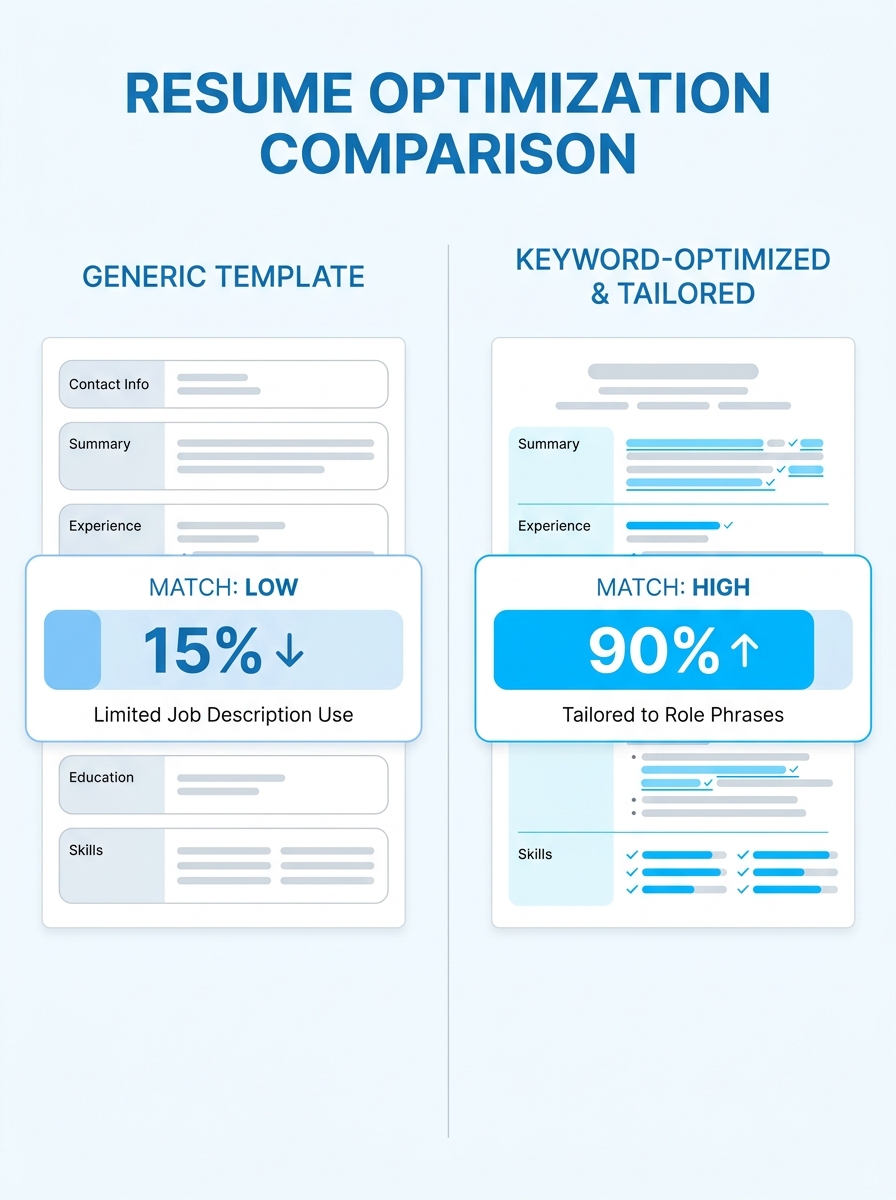
The documented 2.3 percent interview rate from 87 applications aligns with broader trends in ATS-filtered hiring processes, where keyword matching and parsing accuracy determine which applications reach human reviewers. The account does not specify the exact interview rate achieved after implementing the tailored strategy, noting only that the difference was “immediate.”
The Tailoring Method
Evaggelos outlined a five-step process applied before each submission: analyzing the job description, identifying important keywords, optimizing the resume structure, generating a custom cover letter, and preparing role-specific interview questions. The author positioned these steps as presenting existing qualifications “in a way recruiters could actually see” rather than enhancing the underlying credentials.
The method reflects established resume optimization principles that prioritize keyword density and structural parsing over universal template approaches. Evaggelos created a product called the AI Job Hunter System—a collection of prompts, templates, and frameworks—to help other job seekers implement similar tailoring strategies using artificial intelligence tools.
The account frames AI assistance as handling “most of the heavy lifting” in the customization process, reducing the time investment required to produce role-specific applications at scale. The author did not disclose the total number of tailored applications submitted or the resulting interview conversion rate.
Context and Outlook
The documented experience underscores a widening gap between job seekers who treat applications as volume exercises and those who align each submission with specific posting requirements. As nearly 90 percent of employers now use AI to filter resumes before human review, generic applications face structural disadvantages in reaching hiring managers, regardless of candidate qualifications.
The case study arrives as average job search timelines have extended and competition for posted roles has intensified. Evaggelos’s shift from 87 low-conversion applications to an optimized approach mirrors advice from career coaching services that emphasize quality over quantity in modern application strategies.
The AI Job Hunter System product launch indicates growing demand for tools that automate resume tailoring without requiring manual rewriting. The account positions keyword optimization and ATS compatibility as baseline requirements rather than advanced tactics, reflecting how technical filtering has reshaped the front end of hiring pipelines in 2026.