


 4.9
4.9 4.5
4.5A candidate who asked for Rs 65,000 but accepted Rs 50,000 after being promised “significant learning opportunities” resigned two months later for a Rs 75,000 offer from another employer, according to a case shared by Delhi-based entrepreneur Kanika Jain on August 4, 2026. The post drew more than 290 reactions on social media and reignited debate over how employers use vague development promises to justify below-market compensation, according to The Economic Times.
TL;DR: A candidate who settled for Rs 50,000 after requesting Rs 65,000—told the role offered learning opportunities—quit after two months when her workload doubled with no recognition, taking an external Rs 75,000 offer instead.
The Salary Negotiation Breakdown
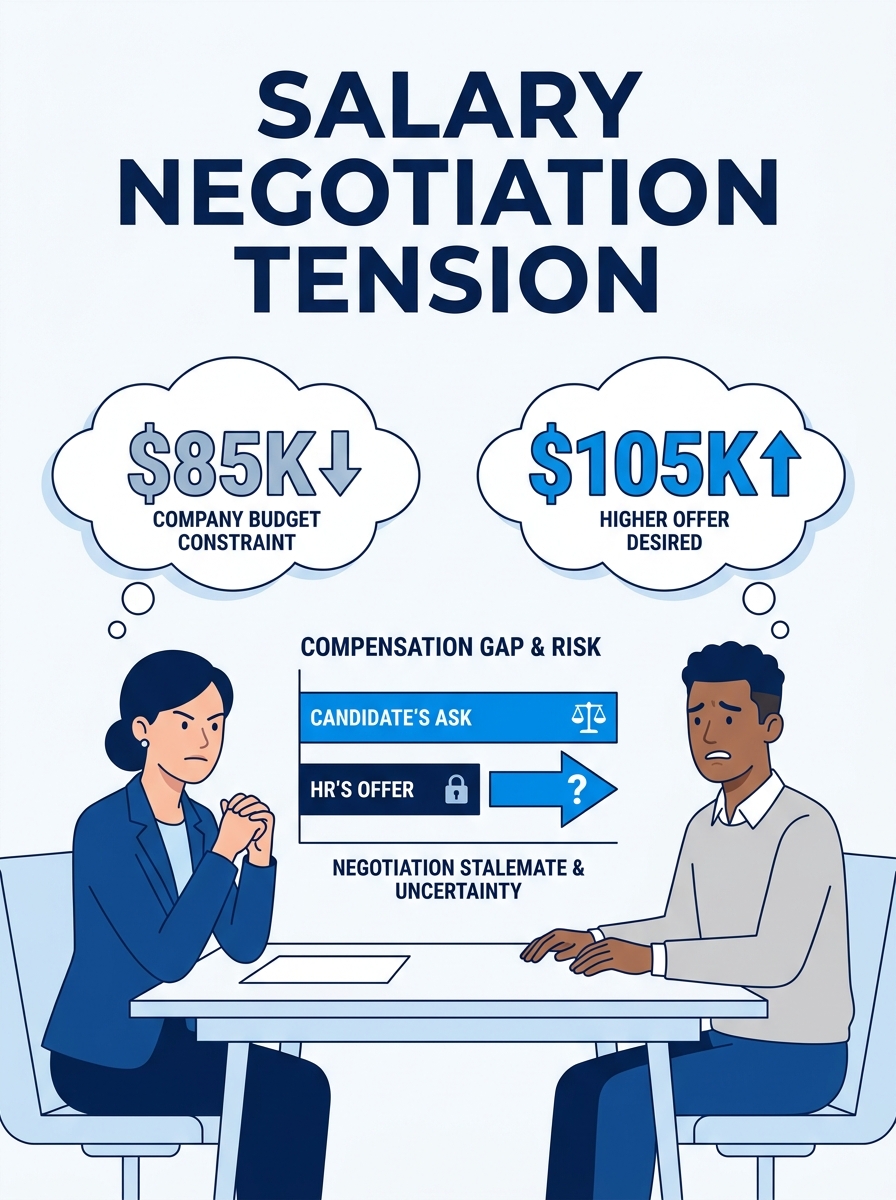
The candidate had been earning Rs 48,000 at her previous employer and asked for Rs 65,000 at the new company, citing her skills, certifications, and experience. HR responded with a Rs 50,000 counteroffer, calling it a “reasonable increase” and telling her that salary expectations needed to be realistic. When she pushed back, HR emphasized that the role offered significant learning opportunities. She accepted the offer hesitantly.
The Rs 50,000 figure represented a 4.2% increase over her request, while the external offer she eventually accepted came in 50% higher than what the first employer paid her.
What Happened During Her Two-Month Tenure
Within two months, the candidate was assigned additional responsibilities beyond her original job description. Her performance remained consistently strong and she met all deadlines, according to Jain’s account. No formal recognition or compensation adjustment followed. Her workload doubled during that period.
She then received an external offer for Rs 75,000 per month and submitted her resignation. Her manager’s response, as shared in Jain’s post: “You should have informed us, we could have done something.”
Jain’s commentary was direct. “When it mattered, nothing was done,” she wrote.
The “Learning Opportunities” Defense
Jain argued that offering below-market salary with the promise of learning opportunities functions as a form of toxic workplace culture. “Do not disregard an individual’s stated worth,” she wrote in the post, addressing employers directly. Her broader point centered on retention: talent stays when respect is shown, not merely when time passes.
The manager’s offer to “do something” came only after the resignation was submitted, not during the two months when workload increased or performance was consistently strong. Multiple commenters on the post flagged this reactive timing as evidence that the company had the budget flexibility all along but withheld it until departure became imminent.
Similar patterns have appeared in other recent cases. A Reddit job seeker documented how immediate offer acceptance cost thousands in unrealized compensation when they skipped counter-negotiation steps entirely.
Company Response and Broader Employer Practices
The manager’s statement—”You should have informed us, we could have done something”—suggests the employer had internal flexibility to adjust compensation but required the candidate to explicitly demand it. The company made no proactive move when workload doubled or when deadlines were consistently met.
The Economic Times noted it could not independently verify the authenticity of the account, which originated as a social media post. Jain did not name the employer or the candidate in her original sharing.
Salary negotiation frameworks typically advise candidates to anchor requests to market data rather than personal financial need, a point reinforced by nine career coaches who urged new graduates to research comparable roles before entering offer discussions.
Why This Matters Now
This case highlights a recurring dynamic in hiring: employers who underpay candidates during onboarding but claim they “would have done something” when those same employees resign for better offers elsewhere. For job seekers and career changers, the lesson is procedural—if an employer has budget flexibility to retain you post-resignation, that flexibility existed during initial negotiations and during your tenure. Promises of learning opportunities do not offset below-market pay unless those opportunities are documented, time-bound, and tied to concrete skill acquisition that you can verify.
The Rs 50,000 to Rs 75,000 jump the candidate secured by switching employers in two months illustrates the financial cost of accepting lowball offers. Workload increases without corresponding compensation adjustments are a red flag, not a pathway to future raises. Managers who say “we could have done something” after you resign are telling you they chose not to act when action would have kept you.
For mid-career professionals and recent graduates entering negotiations, the tactical takeaway is narrow: if an employer counters your ask with vague development language instead of addressing the dollar figure, treat that as a signal that the company views compensation as discretionary rather than market-driven. Ask for the learning plan in writing with timelines and skill benchmarks. If the employer can’t produce that documentation, the “opportunities” are rhetorical cover for underpayment.