
 4.9
4.9 4.5
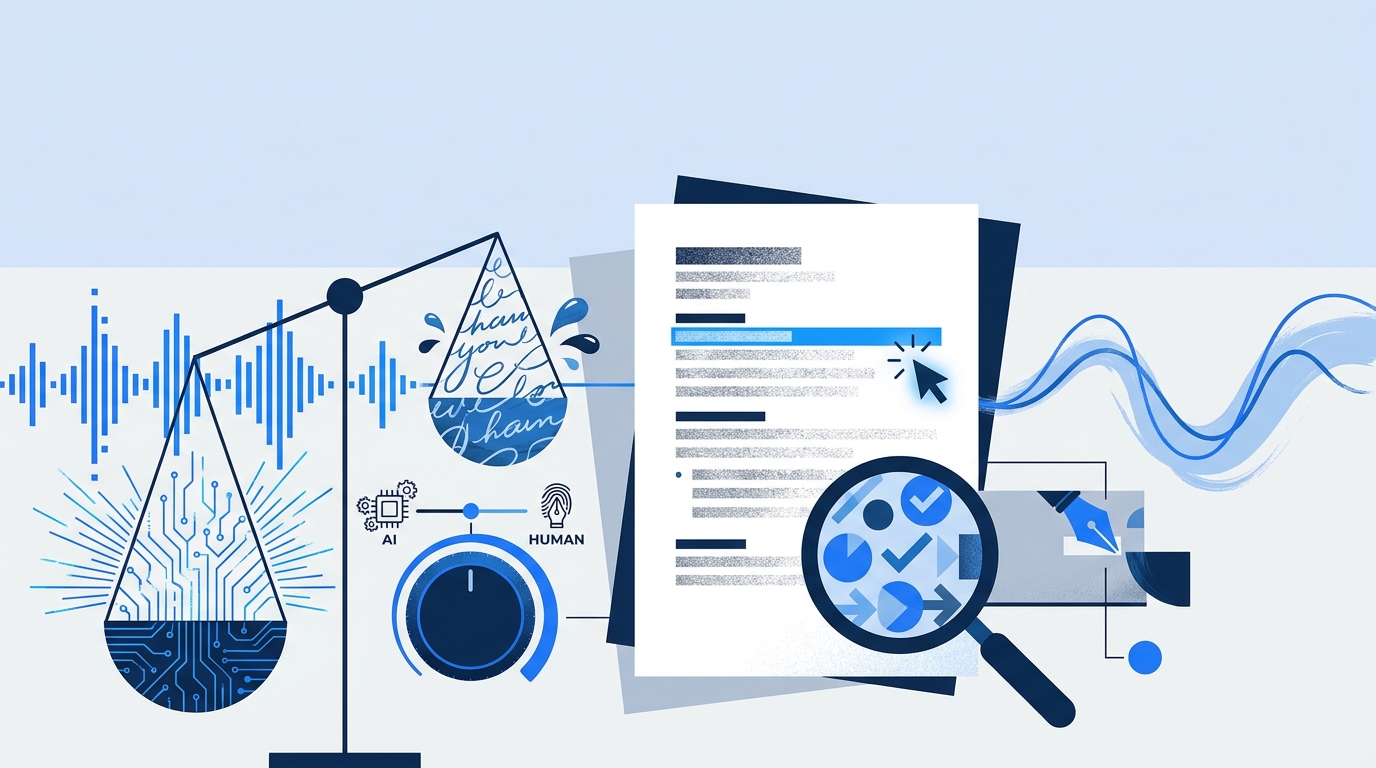
4.5Fifty-three percent of job seekers now use generative AI to write or edit their resumes, and 33.5% of hiring managers say they can spot those resumes in under 20 seconds. The gap between those numbers is the whole problem: AI resume writing authenticity depends on calibration, and overpolished resumes are costing candidates interviews they’d otherwise get.
November 2022: ChatGPT Launches and Resume Writing Shifts Overnight
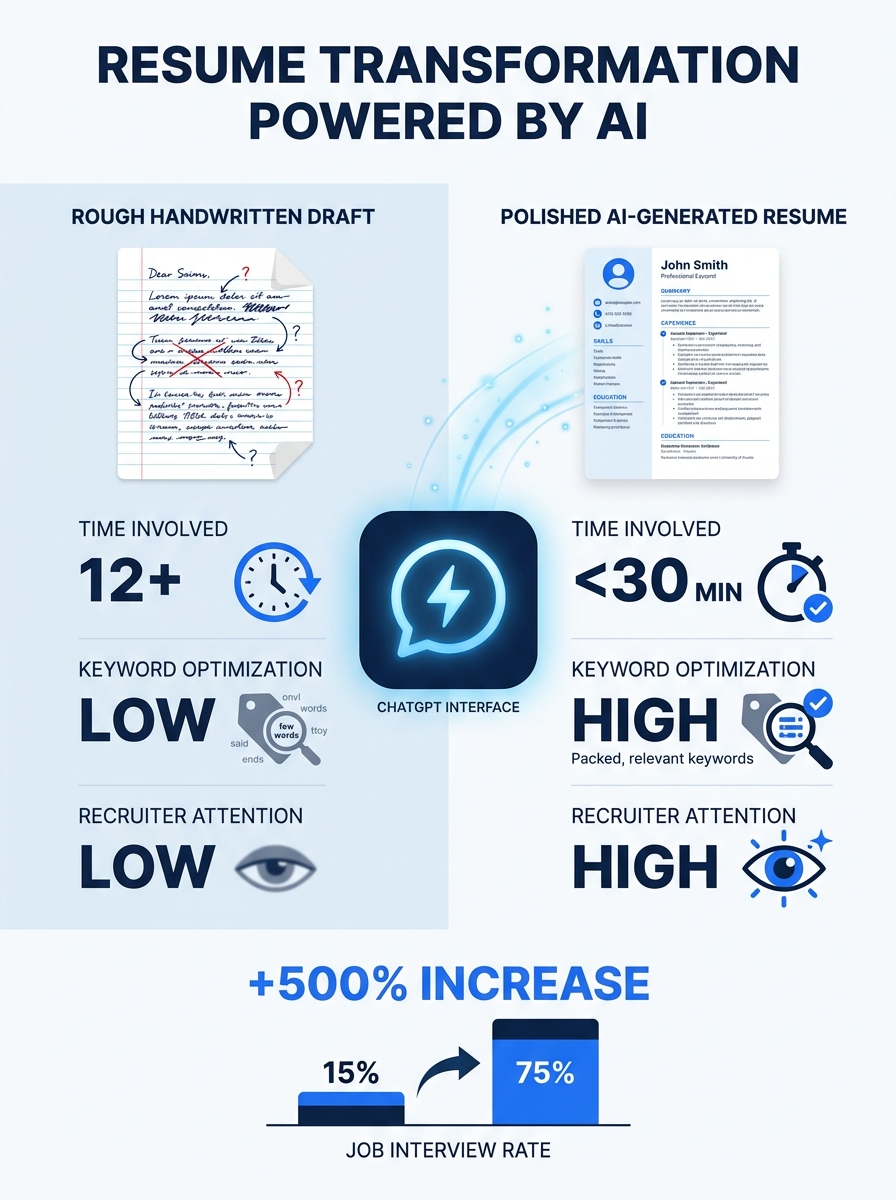
OpenAI released ChatGPT on November 30, 2022, and within weeks, job seekers discovered they could paste a job description and a rough draft into the chat window and receive a polished, keyword-dense resume in seconds. The speed was addictive. The output looked professional. And for the first time, candidates who’d always struggled to articulate their experience had a tool that could generate fluent, confident bullet points on demand.
Adoption accelerated fast. By early 2026, 81% of job seekers had used or planned to use AI somewhere in their application process. Resume builders like those covered in the 2026 Adobe Express and LiveCareer roundup started integrating generative AI features directly into their platforms, making it possible to generate an entire resume from a LinkedIn URL and a job posting.
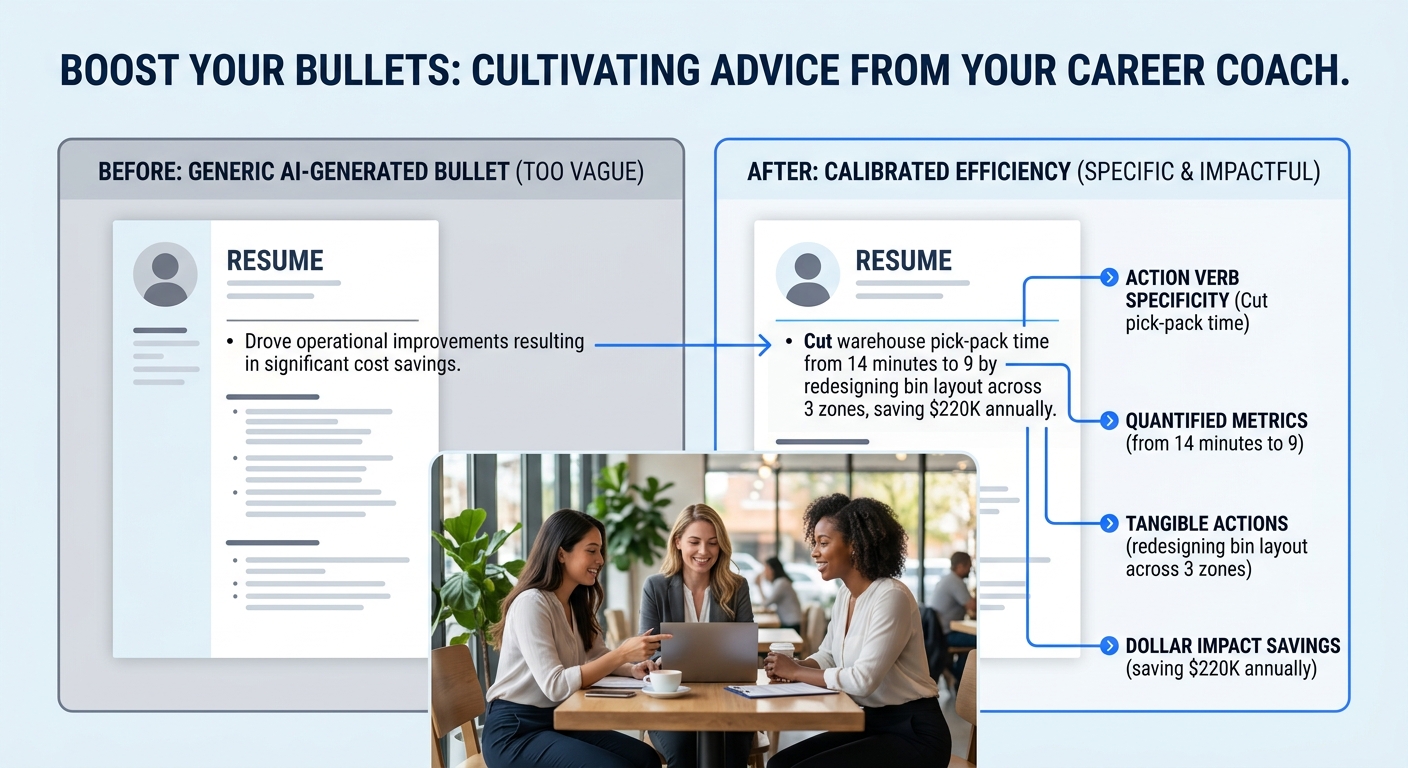
The result was predictable in hindsight. Candidates who had never written a resume bullet with a quantified result were suddenly producing lines like “Spearheaded cross-functional initiatives that drove 40% operational efficiency gains.” The sentences were grammatically perfect. They were also empty: no specifics about what was actually done, by whom, or in what context.
Every Resume Started Sounding the Same
The homogenization showed up first in hiring managers’ inboxes during 2023 and 2024. Ten candidates for the same marketing manager role would submit resumes with nearly identical phrasing: “Drove measurable improvements in customer engagement through data-driven strategies.” The words varied just enough to pass plagiarism checks. The underlying structure and vocabulary were indistinguishable.
This is the overpolished resume detection problem at scale. When AI generates resume content, it pulls from the same training data and optimizes for the same rhetorical patterns. The output converges. Willo’s research on detecting AI-generated resumes identified one of the clearest tells: abrupt shifts in tone between sections. “One section might sound natural and authentic, as if the candidate is genuinely sharing their experience,” their analysis noted, “while another feels detached and overly” polished. That tonal inconsistency—where a clearly human summary sits next to machine-generated bullet points—became the first reliable signal recruiters could name.
AI resume detectors emerged during this period, but their reliability was questionable from day one. These tools analyze patterns like repetition, unnatural sentence structure, lack of personal detail, and predictable vocabulary to guess whether a machine wrote parts of a resume. The catch is they suffer from high false-positive rates and documented bias against non-native English speakers, whose carefully constructed sentences trigger the same flags as AI output.
Warning: AI text detection tools can’t reliably distinguish between AI-assisted writing (where you use AI to polish or draft parts) and fully AI-generated content. A well-written, genuine resume can be incorrectly flagged. Don’t rely on detector scores as your quality benchmark.
Hiring Managers Learn to Spot the Pattern Without Software
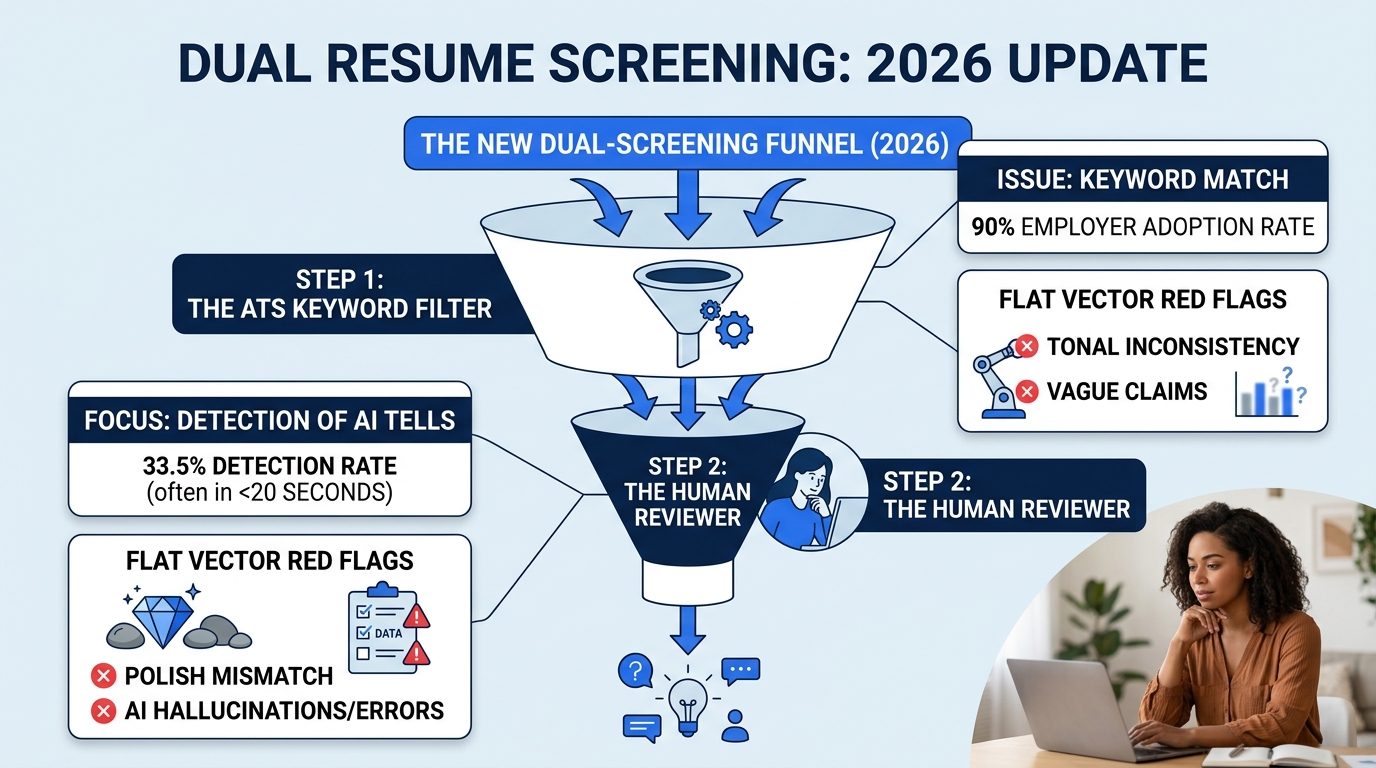
By mid-2025, overpolished resume detection had shifted from a technology problem to a reading-comprehension problem. That 33.5% figure reflects pattern recognition built through thousands of reviews, not algorithmic analysis. Hiring managers weren’t running resumes through GPTZero. They were noticing that the same hollow confidence appeared on resume after resume, and they learned to read past it.
The red flags they identified were consistent. Claims without proof ranked high: “I improved efficiency and drove growth” is meaningless without context, as AiApply’s research documented. What did you improve? By how much? Over what timeframe? The absence of those specifics became the tell, because AI tools generate confident assertions but lack access to the candidate’s actual metrics.
A second flag was consistency mismatch across application materials. If the resume sounds like a McKinsey consultant wrote it but the cover letter has typos and inconsistencies, the gap raises immediate questions. And 19.6% of hiring managers said they’d reject a candidate outright if the resume appeared AI-generated, with studies showing a clear preference for human-written applications over AI-polished ones.
The rejection rate matters because candidates face a double bind. With nearly 90% of employers using AI to filter resumes, the document needs enough keywords and structure to clear ATS software. But it also needs enough human texture to survive the human reviewer who comes next. Write too robotically and you get filtered by a person. Write too casually and you get filtered by software. The calibration lives in the space between those two failure modes.
The Evidence Bank Approach Emerges
The calibration fix that gained traction during late 2025 and into 2026 treats AI as a power tool rather than a ghostwriter. The core concept: build a private document containing raw facts about every project, role, and result you want to reference, then feed that document to the AI with strict instructions to use only what you’ve provided.
This approach solves the biggest authenticity failure in AI-generated resumes: hallucinated specifics. When you give ChatGPT a vague prompt like “write a resume for a project manager,” it invents plausible-sounding metrics. When you give it a structured evidence bank with entries like “Led migration of 340 client accounts from Salesforce Classic to Lightning, completed 3 weeks ahead of 16-week timeline, zero data loss across 2.1M records,” the output stays grounded in real experience. Your personality, context, and specific achievements keep the resume engaging and credible, as Hireflow’s practical guide documented.
The method works in three phases:
- Inventory your raw material. For each role, document the project name, your specific contribution, the tools or systems involved, the scope (team size, budget, timeline), the constraint you faced, and the measurable outcome. Aim for 4-6 entries per position.
- Prompt with constraints. Tell the AI to use only the facts you’ve provided and to ask clarifying questions instead of inventing details. A prompt like “Write a resume bullet for this experience using only the information below—if a metric is missing, flag it instead of making one up” produces dramatically different output than an open-ended request.
- Rewrite the voice layer yourself. The AI handles structure, keyword optimization, and ATS formatting. You handle sentence rhythm, word choice, and tone. This is where resume writing voice preservation actually happens: in the final editing pass where you replace “orchestrated” with “ran” because that’s how you’d actually describe the work.
The AI handles structure and keywords. You handle the voice. That division of labor is the whole calibration.
As one Reddit user in r/jobsearch put it about their own approach: “Use AI to confirm keywords and put some of those in your skills section. Other than that, I recently rewrote my resume and started getting callbacks.” That combination of AI for keyword research and human writing for the actual content keeps showing up in successful examples.
The practical test for human voice in AI-assisted resumes is simple: read each bullet point and ask whether it could describe anyone else in your field. If a project manager at a competing firm could paste the same line into their resume without changing a word, the bullet lacks specificity. The fix is always more concrete detail, because specificity is what AI can’t generate without your input. If you’ve been struggling with vague, generic descriptions, this diagnostic catches the problem before a recruiter does.
Why Consistency Across the Application Stack Matters Now
Why does the calibration extend beyond the resume itself? Because hiring teams in 2026 increasingly check cross-document consistency. Your resume, cover letter, LinkedIn profile, and interview answers all need to tell the same story in a recognizably similar voice. If your resume uses phrases like “synergistic cross-functional alignment” but you describe the same work in an interview as “I got the engineering and sales teams to actually talk to each other,” the disconnect registers instantly.
This consistency check is why the problem of resumes sounding too perfect extends beyond the document itself. Anthropic, the company behind the Claude AI model, now explicitly requires job applicants to confirm they won’t use AI assistants during the application process, as reported in EMBO Reports. The signal from employers is unambiguous: voice consistency between written materials and live conversation is becoming a proxy for authenticity.
For candidates doing their own calibration, the process that works is writing your resume summary and top 3 bullet points entirely by hand first. Use AI afterward to check for missing keywords, suggest structural improvements, and audit for gaps you keep missing. Keep the first draft human. Then let AI refine the packaging around your real content rather than generating the content itself.
If you’re concerned about keyword coverage, work backward: pull the job description’s key terms into a checklist, draft your bullets from your evidence bank, then confirm the important keywords appear naturally. This is fundamentally different from asking AI to write keyword-optimized bullets from scratch, because the starting point is your experience rather than the algorithm’s guess about your experience.
Where the Calibration Stands Now
The data in mid-2026 shows a hiring market where AI assistance is expected, AI dependence is penalized, and the line between the two is drawn at specificity. Fifty-three percent of candidates use AI tools. Eighty-one percent plan to. And the average job search now stretches past 108 days, which means every application carries more weight than it did two years ago.
Hiring managers aren’t scanning for AI authorship with forensic tools. They’re reading bullet points and asking a single question: “Does this person actually know what they did, or did a machine fill in plausible-sounding details?” The answer shows up in the named tools, the exact numbers, the constraints that made the work hard, and the outcomes that made it matter.
The candidates getting callbacks in 2026 treat AI as an editor rather than an author. They benchmark their resume metrics against industry data to make sure their numbers are competitive. They use AI to catch formatting issues, suggest stronger verbs, and flag missing keywords. And then they write the parts that matter in their own voice, with their own details, in sentences that sound like something they’d actually say out loud. That combination produces resumes that clear ATS filters, survive the 20-second human scan, and hold up when the interviewer asks you to walk through your experience. Getting there takes more work than pasting a job description into ChatGPT and hitting enter, and less work than writing the whole thing from scratch. The results, measured in callbacks and interviews and offers, consistently favor candidates who found that middle ground.