

 4.9
4.9 4.5
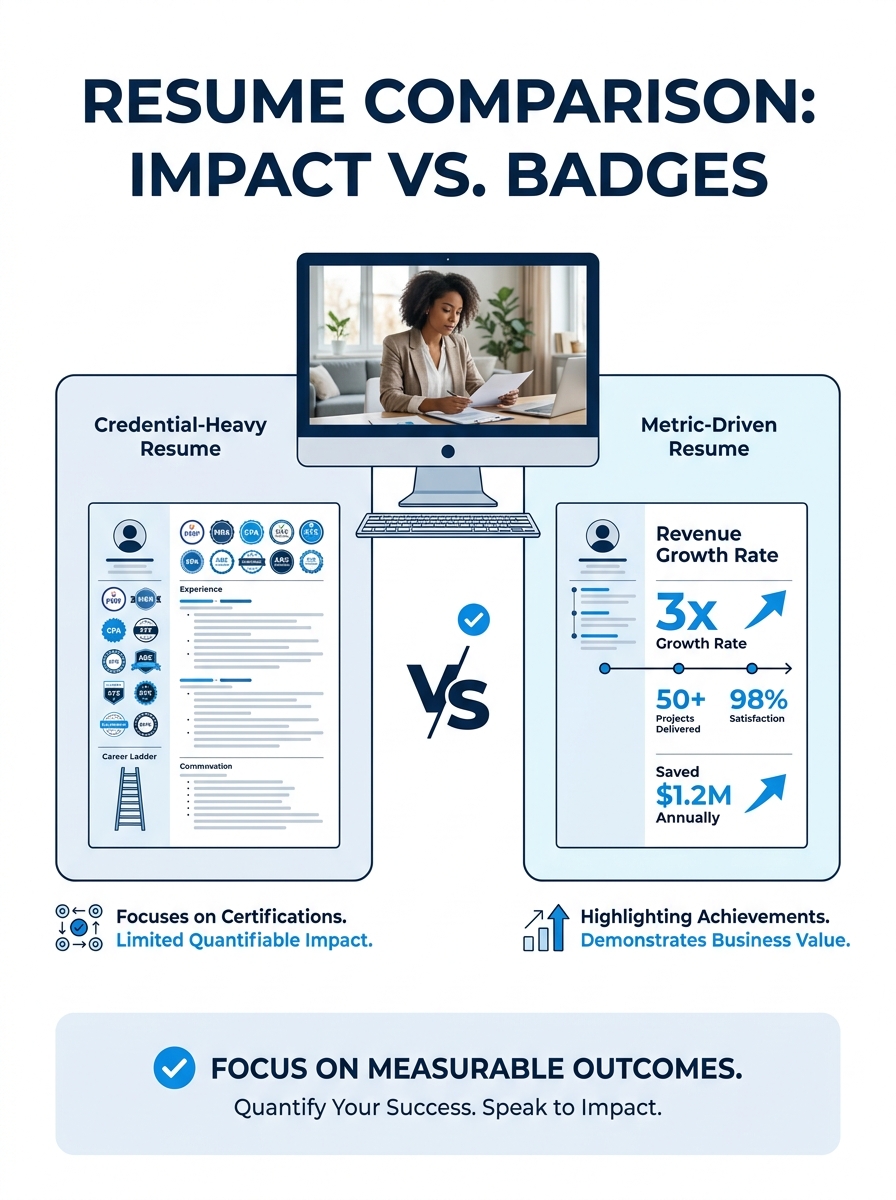
4.5Credential stacking — piling certifications, degrees, and prestigious affiliations onto your résumé — is the fastest way to make a hiring manager suspicious of you. Elon Musk confirmed as much on June 27, 2026, when he admitted to Fortune that he’s “fallen prey” to the “pixie dust” of impressive-looking résumés and now tells his teams: “Don’t look at the résumé.” The wow factor hiring managers actually respond to comes from specificity, context, and evidence rather than from stacking logos.
TL;DR: Flashy credentials trigger skepticism in 2026 hiring. Genuine achievement bullets grounded in measurable outcomes, contextual detail, and verifiable skills outperform credential-heavy résumés. Companies like IBM, GM, and Walmart have dropped degree requirements entirely, and the World Economic Forum ranks analytical thinking and active learning above traditional qualifications.
Musk’s “Pixie Dust” Problem Is Everyone’s Problem
One of the world’s most prominent CEOs now distrusts résumés because credentials lie by omission. Musk told interviewers this week that he prioritizes “evidence of exceptional ability” found during 20-minute conversations over anything printed on paper. Tesla’s senior leadership now carries an average tenure of 10 to 12 years, built, he claims, on hiring for demonstrated problem-solving rather than pedigree.
The pattern shows up in hiring data across industries. Evidence from the World Economic Forum shows employers now rank analytical thinking, resilience, and active learning above traditional credentials when evaluating candidates. Companies such as IBM, GM, and Walmart have moved to skills-first hiring models, according to the Financial Times, focusing on what applicants can do rather than where they studied.
So what does this mean for your résumé? The document still matters. Musk’s “don’t look at the résumé” philosophy still requires candidates to get through ATS screening and recruiter review before reaching a conversation. But the résumé needs to signal credibility differently than most people assume. Stacking credentials tells a hiring manager you’ve collected things. Genuine achievement bullets tell them you’ve done things, with receipts.
Specificity Outperforms Prestige Every Time
The difference between a résumé that earns a callback and one that gets skimmed comes down to how concrete your bullets are. Columbia Career Education’s résumé guide frames it directly: start with strong action verbs, provide contextual details about the purpose and scope of your work, and quantify achievements where possible.
Sounds obvious. But look at what most people actually write:
Weak bullet: “Managed various marketing campaigns across multiple channels”
Strong bullet: “Planned and executed 6 paid search campaigns across Google and Meta, generating $340K in attributed revenue on a $28K monthly spend”
The second bullet contains 5 specific numbers. The first contains zero and leans on the filler words “various” and “multiple,” which Resume Worded’s bullet point guide specifically flags as credibility killers. When you write “various” or “multiple,” hiring managers read it as “I don’t remember, or the number isn’t impressive enough to share.”
Career writer Dianne Glavaš put it well in a June 2026 Medium analysis: when you lead with action, add context, support claims with evidence, and structure for clarity, “you make it easier for recruiters to understand your value quickly and confidently.” That structure of action, context, evidence, and clarity is a credibility signal. A row of certification acronyms is not.
If you’re struggling to quantify early-career work, our breakdown of converting “assisted with” into measurable impact walks through the process for roles where you weren’t the decision-maker.
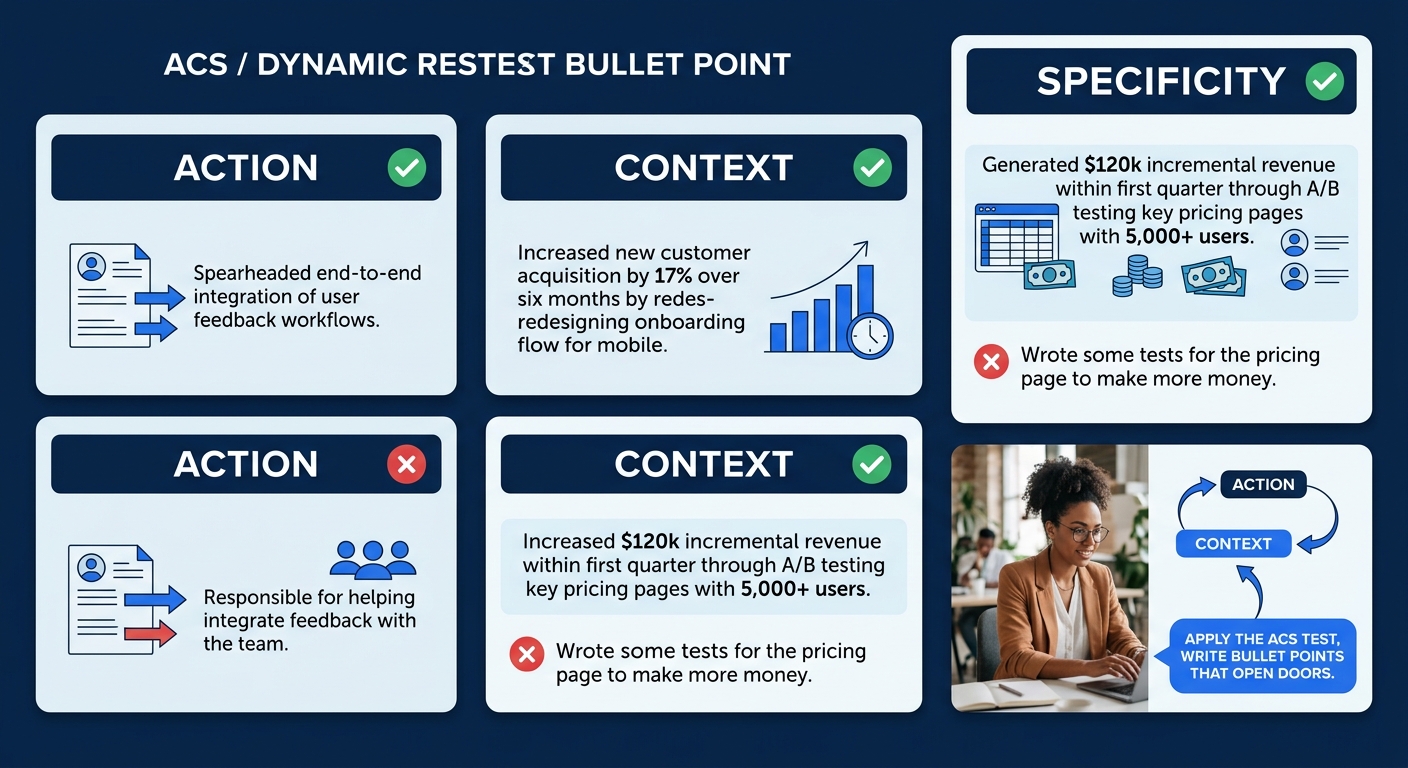
Here’s a framework for evaluating whether any bullet carries authentic resume impact. Call it the ACS test:
| Test | Question | Pass Example | Fail Example |
|---|---|---|---|
| Action | Does the bullet open with a specific verb? | “Redesigned onboarding flow…” | “Responsible for onboarding…” |
| Context | Can the reader understand scope without reading other bullets? | “…for a 200-person SaaS company…” | “…for the company…” |
| Specificity | Does at least one number, percentage, or named outcome appear? | “…reducing time-to-productivity by 3 weeks” | “…improving efficiency” |
A bullet that passes all three columns consistently outperforms a bullet padded with credential references. Hiring managers at fast-growing startups confirmed this pattern in a Business Insider roundup published June 27, where founders at Perplexity, Kalshi, and Replit shared what they actually screen for. Credentials barely came up. Demonstrated work did.
Overpolished Résumés Now Trigger Active Distrust
The AI writing boom created a paradox for job seekers. Tools that promise to “optimize” your résumé often produce bullets so polished, so packed with superlatives, that they set off alarm bells. Nearly 90% of employers now use AI to filter résumés, according to career coach data tracked on our site. But the same employers who rely on ATS scanning have grown wary of résumés that read like they were generated by the same AI systems doing the filtering.
Resume authenticity in 2026 is a real hiring factor. LinkedIn’s Talent Hub and other ATS platforms now include direct verification of digital credentials, according to VerifyEd’s career research. Cybersecurity professionals with verified digital badges see measurably higher career advancement rates. The verification layer means that unverifiable claims — “Led digital transformation initiative” with no supporting metrics, no named tools, no timeline — stand out as hollow in a way they didn’t five years ago.
A credential you can’t verify is a claim. A result you can measure is evidence. Hiring managers in 2026 know the difference.
The practical implication: when you list certifications on your résumé, write out the full name first, followed by the acronym in parentheses if it’s commonly recognized. Harvard Business School Online’s credential guide recommends this format — “Master of Business Administration (MBA),” for example — because it helps ATS systems parse both versions. But listing it correctly is the minimum. The credential only adds credibility when it connects to a demonstrated outcome on the same page.
Our guide on spotting overpolished résumé patterns that cost interviews covers the specific red flags recruiters notice in AI-written documents. And if you’re weighing how much AI assistance to use in the first place, the balance between AI help and human voice is the tightrope most applicants are walking right now.
Warning: If every bullet on your résumé sounds like it was written by the same optimization tool, recruiters will assume it was. Vary your sentence structure, leave in some shorter bullets, and don’t let every line end with a percentage increase. Consistency of voice matters more than consistency of format.
The Credentials-to-Credibility Gap Is Measurable
Awards and accomplishments on your résumé do matter, but they matter for a specific reason that most applicants misunderstand. According to Remote.com’s résumé research, awards and accomplishments “showcase your unique value, build credibility on your skills, and your ability to succeed.” The key phrase is “build credibility on your skills.” The award isn’t the point. The skill the award validates is the point.
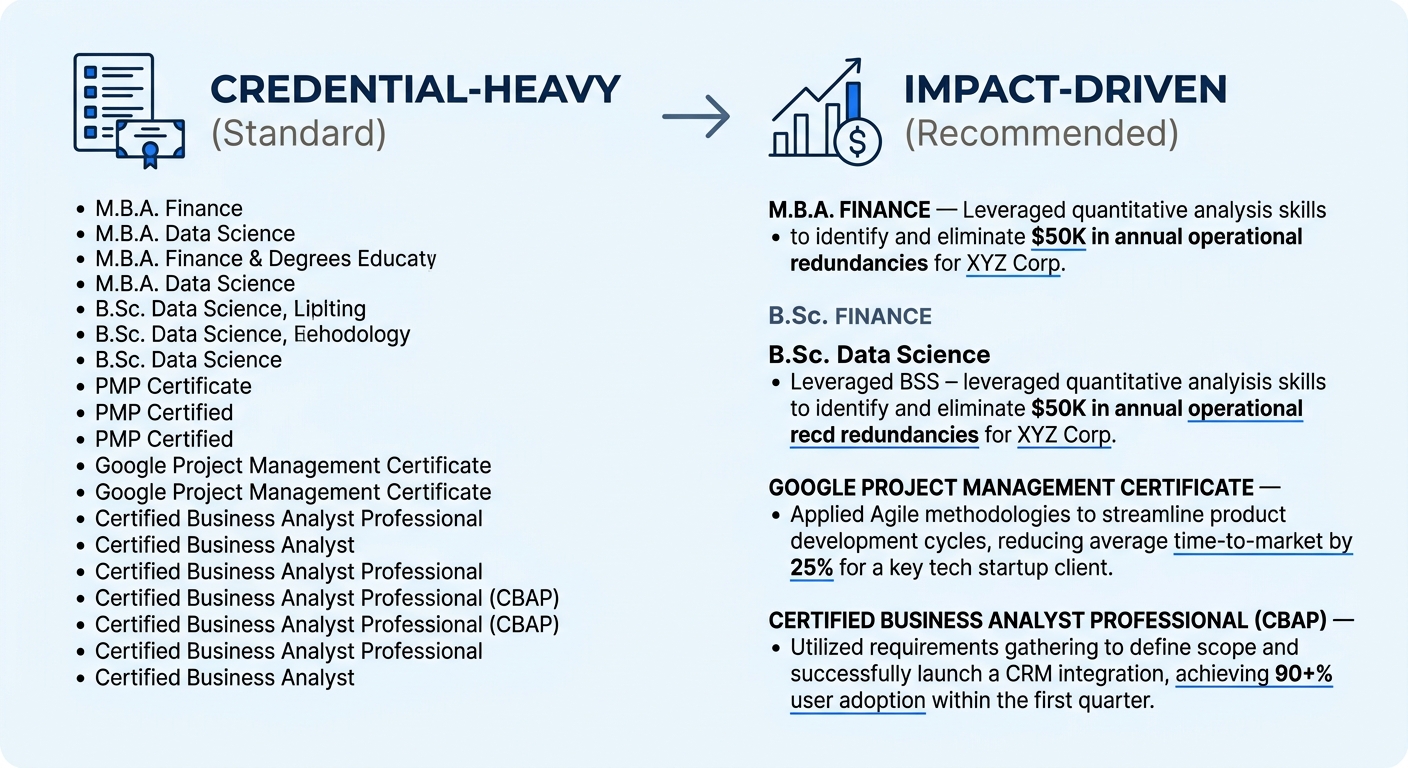
This is where the gap between credibility signals vs credentials becomes concrete. A credential says “I completed a course.” A credibility signal says “I completed a course, applied the methodology to restructure our inventory system, and reduced waste by 14% in Q2.” The credential is a line item. The credibility signal is a story with an ending a hiring manager can evaluate.
The Muse’s résumé guidance reinforces this: “you don’t want to [start with a bang] at the expense of context that helps the hiring manager understand why what you did was so impressive.” Your first bullet under each role should provide an overview of the type of company, scope of operations, yearly revenue, or number of clients served. That context is what makes subsequent genuine achievement bullets believable.
And the skills-first hiring movement continues to accelerate. NET Recruit’s employer research confirms that employers increasingly look for candidates who demonstrate a commitment to ongoing development. The credential that impressed five years ago carries less weight when the field has moved. But a résumé showing you applied new skills to produce measurable results carries weight regardless of when you earned the credential.
For anyone managing a career transition, our framework for translating transferable skills into ATS-friendly language helps bridge the gap between what you’ve done and what the target role requires. And ResumeWriting.net maintains updated guidance on structuring these transitions without overstating your fit.
The Claim, Revisited
Musk’s “pixie dust” confession landed this week, but the underlying shift has been building for years. IBM, GM, and Walmart dropped degree requirements. The World Economic Forum reranked employer priorities. ATS platforms added credential verification layers. And hiring managers at Perplexity, Kalshi, and Replit told Business Insider they screen for demonstrated work, not decorated résumés.
The contrarian claim from the top of this article — that stacking credentials actively undermines your credibility — holds up against every data point in the current hiring landscape. Credentials still belong on your résumé, obviously. A PMP certification matters. A relevant master’s degree matters. But they matter as supporting evidence, not as the headline act. The headline act is what you did with those credentials, expressed in bullets that pass the ACS test: clear action, sufficient context, at least one specific number.
Wow factor hiring in 2026 rewards the candidate who can show receipts over the candidate who can show the longest list of abbreviations after their name. Write your résumé with that hierarchy in mind, and the 20-minute conversation Musk values so highly will go a lot better when you earn it.