

 4.9
4.9 4.5
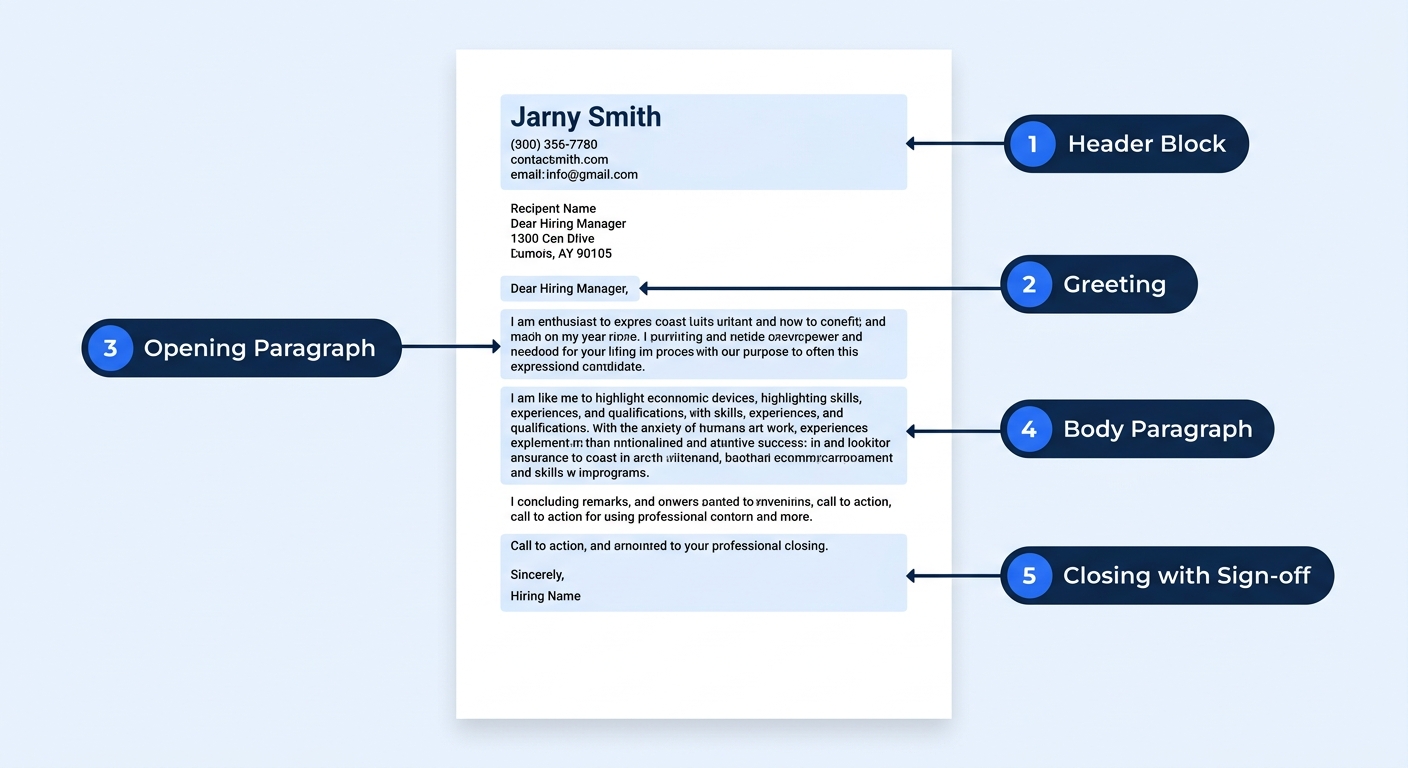
4.5Indeed’s cover letter formatting guide recommends treating every cover note letter like a business letter: header, greeting, three tight paragraphs, and a professional sign-off, all held to a single page. This tutorial walks you through building one from scratch in about 30 minutes.
TL;DR: A cover note letter follows a fixed five-part structure. You need the job posting, two measurable achievements, and the hiring manager’s name. The finished example at the end totals 174 words and is ready to customize for any role.
Before You Start
You need four things before writing a single word. Missing any of them will stall you mid-draft or produce a generic letter that reads like every other application in the pile.
- The full job posting, saved as a PDF or screenshot. Postings get taken down mid-application cycle, and you’ll need the exact language for keyword matching later.
- The hiring manager’s name. Check LinkedIn, the company’s team page, or call the front desk. Indeed’s cover letter writing guide specifies that addressing a specific person signals genuine effort over a generic “Dear Hiring Manager.” If you can’t find a name after 10 minutes of research, “Dear [Department] Hiring Team” is acceptable.
- Two quantified achievements from your recent work. These are numbers: percentages, dollar amounts, headcounts, timelines. Top-performing cover letters cite results like “increased sales by 156%” or “reduced team turnover by 50%.” If you don’t have exact figures, reasonable estimates grounded in real outcomes work fine.
- A word processor or template. Microsoft Word offers free cover letter templates that handle spacing and margins automatically. Canva provides 500+ printable options with more visual flexibility. Plain Google Docs works too.
Time required: 25–35 minutes for your first letter. Subsequent letters take 10–15 minutes each once the structure is locked in.
Knowledge level: None needed beyond professional email writing.
Pull the Job Posting Apart
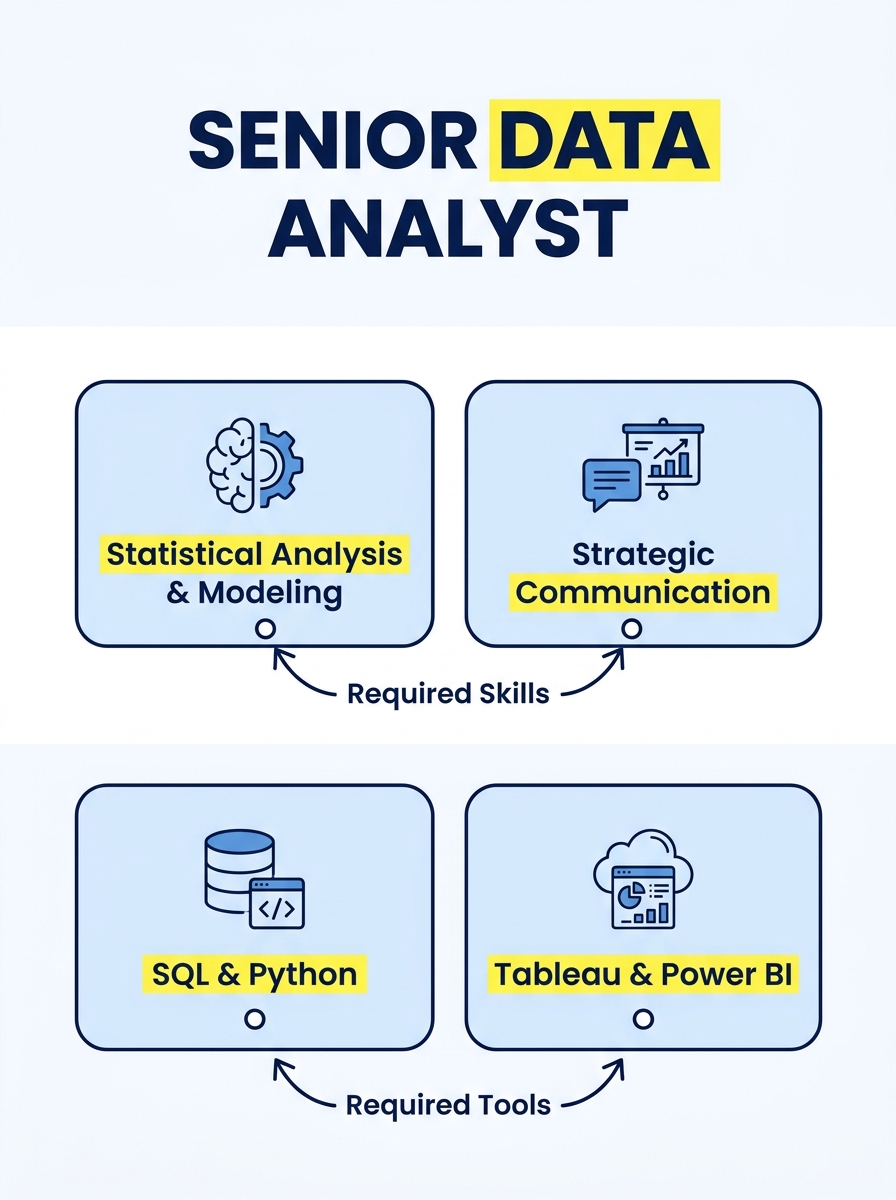
Open the job posting and highlight three categories: the exact job title, the top 3 required skills, and any specific tools or certifications mentioned by name. These words need to appear in your letter because many companies run applicant tracking systems (ATS) that filter applications before a human ever reads them. Indeed’s formatting guide notes that a simple, clean format with standard headings helps ensure your letter gets parsed correctly and reaches a real person.
Write down the 5–8 keywords you’ve identified. You’ll weave these into your paragraphs naturally over the next steps. Don’t list them. Don’t stuff them into one sentence. Spread them across the letter so the ATS picks them up and a human reader doesn’t notice the optimization.
Verification: You have a short list of terms that match the posting’s language word-for-word. If the posting says “project management,” your letter says “project management,” not “overseeing initiatives.” If the posting says “Salesforce,” you write “Salesforce,” not “CRM platform.”
Write the Header and Greeting
Your header block sits at the top of the page and mirrors a standard business letter format. Include your full name, phone number, email address, and city/state. A full street address is no longer expected. Below that, add the date, then the recipient’s name, title, company name, and company address.
The University of Michigan Career Center’s cover letter resources stress that the entire document should never exceed one page. With margins set to 1 inch on all sides and font size between 10.5 and 12 points (Times New Roman, Calibri, or Arial), your header should occupy roughly 6–8 lines.
For the greeting, use “Dear [First Name] [Last Name]:” with a colon, not a comma. Plug in the hiring manager’s name you found during prep. The 11% of applicants who report using AI to draft their cover letters often skip this personalization, which makes your research effort visible right away.
Verification: Your header looks like the top of a formal letter, and your greeting addresses a real person by name. If it says “To Whom It May Concern,” go back and spend 5 more minutes on LinkedIn.
The Opening Paragraph
This paragraph runs 2–3 sentences and accomplishes three things: it names the exact position, explains how you found it, and makes one specific claim about why you’re a strong fit. The University of Central Florida’s cover letter samples guide outlines this as the standard academic and professional format, stating that applicants should identify the position and ask for consideration based on relevant qualifications.
Here’s what that looks like in a real cover note letter example:
I’m writing to apply for the Marketing Coordinator position posted on your careers page. With three years of experience running paid social campaigns that generated over $400,000 in attributed revenue, I’m confident I can bring measurable results to your digital team.
That’s 43 words. The recommended length for an entire cover note letter is under 200 words, which means your opening paragraph should land between 35 and 55 words. Every sentence earns its place or gets cut.
Verification: Read your opening aloud. If it doesn’t contain the job title and at least one specific credential with a number attached, revise before moving on.
Two Achievement Stories for the Body
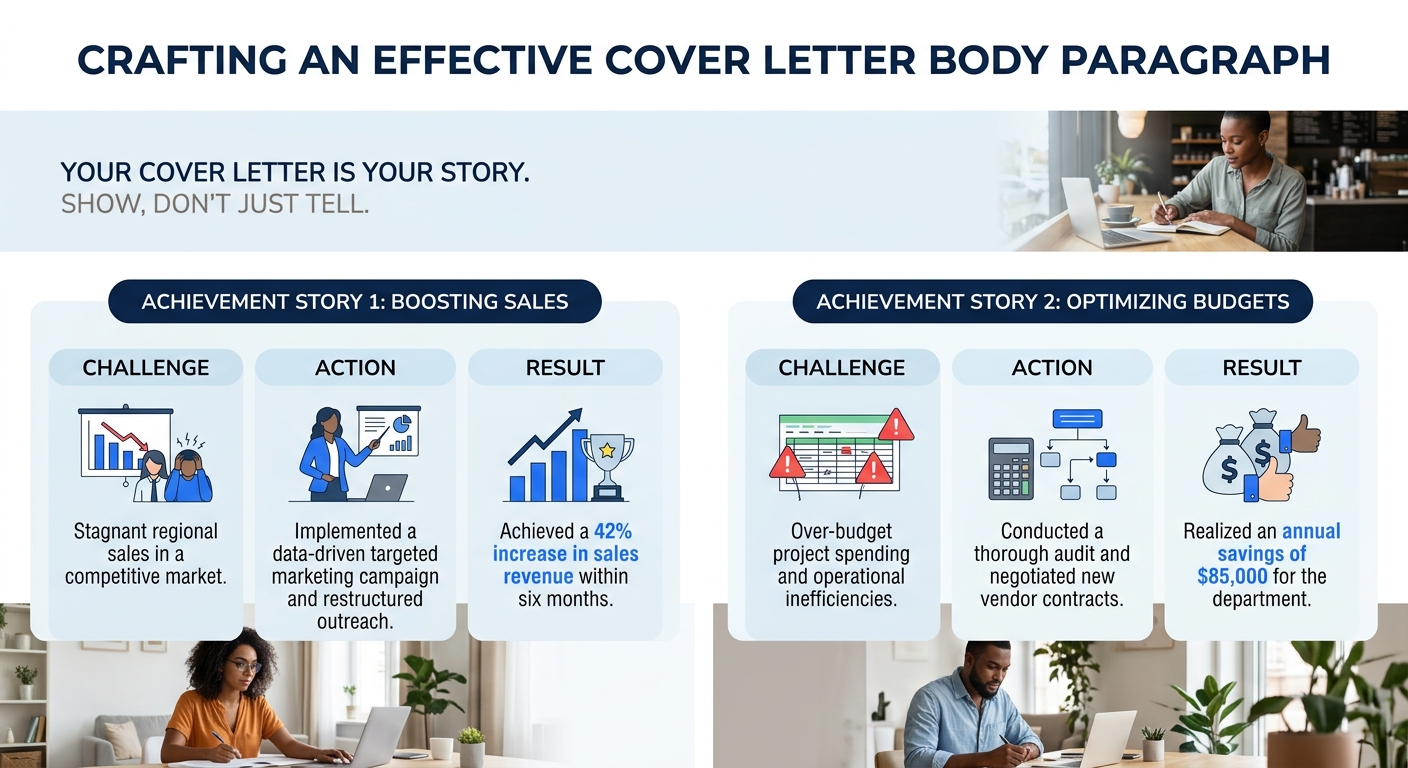
The body paragraph contains two short stories, and each follows the same three-part pattern: name a challenge you faced, describe the action you took, and quantify the result. Hiring managers reviewing 50+ applications per opening spend an average of 6–7 seconds on an initial cover letter scan. Two stories with concrete numbers are enough to earn a full read.
Story 1 should match the most important requirement in the job posting. If the posting emphasizes “team leadership,” your first story is about leading a team and what happened because you did.
Story 2 should address a secondary requirement or demonstrate a complementary skill. Research from top-performing cover letter examples suggests that writing about fixing a broken process, such as reducing onboarding time by 30% or cutting error rates by 50%, performs well because it pairs problem-solving with a measurable outcome.
Keep both stories to 2–3 sentences each. The entire body paragraph should be 60–80 words. If you’re writing more, you’re explaining context the reader doesn’t need. Trim the setup, keep the numbers.
Two concrete stories with numbers are enough to earn a full read from a hiring manager scanning 50+ applications.
If you need help choosing which achievements to feature, our guide on sample cover letters for any job walks through the selection process across different industries.
The Closing Paragraph and Sign-Off
Your closing is 2 sentences. The first restates your interest in the specific role. The second requests a conversation, provides your availability, and thanks the reader. Then sign off with “Sincerely,” followed by your full name.
I’d welcome the chance to discuss how my background in supply chain optimization aligns with your team’s goals. I’m available for a conversation at your convenience and can be reached at (555) 123-4567. Thank you for your time.
Sincerely, Jordan Rivera
That closing runs 47 words. Shorter is fine. Longer rarely helps. The entire letter, from greeting through sign-off, should stay under 200 words total. The University of Michigan Career Center caps it at one page, and 200 words on a properly formatted page leaves enough white space to look clean and readable.
Verification: Copy your full letter into a word counter. If you’re past 200 words, cut adjectives and filler phrases first. If you’re over 250, you’ve included context that belongs on your resume instead.
The Full Cover Note Letter Example, Assembled
Here’s the complete letter from the steps above. This cover note letter example totals 174 words and follows the business-letter structure that Indeed recommends across its library of 200+ job-specific templates.
Jordan Rivera (555) 123-4567 | [email protected] | Austin, TX
August 2, 2026
Ms. Patricia Chen Director of Marketing Greenline Solutions 200 Congress Ave, Suite 400 Austin, TX 78701
Dear Patricia Chen:
I’m writing to apply for the Marketing Coordinator position posted on your careers page. With three years of experience running paid social campaigns that generated over $400,000 in attributed revenue, I’m confident I can bring measurable results to your digital team.
At my current company, I redesigned our lead-nurture email sequence, increasing click-through rates by 42% over six months and adding $85,000 in pipeline value. Separately, I built a reporting dashboard that cut our weekly analytics prep from 4 hours to 45 minutes, freeing the team to focus on campaign strategy.
I’d welcome the chance to discuss how my experience aligns with Greenline’s growth goals. I’m available at your convenience and can be reached at the number above. Thank you for your time.
Sincerely, Jordan Rivera
Notice what this example does: it names the job title in sentence one, drops 4 specific numbers in the body (42%, $85,000, 4 hours to 45 minutes), and closes with a clear call to conversation. You can adapt this template for different roles by swapping your own achievement stories and matching keywords from each new job posting.
For more templates organized by industry, browse our collection of cover letter examples across job types.
When Something Goes Wrong
Three problems trip up most people during this process. Recognizing them early saves a full rewrite.
The ATS rejects your file format. If you submit a .pages file or a heavily designed PDF with columns or graphics, the tracking system may fail to parse your text entirely. Save your letter as a standard .docx or a simple PDF exported from Word or Google Docs. You’ll know this is the issue if you apply to 15+ positions without a single response, even for roles where you’re clearly qualified. Test your file by pasting the content into a plain text editor: if the text comes through cleanly, the ATS will read it too.
Your letter sounds generic. If you can swap the company name and job title for a different posting without changing anything else in the body, the letter is too vague. Go back to step one and pull 3 more keywords specific to the new posting, then revise your achievement stories to address those requirements directly. Our guide on cover letter templates and samples includes before-and-after rewrites showing how small, targeted edits fix this problem.
You can’t find quantified achievements. This is common for people in support roles, education, or early careers. Reframe your impact in terms the hiring manager cares about: “trained 12 new hires in 90 days,” “managed a $15,000 event budget,” or “responded to 80+ customer inquiries per day with a 97% satisfaction rating.” If you handled something regularly, it has a number attached. You just need to find it.
Tip: Run your finished letter through the keyword list you created in step one. Every term on that list should appear at least once in your final draft. If 2 or more keywords are missing, weave them into your achievement stories or closing paragraph before submitting.
Where to Go From Here
Your cover note letter is one component of a larger application package. Once you’ve written and saved this first version as a template, each new application becomes a 10–15 minute customization job: swap the company details, match the new posting’s keywords, and update one or both achievement stories if needed.
If you’re applying to more than 5 roles per week, build a small library of 3–4 achievement stories you can rotate in and out. Keeping a running document of your quantified wins, updated monthly, means you’ll never sit in front of a blank body paragraph wondering what to write. And if your resume needs the same level of precision, our ATS-tested resume builder comparison covers which platforms handle formatting and keyword optimization best.
The letter you built today follows a structure backed by career centers at the University of Michigan and the University of Central Florida, and reflected in Indeed’s library of over 200 role-specific samples. It’s 174 words, built around real numbers, and designed to clear an ATS screen while reading like an actual person wrote it. Save it, reuse the structure, and keep swapping in fresh achievements as your career grows.