
 4.9
4.9 4.5
4.5This tutorial walks you through writing a finished, job-specific cover letter in six steps, from header block to final proofread. You’ll end with a one-page letter sample cover ready to submit. Total time: about 40 minutes with a job posting open in front of you.
TL;DR: Build your cover letter in six sequential steps: header, greeting, hook paragraph, evidence paragraph, closing paragraph, and sign-off. Keep body text under 300 words, include one quantified achievement, and mirror keywords from the job posting verbatim.
Before You Start
You need four things before step one:
- A specific job posting open on your screen. You’ll pull keywords directly from it.
- Your current resume, so you can select which achievements to highlight without copying bullet points word for word.
- The hiring manager’s name, if findable. Check LinkedIn and the company’s team page first. MIT’s career advising office recommends addressing the letter to a specific person, and when no name is available, “Dear Hiring Manager” works. Never default to “To Whom It May Concern.”
- 40 uninterrupted minutes. That’s enough for a first draft plus one editing pass.
A 2025 MyPerfectResume survey found that 88% of job seekers believe a cover letter improves their interview chances, and 65% regularly submit one. But 66% of candidates say the ideal letter should be half a page or less, between 150 and 300 words. That constraint works in your favor: a short, targeted letter is faster to write and harder for a hiring manager to skim past.
Pull Keywords from the Job Posting
Open the posting and read it twice. On the second read, highlight three to five specific skills, tools, or qualifications the employer mentions more than once or lists first. These become your keywords.
The University of Michigan Career Center advises applicants to “focus on skills and attributes the employer is seeking in applicants” and to use both LinkedIn and the organization’s website to gather context. That research step takes five minutes and shapes every paragraph you’ll write.
Write your keywords down. You’ll weave at least two of them into your letter sample cover verbatim. If the posting says “project management,” don’t write “managing projects.” ATS software and human readers both respond to exact phrasing. When we looked at how resume builders perform against real ATS platforms, keyword matching was one of the biggest factors separating high-scoring documents from low ones. The same principle applies to cover letters.
You’ll know this step worked when you have 3-5 terms written down, each lifted directly from the posting.
Set Up Your Header and Greeting
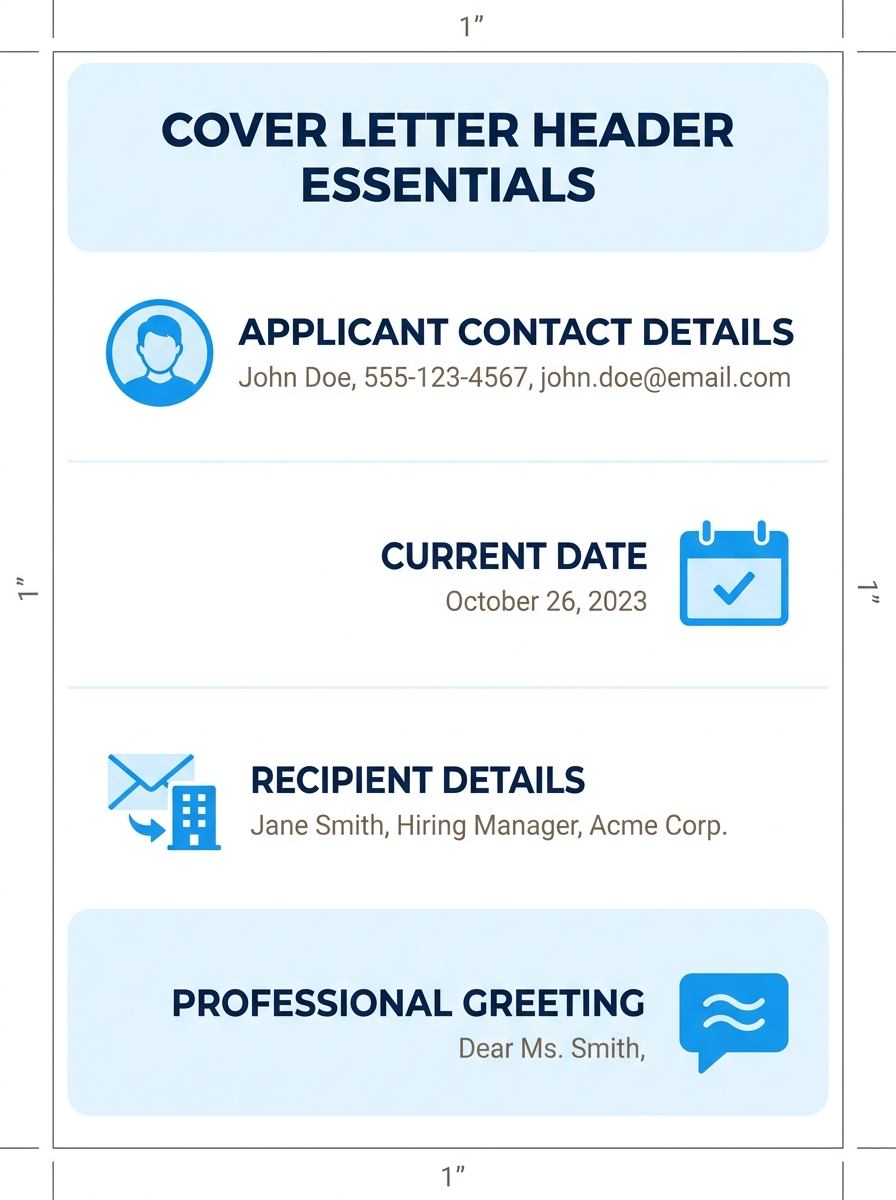
Your header mirrors a standard business letter. Place your contact information at the top: full name, phone number, professional email address, city and state (full street address is optional), and LinkedIn URL if your profile is complete. If you’ve invested time optimizing your LinkedIn profile with a strong photo, include that link, it gives the reader another way to evaluate you beyond the letter itself.
Skip one line, add the date. Skip another line, add the recipient’s information: their name, title, company name, and company address.
The greeting follows. “Dear [First Name] [Last Name],” is the standard format. If you found the hiring manager’s name during research, use it. If not, “Dear Hiring Manager,” is acceptable. Indeed’s formatting guide confirms that a professional greeting “demonstrates professionalism and attention to detail” and can help a candidate stand out from other applicants.
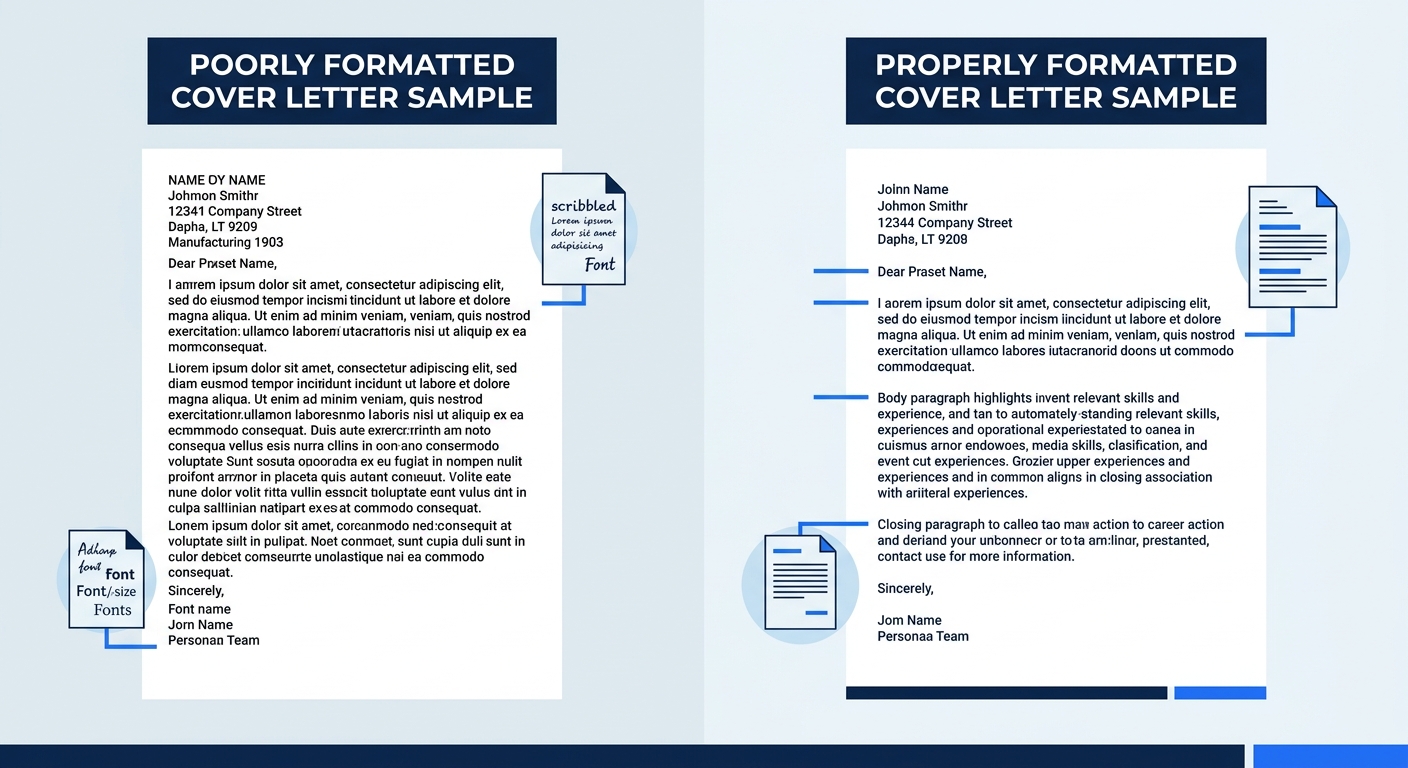
The University of Michigan Career Center specifies margins between 0.5 and 1 inch on all sides, with the layout left-justified and beginning no more than 2 inches from the top of the page. Font size should land between 10 and 12 points, matching the typeface on your resume. These formatting details seem minor, but inconsistent spacing and mismatched fonts signal carelessness to the 39.9% of hiring managers who read cover letters after reviewing a resume.
You’ll know this step worked when your header looks like a business letter and the greeting includes a specific name or “Dear Hiring Manager.”
Write the Hook Paragraph
This is where most cover letters collapse. Your opening paragraph has one job: make the reader want to keep reading. You get three to four sentences, roughly 40 to 60 words.
Start by naming the specific position you’re applying for and where you found it. Then immediately connect your background to the role with one concrete, relevant fact. Avoid “I’m passionate about your company’s mission” and lead with evidence instead.
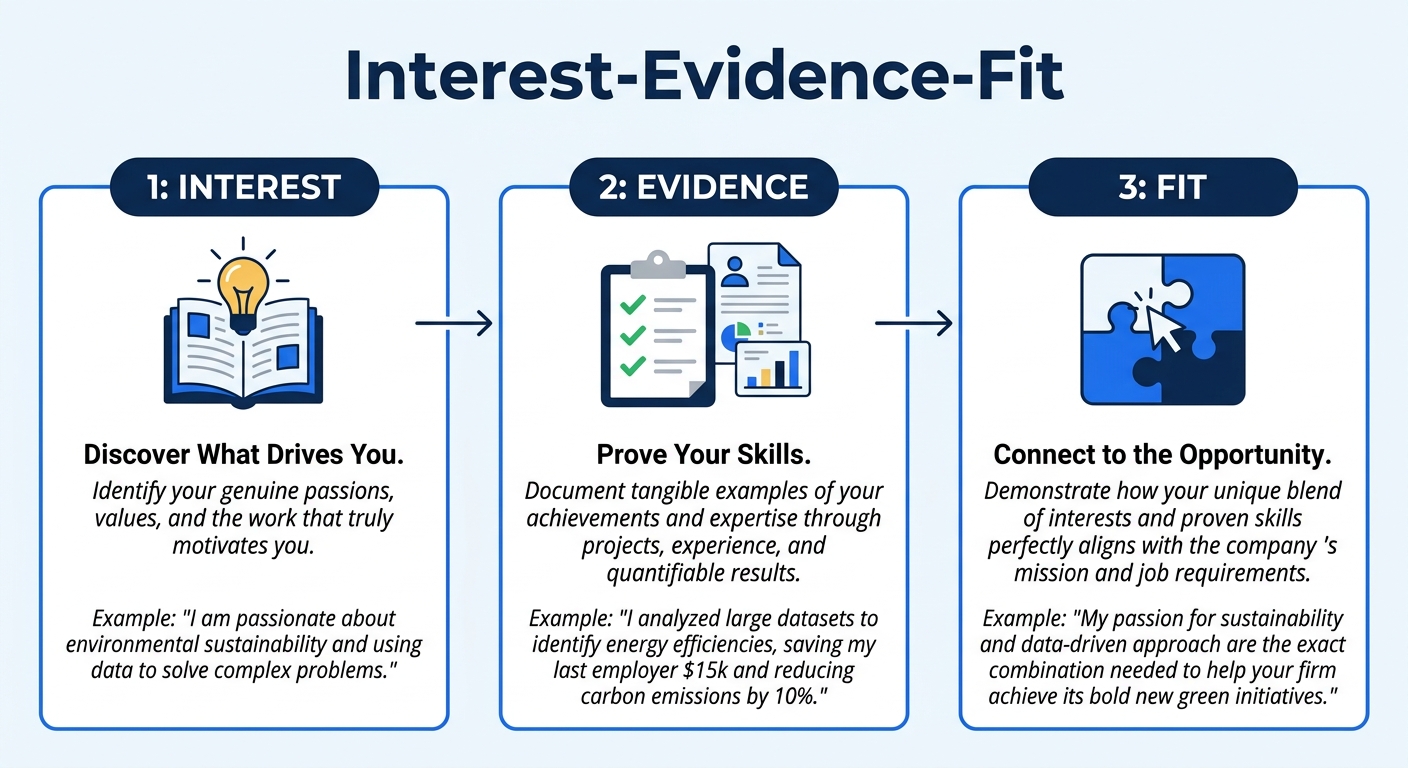
I recommend structuring this first paragraph around what I call the Interest-Evidence-Fit framework:
- Interest: Name the exact role.
- Evidence: Drop one quantified fact from your experience that directly maps to the posting’s top keyword.
- Fit: State why this company makes sense for you, reference a specific initiative, product, or value.
MIT’s career advising office states that a cover letter “should be no longer than one page with a font size between 10-12 points.” With that page constraint, every sentence in your opening must earn its spot.
Here’s an example opening:
Dear Ms. Torres, I’m applying for the Marketing Coordinator role listed on LinkedIn. At Relay Media, I increased email open rates by 34% over six months by A/B testing subject lines and send times. Your team’s emphasis on data-driven content strategy is exactly the environment where that kind of results-oriented work would have the most impact.
That’s 55 words. It names the role, includes a number, and references something specific about the company. If you want to see more variations of strong openings, our roundup of cover letter examples for different job types shows how this framework adapts across industries.
You’ll know this step worked when your opening paragraph includes one number and mentions the company by name or references a specific company initiative.
Build the Evidence Paragraph
The second paragraph proves you can do the job. Indeed’s guidance is direct: “Cover letters should be around three paragraphs long and include specific examples from your past experience that make you qualified for the position.”
Pick one accomplishment from your resume, the one that most closely matches the job posting’s primary requirement. Expand it with context the resume doesn’t include: what the situation was, what you specifically did, and what measurable result followed. This paragraph runs 50 to 80 words and hits at least two of your keywords from the first step.
One common mistake is cramming three accomplishments into this space. Resist that impulse. A single well-told achievement with a specific number (revenue generated, percentage improved, users served, time saved) is more convincing than three vague claims. The same MyPerfectResume survey found that 32% of job seekers now use AI tools to draft their letters, which means hiring managers are reading dozens of generic, multi-achievement paragraphs daily. One verifiable story stands apart from that noise.
A single well-told achievement with a specific number is more convincing than three vague claims.
Tip: If you’re making a career change and your best achievement comes from a different industry, frame it around the transferable skill. “Managed a $2M renovation budget across 14 subcontractors” translates to project management in any field. We’ve explored this kind of [career pivot framing](/blog/career-pivot-vs-panic-framework) before.
You’ll know this step worked when your paragraph contains exactly one achievement with at least one specific number.
Write the Closing and Sign Off
Your closing paragraph does three things in roughly 40 words: restates your enthusiasm for the role, signals availability, and makes a direct ask for next steps.
The University of Michigan Career Center recommends a tone that is “positive, confident but not imposing, concise with supporting detail, written in active verb voice.” Translated into practice, that means ending with action rather than apology. Don’t write “I hope to hear from you at your earliest convenience.” Write “I’d welcome the chance to discuss how my experience aligns with this role. I’m available for a conversation any weekday afternoon.”
Example closing:
I’d welcome the opportunity to discuss how my experience with data-driven marketing campaigns aligns with your team’s goals. I’m available at (555) 123-4567 or [email protected]. Thank you for your time and consideration.
Follow this with “Sincerely,” or “Best regards,” and your full name. If submitting via email, the University of Michigan Career Center advises using the body of the email as your cover letter rather than attaching a separate document, unless the posting specifically requests an attachment.
You’ll know this step worked when your closing contains a concrete next-step ask and your contact information.
Format, Proofread, and Send
Pull the full letter together and check these five formatting details:
- Total word count falls between 150 and 300 words (body text only, excluding the header block).
- Font and size match your resume: 10 to 12 point, same typeface.
- Margins sit between 0.5 and 1 inch on all sides.
- No spelling or grammar errors. Read the letter aloud once, then run a spell-checker as a second pass.
- File name follows the convention FirstName_LastName_CoverLetter.pdf unless the posting requests otherwise.
Save as PDF unless the posting specifies .docx. And match the file-naming convention of your resume so both documents look like they came from someone organized.
The MyPerfectResume survey found 92% of applicants report maintaining full honesty in their cover letters. The 8% who embellish qualifications or overstate familiarity with a company risk a problem that surfaces quickly in interviews. Write only what you can defend face-to-face.
You’ll know this step worked when the letter fits on one page, the formatting matches your resume, and the file is saved as a PDF with a professional name.
When Things Go Wrong
Three problems come up repeatedly with letter sample cover documents:
The letter runs over one page. Cut the evidence paragraph first. If you included two achievements, drop one. If you used filler phrases like “I believe that I would be a great fit because,” replace with a direct statement. A one-page letter signals you can communicate tightly, which is itself a skill employers value.
You can’t find the hiring manager’s name. Try LinkedIn’s company page and filter by department. Check the job posting for a recruiter’s name. Call the company’s main line and ask who manages hiring for the team. If all three attempts fail, “Dear Hiring Manager” is the fallback MIT recommends.
The job posting is vague and gives you nothing to work with. Look at the company’s “About” page and recent press releases for language clues. Check similar roles at the same company on Indeed’s cover letter library or other job boards. The strongest cover letters borrow language from the company’s own public communications rather than relying on generic industry buzzwords. If you’ve browsed other letter cover samples, you’ll notice that pattern across the ones that read best.
Where to Go From Here
The letter you’ve built in these six steps handles the standard job application scenario: you found a posting, you have relevant experience, and you want to stand out from other applicants. But cover letters shift depending on context. A career-change application needs the evidence paragraph to anchor harder on transferable skills, and the hook paragraph should address the industry switch directly instead of hoping the reader won’t notice. Our collection of cover letter samples for different scenarios walks through those variations in detail.
For email applications where no cover letter is explicitly requested, a shorter version works well: three to four sentences in the email body that follow the Interest-Evidence-Fit structure from the hook paragraph step, followed by your resume as an attachment. You’re still writing a cover letter. You’re writing a tighter one.
The differentiator between the 65% of applicants who submit a cover letter and the smaller group who actually get callbacks comes down to specificity. Name the role. Include a number. Speak to this company’s needs in under 300 words. That’s the letter you just built.