

 4.9
4.9 4.5
4.5Marketing consultant Lilach Bullock published a LinkedIn headline optimization guide on September 21, 2026, claiming a three-part formula that places searchable job titles before personality statements increased her weekly profile views from 40 to 140 within six weeks, according to her analysis posted on LilachBullock.com.
TL;DR: Bullock’s framework prioritizes keyword-first headlines over “Helping X do Y” templates that now dominate LinkedIn profiles, arguing search algorithm weight and recruiter filter terms both favor nouns over soft verb phrases.
The guide addresses a shift in how LinkedIn headlines function across search results, profile cards, and comment threads simultaneously. The platform allocates 220 characters for the headline field, expanded from a previous 120-character limit, yet most users fill fewer than 110 characters, Bullock noted.
The Three-Part Formula
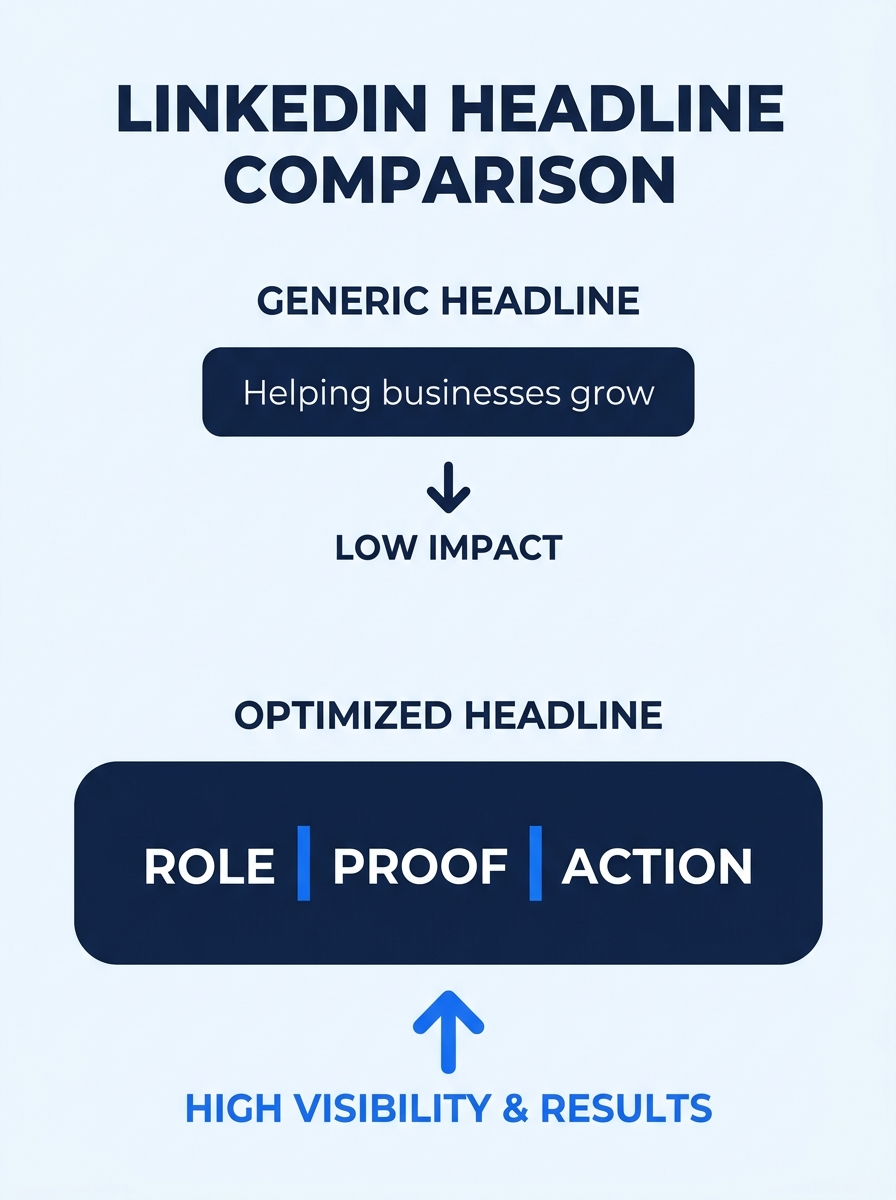
Bullock’s structure divides the 220-character headline into three sequential components. Part one places the searchable role or outcome phrase a target reader would type into LinkedIn search, such as “Copywriter for SaaS companies” or “AI Consultant for Small Businesses.” Part two adds proof or specificity through numbers, credentials, or niche markers—”10 years, 200+ launches” or “Ex-Google.” Part three optionally includes a human hook or contact call, such as “Currently taking two new clients.”
The formula separates each segment with vertical bars or middle dots rather than full sentences. “LinkedIn’s search treats headlines almost like a list of tags,” Bullock wrote, explaining that grammatical structure consumes characters that could hold additional keywords.
An example following the framework: “Freelance Copywriter for Fintech Brands | 8 years, ex-Wise | Currently booking March.” The construction places role identification in the opening eight words, where both LinkedIn’s algorithm and human scanning patterns prioritize weight.
Profile View Results
Bullock’s own headline previously read “Keynote Speaker | Forbes-listed | Social Media Influencer.” In early 2026, she revised it to “AI Consultant for Small Businesses | Marketing Strategy & Speaker | Forbes-listed.” The change placed “AI Consultant” in the opening position, matching the exact phrase appearing in LinkedIn searches that directed traffic to her consulting page during the same period.
Weekly profile views rose from approximately 40 to roughly 140 over six weeks, tracked through LinkedIn’s Creator dashboard analytics. Bullock reported no changes to posting frequency, profile photo, or content volume during the test window. The headline revision represented the sole variable.
The guide connects headline construction to how LinkedIn surfaces profiles in three contexts: under the user’s name on their profile page, adjacent to their name on every post and comment, and in search results when prospects type keywords. Job seekers using LinkedIn for job search face the same multi-context challenge, where headlines must perform both search-engine and first-impression work simultaneously.
Why “Helping” Headlines Fail
Bullock identified “Helping X do Y through Z” and “I turn A into B” as dominant headline templates that have saturated LinkedIn profiles over the past decade. The guide argues these formulas bury actual keywords—such as job titles and service categories—under soft verb phrases that neither LinkedIn search nor human readers weight heavily.
A comparison example contrasted “Helping small business owners grow through smarter marketing” with “Marketing Consultant for small businesses | Growth strategy, lead generation, AI marketing tools.” The second version places “Marketing Consultant,” “small business,” and “lead generation” at the line’s opening, where LinkedIn search indexing and reader eye-tracking both concentrate attention. “Charm doesn’t index. Nouns do,” Bullock wrote.
The pattern mirrors broader LinkedIn optimization strategies career coaches have emphasized since LinkedIn introduced natural-language query features in its Recruiter AI tool earlier in 2026. Recruiters filtering candidates by role and skill keywords rely on exact-match terms appearing in headlines before personality descriptors.
What Happens Next
Job seekers and career changers adapting this formula should audit competitor headlines in their industry to identify overused phrases, then select role terms appearing in actual LinkedIn search queries and recruiter job posts. The 220-character limit allows space for three to five keyword phrases when separated by bars rather than sentences.
Professionals can test headline changes by monitoring weekly profile view counts in LinkedIn analytics over a four-to-six-week window, isolating the headline as the primary variable by holding content posting frequency constant. ResumeWriting.net‘s LinkedIn guides offer complementary strategies for optimizing About sections and Experience entries to support headline keyword density.
The guide’s publication follows a pattern of LinkedIn profile optimization frameworks released in September 2026 as professionals prepare for year-end job search cycles and recruiters increase candidate sourcing ahead of 2027 hiring budgets.