

 4.9
4.9 4.5
4.583% of hiring managers read cover letters they receive, and submitting one makes you 1.9 times more likely to get an interview. This guide walks you through writing a cover letter from scratch, from company research through final proofread, in about 45 minutes.
TL;DR: Research the company, match your top two or three skills to the job description’s requirements, write 250–400 words in business-letter format, and proofread before you hit send.
Before You Start
You need three things ready before you write a single word: the full job posting (saved or printed so you can reference it line by line), your most current resume, and access to the company’s website and social media profiles. A word processor or plain text editor works fine. You don’t need specialized software.
Time required: 45 minutes for your first letter. After you’ve done two or three, expect 20–30 minutes per application.
Skill level: If you can write a professional email, you can write a cover letter. And if you’d prefer structured guidance throughout the process, professional career coaches can review your draft and give targeted feedback on positioning and tone.
Step 1: Research the Company and the Job Posting
47% of HR professionals reject candidates who show no knowledge of the company, according to hiring survey data. Spending 10 minutes on research before you write separates you from nearly half the applicant pool.
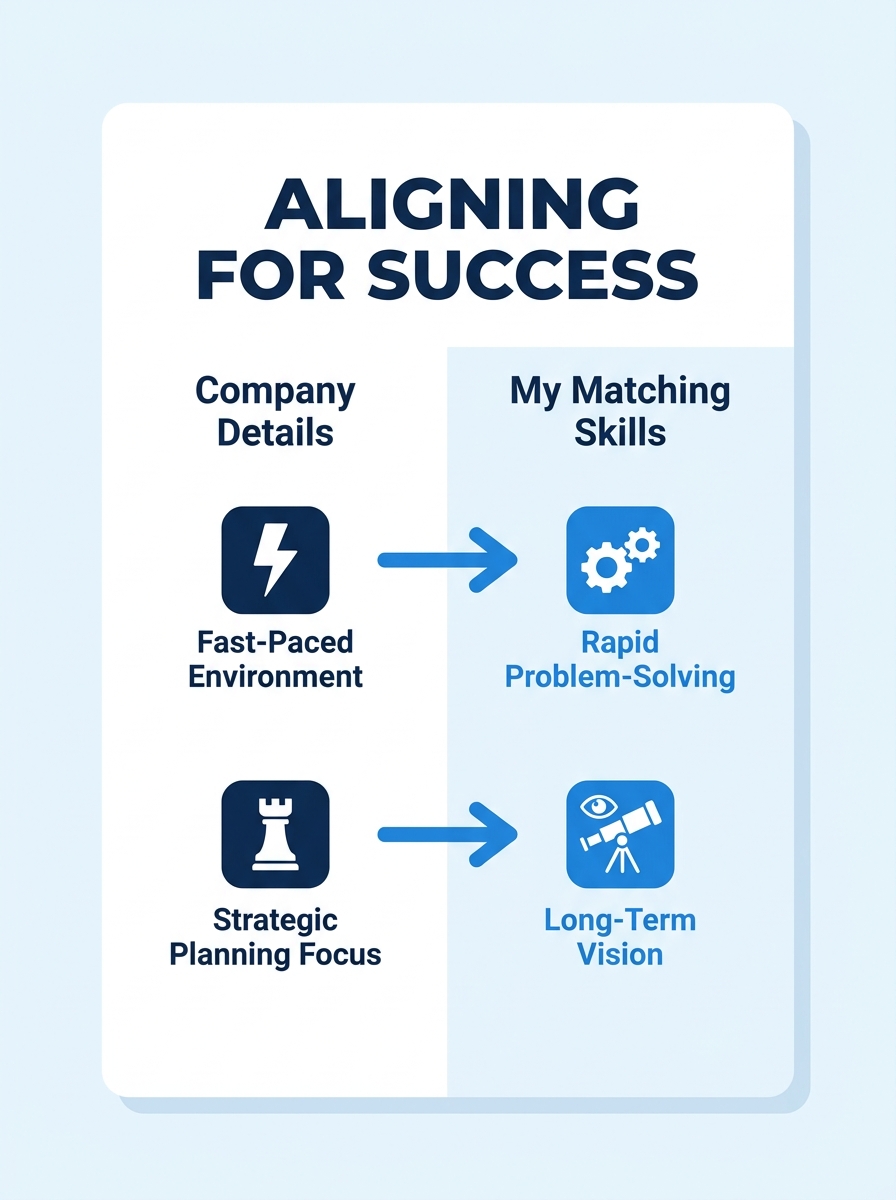
Open the job posting and highlight the top three to five skills or qualifications listed. Then visit the company’s website, LinkedIn page, and any recent press coverage. Write down two or three things that genuinely interest you about the organization: a product launch, a mission statement, a market they’re entering.
As Resume Genius notes in their 2026 cover letter guide, “Learn what the employer is looking for and address these details in your cover letter, and you’ll already place yourself above the majority of candidates.”
You’ll know this step worked when you can complete this sentence without faking it: “I want to work at [Company] because ____________, and I’m qualified because I have experience in ____________.”
Step 2: Write Your Header and Greeting
The header is the simplest part of a cover letter, and getting it right signals professionalism before the hiring manager reads a word of your pitch. Include your full name, phone number, email address, and city/state at the top. Below that, add the date, followed by the hiring manager’s name, title, company name, and company address.
Your cover letter structure should follow standard business-letter format: left-aligned, single-spaced, with a blank line between each paragraph.
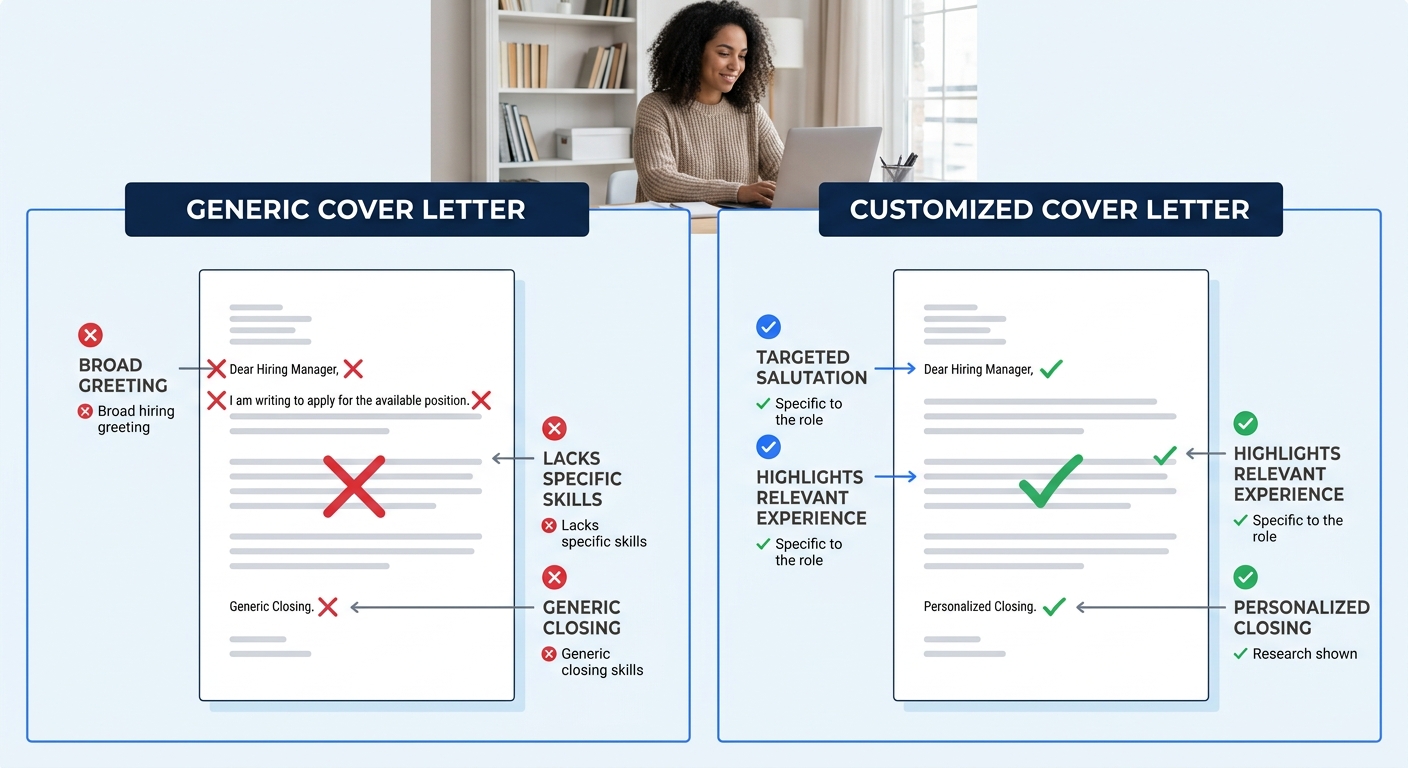
For the greeting, address the hiring manager by name. 26% of hiring managers say being addressed by name makes a measurable difference in their impression of a candidate. Search the company’s LinkedIn page, the job posting itself, or call the front desk to find the right person. If you genuinely can’t find a name after trying all three, “Dear Hiring Manager” works better than “To Whom It May Concern.”
You’ll know it worked when your header looks like a professional business letter, and your greeting includes a real person’s name.
Step 3: Open With a Specific Hook
MIT’s Career Advising office recommends that you “state clearly in your opening sentence the purpose for your letter and a brief professional introduction.” Your opening paragraph should be two to three sentences, maximum.
Skip generic openers like “I am writing to apply for the position of…” Instead, lead with something concrete: a relevant achievement, a specific reason you’re drawn to the company, or a direct statement of what you bring to the role.
Here’s a before-and-after to make the difference obvious:
Weak opener: “I am writing to express my interest in the Marketing Coordinator position at Acme Corp. I believe I would be a great fit for this role.”
Strong opener: “Your Q3 campaign for the Acme Pro launch increased social engagement by 40%. I tracked it closely because I ran a similar campaign at my current company that drove a 35% lift in qualified leads. I’d love to bring that same approach to your Marketing Coordinator role.”
The strong version names the company, references specific work, and quantifies what the candidate has done. Only 26% of candidates include measurable data in their cover letters, so adding a single number immediately sets you apart from three-quarters of the pool.
Only 26% of candidates include measurable data in their cover letters. One specific number in your opening paragraph puts you ahead of three out of four applicants.
Step 4: Build the Body Around Skill-Qualification Matches
The body consists of one to two paragraphs where you connect your experience directly to the job’s requirements. This is the section that answers the question every hiring manager asks when they pick up your letter: “Why should I interview this person?”
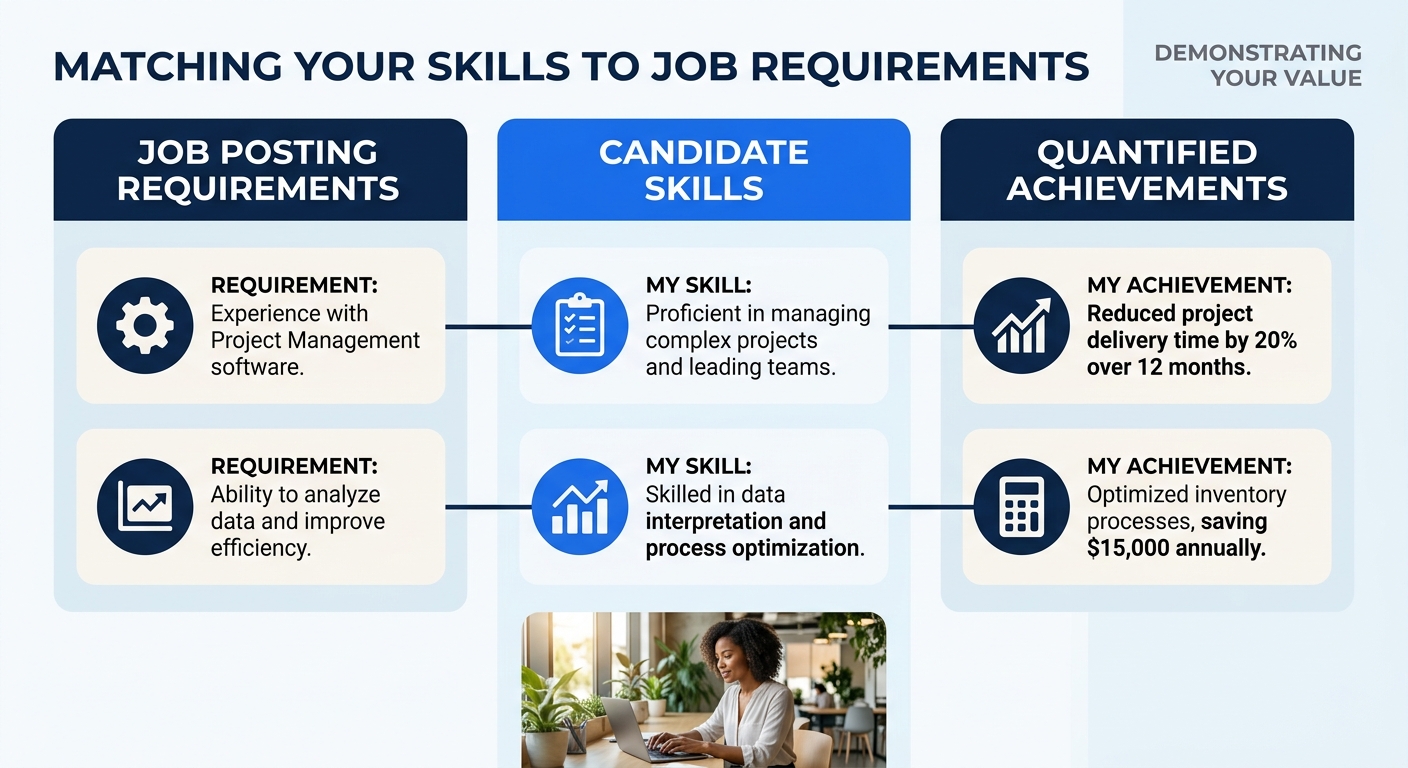
Go back to the three to five skills you highlighted from the job posting in Step 1. Pick the two or three where you have the strongest evidence. For each, write a sentence that names the skill, describes what you did, and quantifies the result whenever possible.
63% of HR professionals say they want to understand a candidate’s motivation for applying, so weave in why this particular role at this particular company interests you. Connect that interest to something from your research: a company value, a product direction, a team structure you’d thrive in.
A practical structure for the body paragraphs:
- Paragraph 1: Your strongest skill-qualification match with a quantified achievement, plus one supporting example that shows range.
- Paragraph 2: Why this company specifically, tied to your research findings. A brief mention of how your background fits the team’s direction or the organization’s goals.
Avoid buzzwords. 51% of resumes already contain phrases like “team player” and “results-driven.” Your cover letter loses impact when it echoes the same language everyone else defaults to. Be specific instead: say what you did, with whom, and what changed because of it.
Step 5: Close With Confidence and a Clear Ask
Your closing paragraph runs three to four sentences. Thank the reader for their time, restate your interest in the role, and include a direct call to action. Something like: “I’d welcome the opportunity to discuss how my experience in X could support your team. I’m available for a conversation at your convenience and can be reached at [phone/email].”
Sign off with “Sincerely” or “Best regards,” followed by your full name. If you’re sending the letter as an email body rather than an attachment, your email signature can serve as the sign-off.
Don’t apologize, don’t undersell yourself, and don’t introduce brand-new qualifications here. The closing reinforces what you’ve already established in the body.
You’ll know it worked when your final paragraph expresses genuine interest, asks for a specific next step, and ends cleanly in four sentences or fewer.
Step 6: Format, Proofread, and Send
MIT’s career advising guidelines specify that a cover letter should be no longer than one page with a font size between 10 and 12 points. Aim for 250 to 400 words total. If you’re over 400, you’ve included too much.
Your formatting checklist:
- Font: A clean, readable typeface like Calibri, Arial, or Georgia in 10–12pt
- Margins: One inch on all sides
- Spacing: Single-spaced with a blank line between paragraphs
- File type: PDF unless the posting specifically requests .docx (PDFs preserve your formatting across devices)
- File name: FirstName-LastName-CoverLetter.pdf
Now proofread. 58% of hiring managers automatically reject cover letters with typos. Read your letter out loud and you’ll catch awkward phrasing and errors your eyes skip over on screen. Then have someone else read it. A second pair of eyes catches what yours won’t.
Before sending, do a final content check: does your letter name the company and the specific position title? Does it reference at least two requirements from the job posting? 35% of hiring managers disregard letters that fail to mention specific skills listed in the posting, so this two-minute review protects the 45 minutes you’ve already invested.
Warning: 79% of employers read cover letters even when they’re listed as “optional” in the posting. If the application gives you the option to include one, always include one.
Common Mistakes and How to Fix Them
Problem 1: Your letter reads like a copy of your resume. Your cover letter should explain context and motivation that your resume can’t convey on its own. If a sentence appears word-for-word on both documents, cut it from the letter and replace it with the story behind the achievement. As Indeed’s cover letter guide explains, a strong cover letter “lets you expand on your skills more personally than a resume.”
Problem 2: You’re sending the same letter to every job. Customizing each application takes extra time, but it’s the single highest-impact change you can make. Swap the company name, the role title, and the skill-qualification matches for each posting. Your standard format stays the same; the content inside it changes.
Problem 3: Your letter is too long. If you’re over 400 words, cut the weakest example from your body paragraphs. Every sentence should either demonstrate a qualification or explain your motivation. If it does neither, delete it.
Where to Go From Here
You now have a repeatable six-step process: research, header, hook, body, close, format and proofread. The first letter takes the longest. By your third or fourth application, you’ll find yourself spending most of your time on Step 1 (research) and Step 4 (matching skills to the posting), which is exactly where your effort belongs.
If you want to tighten your overall presentation, our guides on proper cover letter formatting walk through layout decisions in more detail. And the cover letter is only one piece of the application: once it does its job and gets you into the room, the interview is where you close the deal.
Every sentence on that page has one job: convince a busy person to spend 30 minutes talking to you. Write with that person in mind, and the rest follows.