

 4.9
4.9 4.5
4.5Applicants returning to work after extended employment gaps should address the absence honestly and include any certifications or volunteer work completed during the period, according to Andy Decker, CEO of Goodwin Recruiting, a candidate recruitment and placement firm. The guidance, published July 20 by the Associated Press, comes as resume gaps have become less stigmatized following the COVID-19 pandemic, when many workers paused careers for childcare or family responsibilities.
TL;DR: Recruiters now expect job seekers to explain resume gaps directly in interviews, citing any skills gained or certifications earned during the break. Extended employment lapses carry less stigma than before the pandemic.
Decker told the AP that employers focus more on skills and results than perfect career chronology. “You have to address it honestly and directly,” he said. “Make sure that you’ve included anything you did during that time. Did you get certifications? Did you volunteer?”
Extended Gaps Increasingly Common Post-Pandemic
Employment history lapses have grown more common since remote work and pandemic-era caregiving shifts normalized career interruptions, according to Decker’s statement. Some applicants now label these periods on resumes as “career break” or “family responsibility,” he said. Job seekers who lost positions during mass layoffs or left to care for ill relatives face questions about the gaps during screenings and interviews.
Monique Di Liberto, 57, took a 17-year break from her opera singing career to raise children while her husband built a chiropractic practice. When she began job searching for administrative support roles, she repeatedly heard she wasn’t qualified despite transferable experience managing PTA budgets and presenting project plans to school boards. One interviewer told her, “This resume was so different than anything I had ever seen. I needed to see the person who created this,” according to the AP report.
Di Liberto proposed a 30-day trial as an administrative assistant, telling the employer: “I recognize that you probably are getting resumes of people who are far more qualified than me, but I would challenge that they are not as tenacious and driven as me.” The company hired her. Over the following decade, she advanced to head of client services at an artificial intelligence company, facing questions about her 17-year employment lull in each subsequent interview.
Transferable Skills From Non-Traditional Experience
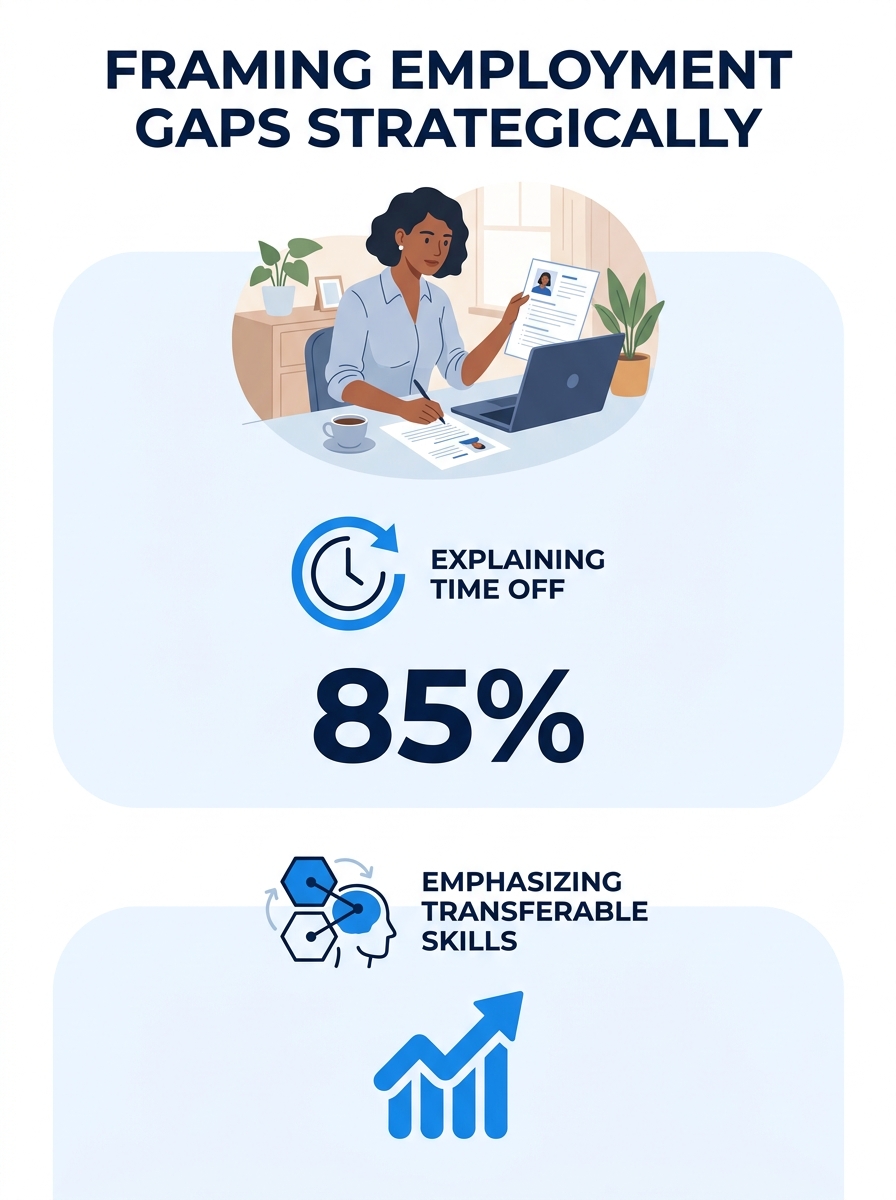
Employers value skills over perfect career paths, making volunteer work an effective way to maintain professional capabilities during gaps, Decker said. Di Liberto reviewed her activities beyond family life for workplace-relevant skills: serving as PTA president required budget management, and helping with her husband’s business involved software rollouts and hiring.
Laura Sandvik left a marketing position to care for her mother and later her children. She highlighted soft skills gained from the experience in her LinkedIn profile, writing: “I have no regrets about those choices. They strengthened my patience, perspective, and sense of responsibility.”
For job seekers who need to explain gaps on their resumes more effectively, professional resume writers can help reframe career breaks around transferable skills and accomplishments. Many resume builders now include formatting options specifically designed to minimize visual emphasis on employment timeline gaps.
Layoff Explanations Should Avoid Negativity
Applicants who lost jobs through restructuring or layoffs don’t need to volunteer that information on a resume but should respond honestly if asked, Decker said. “I would simply say, ‘I was one of 270 people caught up in this reduction of force,'” he suggested. Practice the response before the interview and avoid blaming the employer, he added.
Baura Zia, 35, was laid off in 2022 shortly after returning from maternity leave. On her resume, Zia describes the following three years as a “parenting gap” and notes she moved across the country during that period. When interviewing for part-time positions, she explained the previous organization lost the contract she worked on, clarifying the layoff wasn’t performance-related.
“Having grace with yourself is really important,” Zia said. “It’s not a flaw to have a career gap. If anything, you’ve grown so much from that.”
During her job search, Zia contacted people online to ask about their experience at companies where she’d applied. She also reached out to contacts from a networking group for women in public relations she joined years earlier.
What Happens Next
The advice aligns with a broader shift in how recruiters now approach employment gaps during interviews, with hiring managers expecting candidates to proactively address timeline breaks rather than leaving them unexplained. Job seekers preparing to re-enter the workforce after extended absences can strengthen applications by documenting volunteer roles, certifications, or freelance projects completed during the gap period.
For candidates concerned about how resume formatting choices affect gap visibility, career coaches recommend reverse-chronological layouts that pair each employment period with a brief explanation of the following break. The strategy allows applicants to control the narrative before interviewers raise questions, particularly for gaps exceeding six months.