

 4.9
4.9 4.5
4.5Unemployment duration in the United States averaged 24.9 weeks in July 2026, with more than one in four jobless workers searching for six months or longer, according to the U.S. Bureau of Labor Statistics—a market condition that career experts now attribute partly to mass-application strategies and AI-generated résumés flooding employer pipelines, according to a report published August 19, 2026, by Forbes contributor Caroline Castrillon.
TL;DR: The average job search stretched to nearly six months in July 2026 as traditional tactics—mass applications, generic résumés, job-board reliance—lost effectiveness in a market where AI tools and automated screening changed both sides of the hiring equation.
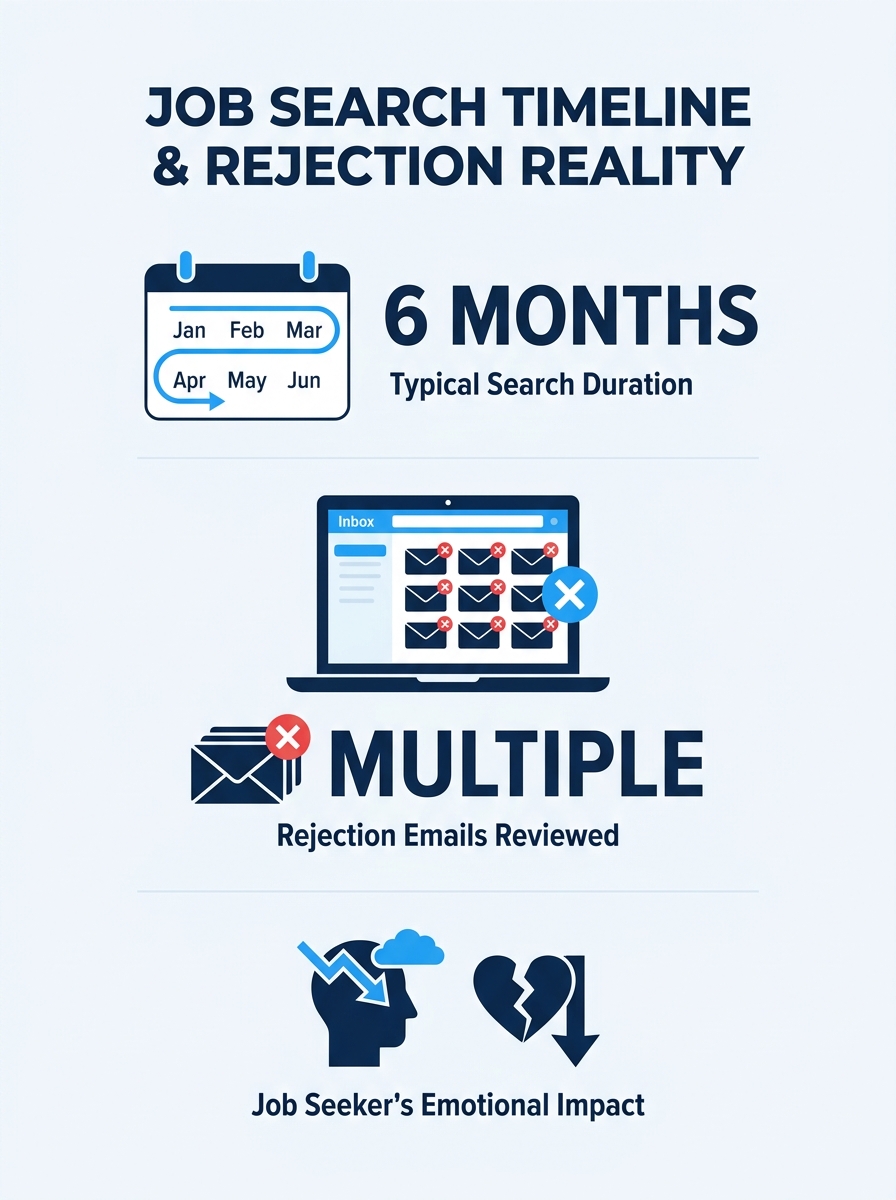
The 24.9-week figure represents the typical time spent by unemployed individuals actively searching for work, the Bureau of Labor Statistics reported. Of the total unemployed population, 25.5% had been job hunting for 27 weeks or longer, the data showed.
Application Volume Undermines Candidate Quality Signals
One-click application tools enabled job seekers to submit more applications while simultaneously eroding their effectiveness, according to iHire’s 2025 State of Online Recruiting report. The survey found that 59.7% of employers cited receiving too many unqualified applicants as one of their biggest job-board challenges, while 35.1% of job seekers said they valued the ability to apply to multiple jobs at once.
“That creates a crowded funnel where volume alone does little to help you stand out,” Castrillon wrote in the Forbes analysis. The mismatch between candidate behavior and employer needs points to a structural problem: tactics that feel productive—submitting dozens of applications per week—may actively reduce a job seeker’s chances of standing out in applicant pools now measured in hundreds rather than dozens.
The data suggests candidates should prioritize roles where their background closely matches employer requirements rather than measuring progress by application count, the report stated. For context on preparing for high-stakes interviews once applications succeed, job seekers may reference public speaking advice for interview success to refine delivery.
AI Adoption Raises Minimum Standard for Application Materials
AI tool usage for résumé and cover letter creation jumped to 29.3% of candidates in 2025, up from 17.3% the previous year, iHire’s survey found. The widespread adoption of AI writing assistance elevated baseline expectations for application quality, making polished formatting and keyword optimization table stakes rather than differentiators.
Employers now expect résumés to demonstrate specific accomplishments with measurable outcomes—numbers, percentages, time saved, revenue generated, costs reduced, or growth achieved, the Forbes report stated. Generic descriptions of job duties no longer satisfy screening requirements, whether conducted by automated systems or human reviewers.
Skills-Based Hiring Demands Concrete Evidence
Seventy percent of employers reported using skills-based hiring practices in the NACE Job Outlook 2026 survey, up from 65% the previous year. The practice appeared most frequently during job interviews, where 87% of employers applied skills assessment, followed by candidate screening at 65%, the National Association of Colleges and Employers data showed.
Job seekers must prepare specific examples of problems solved, decisions made, challenges handled, and measurable results delivered, Castrillon stated. Depending on the field, that evidence may include work samples, portfolios, case studies, or skills assessments beyond the résumé itself.
The shift reflects employer skepticism about credentials and self-reported skills in an environment where AI can generate plausible-sounding application materials at scale, the report noted.
Multi-Channel Search Strategies Replace Board-Only Approaches
While job boards remain a recruiting staple, employers diversified their candidate sourcing in 2025, iHire’s survey found. Employee referrals were used by 71.3% of employers, company career pages by 49.5%, and professional networking sites such as LinkedIn by 46.1%.
The data indicates that search-and-apply strategies leave job seekers visible through only one of several channels employers monitor, the Forbes analysis stated. Effective job searches now require identifying roles through job boards but pursuing them through company career sites, former colleagues, recruiters, and professional contacts.
For professionals seeking structured guidance on career transitions and search optimization, career coaching services offer personalized strategy development based on individual background and target roles.
Posting Activity Decouples from Actual Hiring
Not every active job listing represents a genuine near-term opportunity, Revelio Labs research indicated. The ratio of hires per job posting fell from 0.75 in earlier periods, the labor market analytics firm found, suggesting that companies maintain posted openings even when hiring processes stall or pause.
Job seekers waste time and dilute their application quality when pursuing roles that employers have no immediate intention to fill, the report stated. Verification steps—checking posting age, contacting the hiring manager, or researching recent company layoffs or hiring freezes—can help candidates invest effort where opportunities genuinely exist.
Context and Outlook
The collision of AI-enabled mass applications and automated screening systems transformed job search mechanics between 2024 and 2026, creating an environment where traditional volume-based tactics actively work against candidates. For readers of the ResumeWriting.net blog, the research underscores a central theme: generic applications lose value as screening technology and candidate behavior both escalate, making targeted positioning and verifiable accomplishment documentation the new minimum threshold for interview consideration.
The 24.9-week average unemployment duration suggests that even qualified candidates face extended searches when relying on outdated playbooks. Skills-based hiring’s rise to 70% employer adoption means application materials must now function as evidence portfolios rather than credential lists—a shift that rewards candidates who maintain concrete examples, quantified results, and work samples over those who rely on job-title progression alone.
Job seekers should expect these trends to intensify rather than reverse. As AI writing tools become more sophisticated, employer countermeasures—including portfolio requirements, skills testing, and referral preference—will likely grow more stringent, creating advantage for candidates who adapt search strategy proactively rather than reactively.