

 4.9
4.9 4.5
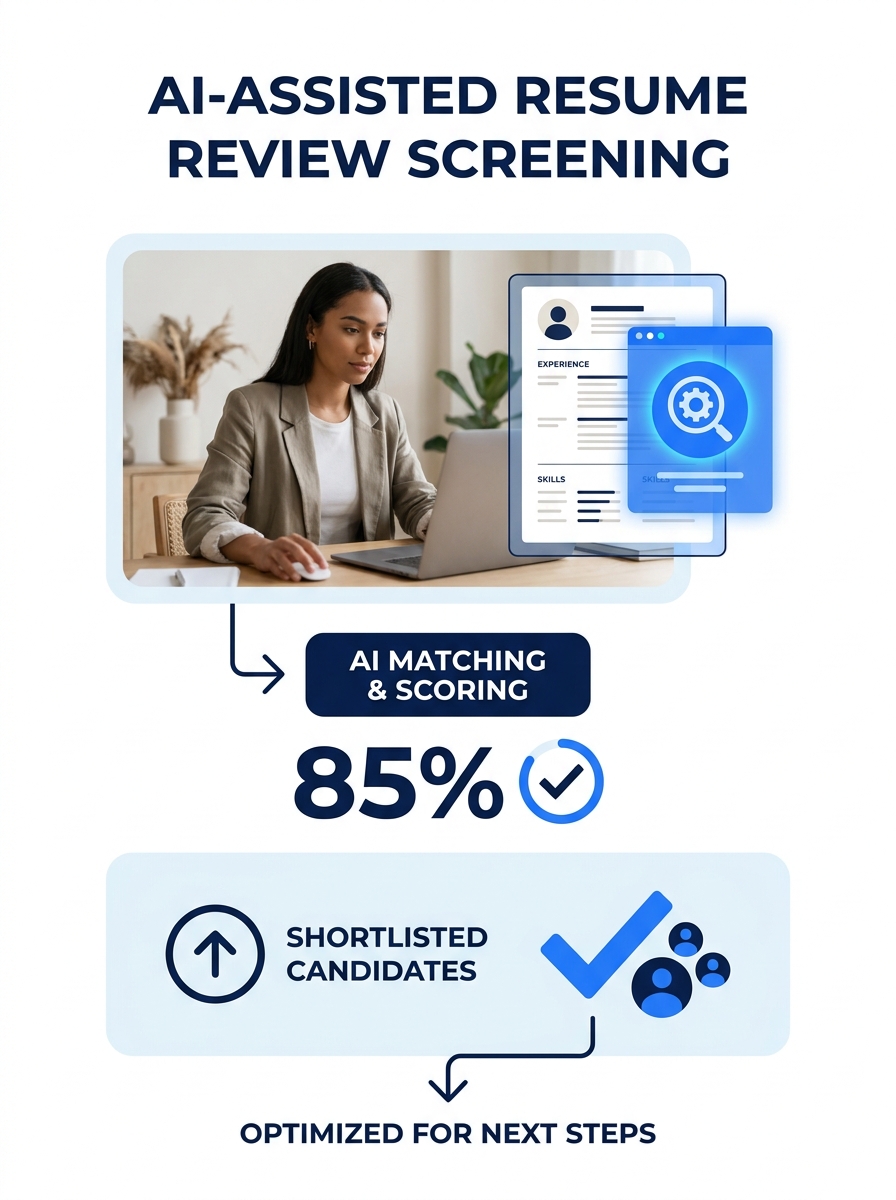
4.5Hiring managers spend an average of 11.2 seconds reviewing each resume, according to a study released May 8 by AI-powered interview platform InterviewPal, while 71% now deploy automated software to filter candidates before human review begins. The research examined screening patterns across multiple industries as application volumes surge and artificial intelligence tools reshape both sides of the hiring equation.
The study arrives as employers report receiving hundreds of applications per opening, compressing initial resume evaluations into split-second judgments, according to Forbes. Roshaunda Green, global senior talent acquisition partner at Pitney Bowes, told the outlet that recruiters prioritize sequential alignment with job requirements during those brief scans, seeking immediate evidence that candidates meet 80% of listed qualifications without interpretation.
Sequential Job Requirement Matching Drives First Impression
Job descriptions list mandatory skills in deliberate order, Green explained to Forbes, with the first five bullet points representing core competencies essential to role performance. Candidates who bury alignment evidence below resume headers or fail to mirror requirement language face automatic disqualification during machine screening.
The compression means resumes must surface qualification matches in their top third. Generic summaries that force recruiters to infer connections between candidate experience and role needs typically fail the 11-second threshold, particularly when automated systems parse applications before human eyes engage.
Quantified Results Replace Task Descriptions
Priya Rathod, workplace trends expert at Indeed, identified measurable impact as the second element recruiters seek during rapid scans. Sales professionals must specify quota attainment rates and client acquisition numbers; project managers need delivery timelines and budget figures; developers should cite deployment volumes and performance improvements.
The shift reflects broader pushback against AI-generated resume language, which frequently defaults to passive “responsible for” phrasing that dominates competitor applications. Concrete metrics—”increased conversion rates 34% across Q2-Q3″ versus “responsible for improving sales performance”—distinguish human-tailored resumes from template output. Job seekers looking to strengthen this dimension may find useful frameworks in resume language audits focused on power verbs and measurable outcomes.
Keyword Optimization Now Mandatory for ATS Passage
The 71% AI-adoption rate among hiring managers means algorithmic filters now represent the primary gatekeeper, not the initial human reviewer. Rathod advised Forbes readers to keyword-match both resumes and cover letters against job descriptions, treating AI as a first-round opponent that demands precise terminology alignment.
She cautioned against wholesale AI-generated content, recommending candidates use automated tools only for keyword identification before manually customizing tone and experience details. The same filtering systems that elevate keyword matches also flag generic phrasing patterns, creating a technical paradox where AI-assisted writing must remain demonstrably human to pass AI screening. Understanding how AI-enhanced content triggers readability failures in ATS systems has become central to competitive application strategies.
Cookie-Cutter AI Resumes Create Credibility Crisis
Sixty-seven percent of hiring managers reported that AI-generated resumes have negatively impacted their screening processes, citing both fabricated credentials and format homogeneity as primary concerns. Green described receiving “15 of the same resumes for one job,” where candidates submit raw AI output without personalization adjustments.
The sameness problem extends beyond language to structural choices. When multiple applicants deploy identical resume builders or ChatGPT prompts, recruiters encounter matching bullet structures, indistinguishable summary statements, and uniform skill categorizations. Green emphasized that credibility loss occurs “immediately” when reviewers recognize template patterns, particularly during the compressed 11-second evaluation window where differentiation determines advancement.
The convergence has driven some recruiters toward personal branding signals that resist automation, valuing portfolio links, GitHub contributions, and case-study specifics over polished but generic prose. For roles requiring technical precision, keyword analysis strategies that avoid generic bloat offer middle-ground approaches that satisfy ATS filters without sacrificing human distinctiveness.
What Happens Next
Job seekers face a technical balancing act: resumes must contain sufficient keyword density to pass automated filters while maintaining enough originality to engage human reviewers during the 11-second scan. The InterviewPal findings suggest prioritizing top-third alignment statements, quantified accomplishment bullets, and deliberate language variation from job-description phrasing.
The 67% negative-impact figure indicates hiring managers are developing pattern-recognition skills for AI-generated content, making customization non-optional. Candidates who extract keyword lists from job postings but rewrite bullets in personal voice, who cite specific metrics rather than responsibility categories, and who structure resumes around sequential requirement matches rather than chronological defaults will likely navigate both algorithmic and human screening stages more successfully.
The compression to 11.2 seconds eliminates margin for interpretive reading, transforming resume optimization from stylistic preference into technical necessity for interview advancement.