
 4.9
4.9 4.5
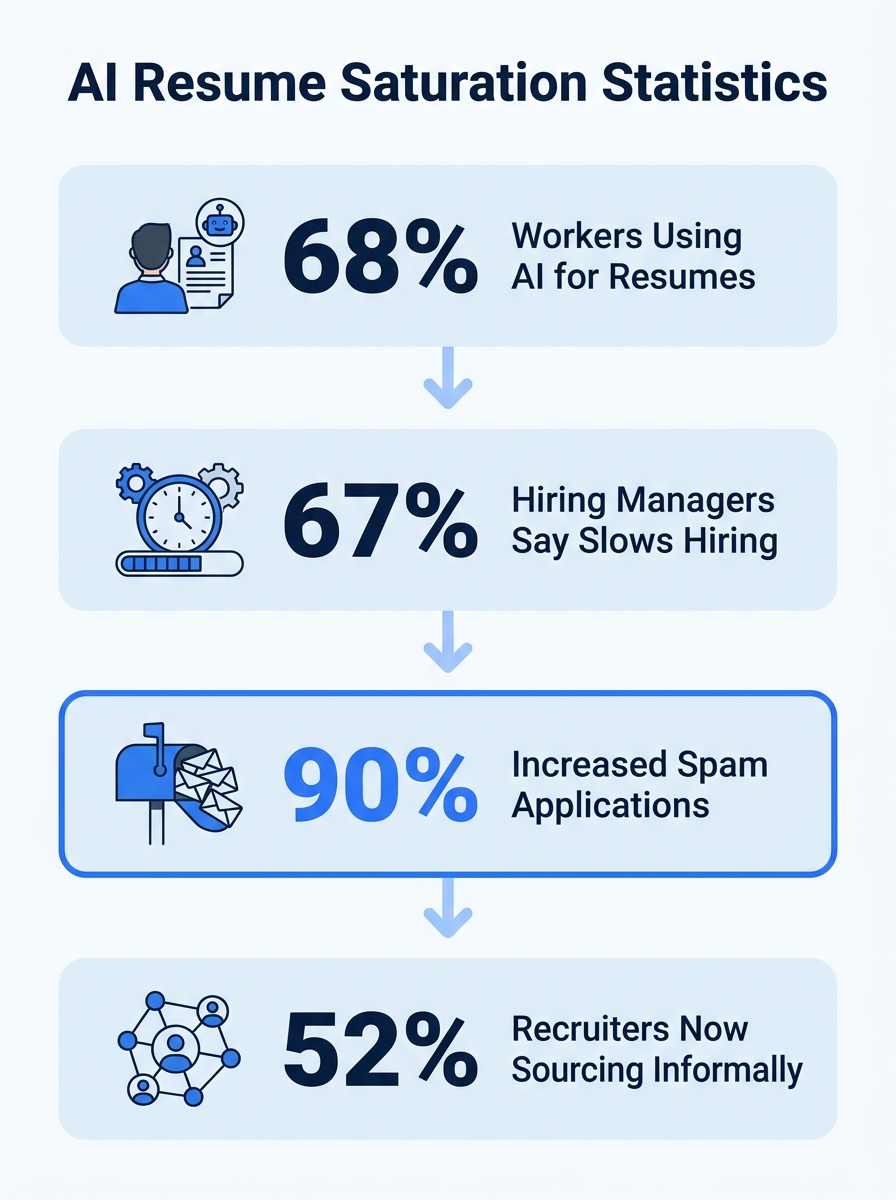
4.5When HR Dive reported this week that recruiters have started sourcing candidates at bars, parties, and grocery stores, the headline read like satire. The Zety survey behind the story found that 52% of hiring professionals have now scouted talent in informal social settings, with 84% reporting those encounters produced stronger hires than formal application channels. The catalyst is an AI resume saturation problem that has been building for two years and has now reached a breaking point: traditional resume pipelines are so flooded with machine-generated applications that many hiring teams can no longer locate real candidates inside them. Recruiters aren’t abandoning their desks for happy hours because they want to. They’re doing it because their inboxes stopped being useful.
The Flood, By the Numbers
The scale of the problem has become hard to ignore. According to a Forbes report published in March, more than two-thirds of hiring managers say AI-generated resumes are actively slowing the hiring process, with roughly 20% reporting delays of around two weeks per open role. A Resume Now survey from late 2025 found that 68% of workers used AI to write their resumes, while 90% of hiring managers reported a corresponding surge in spammy or low-effort applications. These two statistics, taken together, paint a picture of a system eating itself: candidates use AI to produce more applications faster, recruiters get buried under the volume, and the signal-to-noise ratio collapses for everyone.
“AI is flooding the market right now with resumes that mirror the job description,” Sandra Lavoy, Robert Half Canada’s Ottawa-based metro market director, told The Globe and Mail. In some cases, generative AI tools are fabricating or embellishing qualifications entirely. The result is a new layer of verification work that didn’t exist three years ago. Recruiter fatigue isn’t an abstract concern; it’s a measurable bottleneck, with HR teams at mid-size companies now spending more time disqualifying AI-polished applications than evaluating genuine candidates. If you’ve been wondering why your carefully written resume seems to disappear into the void, this is a major part of the answer. Your application is sitting in a pile with hundreds of machine-generated documents that look superficially identical to yours. And we’ve written extensively about how AI-polished resumes can sabotage your personal story even when the content itself is accurate.
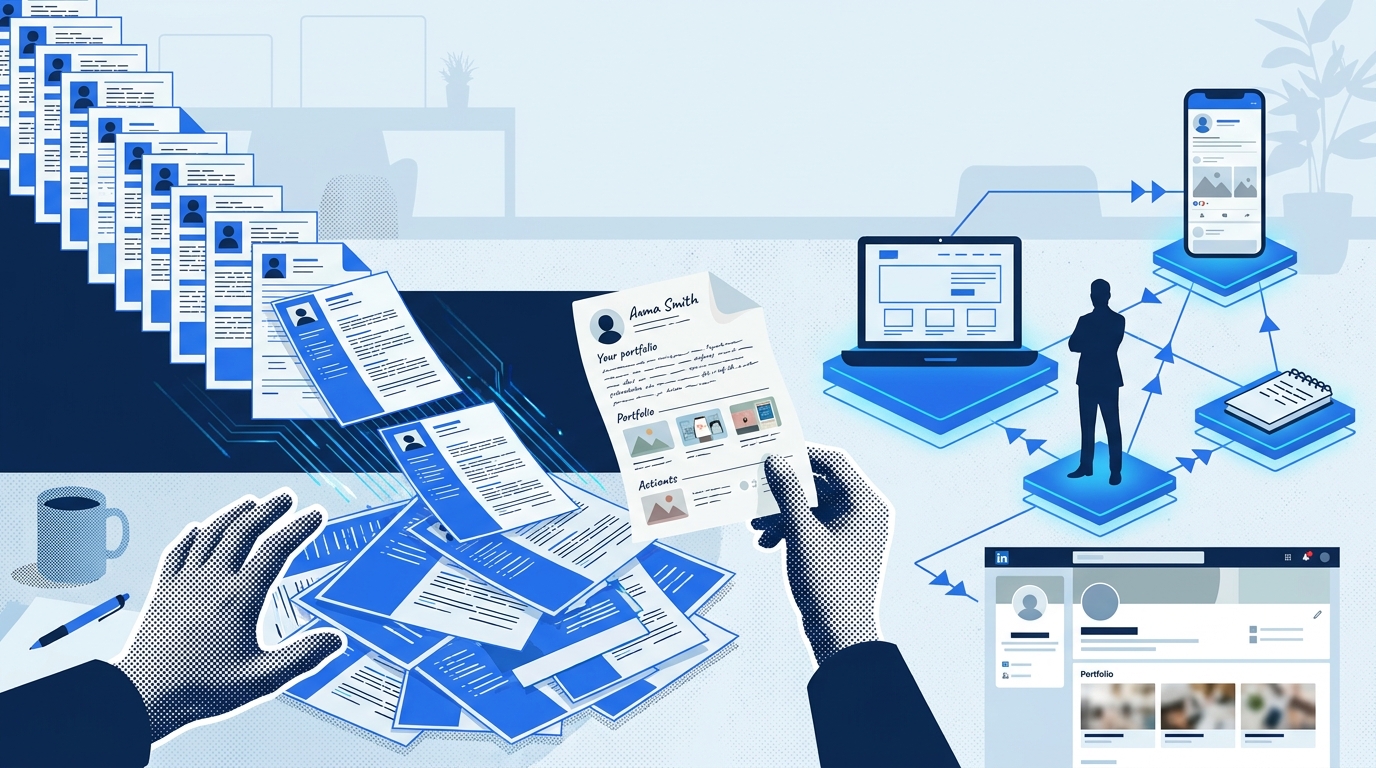
The downstream effects are spreading beyond the hiring desk. Companies like Automattic have banned AI use in application responses. Expensify has replaced resumes entirely with motivation-based questions. These are extreme responses, but they reflect a genuine crisis of trust. When every resume reads like it was optimized by the same algorithm, the document stops functioning as a differentiator. It becomes noise.
How Recruiter Sourcing Has Already Changed
The shift in recruiter sourcing trends in 2026 has been swift and measurable. Two days ago, Inc. reported that recruiters are increasingly ignoring perfect resumes and scouting LinkedIn instead, prioritizing candidates who have visible professional presence over those who submit polished but anonymous applications. Active sourcing platforms are booming alongside this shift. Gem, one of the fastest-growing tools in the space, now scans a database of over 800 million professional profiles while also rediscovering candidates already sitting in a company’s ATS and CRM. HireEZ, SignalHire, and Betterleap are all expanding rapidly to meet the same demand, each offering AI-powered search across multiple channels.
What’s happening here is a structural inversion. For decades, the hiring model was fundamentally inbound: companies posted jobs, candidates applied, and recruiters filtered the pile. That model assumed a manageable volume of reasonably honest applications. Both assumptions have broken down. The new model is outbound. Recruiters are searching for candidates rather than waiting for them, which means your visibility outside of job applications matters more than it ever has. Your LinkedIn profile optimizations carry real weight here, because a recruiter using Gem or LinkedIn Recruiter to build a shortlist will never see a resume you submitted through a job board. They’ll see your profile, your posts, your endorsements, and your activity.
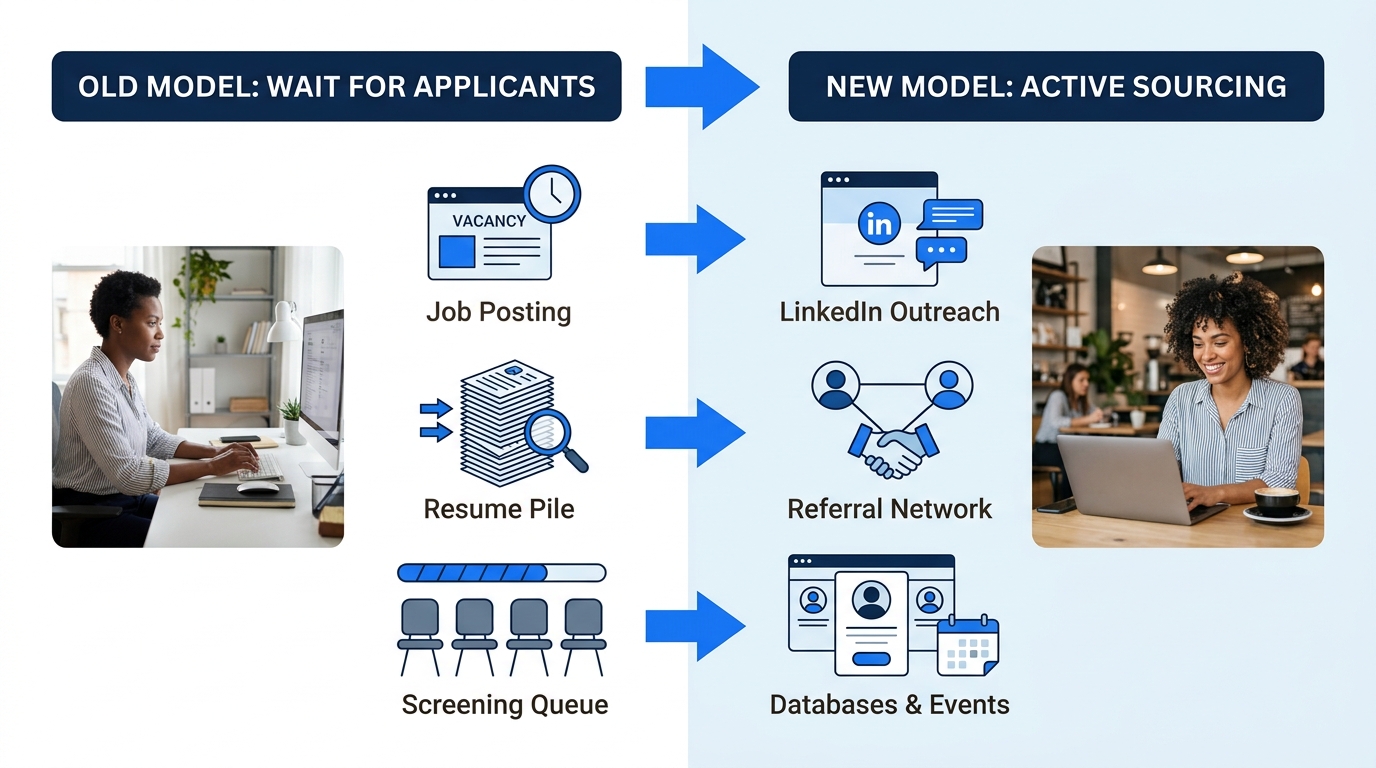
And it’s not only digital channels where this shift is playing out. The Zety survey’s finding about bars and grocery stores sounds like a punchline, but it reflects something real about how trust operates in hiring. When a recruiter meets someone at an industry meetup and has a five-minute conversation about their work, that interaction provides more signal than a two-page document ever could. Behavioral fit, communication style, and genuine expertise are all immediately apparent in ways that no resume can convey, no matter how well-written.
When every resume reads like it was optimized by the same algorithm, the document stops functioning as a differentiator. It becomes noise.
Personal Branding Over Templates
The phrase “personal branding” tends to make people uncomfortable, conjuring images of influencer-style self-promotion that feels disconnected from the reality of job searching. But the concept, stripped of its marketing gloss, is practical: it means making your professional identity visible and distinct enough that someone can find you, recognize what you do, and understand why you’re worth talking to. A study covered by Digital Information World found that nearly one in three professionals are actively repositioning their personal brand to pursue new opportunities, whether that means breaking into a different industry, preparing for a leadership role, or lobbying for an internal move.
The Rolling Stone Culture Council put the dynamic bluntly: “In a world dominated by screens, résumés whisper while content shouts. Most hiring managers look you up online before they ever schedule a call, and what they’re searching for isn’t your degree.” This aligns with what we’re hearing from recruiters across the board. Authentic resume positioning means your resume and your online presence tell the same coherent story, one that a machine didn’t generate and that couldn’t belong to anyone else. The resume sections that most candidates skip are often the ones that carry the most personal branding value, precisely because they require genuine thought about who you are and what you bring.
So what does this look like in practice? It means your LinkedIn headline says something specific about the problems you solve, not a string of keywords an AI tool suggested. It means your resume’s summary section reflects your actual voice and professional perspective rather than a templated paragraph that could describe any of the 200 other applicants in the pile. It means you have some form of visible work product, whether that’s LinkedIn posts about your field, a portfolio of projects, a GitHub profile, or contributions to professional communities. The point isn’t to become a content creator. The point is to leave enough of a trail that when a recruiter searches for someone with your skills, your name surfaces with context attached to it. We’ve covered how to tell when AI rewriting helps versus when it actively hurts your chances, and the distinction maps cleanly onto this question of authenticity. AI can help you tighten language and fix structural issues. It cannot give you a professional identity.
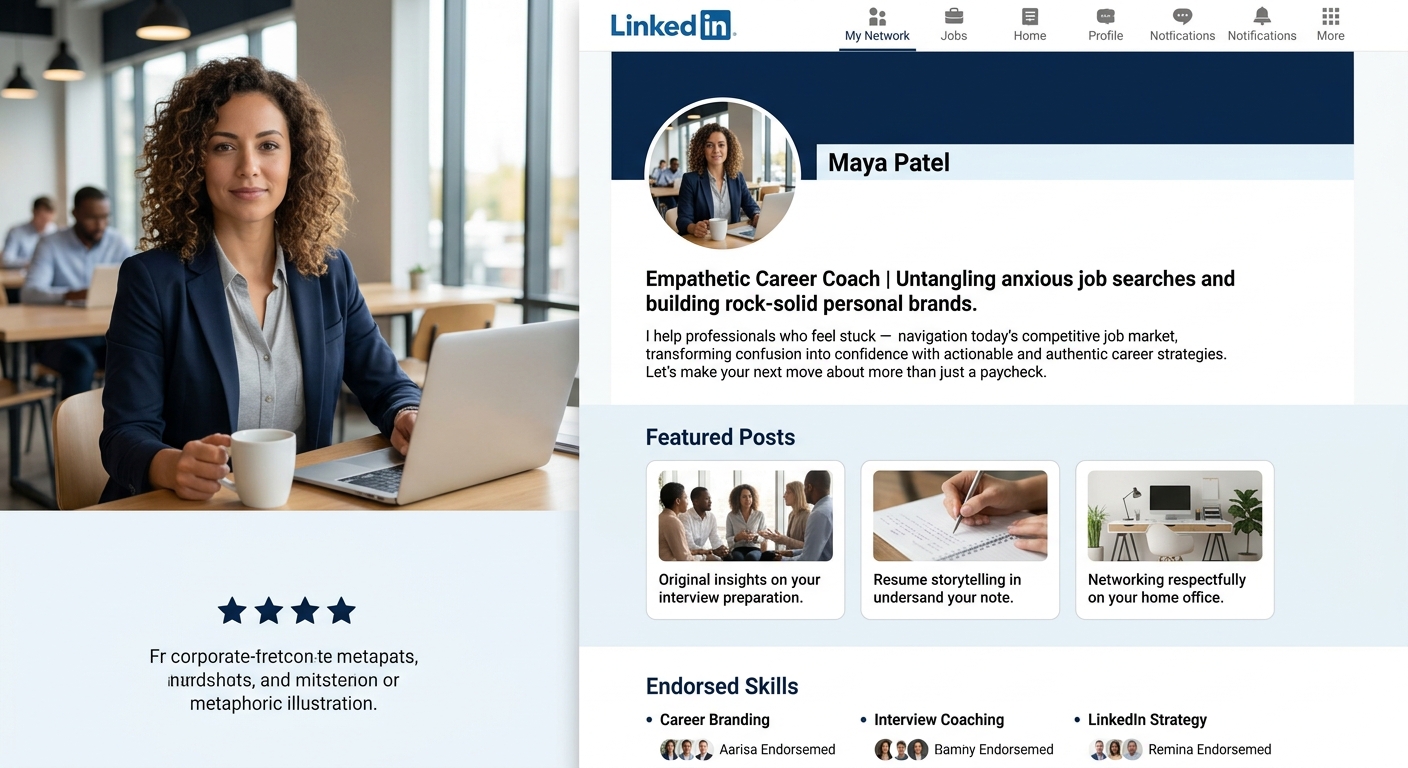
Even resume builder platforms are acknowledging this shift. Enhancv, for instance, now emphasizes storytelling and personal strengths, building in sections for achievements, values, and traits rather than defaulting to the keyword-stuffing approach that dominated the previous generation of tools. The direction of the market is clear: personal branding over templates, specificity over optimization, and evidence of real work over claims about qualifications. If you’re navigating this landscape after a career disruption, the challenge is sharper but the principle holds. Your resume and your online presence need to answer the question “who is this person?” in a way that an AI tool would never answer it.
Where the Tension Remains
The return to personal branding and active sourcing solves real problems for recruiters drowning in AI-generated noise. But it also creates new ones, and it’s worth being honest about them. A hiring model that rewards visibility, networking, and online presence advantages people who already have professional platforms, social capital, and time to invest in content creation. Introverts, career changers, people returning from caregiving gaps, and workers in industries where LinkedIn activity isn’t the norm face a steeper climb under this model than under the old one. The traditional resume, for all its limitations, was at least a standardized format that gave everyone the same surface area to work with.
There’s also the question of durability. Recruiter sourcing trends have shifted before, and they’ll shift again. ATS platforms like Workday, Greenhouse, and iCIMS are already implementing stricter AI parsing systems designed to rank or disqualify resumes based on formatting patterns and content authenticity signals. It’s plausible that the technology catches up with the problem and that inbound applications become useful again once better filters exist. If that happens, the candidates who abandoned resume craft entirely in favor of personal branding may find themselves back at square one. The smarter bet, and the advice we keep coming back to when we look at how AI is changing resume screening, is to treat your resume and your personal brand as two expressions of the same professional story rather than choosing one over the other.
What we’re watching unfold is a correction, not a revolution. Resumes aren’t dying. They’re losing their monopoly on first impressions, which is a different thing entirely. The candidates who will navigate this period most successfully are those who can write a resume that sounds like a human being with a specific point of view and also show up in the places where recruiters are now looking. That’s a harder ask than feeding a job description into an AI tool and clicking “generate.” It requires thought about what makes you distinct, what you want to be known for, and how your professional life looks to someone encountering it for the first time from the outside. Nobody said that was easy, but the recruiters showing up at happy hours are telling you, in the most literal way possible, that the old approach has stopped working.