

 4.9
4.9 4.5
4.5Forbes contributor Jodie Cook published an analysis on April 24 identifying three profile modifications that address the conversion gap between LinkedIn profile views and visitor action, according to the article. The recommendations target profiles that attract visitors but fail to generate connection requests, message inquiries, or other engagement.
Cook’s findings stem from testing that quadrupled her LinkedIn following by eliminating conflicting messaging across profile sections. The core issue, the analysis states, is scattered calls to action that create decision paralysis rather than directing visitors toward a single clear next step.
Single Call-to-Action Placement
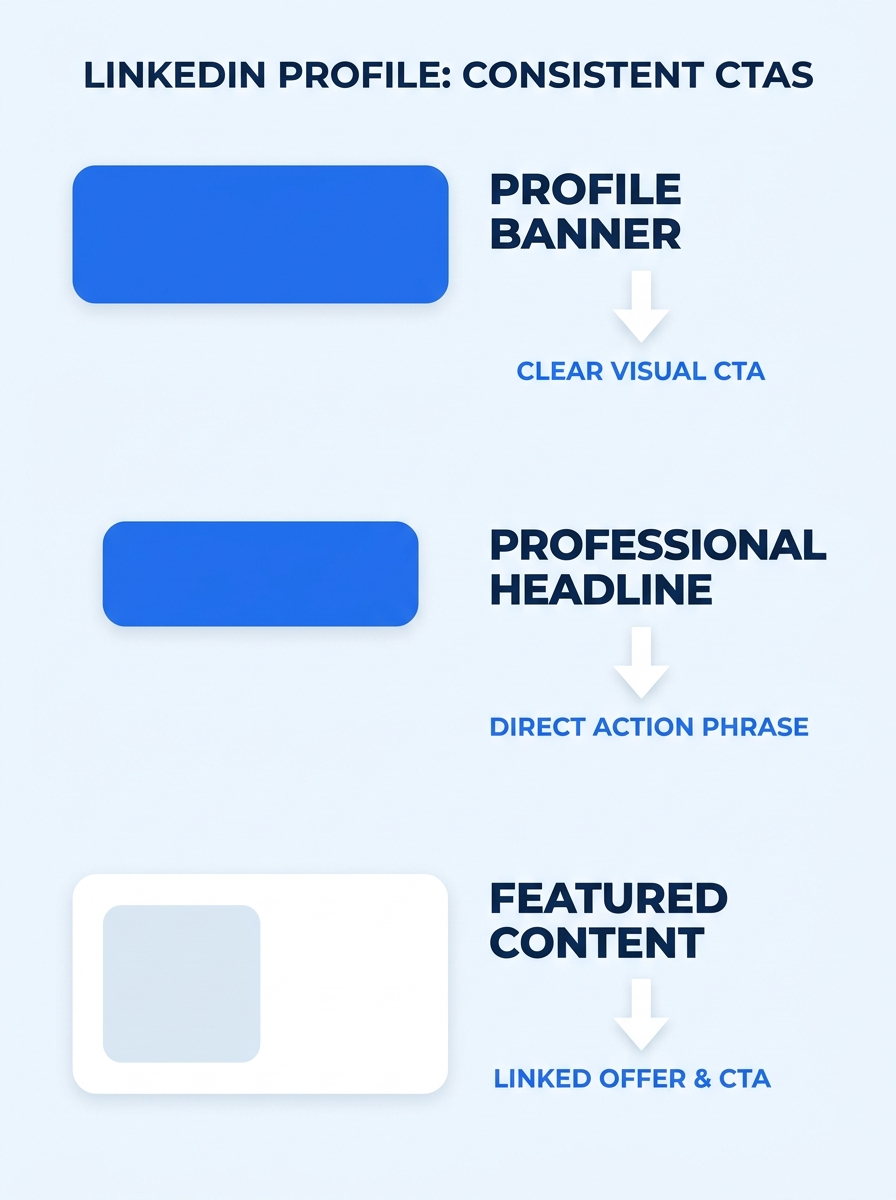
The first modification centers on consolidating multiple competing asks into one consistent directive across all profile sections. Most LinkedIn profiles, the article notes, request different actions in different locations—booking calls in the headline, downloading guides in the featured section, following for tips in the about section.
Cook’s analysis found this scattered approach produces lower conversion rates than profiles that repeat the same call to action in the headline, banner image, featured section, about section, and experience descriptions. The repetition appears excessive to the profile owner but necessary for visitors who view the profile once, the article states.
Audience-Specific Language Replacement
The second modification addresses generic terminology that fails to signal relevance to specific visitor types. Words like “helping businesses grow” or “working with professionals” describe broad categories without identifying a particular problem, role, or outcome, according to the analysis.
Cook’s recommendation involves replacing general terms—leaders, teams, organizations, entrepreneurs—with precise descriptors of the ideal connection’s role, industry, or situation. A leadership coach for tech founders, the article notes as an example, communicates differently than a leadership coach for senior executives changing industries.
The specificity requirement applies to LinkedIn’s billion-member user base, where broad language renders profiles invisible to high-value connections searching for specialized expertise, the analysis states.
Personal Context Over Credentials
The third modification prioritizes narrative explanation of motivation over qualification lists. Visitors can locate numerous professionals with similar credentials, the article notes, but cannot find elsewhere a specific practitioner’s reason for entering the field.
Cook’s framework places this story in the about section, extended beyond single-sentence mentions. The recommended structure includes a witnessed problem, learned insight, and resulting decision that shaped the professional’s current practice, according to the analysis.
The article distinguishes credentials as proof of capability while framing personal story as evidence of sustained commitment to quality work. The story should reveal values through specific experiences rather than abstract claims, Cook’s analysis states.
Implementation Timeline
The modifications require immediate execution rather than gradual rollout, according to the article. Cook recommends reviewing each profile section within one hour, cutting conflicting messages, sharpening language toward a specific audience, and adding the motivation story unique to that professional.
The clarity test Cook proposes involves reading the headline to someone outside the field. If that person cannot explain in one sentence what the profile owner does and who they help, the message needs revision, the analysis states.
The Takeaway
Job seekers and career changers following Cook’s framework need to adapt the entrepreneur-focused advice to hiring manager expectations. The single call-to-action becomes “open to opportunities in [specific role]” rather than “book a discovery call,” placed consistently in the headline, about section, and open-to-work settings. The audience-specific language targets hiring managers in particular industries or company sizes, not generic “recruiters” or “employers.” The personal story explains career trajectory and what drives interest in the next role—the equivalent of answering “why this company” before the interview question gets asked. Profiles optimized for conversion don’t just attract more views; they attract views from decision-makers who recognize a clear fit and know exactly how to proceed.