


 4.9
4.9 4.5
4.5ATS platforms reject up to 75% of incoming resumes before a human ever reads them, driven by formatting errors, missing keywords, and incompatible file types, according to Scale.jobs research on ATS mistakes. The four blockers responsible for most of that rejection volume are broken formatting, keyword gaps, AI-generated language, and context-free claims. Each one is fixable in under an hour.
TL;DR: Formatting errors, missing keywords, detectable AI writing, and vague bullet points account for the vast majority of automated and human resume rejections. Fixing these four blockers moves your application from the discard pile into the interview shortlist, and the repairs take between 15 and 90 minutes each.
Formatting That Machines Can’t Read
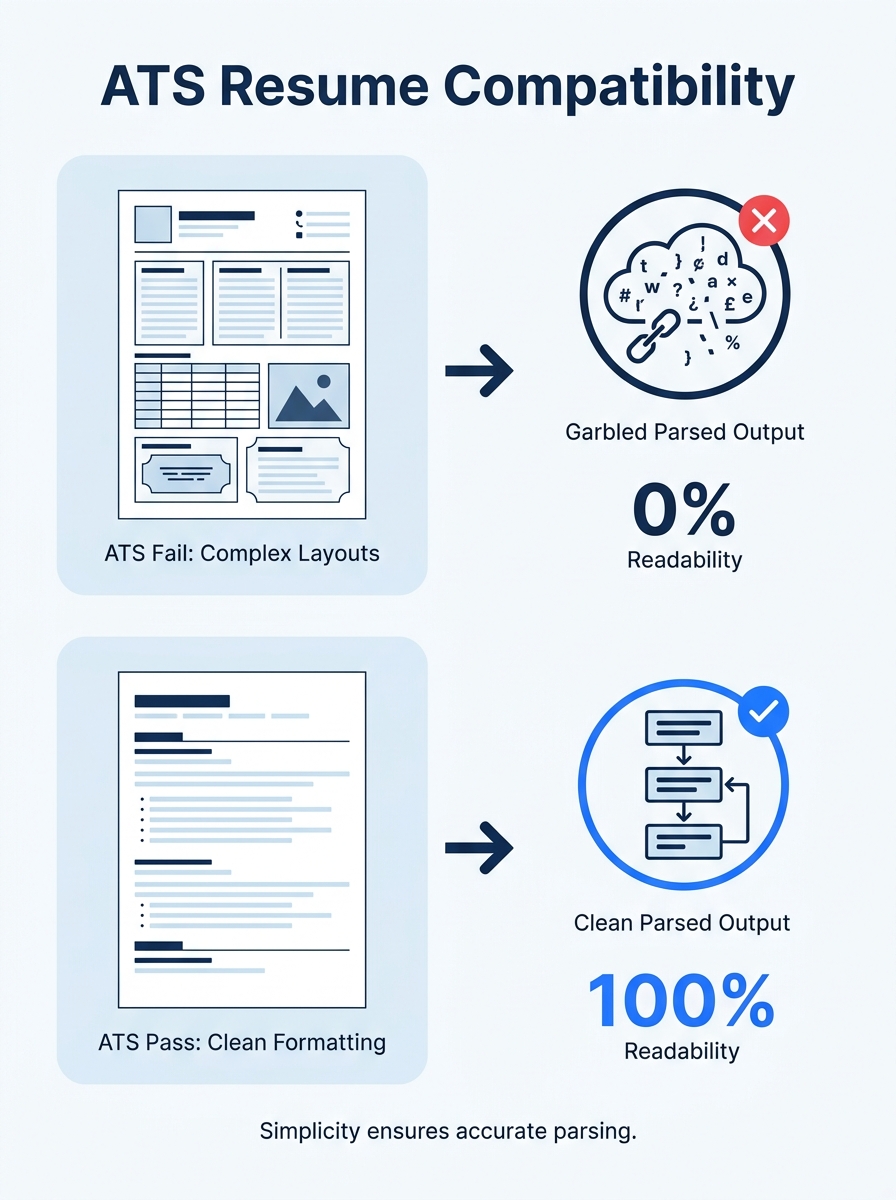
ATS software parses your resume by reading the underlying file structure, not the visual layout you see on screen. When the parser encounters tables, text boxes, headers, footers, or multi-column designs, it often extracts garbled text or skips entire sections. A resume that looks polished in PDF preview can arrive at the recruiter’s screen as a wall of fragmented characters, creating ATS failure points that disqualify you before your qualifications are even evaluated.
The specific formatting errors that trigger rejection break down into a short list. Embedded tables cause field-mapping failures in a significant portion of ATS platforms, according to the Boston Institute of Analytics’ breakdown of the top 10 parsing mistakes. Custom fonts that aren’t embedded in the file render as substitution characters. And graphics-heavy templates from design tools strip away entirely, leaving blank space where your skills section should be.
The fix: use a single-column layout with standard section headings (Experience, Education, Skills, Certifications). Stick to fonts like Arial, Calibri, or Georgia at 10-12pt. Save as .docx when the application portal accepts it, since .docx files parse more reliably than PDFs across most ATS platforms. If you’re unsure whether your current template passes, many of the top resume builders include built-in ATS compatibility checks that flag parsing problems before you submit.
How Missing Keywords Create Silent Rejection
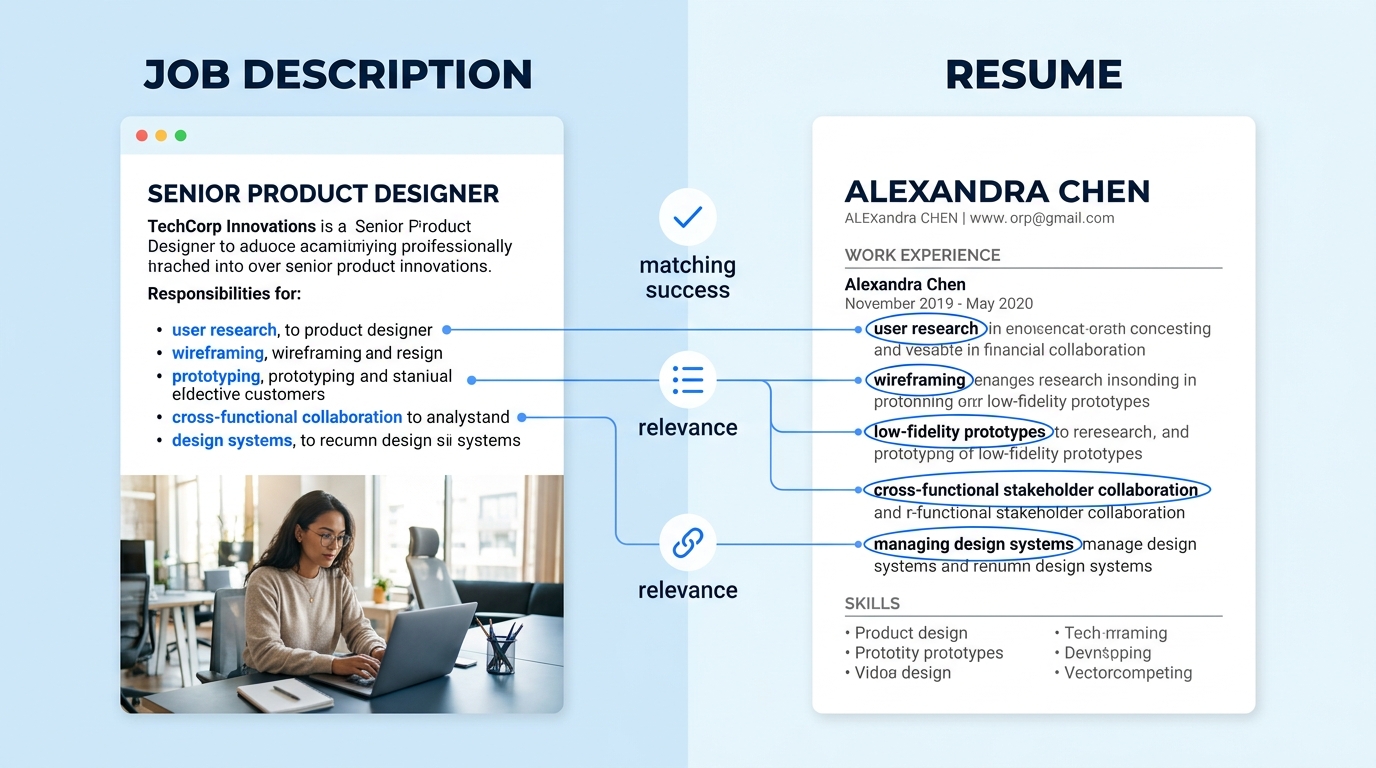
An ATS scores your resume against the job description’s required qualifications by matching keywords. When the system searches for “Search Engine Optimization” and your resume says only “SEO,” some platforms won’t register a match. That single abbreviation gap can drop your match score below the threshold and trigger automatic hiring manager rejection.
The keyword problem runs deeper than acronyms, though. Job descriptions often use specific phrasing like “cross-functional collaboration” versus “worked with other teams,” or “P&L management” versus “managed the budget.” Resume Worded’s analysis of rejected applications found that tailoring your resume to every application by matching the target posting’s exact language is the single most impactful change job seekers can make. One job seeker documented a 2.3% interview rate from 87 applications before switching to a tailored resume strategy, then saw callbacks climb dramatically after mirroring each posting’s keywords.
Eva Chan, Career Expert and Senior Digital PR Writer at Resume Genius, has written extensively about how resume red flags compound: a missing keyword section paired with formatting errors means the ATS never even evaluates your actual qualifications. The system has already moved on.
The fix: for every application, pull the 8-12 most important terms from the job description, covering hard skills, certifications, software names, and specific process language. Work each one into your skills section and your bullet points. Include both the full term and the abbreviation where relevant: “Search Engine Optimization (SEO)” covers both parsing possibilities. Don’t stop at hard skills either. Phrases like “stakeholder communication,” “Agile methodology,” or “regulatory compliance” appear in ATS keyword filters too. Since nearly 90% of employers now use AI to filter resumes, matching the posting’s language is table stakes for getting past the first gate.
AI-Generated Language Is Now the Top Red Flag
Resume Genius surveyed 625 hiring managers across the U.S. and found that AI-generated resume content is the biggest red flag recruiters look for in job candidates. The telltale signs include overly polished phrasing, buzzword density that reads like a thesaurus exploded, and a uniform sentence structure that no human naturally produces. Poor formatting and typos ranked as the second and third most common application blockers in the same survey.
This creates a genuine paradox for job seekers. AI tools are useful for brainstorming bullet points, catching grammar errors, and organizing experience. But when the output sounds algorithmic, with every sentence the same length and every bullet starting with an action verb followed by a quantified result in identical syntax, recruiters notice. And they move on.
Forbes career contributor Caroline Castrillon advises job seekers to edit thoroughly so that their resume “reflects your authentic voice rather than sounding like an algorithm mass-produced it.” That means varying your sentence structure, keeping some bullets shorter (12 words) and others longer (up to 25 words), and reading the final version aloud to check whether it sounds like something you’d say in a real conversation about your work. We’ve written extensively about balancing AI assistance with human voice and the specific patterns that trigger recruiter suspicion.
When every bullet follows identical syntax and every sentence hits the same length, recruiters recognize the pattern and skip to the next candidate.
The fix: use AI as a drafting partner, not a ghostwriter. Generate initial bullet points, then rewrite each one in your own words. Break the uniform pattern by varying bullet length deliberately. Replace generic phrasing like “spearheaded cross-functional initiatives to drive operational excellence” with specific, concrete language about what you actually did: “Led a 4-person team that cut invoice processing time from 6 days to 2.” The internal contradictions between your summary and your bullets are another signal of AI-generated content that recruiters catch easily, so make sure your entire document tells a consistent story.
Vague Context and Unexplained Gaps
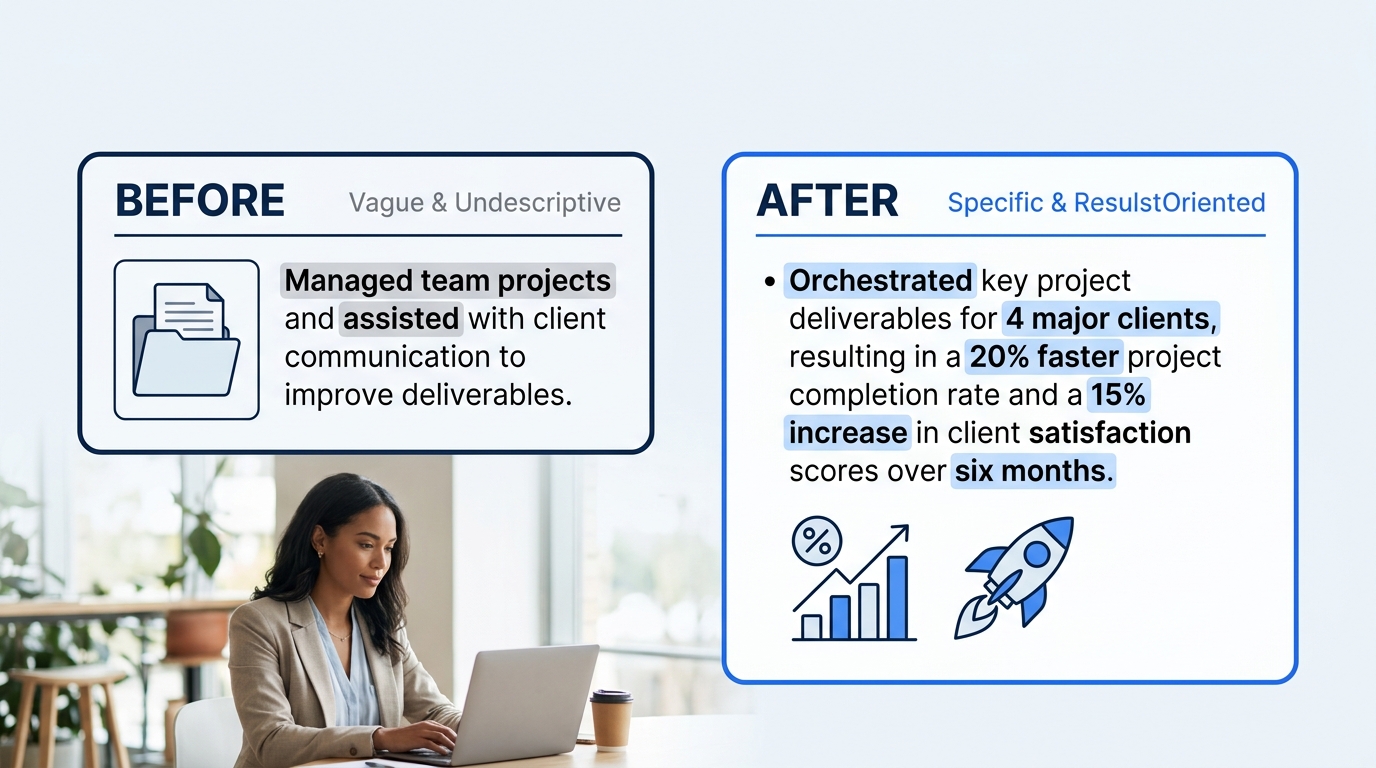
Ex-Google recruiter Farah Sharghi identifies the core problem behind many rejected resumes as “you had to be there” language: bullets written for the applicant rather than for a stranger. Phrases like “Conducted financial analysis” or “Managed key accounts” tell a recruiter nothing about scale, impact, or context. And unexplained employment gaps compound the problem, because when hiring managers see periods of unemployment with no context, they fill the silence with worst-case assumptions about why you left or what you were doing.
This blocker operates at both the ATS level and the human review level simultaneously. ATS systems may downgrade resumes that lack a professional summary, which means your application can fail at the automated stage before a recruiter even has the chance to wonder about your 8-month gap. At the human stage, vague bullets get the 6-second scan treatment and land in the reject pile almost immediately.
Fix for vague language: every bullet should answer three questions: what did you do, at what scale, and what changed because of it? “Conducted financial analysis” becomes “Analyzed quarterly revenue trends across 3 product lines ($14M combined), identifying $430K in recoverable margin that the pricing team implemented in Q3.” The specificity itself signals competence, because only someone who actually did the work can produce numbers that precise.
Fix for gaps: address employment breaks directly with a one-line entry. “Career Break: Family Caregiving” or “Professional Development: Completed Google Data Analytics Certificate” neutralizes the red flag in seconds. Career coaches have found that honest gap explanations carry almost no stigma in the current hiring market, while unexplained silence still raises serious concerns.
The Four Blockers at a Glance
| Blocker | What Triggers It | ATS Impact | Human Reviewer Impact | Time to Fix |
|---|---|---|---|---|
| Broken formatting | Tables, text boxes, multi-column layouts, custom fonts | High: sections parsed as gibberish or skipped entirely | Medium: visual clutter if resume reaches a human | 30-45 minutes with a clean template |
| Missing keywords | Abbreviation-only terms, phrasing mismatches with job description | High: match score drops below threshold | Low: humans often infer synonyms | 15-20 minutes per application |
| AI-generated language | Uniform syntax, buzzword overload, overly polished tone | Low: most ATS don’t screen for this yet | High: 625 hiring managers named it the top red flag | 45-60 minutes to rewrite in your voice |
| Vague context and gaps | Generic bullets, unexplained employment breaks, missing summary | Medium: no summary can lower ranking scores | High: triggers 6-second rejection or worst-case assumptions | 60-90 minutes for a full bullet rewrite |
Tip: Tackle these blockers in order of time efficiency. Formatting takes 30 minutes and eliminates the highest-volume ATS failure points. Keyword matching takes 15-20 minutes per application but compounds across every submission. AI voice and vague bullets require more rewriting time but produce the biggest gains at the human review stage.
What Remains Unsettled
The ATS landscape keeps shifting in ways that make some of these fixes temporary. Several major ATS platforms are rolling out AI-powered parsing that handles tables and multi-column layouts better than their predecessors, which could reduce formatting-related rejections over the next 12-18 months. But the same AI advancement is also making AI-content detection more sophisticated. What passes as human-sounding today may trigger flags in a year’s time.
The keyword matching problem is evolving too. Newer ATS systems use semantic matching rather than exact-string matching, meaning they can recognize that “budget management” and “P&L oversight” refer to similar competencies. Whether that shift helps or hurts applicants depends on how well the algorithms handle edge cases and industry-specific terminology. For now, including both the exact job-description language and reasonable synonyms remains the safest approach.
The one constant across every version of ATS software and every generation of hiring managers is the value of specificity. Concrete numbers, clear context, and an authentic voice have never been penalized by any screening system, human or automated. Building those qualities into your resume eliminates the majority of application blockers and keeps your document resilient as the technology around it continues to change.