
 4.9
4.9 4.5
4.5SHRM warned earlier this year that AI hiring could degenerate into “bots screening resumes submitted by other bots,” with humanity stripped from the process. As of this week, that warning looks generous. The Washington Times reported on May 14 that employers have moved past using AI to sort incoming applications. According to a MyPerfectResume survey of 1,000 hiring managers, 52% now use AI-generated productivity data to inform restructuring, and 28% of HR directors are actively considering algorithmic input when deciding which employees to lay off. Challenger, Gray & Christmas counted 21,490 AI-cited job cuts in April 2026 alone, representing 26% of all announced layoffs that month.
The AI hiring automation escalation has crossed a line that most job seekers haven’t fully registered yet. Algorithms are no longer a filter you pass through on your way to a human conversation. They’re shaping whether you get hired, how your performance is measured, and whether you keep the job once you have it. That reality demands a different resume strategy against AI employment decisions, and it demands it now.
Here are six rules for operating in this environment.
Assume your resume is being scored by a machine that has never met you
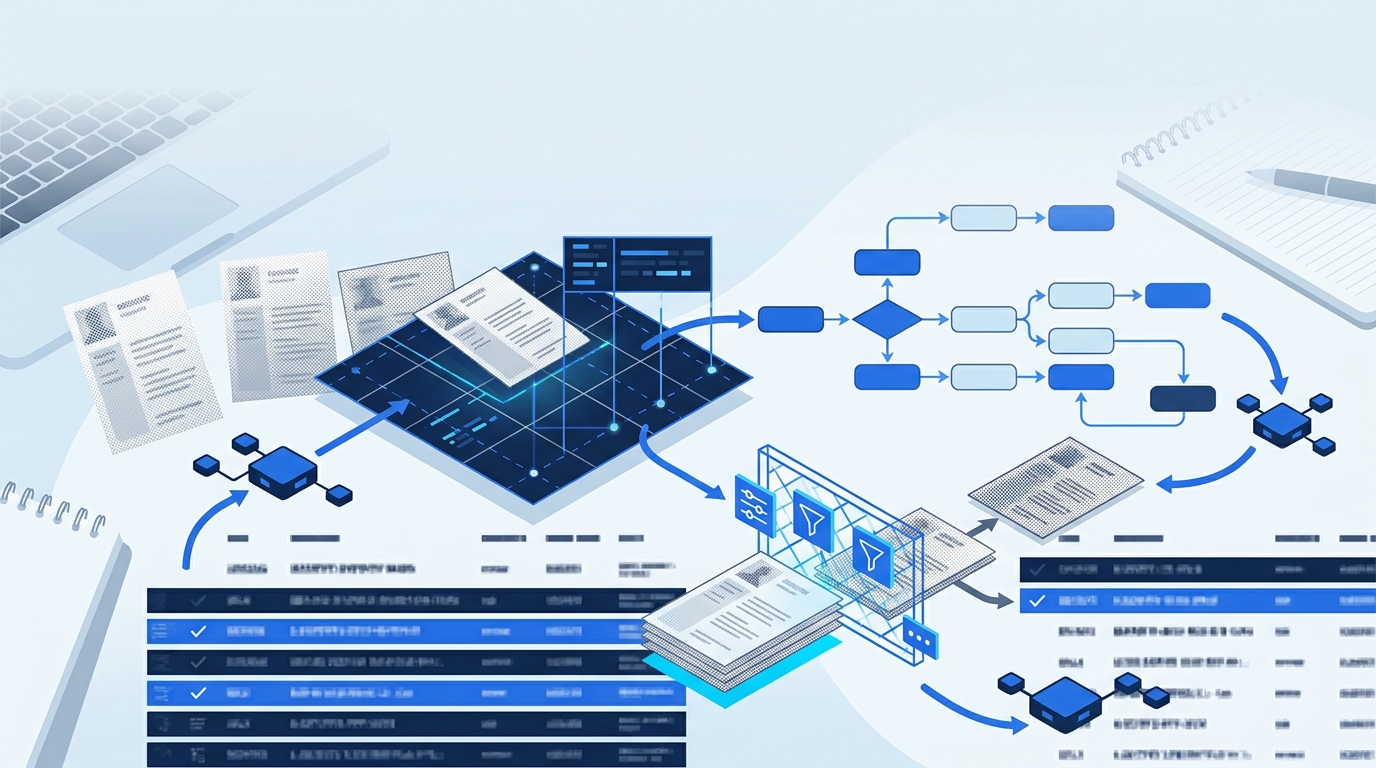
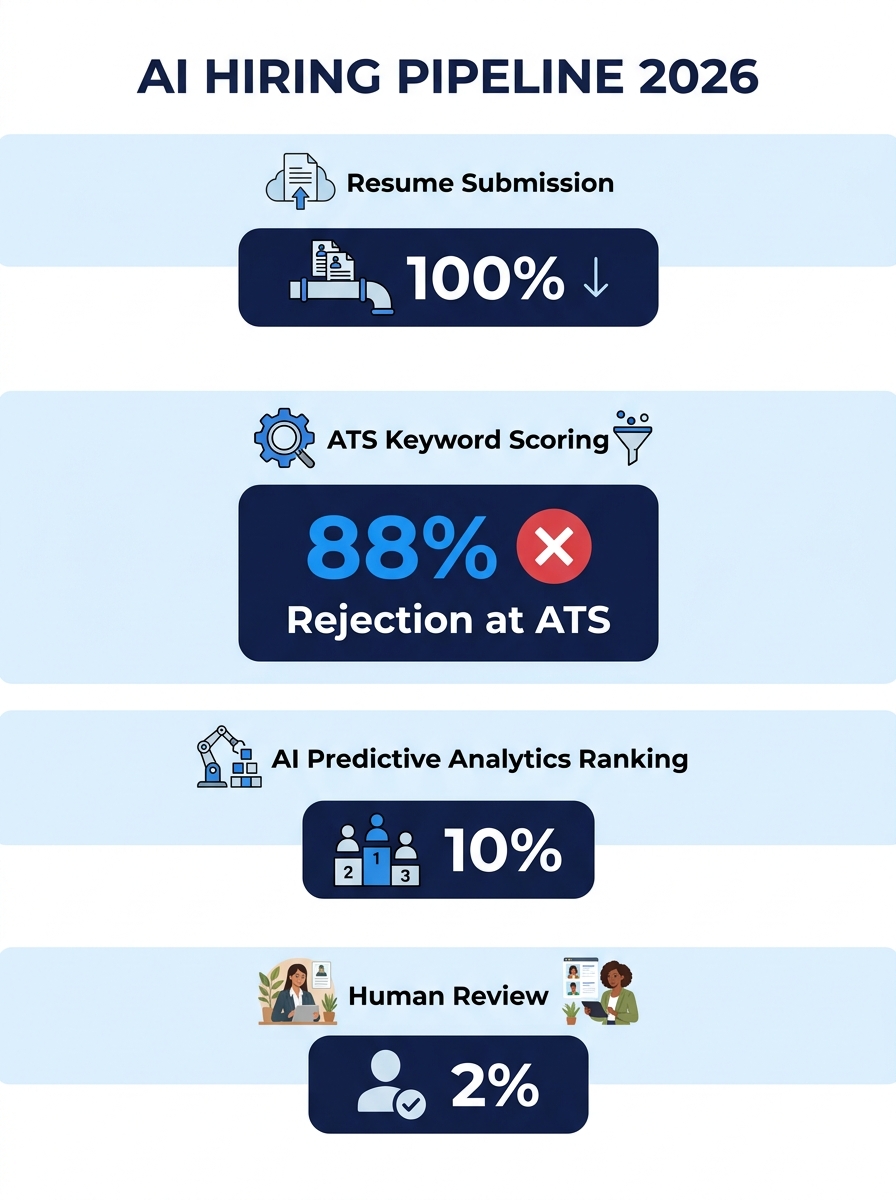
A 2025 Harvard Business School study found that applicant tracking systems automatically reject up to 88% of qualified candidates because of mismatched keywords or formatting errors. That number has likely gotten worse, not better, as companies add additional AI layers on top of existing ATS platforms. Tools like Workday, Greenhouse, iCIMS, HireVue, and Paradox now handle everything from keyword matching to predictive analytics about candidate fit.
The practical meaning: your resume is almost certainly being converted into a numerical score before any person reads it. If the score falls below the threshold, no human ever sees your name. The AI-driven hiring risks 2026 presents are concentrated in this exact moment, when the algorithm decides whether you’re worth a second look.
This rule breaks when you’re applying to small companies (under 50 employees) or submitting directly to a hiring manager you already know. In those cases, a human is your first reader. For everyone else, the machine goes first.
Match the algorithm’s vocabulary before you try to impress a human
The simplest and most reliable resume sorting AI bias is vocabulary mismatch. If a job description says “cross-functional collaboration” and your resume says “worked across teams,” you might score lower even though the meaning is identical. ATS keyword matching is literal. It counts terms. It doesn’t interpret nuance.
Columbia University’s career education office advises job seekers to be aware that organizations may scan for things beyond job description text, including brand-name competitors and specific schools. This means your keyword strategy can’t stop at matching the posted requirements.
Pull the exact language from the job posting into your resume. If they say “stakeholder management,” use that phrase. If they say “Python,” don’t write “programming languages” and hope the system makes the connection. We’ve written extensively about AI keyword analysis for matching job descriptions, and the core advice holds up: mirror the posting’s vocabulary, then add your specific accomplishments around those terms.
Where this rule gets tricky is when you’re applying to dozens of jobs at once. Each posting uses slightly different language for similar roles. That means each application should get its own keyword pass, which is tedious but necessary.
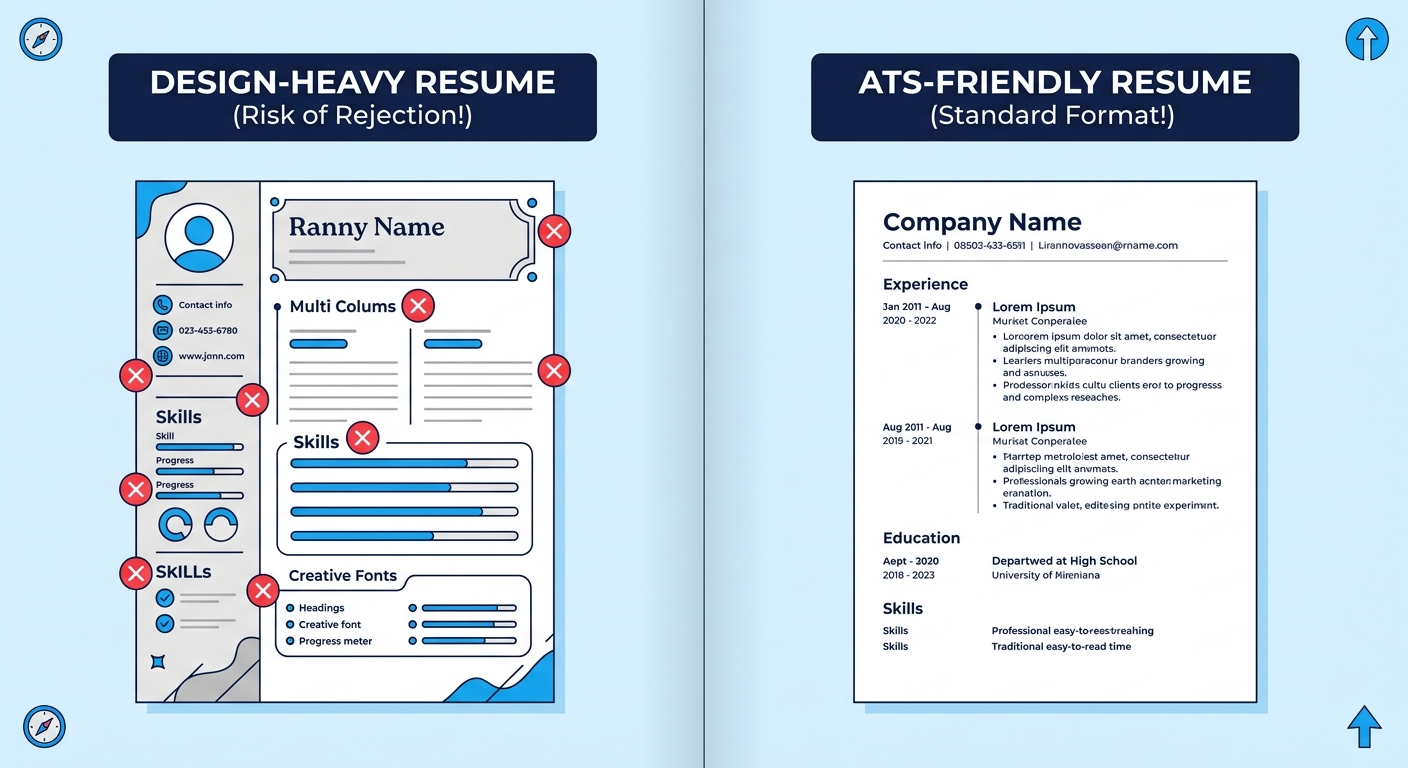
Strip your formatting down to what a parser can actually read
Tables, columns, headers embedded in text boxes, icons instead of bullet points, infographics baked into your resume PDF: all of these can confuse ATS parsers. The system tries to extract your text into structured fields (name, contact info, work history, education), and anything that disrupts that extraction can garble your data or cause whole sections to vanish.
Keep these constraints in mind:
- Use standard section headings like “Experience,” “Education,” and “Skills.”
- Avoid two-column layouts unless you’ve confirmed the specific ATS can parse them.
- Don’t rely on charts or visual elements to communicate key information.
- Save as a .docx or standard PDF, not a designed PDF from Canva or similar tools.
- Fill out every field in an online application, even optional ones.
The frustrating part is that clean, parseable resumes often look bland to human eyes. This is the core tension we explored in our piece on the gap between ATS-optimized resumes and what hiring managers actually want to read. You need a resume that satisfies the machine first, then reads well to the person who eventually opens it.
Treat every automated screen as a potential bias minefield
University of Washington researchers found significant racial, gender, and intersectional bias in how three major large language models ranked resumes. The models favored white-associated names and showed measurable discrimination across demographic categories. A Fortune report from May 10, 2026 found that when AI generated identical resumes for a man and a woman, the woman’s version was more likely to be labeled “weak” while the man’s received a 97% approval rating.
This isn’t an abstract policy concern. If your name, your graduation year, or your previous employers trigger a biased pattern in the model, your resume could be ranked lower than an identical one with different demographic signals. And the legal landscape is catching up: fines for AI hiring violations now run $500 to $1,500 per violation, multiplied by each day of non-compliance and each affected applicant, potentially reaching millions for companies that ignore the rules.
If your name, your graduation year, or your previous employers trigger a biased pattern in the model, your resume could be ranked lower than an identical one with different demographic signals.
What can you do about this as an individual applicant? The honest answer is: limited things. You can’t control the model’s biases. But you can be aware that AI resume tools treat identical content differently based on perceived gender and other factors, and you can focus on making the substantive content of your resume so keyword-dense and achievement-specific that the algorithm has less room to weight irrelevant factors.
Some candidates have gone further, removing graduation years, using initials instead of first names, or omitting photos entirely. These are personal decisions, and none of them guarantee fair treatment from a biased system. But they reduce the surface area for discrimination.
Build a professional presence the algorithm can’t gatekeep
Workplace experts confirm that hiring managers routinely search candidates’ names on Google before scheduling interviews. Your LinkedIn profile, your portfolio, published articles, conference talks, open-source contributions: these all exist outside the ATS pipeline and give hiring managers a reason to pull your resume out of the rejected pile.
This matters more in 2026 than it did even two years ago. The San Francisco Chronicle reported on May 11 that the flood of AI-generated applications has created an “applicant tsunami” where hiring managers struggle to tell genuine candidates apart. When 200 resumes look functionally identical because they were all optimized by the same AI tools, the candidate with a visible, human professional presence stands out.
Invest time in your online presence and its alignment with your resume. Make sure your LinkedIn summary tells a story that your resume’s bullet points can’t capture. If you’re in a technical field, maintain a portfolio or GitHub profile that shows actual work, not template projects.
Tip: Networking and direct referrals bypass the AI screen entirely. A hiring manager who already knows your name will search for your resume in the system rather than waiting for the algorithm to surface it. In an era of algorithmic layoff decisions and AI-filtered applications, the human connection has become the most reliable workaround.
Run your own resume through the same scoring tools employers use
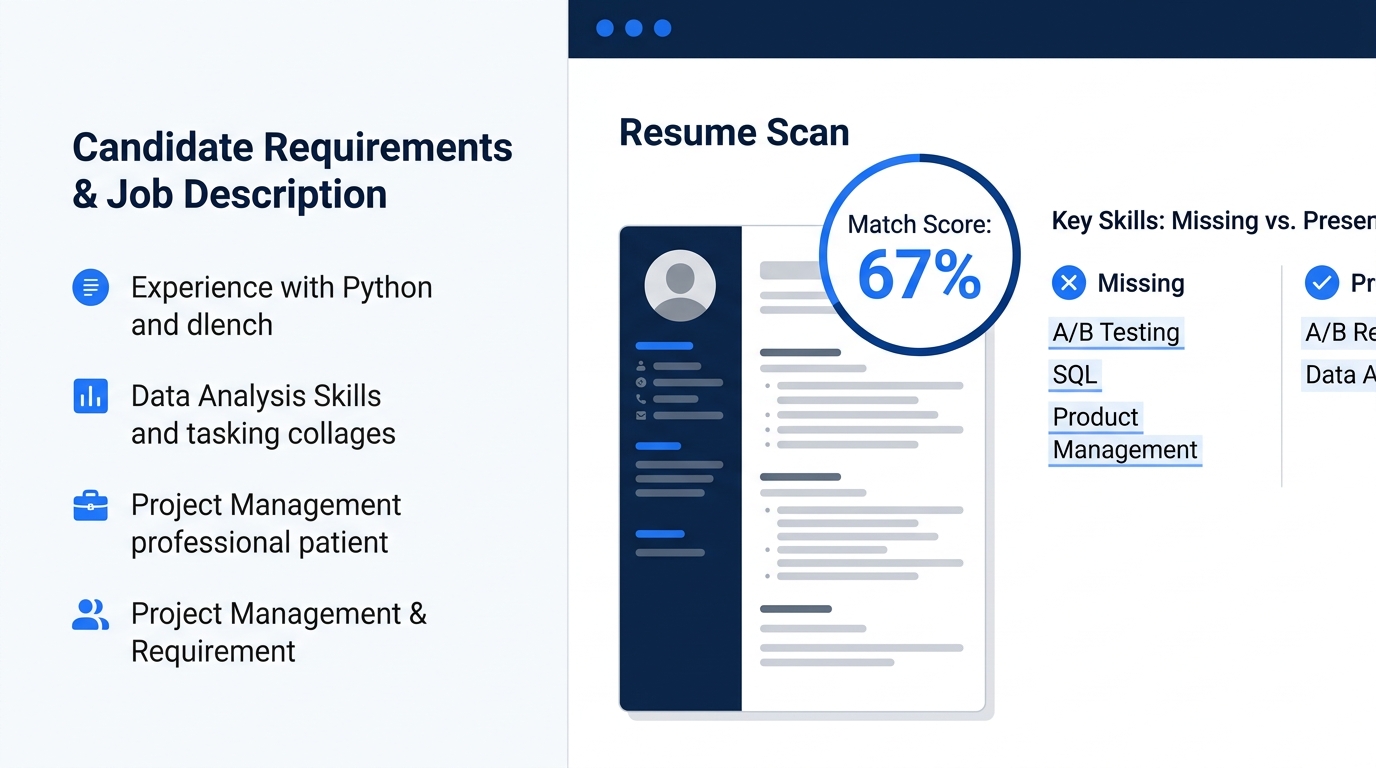
Tools like Jobscan let you paste your resume alongside a job description and get a match score with specific keyword recommendations. This takes the guesswork out of optimization. You can see exactly which terms the system is looking for and where your resume falls short.
The process looks like this:
- Find a job posting you’re interested in.
- Paste the job description into the scoring tool.
- Paste your current resume.
- Review the match score and the specific missing keywords.
- Revise your resume to include those keywords where they truthfully apply.
- Re-scan and check the new score.
Don’t add keywords that don’t reflect your actual experience. If the job asks for “Kubernetes orchestration” and you’ve never touched Kubernetes, don’t drop the phrase into your skills section. ATS optimization is about surfacing relevant experience in the right language, not about fabricating qualifications. A hiring manager who interviews you will notice the mismatch, and some companies now use AI-powered verification to cross-reference your resume claims against your interview responses.
If you’ve been through a layoff recently, the combination of re-optimizing your resume and understanding how these systems work is especially important. We covered this intersection in our guide to rebuilding your resume after AI-related workforce reductions, and the core principle hasn’t changed: specificity beats volume.
When These Rules Collapse
Every rule above assumes you’re operating within the standard application pipeline: submit resume, pass the ATS, get scored, maybe reach a human. But the pipeline itself is under stress. Scammers are fabricating entire candidate profiles using deepfakes. Applicants are embedding hidden white-text prompts in their resumes to trick AI screeners into ranking them higher. And 80% of companies that have piloted AI or autonomous technology have reported workforce reductions, even when the technology wasn’t generating meaningful returns.
The system is becoming adversarial on all sides. Employers deploy AI to filter candidates, candidates deploy AI to get past the filters, and the result is an arms race where the signal-to-noise ratio keeps degrading. SHRM’s description of the endgame, where bots screen applications submitted by other bots, is closer to reality than anyone in recruiting wants to admit.
These rules give you the best shot at surviving the current environment. But the environment itself is unstable. If you’re a senior professional dealing with the buzzword trap in executive summaries, or a developer navigating post-layoff career decisions, the algorithm is only one piece of the puzzle. The companies worth working for know their AI systems are imperfect, and they’re building human checkpoints back into the process. Your job is to make sure you survive the automated rounds long enough to reach those checkpoints, and to build enough of a professional presence outside the pipeline that someone pulls you through directly.
The rules here will need updating as the technology and the legal landscape shift. For now, they represent the best available playbook for a hiring process that is changing faster than most candidates realize.