
 4.9
4.9 4.5
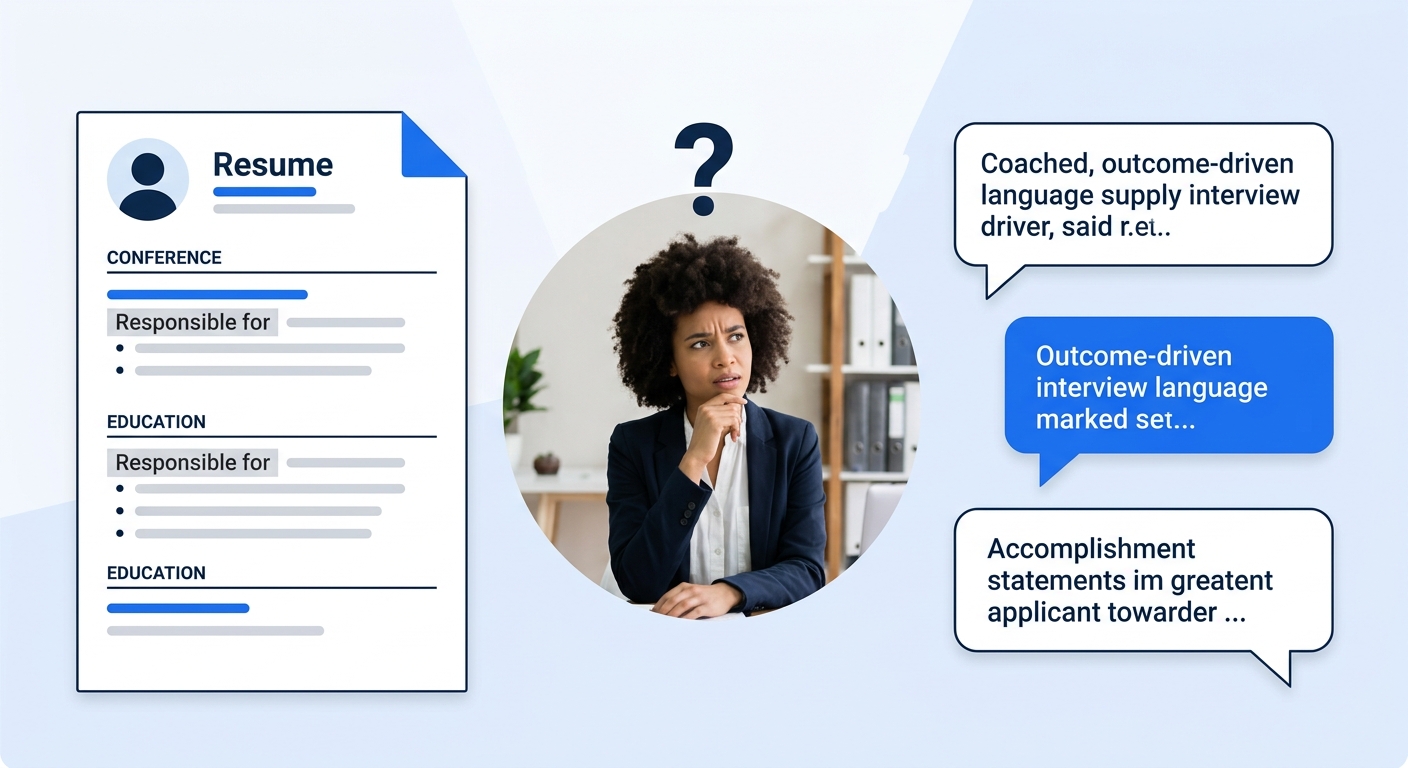
4.5Career coaching reshapes how you describe your professional value — your elevator pitch, your interview answers, your target-role language. The resume, often updated months earlier or never, still broadcasts the old version. This gap between coached positioning and written materials explains why candidates invest in coaching yet see zero improvement in interview conversion rates.
TL;DR: Career coaching changes your verbal narrative, but if your resume doesn’t reflect that shift, interviewers encounter two different candidates. The resulting cognitive dissonance tanks offer rates. Closing the gap requires treating coaching and resume updates as a single continuous process, not separate activities.
The Two-Voice Problem
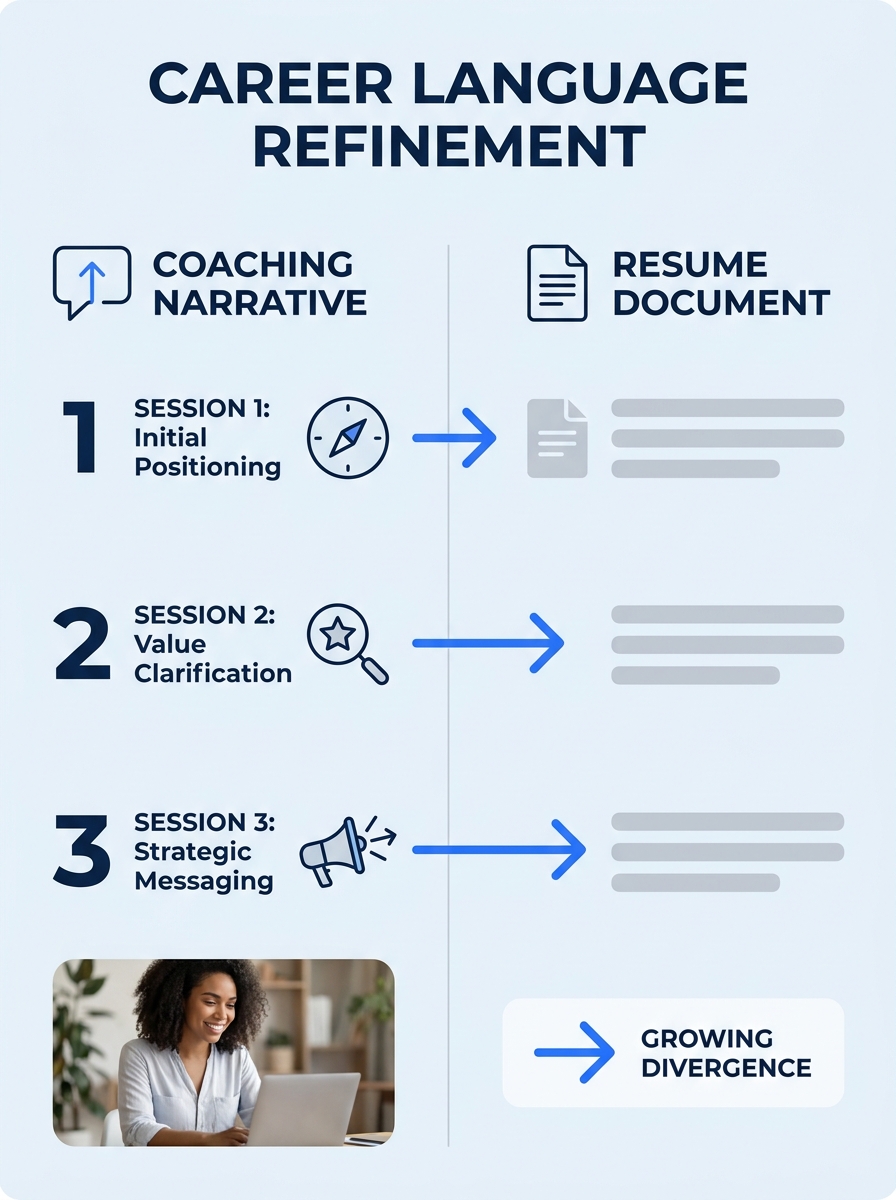
Career coaching works by shifting how you frame your experience. A coach helps you identify transferable skills, reframe career gaps, and articulate a positioning statement aimed at a specific target role. The problem starts the moment that reframing stays verbal.
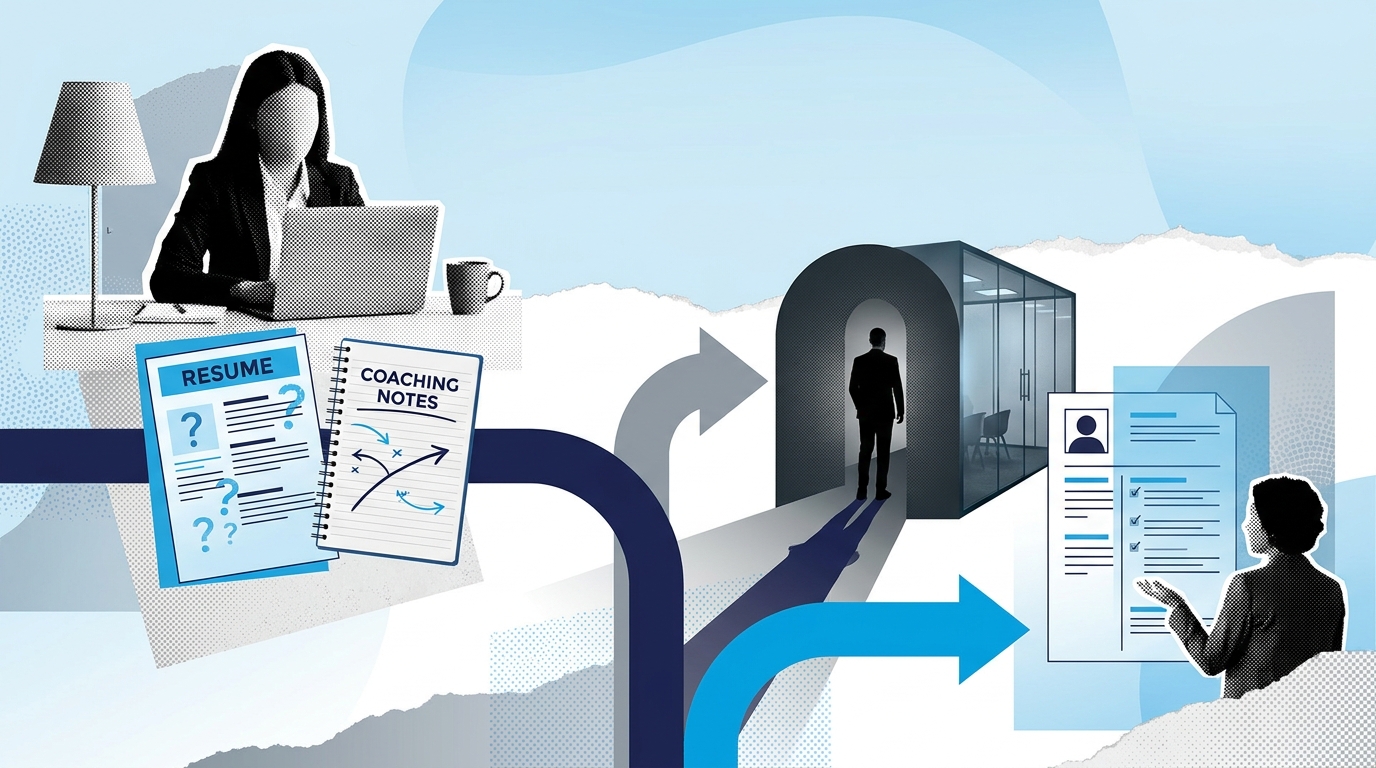
You walk out of a coaching session knowing you’re a “data-driven operations leader who reduced fulfillment costs by 22%.” Your resume still says “Operations Manager — managed warehouse team of 15.” Those are two different people. And the hiring process encounters both of them.
The mechanism is straightforward. Coaching creates a new internal narrative. Your resume preserves the old external one. Every touchpoint in the hiring funnel — the ATS scan, the recruiter phone screen, the hiring manager interview — reads a different version of you depending on whether it encounters the document or the person. Research from BrainWorks confirms that resume positioning statements get scanned for just seconds by initial reviewers whose sole job is deciding whether to advance or reject. If those seconds deliver a message that contradicts what the candidate says 48 hours later on a call, the reviewer’s confidence drops immediately.
This is the core of career coaching resume misalignment: the coaching did its job, but the resume never received the update. And because 34% of recruiters consider the absence of measurable results a dealbreaker, a resume that still lists responsibilities instead of coached, outcome-driven language is failing you twice — once on content, once on consistency.
How Screening Amplifies the Mismatch
Why does this misalignment hurt most at the screening stage? Because screening is where resume-to-positioning consistency locks you into a specific track — and where a stale resume locks you into the wrong one.
Consider the sequence. You apply with a resume written before coaching. An ATS parses it. A recruiter skims it in under 10 seconds, according to Forbes contributor Robin Ryan, focusing on three elements: job title alignment, recognizable skills, and evidence of real work. Both the ATS and the recruiter form an impression of your level, your specialty, and your likely salary band based entirely on what’s on the page. According to Scale.jobs, resumes aligning with 70% or more of a job description’s keywords increase callback rates by 2.5×. If coaching shifted your target role — say, from project management to product strategy — but your resume still carries PM-heavy language, you’re optimizing for callbacks to the wrong jobs.
This creates a paradox. You get interviews, which feels like progress. But you’re getting interviews for roles that match your old positioning, not the role your coach helped you target. The interview conversion gap doesn’t happen because you interview poorly. It happens because you’re interviewing for positions that no longer match the story you’re telling in person.
A 2026 ABR Jobs analysis reinforced that maintaining a master resume as source material prevents this drift: “When a new opportunity emerges, you’ll pull relevant sections rather than rewriting from memory or scrambling to recall details.” That master document needs to reflect your coached positioning, not just your historical experience. Without coaching-driven resume updates at each milestone, the master document itself becomes the source of contamination. Candidates who’ve gone through AI-keyword-driven resume customization are especially vulnerable here, because automated matching amplifies whatever language already exists on the resume — old language included.
The Interview Room Collision
The interviewer has read your resume. They’ve formed expectations. Then you sit down and start talking.
If coaching worked, your language is sharper. You lead with outcomes. You frame your experience around the target role, not the role you left. You use different vocabulary than what’s printed on the page in front of the interviewer. And here’s where the mechanism does real damage: the interviewer doesn’t think “this person has been well-coached.” The interviewer registers inconsistency.
Hiregy’s research on culture-fit assessment highlights the downstream cost: “time wasted providing excessive coaching and feedback to get subpar employees up to speed, increased tensions or unpleasant dynamics between the new employee and team members.” Interviewers are screening for exactly this kind of signal mismatch. When your resume says one thing and your mouth says another, the interviewer’s instinct is to trust the document — because documents don’t get nervous, don’t exaggerate, and don’t try to impress.
Resume Professional Writers frames this gap from the candidate’s side: “If you get the first interview, your resume is plainly doing its job, but if you can’t go above that, you’ll need help with your interview performance.” That advice assumes the blocker is interview skill. Often the blocker is that the resume got you into a room that doesn’t match your coached narrative. Strategic repositioning execution fails when the written and verbal layers point in different directions.
The interviewer doesn’t think “this person has been well-coached.” The interviewer registers inconsistency — and inconsistency is the fastest path to a rejected candidacy.
This is also why candidates who’ve worked with coaches on career clarity and verbal positioning still stall at the offer stage. The coaching landed. The resume didn’t follow. And the 54% of applicants who don’t customize their resumes at all are compounding the problem with every application.
Digital Presence as a Third Signal
The two-voice problem compounds when you factor in LinkedIn, personal sites, and the reality that hiring managers routinely Google candidates before interviews.
An Aurora University study found that 61% of executives say personal branding now outweighs resumes in hiring impact. The same research revealed that 72% of professionals have Googled themselves, 46% have deleted posts out of fear, and over half have hidden parts of who they are to appear more professional. Your online presence is a third narrative layer, and if it doesn’t match either your resume or your coached story, you’ve now got three conflicting signals reaching the same hiring committee.
Career coaches who don’t address this layer leave a structural gap. You might nail the in-person positioning, update your resume summary, and still have a LinkedIn headline that reads “Experienced Professional | Team Player | Results-Driven” — a string of filler that tells the hiring manager nothing about your actual target. The executive summary problem multiplies across every platform where your professional identity lives. And because 18% of professionals feel constant pressure to curate their digital brand, many candidates freeze entirely and update nothing, which widens the alignment gap over time.
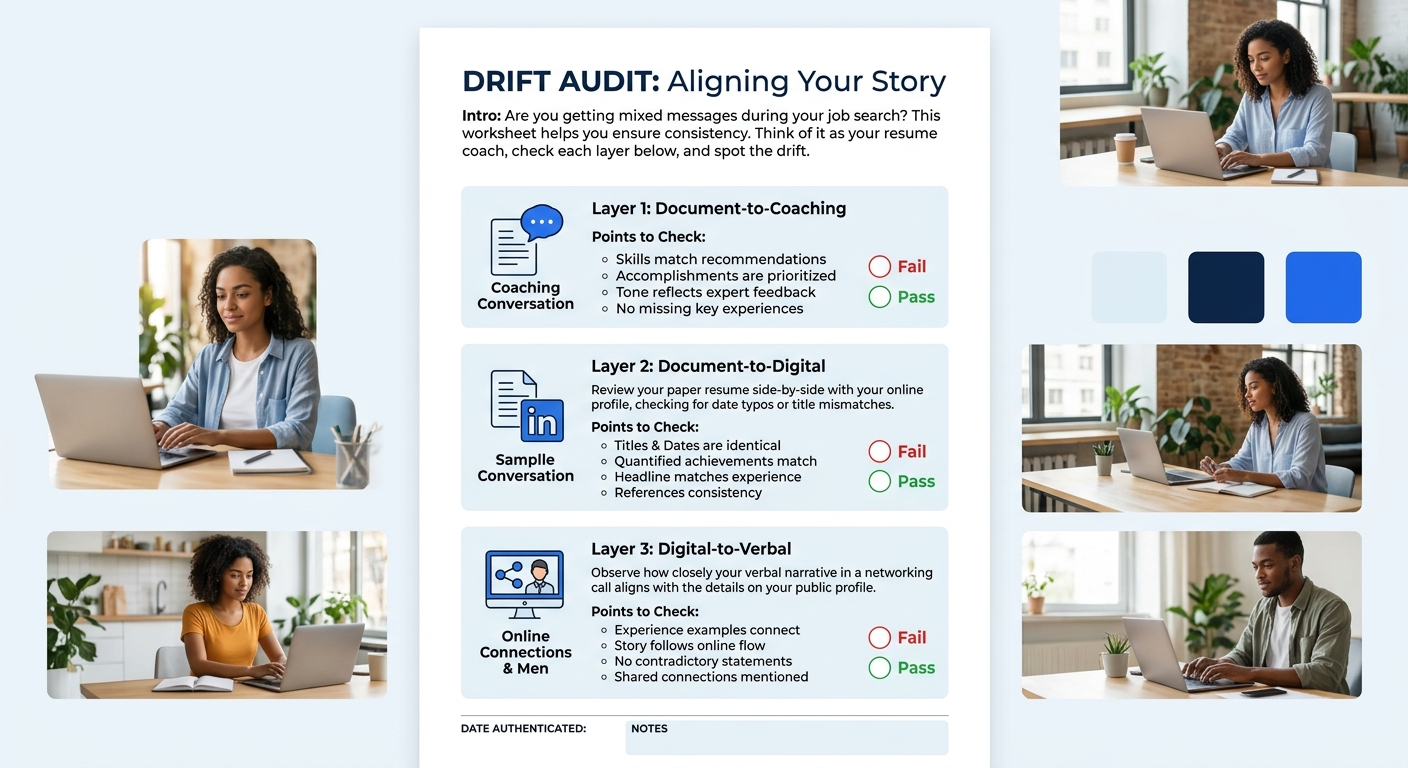
The Drift Audit: A Three-Layer Consistency Check
You can diagnose this problem in about 20 minutes. I’m calling it the Drift Audit — a framework that evaluates alignment across the same three layers the hiring process interrogates.
Layer 1: Document-to-Coaching Alignment. Print your current resume. Write down the three key messages from your most recent coaching session: your target role, your core value proposition, and the career narrative you’ve been rehearsing. Read your resume’s summary, first three bullet points, and skills section. Do they use the same framing and vocabulary as your coached messages? If the answer is no, you’ve found the primary fracture point. Resumes that match 80% of a job description’s terms can boost interview callbacks by up to 50%, according to Scale.jobs — but only if those terms reflect your current positioning, not your pre-coaching positioning.
Layer 2: Document-to-Digital Alignment. Open your LinkedIn profile alongside your resume. Compare the headline, the About section, and the first two experience entries. Differences in job titles, positioning language, or skill emphasis create the multi-signal problem interviewers flag as inconsistency. Candidates who’ve gone through a post-layoff rebuild with a coach are especially prone to this drift, because coaching sessions move fast and LinkedIn updates lag behind.
Layer 3: Digital-to-Verbal Alignment. Record yourself giving a 60-second pitch — the same one you’d deliver at the start of an interview. Play it back and compare it to your LinkedIn About section. M.C. Communication Coach uses a similar method, filming candidates and then conducting “gap analysis” to identify “areas of misalignment” between how they present and how they’re perceived. If your verbal pitch has evolved past what’s written online, the written version is actively working against you.
The Drift Audit works because it mirrors the hiring funnel itself. A recruiter sees your resume, then checks your LinkedIn, then hears you speak. Each transition is a chance for the narrative to fracture. Candidates who convert at the highest rates are the ones where all three layers tell the same story with the same language.
Tip: Run this audit after every coaching session that shifts your positioning. Career coaching changes your narrative incrementally — your documents need to keep pace at the same intervals.
Where The Model Breaks
This alignment mechanism explains many interview conversion gaps, but it has real limits.
It doesn’t account for candidates whose resumes and coaching are perfectly aligned but who target roles in industries with fundamentally different hiring cultures. A coached narrative that works for SaaS companies falls flat in government contracting, where federal resume architecture follows entirely different structural rules. Alignment between coaching and resume is necessary but not sufficient — you also need alignment between your materials and the hiring norms of your target sector.
The model also assumes coaching produced a good narrative in the first place. Some coaches focus heavily on mindset and confidence without generating concrete, resume-ready language. If your coaching sessions never produced specific bullet points, positioning statements, or keyword-optimized achievement language, there’s nothing to transfer to the document. The career coaching preparation checklist exists precisely for this reason — coaches and candidates need to produce written artifacts, not just verbal breakthroughs.
And alignment can’t fix a targeting problem. If your coached positioning aims at roles where you lack 40% of the required qualifications, a perfectly consistent resume-to-interview narrative won’t override the skills gap. This mechanism explains why qualified, well-coached candidates fail to convert. It doesn’t explain failure when the underlying candidacy has structural weaknesses.
The tradeoff worth acknowledging is that maintaining perfect three-layer alignment is time-intensive. Every coaching session that shifts your positioning requires resume edits, LinkedIn updates, and pitch rehearsal. For candidates in active job searches applying to 10 or more roles per week, this cadence can feel impossible. The practical answer is to batch updates around milestone sessions — the ones where your target role, value proposition, or career narrative meaningfully changes — rather than after every single call. Structured coaching programs report over 75% placement rates after 3–4 sessions, according to Sherpact, and those programs build document updates directly into the session workflow rather than leaving them as homework the candidate never does. The goal is consistency at the moments the hiring process checks, not theoretical perfection at every instant.