

 4.9
4.9 4.5
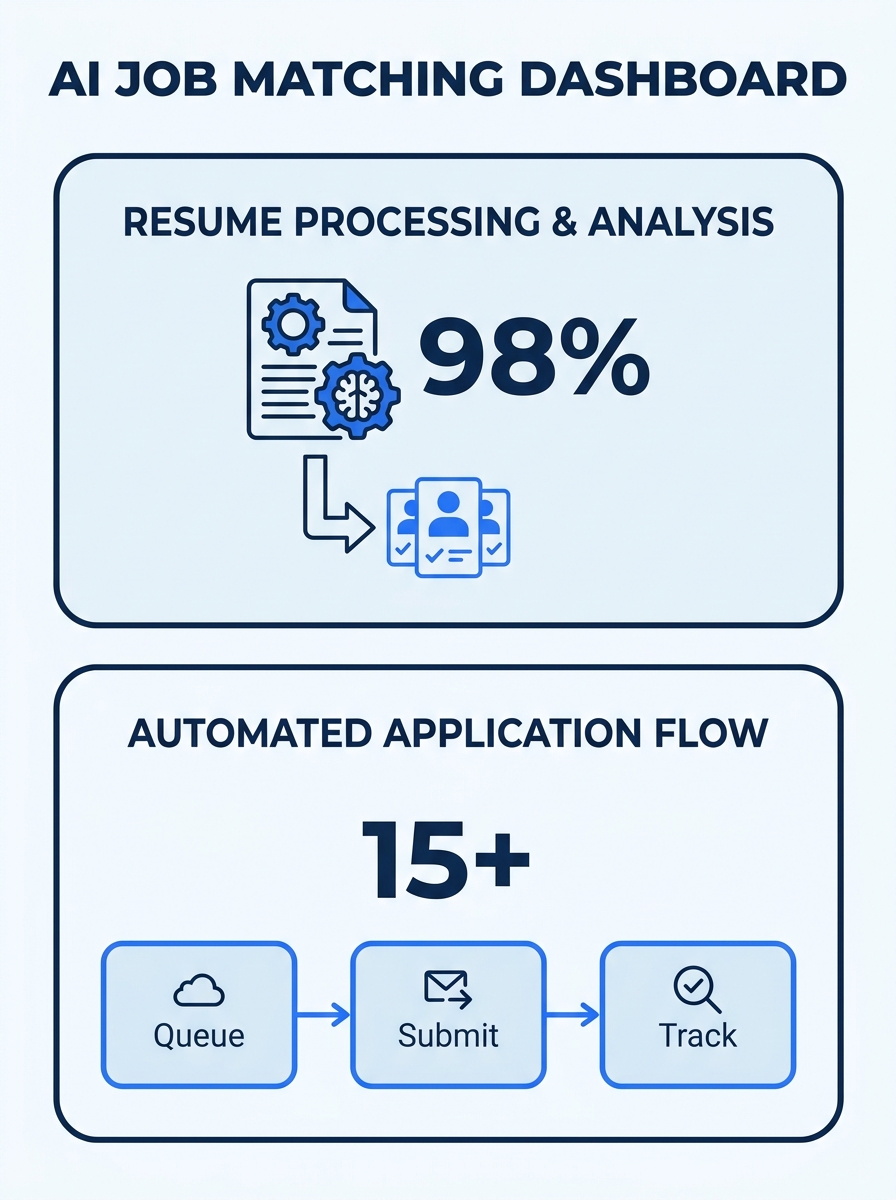
4.5Jobnova, an AI-powered job search platform developed by the Liba Space team, launched June 8 with features that automate application submission to more than 3,000 positions based on user-defined criteria, according to Dynamic Business. The platform combines resume parsing, personalized job matching, automated application submission, and AI-generated cover letters into a single workflow designed to reduce time spent on repetitive application tasks.
TL;DR: Jobnova launched with automated job applications to 3,000+ positions, AI resume customization, and tiered pricing starting at $6.99 monthly, targeting job seekers who want to outsource application volume to machine learning.
The platform’s core automation handles tasks that typically consume hours of manual effort during active job searches. Upload a resume, set job preferences, and Jobnova’s matching algorithm identifies openings and submits applications without requiring users to visit individual employer sites or manually tailor documents for each role.
Four-Feature Stack Covers Resume to Interview Prep
Jobnova’s feature set addresses distinct stages of the job search funnel. Instant job notifications analyze uploaded resumes to match users with current openings, delivering alerts as new positions appear. The AI resume customizer generates tailored resumes and cover letters aligned to specific job descriptions, a capability that overlaps with professional resume writers but executes at higher volume and lower cost.
The automated job application engine applies user-set filters—industry, location, salary range, experience level—to submit applications across its indexed job database. This feature scales application volume beyond what manual submission allows, though it raises questions about application quality versus quantity that have surfaced in broader discussions about AI’s role in reshaping job seeker expectations.
An AI agent provides support for interview preparation and resume optimization, functioning as an on-demand coaching layer. The agent’s capabilities weren’t detailed in the product announcement, but the inclusion suggests Jobnova positions itself as an end-to-end platform rather than a narrow point solution.
Tiered Pricing Separates Volume From Premium Matching
Jobnova offers two subscription tiers differentiated by application volume and matching sophistication. The Basic Plan costs $6.99 monthly or $20.99 quarterly (30% discount), providing 50 auto-apply applications per month, daily personalized job alerts, standard filtering and matching, 10 AI resume generation credits, and standard customer support.
The Pro Plan runs $15.99 monthly or $47.99 quarterly (38% discount) and increases auto-apply submissions to 150 per month. Pro subscribers receive premium AI-powered job matching with relevance scores, job recommendations ranked by fit, early access to unlisted opportunities, 50 resume generation credits, and a dedicated support manager.
The pricing structure positions Jobnova below typical career coaching services, which often charge $150–$500 per engagement, while delivering automated volume that one-on-one coaching cannot match. The trade-off lies in personalization depth—human coaches assess career trajectory and tailor strategy to individual circumstances, while AI platforms apply pattern-matching algorithms to large datasets.
Automation Meets Personalization Gap in Job Search Tools
Jobnova enters a crowded job search tool market where platforms increasingly integrate AI features but few deliver full-cycle automation from resume upload to application submission. Resume builders like Zety and ResumeGenius provide templates and formatting but require manual application submission. Job boards aggregate openings but leave tailoring and tracking to users.
The platform’s approach contrasts with advice to optimize resumes for human readers who review applications after ATS screening. Automated mass application risks generic submissions that fail to address specific employer needs—a concern that surfaces when applicants prioritize volume over targeted customization. The tension between application speed and relevance remains unresolved in AI-driven job search tools.
Interview preparation support adds a layer that distinguishes Jobnova from pure application automation. Whether the AI agent delivers structured frameworks comparable to behavioral interview preparation services remains unclear without deeper product testing. The feature acknowledges that getting interviews requires more than application volume—it demands performance once the callback arrives.
Why This Matters Now
Job seekers face a paradox: applying to more positions increases visibility but dilutes application quality when every submission requires custom tailoring. Jobnova’s automation resolves the volume side of that equation by removing manual submission friction, but it doesn’t solve the personalization challenge that separates strong candidates from filtered-out noise. The platform’s value depends on whether its AI customization produces targeted applications or generic fills.
The pricing accessibility—under $7 monthly for the basic tier—positions Jobnova as a low-risk experiment for job seekers who struggle with resume assembly from scratch or who need to maintain application momentum during extended searches. For professionals in active transition, the Pro Plan’s 150 monthly applications translates to 5 daily submissions, a pace that manual processes rarely sustain.
The launch reflects broader market movement toward AI-augmented job search tools that promise efficiency gains but raise questions about differentiation. When algorithms handle application submission at scale, the competitive edge shifts to candidates who combine automation with strategic targeting—knowing which applications warrant human-level customization and which roles fit algorithmic matching. Platforms like Jobnova automate the mechanics; users still own the strategy.