
 4.9
4.9 4.5
4.5Military.com published a five-step framework on July 22 for writing LinkedIn ‘About’ sections that explicitly addresses whether job seekers should use AI writing assistance, with career coach Lida Citroen advising service members to treat the 2,600-character section as a narrative platform rather than a resume copy-paste, according to the Military.com article.
TL;DR: Military.com published a LinkedIn ‘About’ section framework on July 22 that endorses AI writing assistance when users provide detailed context about personal brand, career goals, and target audience.
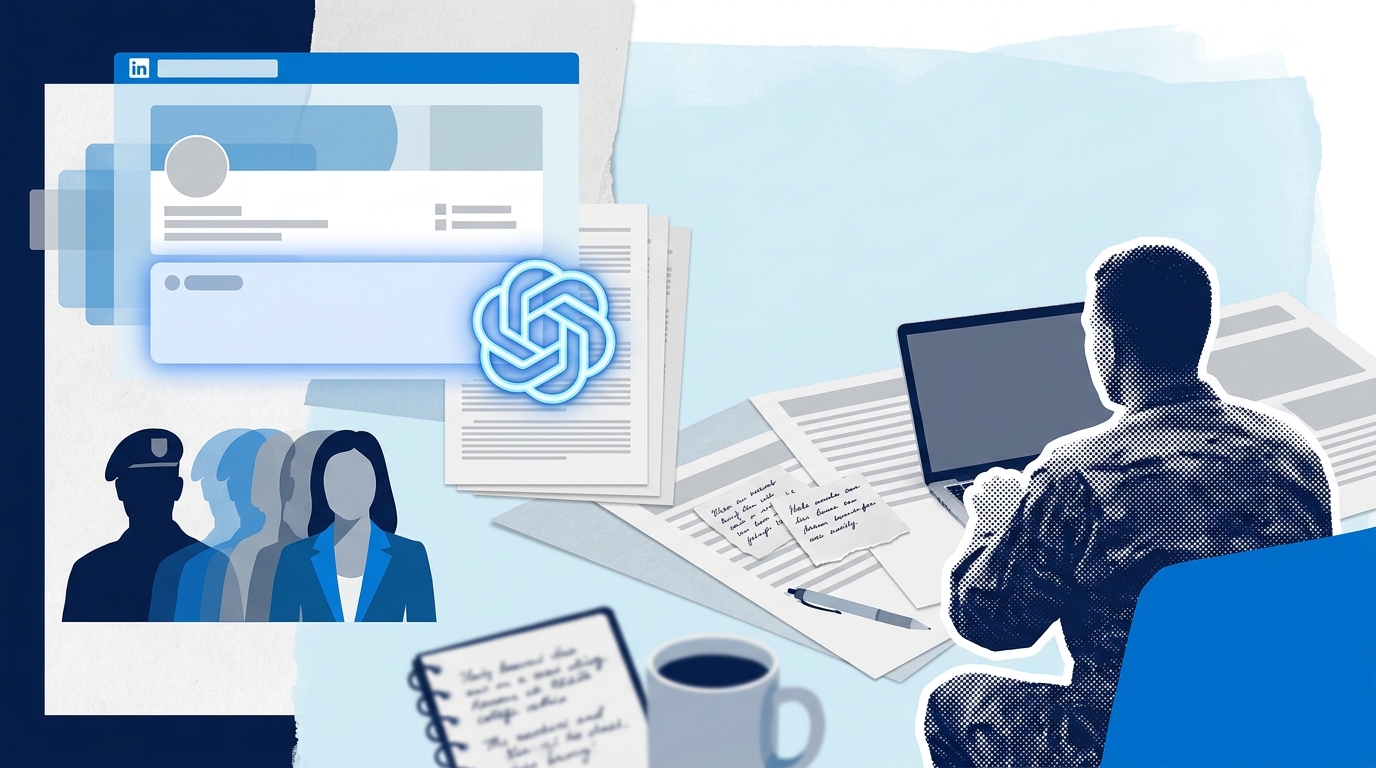
The guidance targets transitioning military personnel who typically upload headshots and copy work histories without using the platform’s 350-370 word narrative capacity, Citroen wrote in the article. The framework arrives as job seekers increasingly turn to generative AI tools for profile optimization, raising questions about authenticity and detection risk.
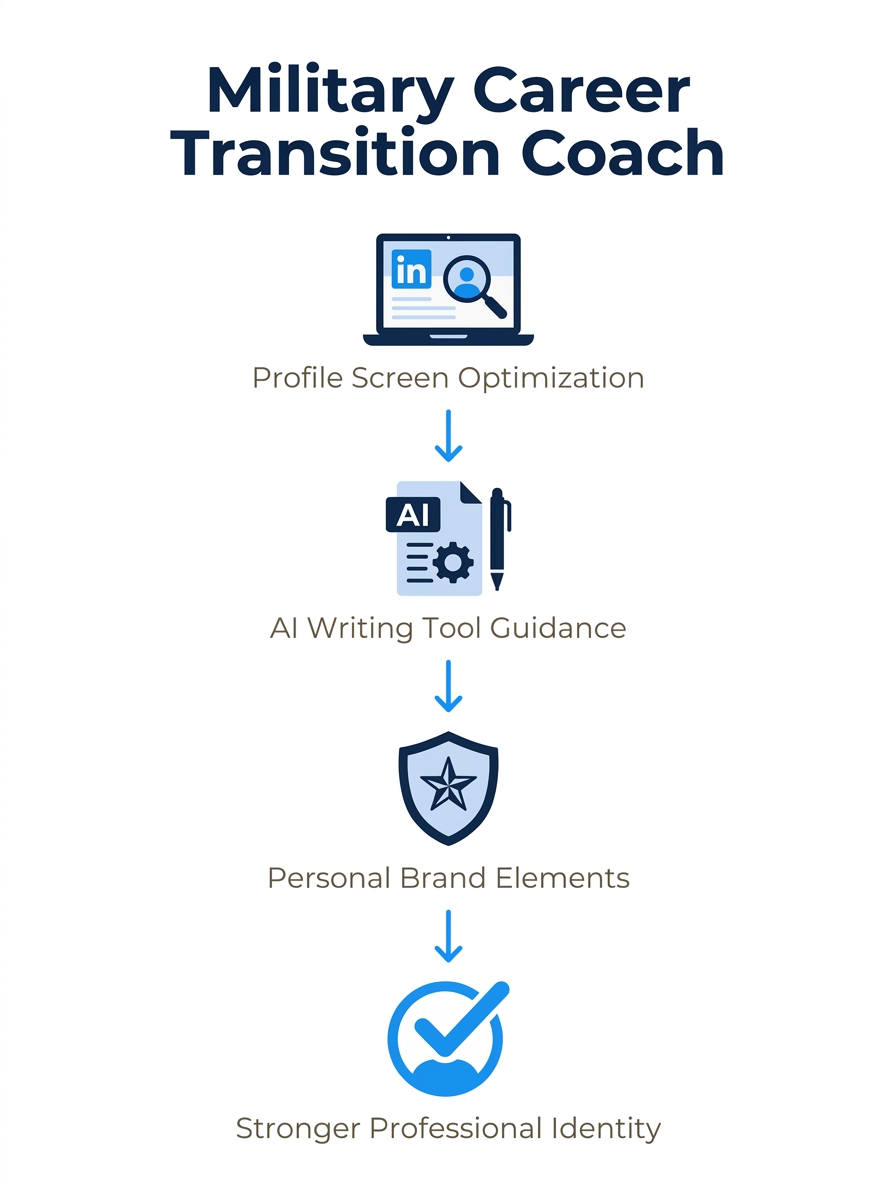
Five-Step Framework Prioritizes Personal Brand and Target Audience
The methodology opens with personal brand clarification—identifying values, desired perception, and profile targets—before audience research. Citroen instructed writers to study industry terminology and pain points, offering a before-after example: instead of “Managed logistics operations for a 40-person unit,” she recommended “Led supply chain operations for a 40-person team under high-stakes, zero-fail conditions.”
The framework’s third step directs writers to maintain natural voice regardless of formality, warning that manufactured tone “won’t sound authentic and real” and will “turn off readers.” Steps four and five emphasize quantified accomplishments and brand reinforcement throughout the section.
Military.com’s guidance notes the About section allows first-person prose, military-to-civilian translation, and search-engine indexing that resumes cannot provide. The platform’s design treats profiles as knowledge-sharing websites rather than credential billboards, according to the article.
AI Assistance Endorsed With Detailed Prompt Requirements
Citroen explicitly endorsed AI tools for About section drafting in the framework’s final segment, stating it is “perfectly fine to use AI” when writers struggle with self-promotion in prose form. The endorsement carries a qualification: users must feed tools comprehensive prompts including personal brand assets, career aspirations, past leadership or technical success attributes, and target-audience needs.
“AI cannot know you as well as you do, so ensure that what it produces not only sounds like you but reflects your authentic self,” Citroen wrote in the July 22 article. The guidance did not specify which AI platforms to use or address applicant tracking system detection concerns that some career coaches have flagged in recent frameworks.
The framework did not include sample About sections or specify how to balance keyword optimization with conversational tone. Job seekers working on broader LinkedIn profile strategy now have explicit permission from a credentialed military career coach to use generative writing tools, provided the output undergoes human review for voice consistency.
Character Limits Shape Content Strategy
LinkedIn’s 2,600-character About section limit translates to roughly 350-370 words, according to the Military.com framework—space Citroen described as sufficient for narrative storytelling, milestone highlighting, and brand positioning. The section differs from resume summaries by allowing conversational first-person voice and industry-specific language translation.
The framework instructed writers to “get indexed by search engines” through keyword inclusion, acknowledging the About section’s dual function as both recruiter-facing narrative and SEO asset. Citroen’s emphasis on quantified metrics and accomplishments aligns with data-driven approaches that other career coaches have recommended for resume sections.
The guidance stopped short of providing completion checklists or revision frameworks, leaving implementation details to individual writers. Service members following the methodology must self-assess whether their personal brand statements align with measurable outcomes listed in supporting text.
Reading Between the Lines
Military.com’s explicit endorsement of AI writing assistance marks a shift from the tool-avoidance language that dominated early 2025 career guidance. Citroen’s framework treats generative AI as a drafting partner rather than a threat, betting that detailed prompts and human review will produce authentic results. The gamble depends on writers investing effort in prompt engineering—feeding tools context about brand, audience, and accomplishments—rather than requesting generic summaries.
The 2,600-character constraint creates strategic pressure: writers must choose between dense accomplishment lists and flowing narrative. Citroen’s before-after logistics example demonstrates the framework’s preference for civilian-translated language over military jargon, but the guidance does not address how to compress 20-year careers into 370 words without losing specificity.
For job seekers uncertain whether their AI-drafted sections pass authenticity tests, the framework offers one clear benchmark: if the output sounds like someone else wrote it, start over. That standard requires writers to know their own voice well enough to recognize departures—a skill the framework assumes but does not teach.