


 4.9
4.9 4.5
4.5Ten members of Forbes Coaches Council published a selection framework for prospective coaching clients on July 2, emphasizing verification of training credentials, client references, and industry-specific expertise over sleek marketing profiles, according to the council’s expert panel post. The guidance package names specific certifications—particularly International Coaching Federation (ICF) accreditation—and outlines a multi-step vetting process that includes conversations with former clients and assessment of coaches’ proven results in a candidate’s target industry.
TL;DR: Forbes Coaches Council published expert guidance July 2 advising prospective clients to verify coach training, industry expertise, and former client outcomes rather than selecting based on social media presence or charisma alone.
The publication addresses rising demand for career coaching services among professionals navigating transitions, promotions, and industry pivots. The framework responds to market confusion about coaching versus consulting, mentoring, and advising—distinctions that affect methodology and outcomes but remain unclear to many buyers.
ICF Certification and Training Standards Emphasized
Greg Smith of FranklinCovey Executive Coaching specified that prospective clients should “identify a professionally trained and, ideally, ICF-certified coach” to ensure adherence to defined methodologies, standards, and a code of ethics. Smith noted that practitioners who fail to differentiate between coaching, consulting, mentoring, and advising “put results at risk,” according to the Forbes panel.
Dr. Sharon H. Porter of Vision & Purpose LifeStyle Magazine and Media recommended researching coaches through referrals, LinkedIn profiles, podcasts, and testimonials before scheduling exploratory conversations. Porter advised prioritizing “a coach who listens deeply, challenges you respectfully and aligns with your values, not just someone with a strong social media presence.”
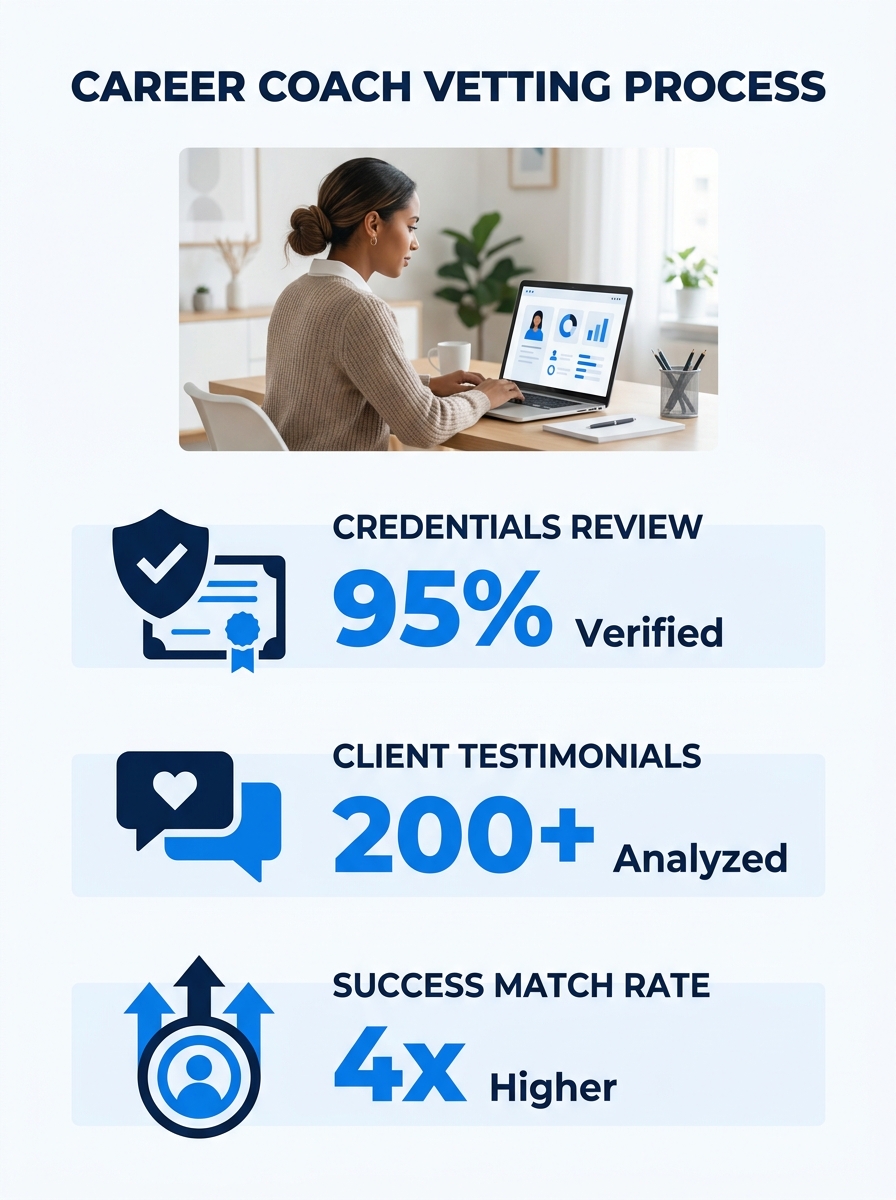
Industry-Specific Expertise Outweighs General Credentials
Dr. Kyle Elliott, a tech career and executive coach at CaffeinatedKyle.com, told the council that specialization in both industry and leadership level matters more than broad coaching credentials. “Find someone who specializes in both your industry and your caliber,” Elliott said, adding that prospective clients should “talk to several former clients” and verify that the coach’s process matches marketing claims.
The recommendation aligns with earlier guidance from career coaches identifying five core growth areas for professionals navigating transitions, including self-awareness development and leadership capability building. Elliott’s emphasis on tech-sector specialization reflects growing complexity in fields where coaching clients face industry-specific challenges around technical leadership, organizational scaling, and executive presence.
Marissa Brassfield of CTOx specified that credentials prove study completion while lived experience and transferable processes prove effectiveness. “Credentials prove someone studied the material; lived experience proves they survived it; and 90-day client results prove their principles and processes are transferable,” Brassfield said.
Former Client Conversations and Results Verification
Emad Rahim of Inclusive 360 LLC recommended exploring reputable coaching platforms or organizations, narrowing options to a shortlist, and conducting initial conversations to assess personality fit. Rahim advised prioritizing “overall fit over credentials” because alignment between coach and client “greatly impacts success.”
Robert Gauvreau of Gauvreau Accounting Tax Law Advisory told prospective clients to identify specific desired outcomes before selecting a coach. “Don’t choose based on charisma; choose based on proven results, alignment and accountability,” Gauvreau said. The focus on results aligns with market shifts documented in recent job search data showing searches now stretch past 11 weeks as competition mounts.
Kenneth Mitchell of Blue Ink, LLC emphasized that visibility doesn’t equal effectiveness. “The best coach is not always the most visible coach,” Mitchell said, recommending prospective clients look for training certification and commitment to continued professional development.
Questions Over Promises as Selection Criterion
Veronica Angela of CONQUER EDGE, LLC advised prospective clients to evaluate coaches based on question quality rather than promised results. “The best coaches don’t just improve performance; they expand perspective, elevate awareness and help develop the ability to lead oneself under pressure,” Angela said. The framework positions coaching as perspective expansion rather than advice delivery.
Andrea Bednar of AndreaBednar.com Inc. told prospective clients to assess their readiness for change before hiring a coach. “What am I actually willing to give up to have what I say I want?” Bednar asked, framing coaching as a process that requires sacrificing perspectives, habits, or identities that no longer serve professional goals.
Alla Adam of Adam Impact Institute recommended seeking coaches who maintain serious pursuits beyond coaching itself—such as building companies, writing books, or leading communities. “If someone only talks about coaching, ask how they challenge and grow themselves when no client is watching,” Adam said.
Reading Between the Lines
The published framework offers job seekers and career changers a concrete vetting process for an unregulated industry where service quality varies widely. The emphasis on ICF certification, former client conversations, and industry-specific expertise creates a filtering mechanism that prospective clients can apply before investing in coaching packages that typically range from several hundred to several thousand dollars per engagement.
The guidance arrives as professionals face extended job search timelines and mounting pressure to differentiate themselves in competitive hiring markets. For readers evaluating whether to invest in coaching, the framework suggests that coaches with demonstrated results in a target industry—verified through former client conversations—offer higher probability of return than generalist coaches with strong social media profiles but limited sector expertise.
The council’s recommendation to prioritize question quality over promised outcomes positions coaching as a development process rather than a quick-fix service. Readers considering coaching should assess their own readiness for the identity shifts and habit changes that effective coaching requires, according to the panel’s guidance.