
 4.9
4.9 4.5
4.5Unemployed Americans are now spending an average of more than 11 weeks searching for work—the longest period in four years—while 26% of job seekers have been looking for more than six months, according to U.S. Bureau of Labor Statistics data analyzed in a June 24, 2026 Forbes report.
TL;DR: Job searches are taking 11+ weeks on average as hiring timelines stretch to 63-68 days, competition intensifies with one opening per unemployed worker (down from two in 2022), and employers add interview rounds.
The extended timelines persist even as unemployment remains relatively low and employers continue posting openings. Hiring activity remains near its weakest level since 2013, according to Cory Stahle, an economist at Indeed Hiring Lab cited in the report. The disconnect stems from structural changes in how employers evaluate candidates rather than a simple decline in job availability.
Openings Drop While Competition Surges
The ratio of job openings to unemployed workers has fallen to roughly one-to-one, down from approximately two openings per unemployed worker in 2022, according to Bureau of Labor Statistics figures. The contraction means qualified candidates now compete against larger applicant pools for each posted role, making it harder to convert applications into interviews.
Competition has intensified not because total hiring has stopped but because the post-pandemic hiring boom has normalized. Employers who filled multiple positions quickly in 2021 and 2022 are now screening more carefully and moving more slowly through hiring pipelines.
The shift particularly affects job seekers who relied on the rapid-response hiring cycles of recent years. Those who received offers within two to three weeks in 2022 now face processes that stretch six to eight weeks or longer, even when their qualifications match employer requirements.
Hiring Timelines Stretch to 63-68 Days
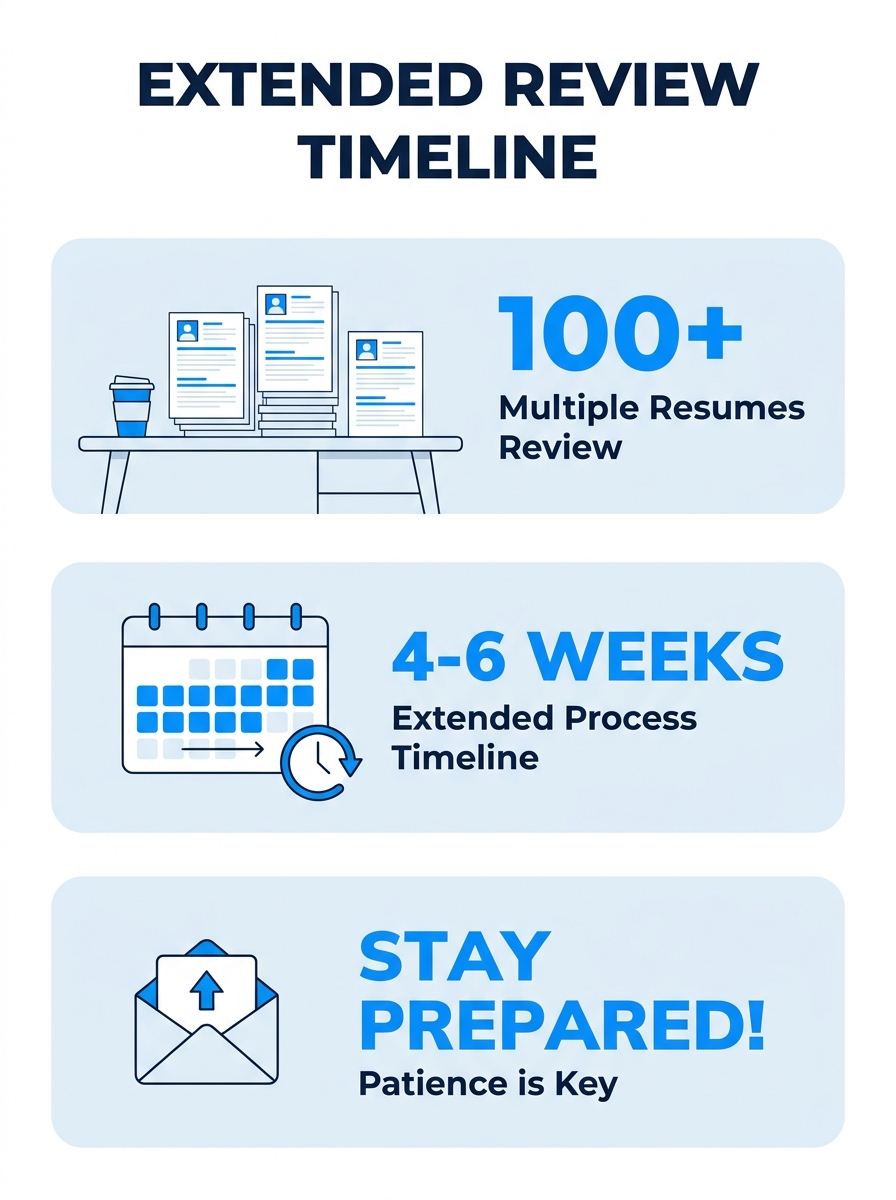
National time-to-fill averages reached 63 to 68 days as of January 2026, according to a Resource analysis drawing on SHRM benchmarking research and LinkedIn Talent Solutions data. The extended timelines reflect longer gaps between interview stages, additional approval steps, and more stakeholders involved in hiring decisions.
Some companies have added executive review layers that weren’t required in 2022, particularly for mid-level and senior roles. Candidates may now wait two to three weeks between an initial conversation with a hiring manager and a second-round interview, then face similar delays before final approvals.
The lengthened process helps explain why job seekers who advance to final-round interviews still report weeks of silence before receiving offers or rejections. Employers facing economic uncertainty are taking more time to confirm that each hire justifies the investment, even when candidates clearly meet posted requirements.
Interview Rounds Multiply as Employers Add Screening Layers
Sixty-one percent of candidates believe four or more interviews are too many, according to the Career Group Companies 2026 Market Trend Report cited in the Forbes analysis. The sentiment reflects a hiring environment where employers routinely add assessment rounds, skills tests, and stakeholder meetings to reduce hiring risk.
Job seekers who once navigated two or three interviews now face five or more conversations before reaching a final decision. The additional rounds often include panel interviews, executive meetings, and project assignments that extend timelines and require sustained engagement across multiple weeks.
The complexity particularly affects candidates juggling multiple interview processes simultaneously. Coordinating availability across five interview rounds at two or three companies creates scheduling conflicts that can further slow timelines or force candidates to drop out of processes altogether.
Employers framing these expanded processes as “thorough” or “collaborative” may not recognize how the added rounds affect candidate experience, particularly for those who remain employed and must navigate interview scheduling around current job responsibilities. As documented in recent job search timeline data, the extended processes are now standard rather than exceptional.
Employers Extend Searches for Perfect-Fit Candidates
Some organizations are leaving positions open longer rather than hiring candidates who can grow into roles, according to the Forbes report. The “perfect candidate” mindset reflects greater scrutiny around hiring decisions as economic uncertainty prompts employers to extend searches in hopes of finding someone who checks every requirement.
Qualified applicants who would have received offers in 2022 now face rejection in favor of candidates with narrower skill matches or more years of specific experience. The selectivity creates longer vacancy periods and more rounds of screening as employers restart searches after initial candidate pools fail to produce their ideal hire.
The trend particularly disadvantages career changers and recent graduates who bring transferable skills but lack exact job-title matches. Employers prioritizing “perfect fit” over growth potential are effectively narrowing their talent pools while simultaneously complaining about difficulty filling roles.
For professionals considering career coaching services to navigate these challenges, the Forbes analysis underscores that extended timelines reflect market conditions rather than individual candidate shortcomings.
What This Means for Job Seekers
Job seekers should recalibrate expectations to account for 11-week average search timelines and 60-plus-day hiring processes as baseline rather than exception. Planning for longer timelines means maintaining financial runway, continuing to apply for multiple positions simultaneously rather than pausing after a promising interview, and asking employers upfront about expected process length and interview rounds.
Focusing on positions that closely match current skills rather than stretch roles reduces friction in a market where employers are screening for perfect fits. Using referrals and networking to bypass initial screening stages becomes more valuable when competition for each opening has intensified. Job seekers who advanced easily in 2022 by applying broadly now benefit more from targeted applications backed by personal connections.
The structural shift toward longer, more complex hiring processes is likely to persist as employers maintain risk-averse hiring postures. Success in this environment requires patience, financial preparation, and strategy adjustments that account for reality rather than hoping timelines will return to 2022 norms.