

 4.9
4.9 4.5
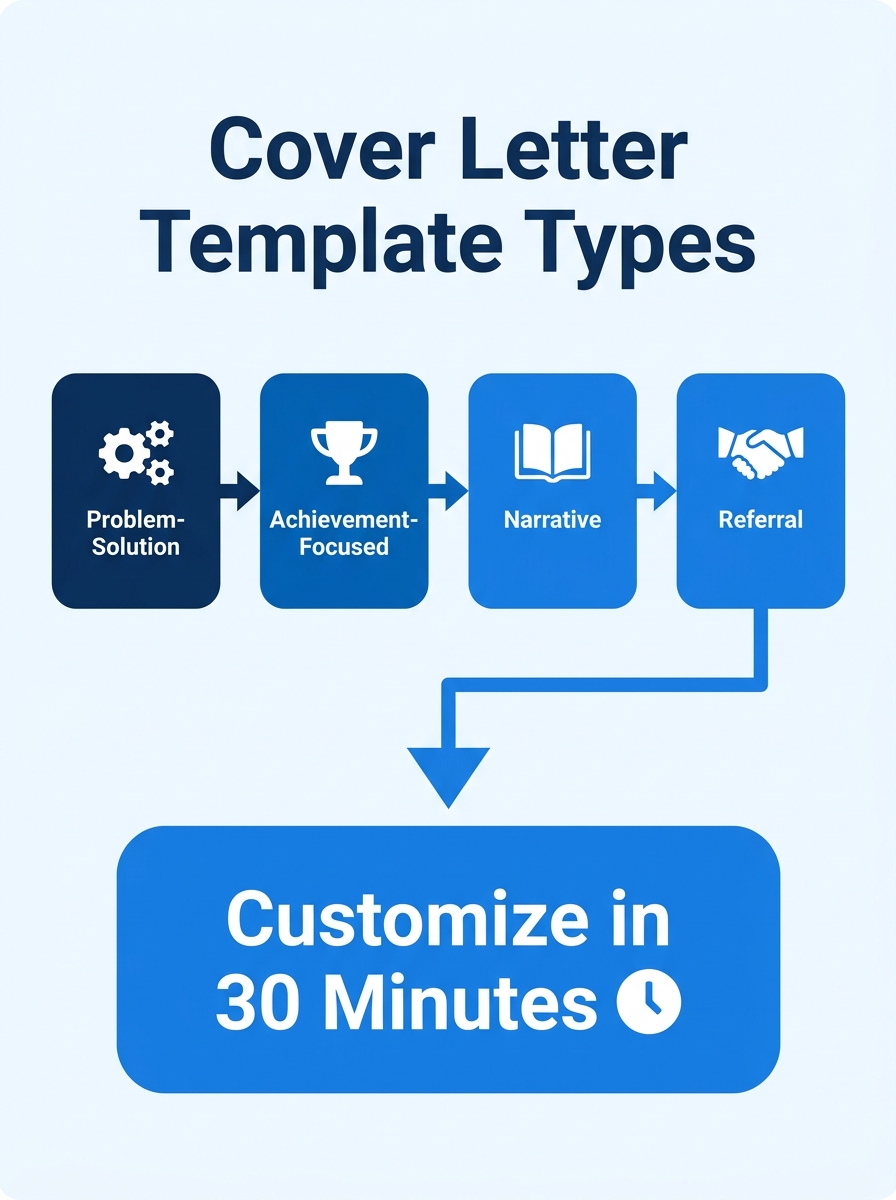
4.5Five cover letter example templates follow, each built for a different job search scenario: problem-solution, achievement-focused, narrative, referral, and career-change. You’ll customize the one that fits your situation in under 30 minutes, using the fill-in structure and sample language below.
TL;DR: Pick the template matching your scenario, replace bracketed placeholders with your own details and at least one measurable result per paragraph, keep the whole thing under one page (66% of job seekers now prefer half a page or less), and submit it alongside a tailored resume. That combination covers the vast majority of applications.
Before You Start
You need four things ready before you open any of these templates. First, a copy of the job posting you’re targeting, you’ll pull exact language from it. Second, a working resume (if yours has issues you’re unsure about, our walkthrough on red flags that make recruiters skip applications is worth a read). Third, two or three measurable achievements you can reference with specific numbers: dollars saved, percentages improved, deadlines hit. Fourth, the name of the hiring manager or department head. LinkedIn, the company’s About page, or a quick call to the front desk gets you this 90% of the time. “Dear Hiring Manager” works only as a fallback.
The standard format is three to four paragraphs, according to Indeed’s cover letter guide, structured like a business letter: your contact information at the top, the date, the employer’s address, a greeting, body paragraphs, a professional sign-off. Every template below follows this skeleton. The differences live in how you structure those body paragraphs.
One more thing: 94% of hiring managers say cover letters influence their interview decisions, and 1 in 4 call them “very important.” So the time you invest here has a measurable payoff.
Step 1, The Problem-Solution Letter
This template works best for experienced professionals applying to roles where the company has a visible challenge: declining market share, a product launch, a new market entry, or a public pivot. The structure forces you to demonstrate strategic thinking before you ever mention your resume.
Paragraph 1 (the hook): Name a specific challenge the company faces. Reference something concrete, a quarterly earnings call, a recent product announcement, a news article. Then state, in one sentence, that you’ve solved this exact type of problem before.
Paragraph 2 (the proof): Describe the situation you handled. Use numbers. “Reduced customer churn by 18% over six months” beats “improved customer retention.” If your achievement involved a team, say how many people and what budget you managed. Hiring managers reading problem-solution letters expect quantified outcomes, not vague claims.
Paragraph 3 (the bridge): Connect your proof back to their challenge. Explain what you’d bring in the first 90 days. Keep this forward-looking but grounded, don’t promise to “revolutionize” anything. Promise to apply the specific skills you just demonstrated.
Paragraph 4 (the close): Thank them, state your availability for a conversation, and include your phone number and email directly in the text. Holl, a career coach at Indeed, advises candidates to use the job description itself to show where they can “best add value to the company”, so echo one phrase from the posting in your closing sentence.
You’ll know this template is working when your opening paragraph references something only someone who researched this company would write. If you could swap in a competitor’s name without changing anything else, the letter isn’t specific enough.
Step 2, The Achievement-Focused Letter
The achievement-focused template replaces traditional prose paragraphs with 3–4 bullet points of quantified results. It’s the strongest format for technical roles, sales positions, and any industry where numbers tell the story faster than narrative.
Paragraph 1 (2–3 sentences): State the role you’re applying for, where you found it, and one sentence about why this company specifically interests you. Keep it tight, this paragraph exists to frame the bullets, not to carry the argument.
Bullet section (3–4 results): Each bullet follows the same formula: action verb + what you did + measurable outcome. Examples from Resume Genius’s cover letter library, which hosts over 200 professional templates, show effective bullet formatting across industries:
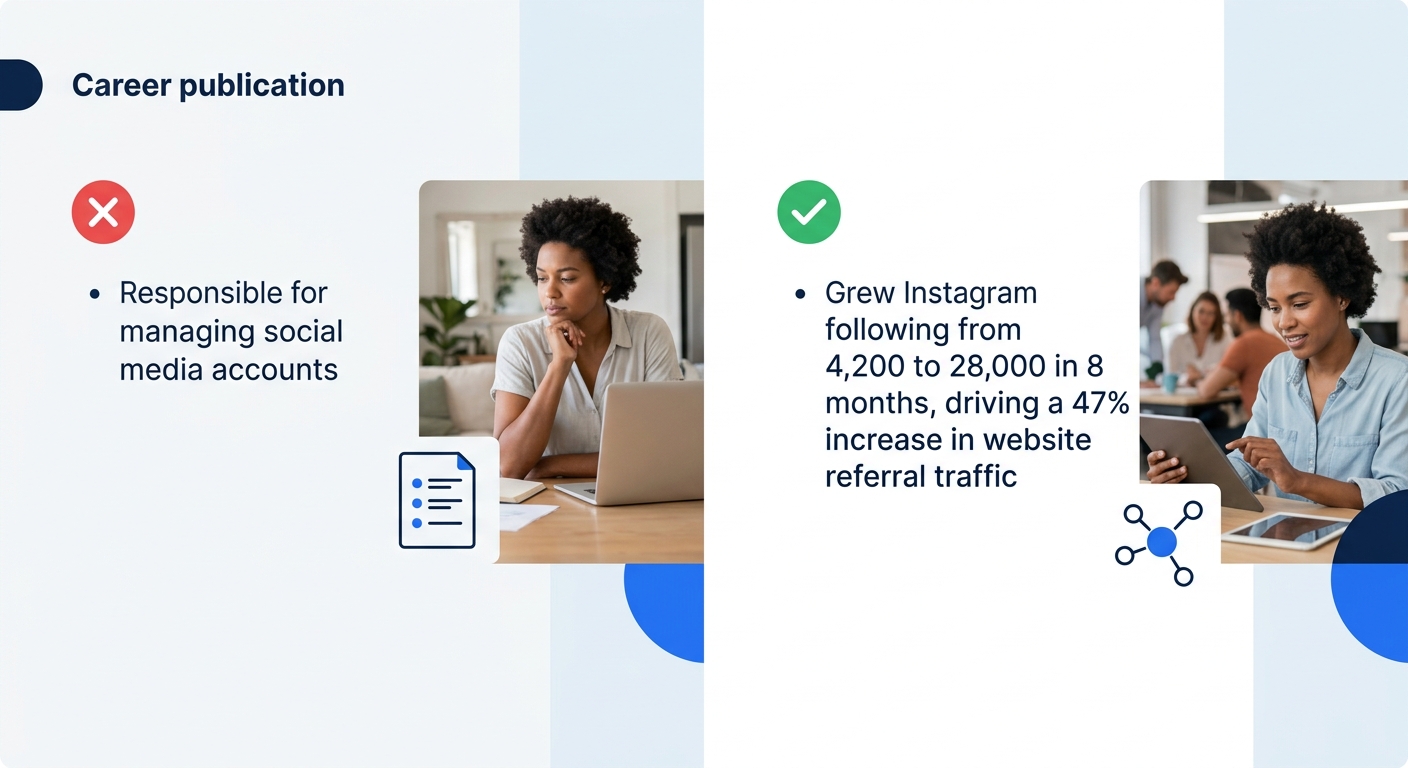
- Managed a $2.4M digital advertising budget, generating a 31% increase in qualified leads over 12 months
- Trained 14 new hires on compliance procedures, reducing onboarding time from 6 weeks to 3.5 weeks
- Built an automated reporting dashboard that saved the finance team 12 hours per week
Closing paragraph: Reiterate your enthusiasm, reference one bullet that directly maps to the job description, and request a meeting. The closing line should feel confident without being aggressive, “I’d welcome the chance to walk through these results in detail” is the right register.
Tip: If you’re struggling to quantify your work, our guide to [aligning your summary with your bullet points](/blog/professional-summary-bullet-points-alignment) shows how to pull numbers from context even when your role didn’t involve revenue or sales.
You’ll know it worked when every bullet contains at least one number and maps directly to a requirement in the job posting. If a bullet is generic enough to apply to any company, cut it and replace it with something targeted.
Step 3, The Narrative Letter
Creative industries, nonprofit roles, education, and leadership positions often respond better to storytelling than to bullet points. The narrative template uses a personal experience, one short, concrete story, as its structural spine.
Opening sentence: Drop the reader into a specific moment. The University of Michigan Career Center advises students to “describe your qualifications for the type of position you seek using specific examples from academic, work, volunteer” experience. The narrative template takes that advice literally: you open with the example, then expand outward.
Body (2 paragraphs): The first body paragraph tells the story, what happened, what you did, what changed. Keep it under 80 words. The second body paragraph pivots to the role: here’s why that experience makes you the right person for this job. Name two or three skills from the posting and show how the story demonstrates them.
Close: End with a sentence that looks forward. Connect your story’s theme to the company’s mission statement or a recent initiative. Then make the ask: a conversation, a call, an interview.
You’ll know it worked when a friend can read the letter and retell your opening story back to you. If the story isn’t memorable enough to repeat, it’s too generic to differentiate you from other applicants.
If a friend can read your letter and retell your opening story back to you, it’s specific enough. If they can’t, it’s too generic to differentiate you.
Step 4, The Referral Letter
A referral letter is the shortest and often the most effective template. When someone inside the company has recommended you, that name carries more weight than any paragraph of qualifications. The entire structure exists to get that name into the first sentence.
Sentence 1: “Jane Rodriguez, your Director of Product, suggested I reach out about the Senior PM opening.” Done. The University of Michigan Career Center is explicit on this point: “if someone has referred you to the organization (a current employee, friend, family member) include his or her name in the first sentence.”
Paragraph 1 (after the referral drop): Briefly explain your connection to the referrer and why they thought you’d be a good fit. Keep it to two sentences, the referrer’s endorsement does the heavy lifting, and you don’t want to dilute it with a wall of text. One specific detail about what you discussed with the referrer adds credibility.
Paragraph 2: This is your standard qualification paragraph, but shorter than usual, 3–4 sentences maximum. Include one quantified achievement. The referral has already gotten the hiring manager’s attention; your job now is to confirm that the referral was well-placed.
Close: Reference the referrer one more time (“As Jane mentioned, I’m particularly excited about your team’s expansion into the APAC market”) and request next steps. Referral candidates get interviews at rates 10× higher than cold applicants in many industries, so your close can be direct.
You’ll know it worked when the letter is under 200 words total. Referral letters that stretch beyond half a page undermine the implied message, which is: someone you trust already vetted me.
Step 5, The Career-Change Letter
Career changers face a specific problem: their resume tells one story, and the job posting asks for a different one. This template bridges the gap by leading with transferable skills and reframing past experience through the lens of the target role. If you’ve been thinking about how to make your resume authentic while switching fields, this letter is where you address the elephant in the room head-on.
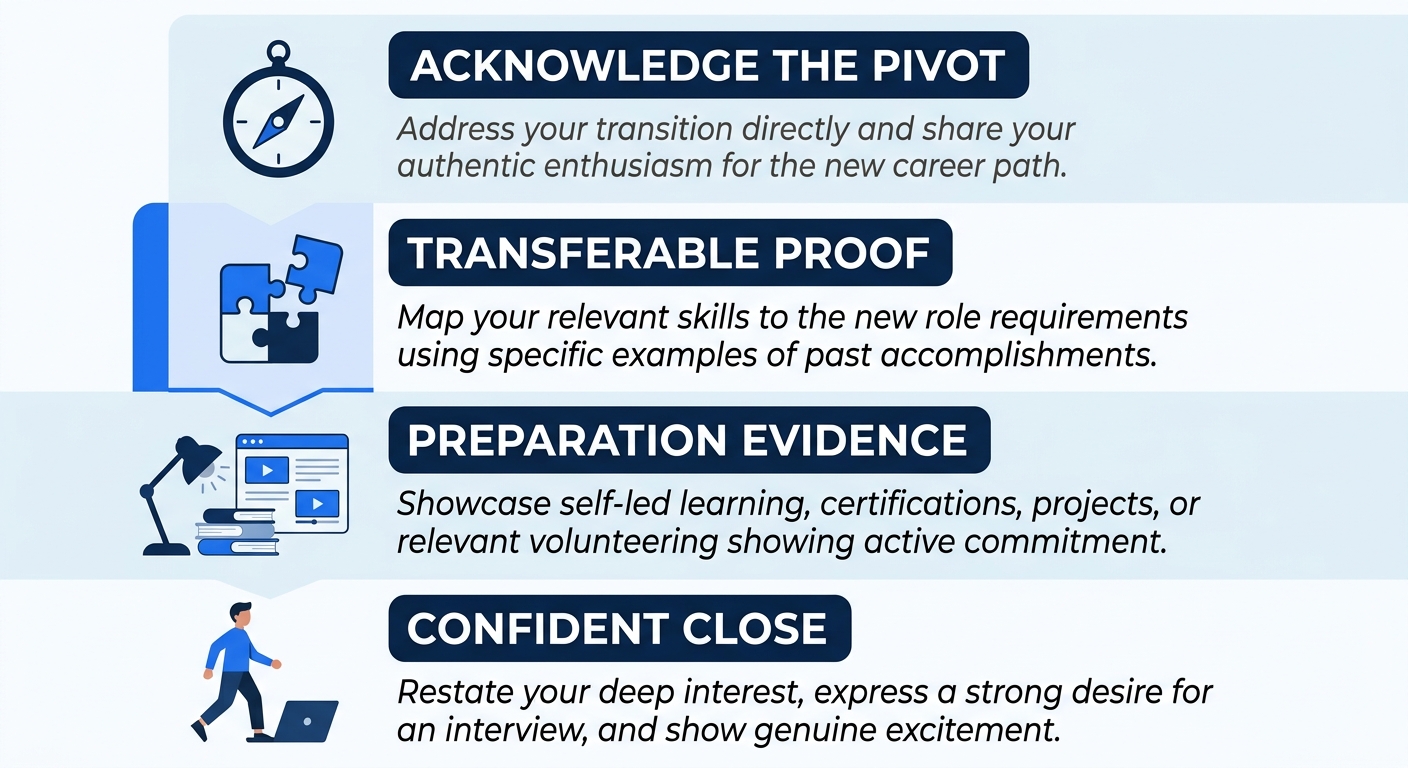
Paragraph 1 (acknowledge the pivot): State clearly that you’re transitioning from X to Y. Don’t hide it, hiring managers will see it on your resume anyway. Name the specific reason for the change in one sentence: passion for the new field, a project that shifted your focus, a skill you developed that pulled you in a new direction.
Paragraph 2 (transferable proof): Identify 2–3 skills from your current career that directly map to requirements in the posting. For each skill, provide one sentence of evidence. A teacher moving into corporate training might write: “I designed and delivered a 14-week curriculum to 120 students across three sections, consistently scoring above 4.5/5.0 on end-of-term evaluations.” That sentence demonstrates curriculum design, audience management, and measurable feedback, all relevant to corporate L&D roles.
Paragraph 3 (what you’ve done to prepare): Mention certifications, courses, volunteer projects, or freelance work in the target field. This paragraph answers the unspoken question: “Are you serious about this, or is this a whim?” Specific details (course names, hours completed, projects delivered) carry more weight than vague references to “ongoing professional development.”
Close: Express enthusiasm for the specific role and company, and acknowledge that your background is non-traditional. Frame it as an asset: “My experience managing classroom dynamics of 30+ students translates directly to stakeholder management in cross-functional teams.” Request an opportunity to discuss the transition in person.
You’ll know it worked when the letter explains why your career change makes sense without being defensive about it. Confidence without arrogance is the target tone.
When Something Goes Wrong
Three problems come up repeatedly when people use these templates, and all three are fixable in under ten minutes.
Problem 1: The letter reads like a second resume. This happens when you list job duties instead of telling the reader why those duties matter to their company. Fix: remove any sentence that starts with “Responsible for” or “Duties included.” Replace it with a result. Ninety-four percent of hiring managers are reading your letter for context about you, not a summary of what they can already see on your resume.
Problem 2: The tone sounds robotic or overly formal. If you’ve used AI tools to help draft, run the output through a quick authenticity check. Our piece on balancing AI assistance with a human voice covers this in depth. The short version: read the letter out loud. If any sentence sounds like something you’d never say in a conversation, rewrite it until it does.
Problem 3: The letter is too long. Remember that 66% of job seekers now prefer documents that fit on half a page. If yours runs over one full page, cut your weakest paragraph entirely. Every cover letter example that performs well in hiring manager surveys shares one trait: brevity. Three paragraphs with strong evidence beat five paragraphs of padding every time.
Warning: Don’t submit the same letter to multiple employers by swapping out the company name. Hiring managers spot this immediately, and ATS systems now flag letters that closely match templates submitted to other postings from the same recruiter network.
Where to Go From Here
You now have five distinct templates mapped to five common scenarios. The work that remains is customization: pulling specific language from the job posting, inserting your strongest quantified achievements, and trimming everything down to one page or less.
If your resume itself needs attention before you send it alongside one of these letters, our guide on formatting fixes that eliminate common red flags is a solid next step. And for anyone navigating a career switch, the templates and tips roundup offers additional cover example letter formats organized by industry.
One last thing to keep in mind: these templates are starting points. The best cover letters borrow a structure and then break from it wherever your own experience demands something different. Use the skeleton. Trust your own story to fill it in.