


 4.9
4.9 4.5
4.5Career coach Beth Hendler-Grunt published a networking framework called the “10/10 rule” on July 8, recommending that entry-level job seekers identify ten target companies, locate ten current employees across those firms, and initiate informational conversations rather than submitting mass applications, according to guidance published in CNBC. Hendler-Grunt, founder of Next Great Step, told CNBC that the approach helps candidates access the “hidden job market” during a period when entry-level hiring rates declined 6% between December 2025 and February 2026 compared to the prior year.
TL;DR: Career coach Beth Hendler-Grunt’s “10/10 rule” directs entry-level job seekers to build relationships with ten employees across ten target companies rather than mass-applying to job boards, addressing a 6% drop in entry-level hiring between December 2025 and February.
The framework counters what Hendler-Grunt calls the “spray-and-pray approach” of submitting dozens or hundreds of generic applications. Her firm Next Great Step has advised over 1,000 college students and recent graduates seeking internships and entry-level roles. The entry-level hiring decline coincides with extended job search timelines stretching past 11 weeks industry-wide.
What the 10/10 Rule Entails
The rule directs candidates to start with ten companies that interest them and identify ten people across those firms currently working in entry-level roles the candidate would want. Hendler-Grunt told CNBC that job seekers should tap college alumni networks through internal portals or LinkedIn filters to locate these contacts.
The outreach message should open with a shared connection point, express curiosity about the contact’s career path, briefly mention the candidate’s skills, and request a 15-minute conversation. “It’s not just, ‘Hi, do you have a job for me?'” Hendler-Grunt said. “That’s like asking to get married on the first date.”
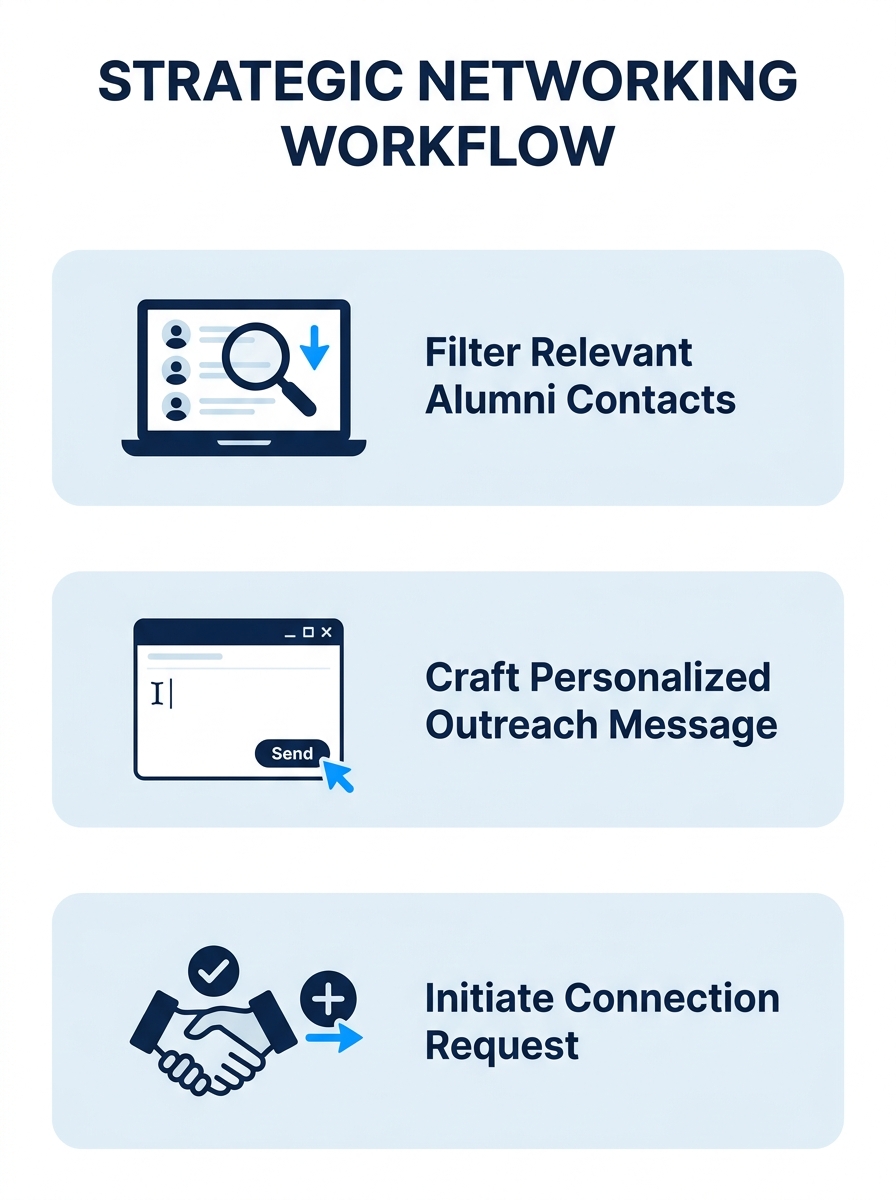
Hendler-Grunt emphasized that the list grows beyond the initial ten companies and ten contacts as people connect candidates to additional contacts. The framework positions networking as the primary job search channel rather than a supplement to job board applications.
The Entry-Level Hiring Context
Entry-level workers in the United States saw an average seasonally adjusted hiring rate drop of 6% between December 2025 and February compared to the same three-month period a year earlier, according to LinkedIn data cited in the CNBC report. The decline makes entry-level work harder to secure for young job seekers during the 2026 hiring cycle.
Hendler-Grunt told CNBC that generic applications from entry-level candidates often “look like a lot of other applications” because early-career professionals typically lack proven rare or unique skills. That pattern makes relationship-building especially important for setting candidates apart from competition.
How to Execute the Outreach
At the start of each 15-minute call, Hendler-Grunt recommends setting a brief agenda: thank the person for their time, say you’d like to learn more about them, then share information about yourself. Questions should focus on details that internet searches cannot answer, such as how the contact reached their current role, their biggest challenges, or how their success is measured.
When discussing personal qualifications, Hendler-Grunt suggests focusing on three core skills with examples or stories demonstrating each. Candidates should tailor skill presentations depending on the contact’s role and background. Even contacts without hiring authority may share advice on communicating skills in interviews, suggest ways to apply those skills, or recommend candidates for roles requiring them.
Closing questions should include asking whether the contact has advice on breaking into the industry or company, whether they can suggest trade organizations or networking groups to join, whether they would stay in touch for periodic career updates, and whether they can connect the candidate to other helpful contacts. “One person connects you to the next, and all of a sudden you have your own network,” Hendler-Grunt told CNBC.
For candidates who have already applied to a role through a job board, reaching out to an entry-level employee at the company or a school alumnus can improve odds. Though these contacts may have limited influence on hiring decisions, they may flag applications or submit referrals. They can also share information about company culture or the role’s day-to-day responsibilities. In these cases, mention the recent application, briefly highlight core skills, and say you’d like to learn more about their experience.
Messaging a hiring manager after applying can also boost visibility. In those messages, share core skills and express interest in discussing the position further, following the pattern of stating clear requests after exploratory conversations.
The Takeaway
The 10/10 rule addresses a structural mismatch in how entry-level candidates approach competitive markets. Job seekers default to application volume because it feels productive—tracking 50 or 100 submissions creates a tangible sense of effort. But when hiring rates drop 6% and ATS platforms filter most applications before human review, volume strategies fail. Hendler-Grunt’s framework forces a reversal: ten targeted relationships yield more job market access than 100 blind applications because “people hire people, not a job board, not an ATS,” as she told CNBC.
The hidden job market concept isn’t new, but the 10/10 structure gives anxious entry-level candidates a concrete starting point. Ten companies feels manageable. Ten people per company creates enough surface area to build momentum without overwhelming candidates who fear networking cold outreach. The rule works because it converts the vague advice to “network more” into a checklist: pick companies, find alumni, draft messages, schedule calls. For recent graduates competing against experienced applicants in a cooling entry-level market, relationship-building isn’t optional networking—it’s the primary channel for getting past automated filters and into hiring managers’ consideration sets.