


 4.9
4.9 4.5
4.5A product manager’s inability to defend his own question during a final CEO interview may have cost him a job offer at a used-car startup, according to a LinkedIn post by Karan Gogna, an Indian product manager based in Canada, published July 6. Gogna said he had cleared all prior interview rounds and submitted documents before HR scheduled one last conversation with the CEO, during which he asked about potential two-wheeler market expansion but could not respond when the CEO turned the question back on him.
TL;DR: Karan Gogna, a Canada-based product manager, attributes losing a startup job offer to his unprepared response when a CEO reversed his closing question about market strategy during a final interview round.
The Interview Process Leading to the Final Round
Gogna told his LinkedIn audience he was interviewing for a role at a startup in the used-car industry, according to his post on BusinessToday. He said he had successfully completed every interview stage and that HR had requested his documents as the hiring process neared completion. Before extending the offer letter, the company scheduled a final conversation with the CEO.
The discussion proceeded smoothly until the CEO asked whether Gogna had any questions, a standard closing prompt in executive interviews. Professionals interviewing for senior roles with C-suite executives often face higher scrutiny on strategic thinking and business acumen during these final evaluations.
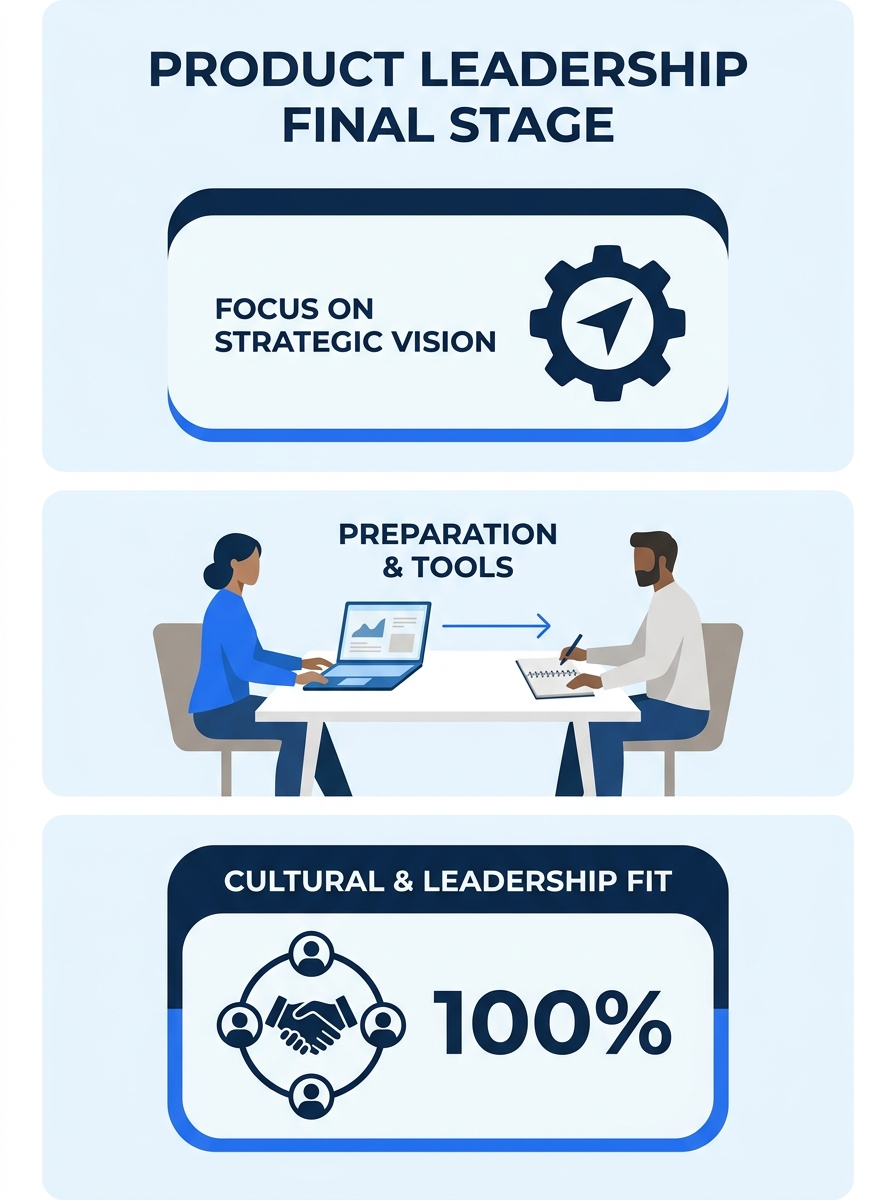
The Question Exchange That Shifted the Outcome
Gogna posed what he intended as an insightful question: “Are you considering getting into the two-wheeler market?” Instead of providing an answer, the CEO responded with his own question: “What do you think? Should we?”
“I had done my homework on the four-wheeler area but I had nothing on two wheelers. I floundered through an answer that did not have any point of view,” Gogna wrote in his post. He acknowledged that his preparation focused entirely on the company’s existing four-wheeler business and that he had not considered prospects in the two-wheeler segment.
The exchange revealed a common gap in candidate preparation: job seekers invest significant time rehearsing answers to anticipated questions but dedicate little effort to preparing their own questions or defending the strategic thinking behind them.
The Rejection and Gogna’s Reflection
HR contacted Gogna the following day to inform him the company had selected another candidate, according to his account. While Gogna said he could not confirm the exact reason for the decision, he believed the final exchange influenced the outcome.
“We spend so much time preparing answers and almost no time preparing our questions. Your closing question is the last data point they get on how you think, so treat it with the same seriousness. Know why you are asking it, and be ready in case it comes right back at you,” Gogna wrote.
The incident illustrates how executive interviewers often use candidate questions as assessment tools. When meeting with senior leaders after exploratory rounds, professionals face evaluation on business judgment, not just technical qualifications.
Industry Professionals Weigh In on the Exchange
The LinkedIn post drew substantial engagement, with professionals sharing similar experiences and debating whether the question itself was problematic or whether Gogna’s inability to articulate a perspective signaled deeper preparation gaps.
One commenter wrote, “The question wasn’t the problem. The moment it came back to you, the interviewer wanted to understand your thinking process. It’s less about having the right answer and more about having a reasoned opinion.”
Another user said, “I’ve always believed the interview isn’t over until you walk out of the room. The questions you ask are often remembered more than the answers you give because they reflect your curiosity and business sense.”
A third professional advised, “This is why I always tell candidates to prepare three or four thoughtful questions in advance. If you’re asking about strategy, growth or expansion, you should also be ready to explain your own perspective.”
One respondent noted the deliberate nature of the reversal: “Sometimes interviewers deliberately flip your question back to you. They’re testing how you think on your feet, how you deal with ambiguity and whether you can back your ideas with logic.”
Why This Matters Now
Final-round CEO interviews carry disproportionate weight in hiring decisions, particularly for product and strategy roles where executives evaluate candidates’ ability to think critically about market expansion, competitive positioning, and resource allocation. Job seekers who treat the closing “Do you have any questions?” prompt as a formality risk signaling shallow preparation or weak strategic judgment at the moment when first impressions have already solidified but final assessments remain fluid.
The reversal tactic Gogna encountered—turning a candidate’s question back on them—is a deliberate test of business reasoning, not a gotcha trick. Executives use these reversals to assess whether candidates can defend their curiosity with logic, data, or informed hypotheses. Preparation for executive conversations should include not only researching the company’s current operations but also forming preliminary perspectives on adjacent markets, competitive threats, and strategic options the business might consider. Candidates who ask about market expansion without forming a testable opinion beforehand treat the question as performative rather than analytical.
For mid-career professionals pursuing senior IC or management roles, this incident underscores that executive interview preparation differs fundamentally from earlier-stage interview prep. The closing question is not an opportunity to appear engaged—it is the final data point on judgment, strategic thinking, and preparation rigor. Treating it with the same seriousness as answering a case study or behavioral prompt may determine whether an offer materializes or whether HR calls the next day with a rejection.