
 4.9
4.9 4.5
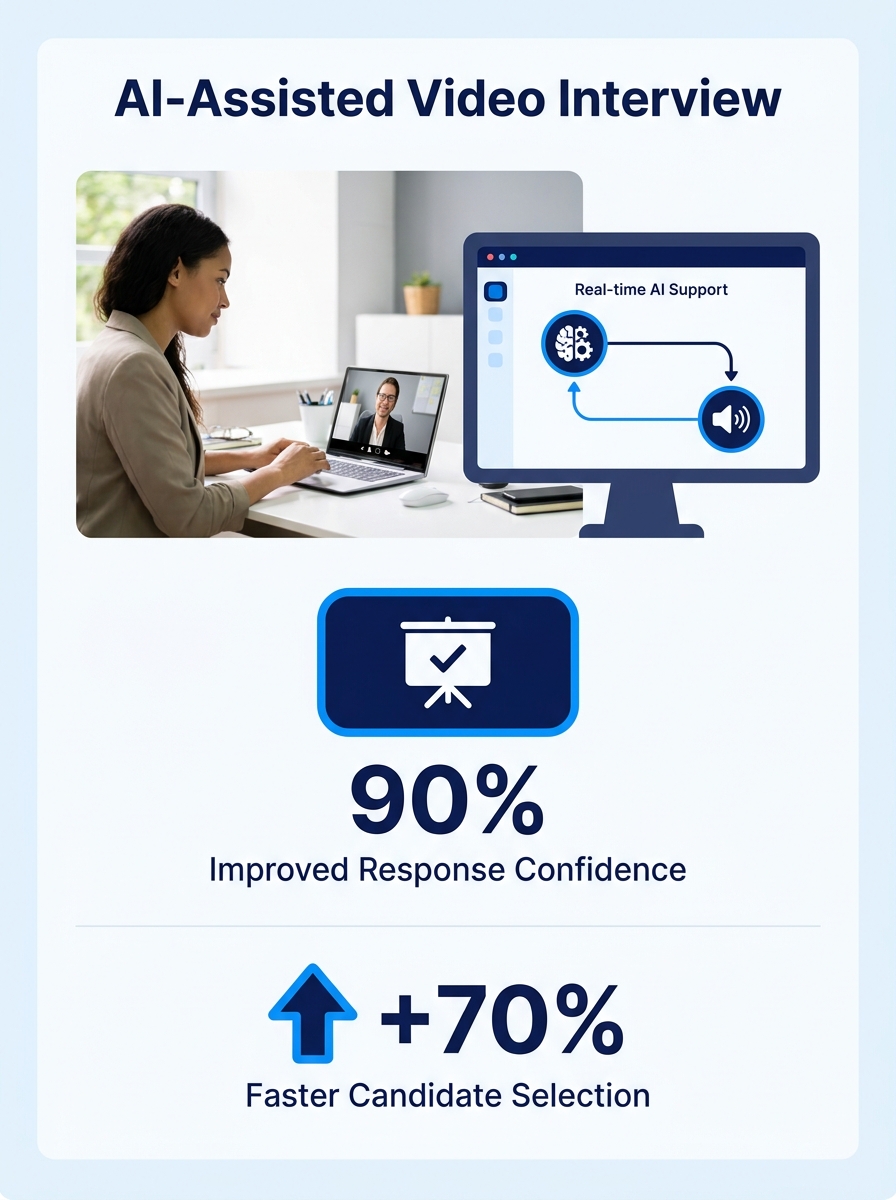
4.5Twenty-two percent of U.S. job seekers now use artificial intelligence during live job interviews, according to a survey released May 4, 2026, by Resume Genius. The finding marks a shift beyond AI-assisted resume writing into real-time interview support that raises questions about hiring authenticity and evaluation methods.
The 2026 Job Seeker Insights Report, based on responses from 1,000 active U.S. job seekers, found that AI adoption spans the entire job search process, with 78 percent of candidates using AI tools at some point. The use of AI during actual conversations with recruiters or hiring managers represents a more contested application than resume polishing or interview preparation.
Resume Genius did not specify which platforms candidates used during interviews, but real-time AI systems that generate talking points, suggest answers, or provide prompts have become widely available. The practice exists in what hiring experts describe as a gray area between legitimate preparation and misrepresentation.
Survey Reveals Widespread Job Search Frustrations
The same survey documented high levels of frustration among job seekers that may explain the turn toward AI assistance. Fifty-five percent of respondents said being ghosted after applying was their biggest frustration, while 49 percent reported that job searching negatively affected their mental health. Sixty-seven percent said they encountered fake or misleading job postings.
Candidates appear to view AI not as unethical assistance but as a tool for competing in an automated hiring environment, according to HR consultant Bryan Driscoll. “Companies spent the last decade automating empathy out of their businesses and the last few years removing people from the hiring process,” Driscoll told Newsweek. “One-way video interviews, AI-screened resumes, automated rejection emails from an unmonitored address. You could argue candidates are automating authenticity out of their side but I’d argue it’s necessary to compete with an AI interviewer.”
The survey also found that 36 percent of job seekers admitted to lying during an interview, and 36 percent said they had “skills manifested”—listing abilities they do not yet possess. AI proficiency was the most commonly exaggerated skill, with 36 percent of respondents admitting to this specific embellishment.
Paradox of AI Adoption and Job Replacement Fears
Despite widespread AI use in job searching, candidates harbor significant anxiety about the technology’s long-term impact. Eighty percent of survey respondents said they fear AI will eventually replace jobs in their field, even as many rely on the technology themselves during the hiring process.
Alex Samuels, PR manager for Use.AI, described the shift as transforming interviews into “open-book environments” where candidates are evaluated on their ability to use tools under pressure rather than on recall or immediate reasoning. “Longer term, this raises a more structural question for hiring: whether we’re measuring independent thinking, or AI fluency,” Samuels told Newsweek.
The distinction between AI-assisted preparation and real-time support matters. Using AI to refine resume language or practice interview responses differs from relying on prompts during a live conversation, though the boundary between the two continues to blur as tools become more sophisticated.
Employers May Shift Interview Methods
Hiring experts expect AI-assisted interviews to force changes in how employers conduct evaluations. Driscoll argued that traditional behavioral questions have become ineffective. “If your interview can be passed by ChatGPT in real time, you’re not interviewing effectively,” he said. “Canned questions, behavioral questions, those are functionally dead. What still works is structured work samples, paid trial projects, and unscripted conversations with people who actually work together.”
Some companies may respond by emphasizing practical assessments or requiring in-person interviews where AI assistance is harder to deploy. Others may accept AI fluency as part of the modern workplace skill set and adjust evaluation criteria accordingly.
The prevalence of AI detection in hiring contexts remains unclear. As real-time AI tools become harder to distinguish from a candidate’s own responses, interview preparation strategies may need to account for both demonstrating genuine capabilities and navigating employer concerns about artificial assistance.
Context and Outlook
For job seekers navigating interview preparation in 2026, the Resume Genius findings reveal a hiring environment where both sides increasingly rely on automation. The 22 percent who admitted to using AI during interviews likely represents a floor rather than a ceiling, given the social desirability bias in self-reporting unethical behavior. The actual figure may be higher.
The practical implication for candidates centers on risk assessment. While AI assistance during interviews may help some job seekers perform better under pressure, the practice carries termination risk if discovered and contributes to an arms race where genuine conversation becomes increasingly rare. Employers who detect AI use may disqualify candidates regardless of their underlying qualifications.
The longer-term trajectory points toward a hiring environment where AI literacy becomes a legitimate, evaluated skill rather than a secret weapon. Companies that continue relying on standardized behavioral questions will find themselves interviewing AI systems rather than people. Those that shift toward work samples, trial projects, and conversational depth may better distinguish between candidates who can perform the job and those who can perform the interview.