

 4.9
4.9 4.5
4.5John Ternus’ LinkedIn profile lists him as Apple’s vice president of hardware engineering five days after he assumed the CEO role on September 1, according to screenshots circulating on social media that prompted debate among career professionals about personal branding strategy. The sparse profile—containing only two employer entries and no headline, About section, or Featured content—contrasts sharply with conventional LinkedIn optimization advice.
TL;DR: Apple’s new CEO John Ternus has not updated his LinkedIn profile to reflect his September 1 promotion, triggering discussion about whether senior executives need robust social media presence or whether work credentials speak for themselves.
The profile lists Ternus’ 25-year tenure at Apple and a four-year stint as an engineer at Virtual Research Inc., along with his mechanical engineering degree from the University of Pennsylvania. Apple’s internal pages updated Ternus’ title following the leadership transition from Tim Cook, but the LinkedIn page remains unchanged as of September 6.
The Profile That Launched a Thousand Posts
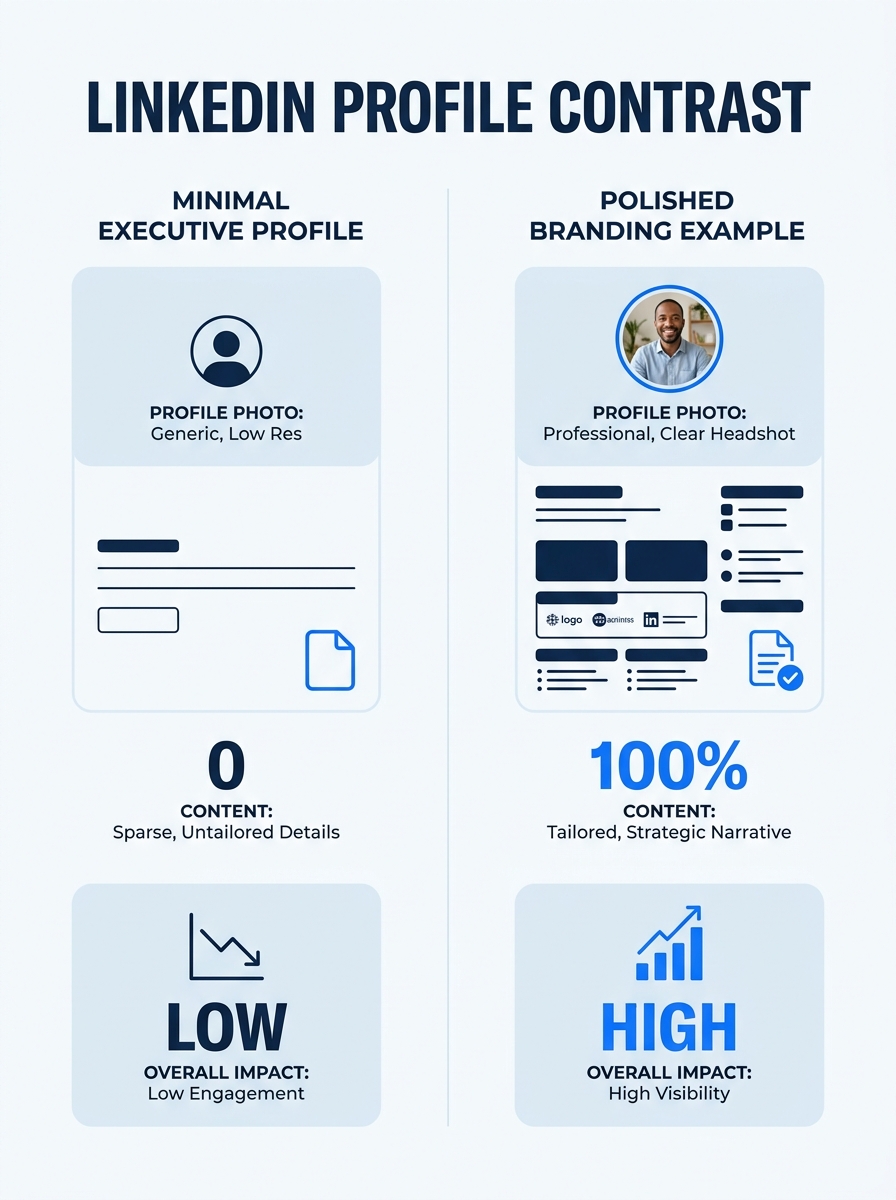
A viral social media post highlighted the absence of elements typically associated with LinkedIn personal branding: no professional headshot, no “visionary leader” headline, no About section promoting his quarter-century career at Apple, and no Featured section displaying achievements. The post noted the profile contained no bulleted lists explaining how each project “created impact”—a common format in executive LinkedIn profiles.
User responses divided into two camps. “I guess, the strongest personal brand is still the work you’ve actually done,” one commenter wrote. Another offered a different interpretation: “He’s able to afford a bare profile because the title already does the talking.”
What the Minimal Profile Includes
Ternus’ LinkedIn page contains two employment entries spanning approximately 29 years total. The Apple entry lists his role as vice president of hardware engineering. The profile includes no recommendations, no skills endorsements, and no posts or articles. His education section lists only the University of Pennsylvania degree.
The minimal presence extends to other platforms. Ternus’ X account became public recently, with his first post consisting of a single word: “hello.” The account follows three accounts: Apple’s corporate page, Tim Cook, and Greg Joswiak, Apple’s senior vice president of marketing.
Career professionals who maintain optimized LinkedIn profiles typically update job titles within 24 hours of a role change to ensure recruiter searches surface their profiles accurately. LinkedIn’s search algorithm weights current title and company name heavily in query results.
The Work-Versus-Branding Question
Comments on the viral post framed the profile as evidence that career progression can occur without active social media management. “A polished profile can open the door, but consistent work is what keeps the door open,” one user wrote. Another stated: “LinkedIn is valuable today, but perhaps the lesson is simple: personal branding can boost credibility, but it cannot substitute for it.”
The discussion arrives as LinkedIn’s AI-powered recruiter tools increasingly parse profile content to match candidates with open roles. Recruiters at AMD, Canva, Siemens, and Zurich Insurance have used LinkedIn’s natural-language search features since October 2024, making profile completeness a factor in candidate visibility.
Executive search consultants note that C-suite appointments at Fortune 500 companies typically involve extensive background verification that renders LinkedIn profile content less critical than for mid-career professionals seeking new roles. Ternus’ appointment followed internal succession planning rather than an external search.
The Takeaway
Ternus’ unchanged LinkedIn profile highlights a divide in personal branding strategy: senior executives with established track records face different visibility requirements than job seekers competing for recruiter attention. For professionals actively seeking roles, an outdated title can remove them from search results within hours of a query. For a newly appointed Fortune 10 CEO, the title update carries symbolic rather than practical value—media coverage and Apple’s official announcements establish the role change far more effectively than a LinkedIn edit.
The incident underscores that LinkedIn optimization serves different purposes at different career stages. Job seekers and mid-career professionals benefit from complete profiles with current titles, quantified achievements, and active posting to surface in recruiter searches. Executives appointed through internal succession or private search processes operate in a visibility ecosystem where LinkedIn constitutes one minor signal among many. The debate Ternus’ profile triggered reflects broader uncertainty about how much energy professionals should invest in social media presence versus direct work output—a question with no universal answer across career stages and industries.