

 4.9
4.9 4.5
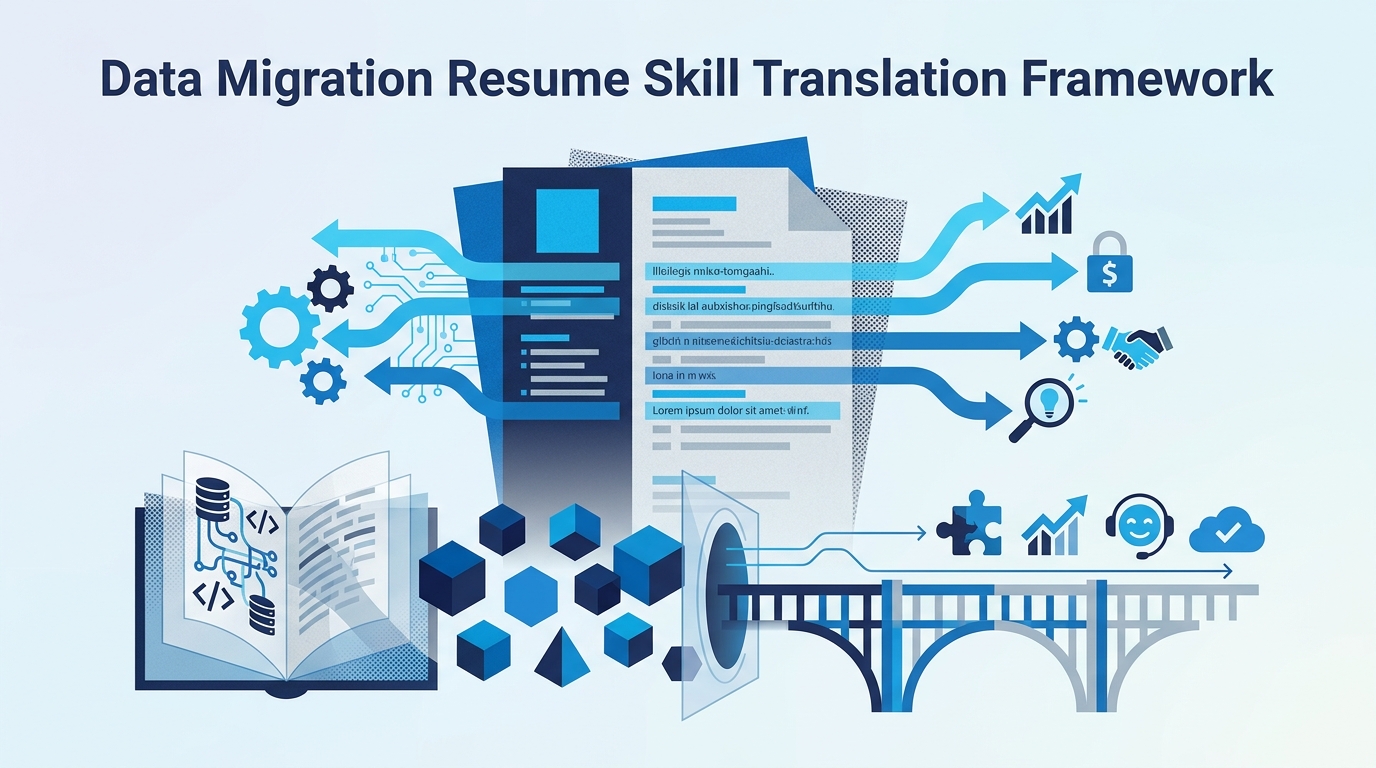
4.5ETL, SSIS, CDC, DAG, ELT. A typical data migration specialist’s resume reads like an alphabet soup recipe. The person who wrote it knows exactly what each acronym means and why it matters. The hiring manager scanning it for six seconds often doesn’t, and that disconnect costs interviews. A thread on r/sysadmin captured this tension with unusual clarity: one systems administrator realized their resume was so packed with unexplained acronyms that anyone outside their exact specialty would struggle to parse a single bullet point. The responses from IT hiring managers were blunt and consistent. If they can’t understand the business impact on first read, they move on.
This is the core challenge of technical resume translation for data migration professionals. You do genuinely complex work. Your resume needs to communicate that complexity to people who evaluate business outcomes, not database schemas.
Why Data Migration Resumes Fail at the First Screen
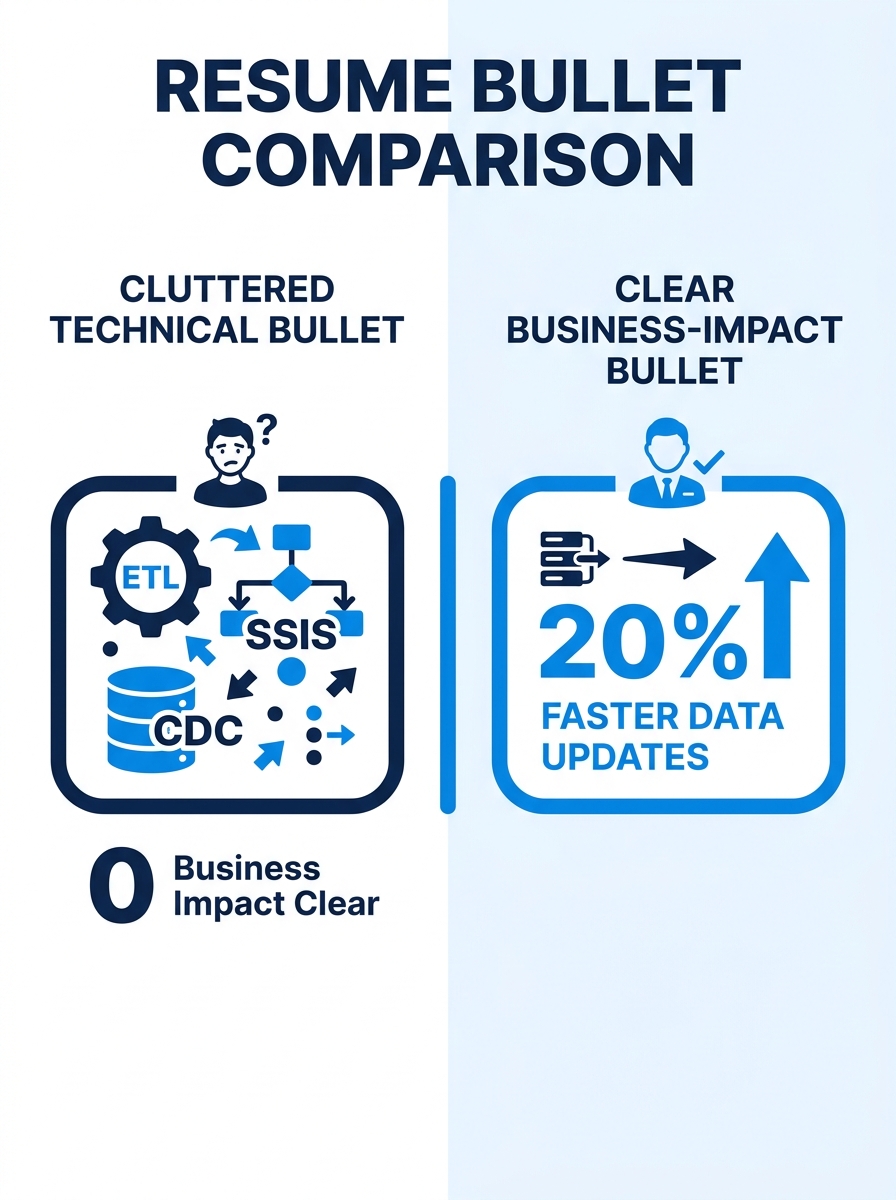
The typical data migration resume bullet sounds something like this: “Designed and implemented SSIS packages for ETL processes migrating data from on-prem SQL Server to Azure Synapse Analytics.” To a fellow data engineer, that sentence conveys real skill. To a VP of Operations deciding whether to bring you in for an interview, it registers as noise. They want to know what happened to the business when you did that work. Did the migration save money? Did it reduce downtime? Did it allow the company to retire expensive legacy systems?
The failure mode here is specific to technical IT roles. Data migration professionals spend their days solving concrete problems with precise tools, and they describe their work the same way on their resumes. The tools and protocols feel like the accomplishment because mastering them required significant effort. But hiring managers at most organizations, especially outside pure tech companies, evaluate candidates based on what changed for the business after the work was done. Your SSIS package isn’t the story. The 40% reduction in data retrieval time is.
This translation gap matters even when technical recruiters handle the initial screen. A keyword-matching ATS might pick up “SSIS” and “Azure,” but the human reviewer who gets your resume next needs a reason to schedule a phone call. Replacing weak, passive language with action-driven results is part of the solution, but for data migration roles specifically, the bigger problem is that candidates bury the result inside the technical description or omit it entirely. A LiveCareer analysis of data migration specialist resumes emphasizes that candidates should lead with data handling outcomes, project management results, and problem-solving evidence rather than tool names. The tools are supporting details, not headlines.
The Translation Process for Data Migration Bullets
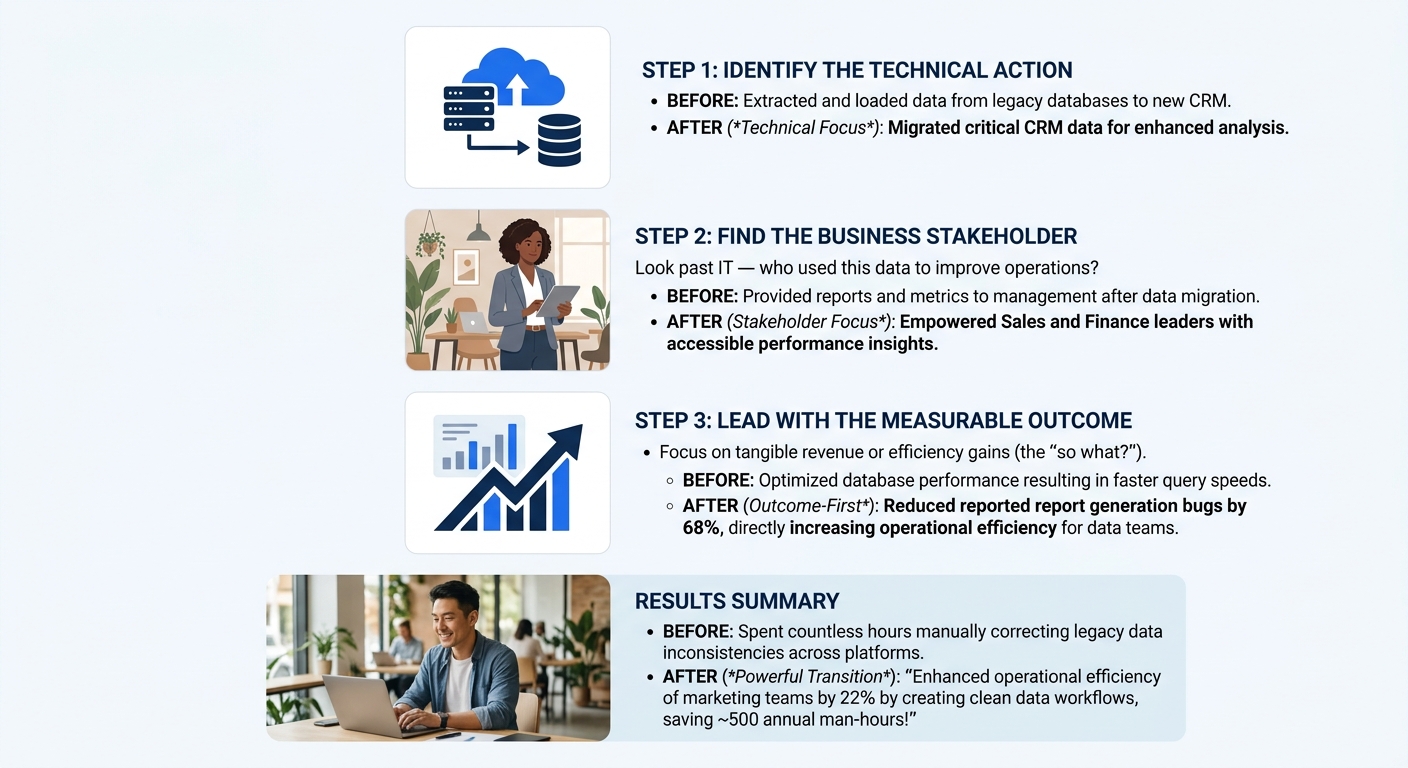
Converting your data migration experience into language that resonates with hiring managers follows a reliable pattern. You start with what you actually did (the technical reality), identify who cared about the outcome (the stakeholder), and rewrite the bullet to lead with the outcome rather than the method. This three-part sequence sounds simple, but it requires you to think about your own work differently than you’re used to.
Take a common responsibility from data migration job descriptions: “Assist with the implementation of the Method of Procedure on the night of cutover, running any database migration tool, as well as pre and post-cutover testing.” That’s what the employer listed in the job posting. If you put exactly that language on your resume, you’ve described a task without claiming any achievement. A translated version would read: “Executed overnight database cutover for 12M-record migration, completing pre- and post-migration validation testing with zero data loss and no unplanned downtime.” Same work, completely different impression. The translated version gives the hiring manager three concrete things to evaluate: the scale (12M records), the quality (zero data loss), and the reliability (no unplanned downtime).
The pattern works across the most common data migration resume bullets. “Created Python scripts to automate data validation” becomes “Built automated validation checks that caught 2,300 data discrepancies before go-live, preventing post-migration cleanup that would have taken the team an estimated three weeks.” “Managed ETL pipeline development” becomes “Designed and maintained the ETL pipeline processing 500K daily transactions across three business units, reducing manual data reconciliation from 20 hours per week to under two.” Notice that the technical terms don’t disappear entirely. You’re still mentioning ETL, Python, and validation because those keywords matter for ATS parsing and for technical interviewers who review your resume later in the process. The shift is in emphasis: the business outcome leads, and the technical method supports it.
If you’re struggling to attach numbers to your work, you’re in good company. The approach for building resume bullets when you don’t have obvious metrics applies directly here. Think about records migrated, systems consolidated, hours saved, errors prevented, or deadlines met. Even approximate figures (“500K+ records”) carry far more weight than vague descriptions (“large-scale data sets”). As Columbia Career Education’s guide to strong bullet points illustrates, a single well-translated bullet about writing a training manual for a data tracking system can highlight communication skills, leadership, or technical documentation depending on what the target job requires. The same underlying work supports multiple translations.
Your SSIS package isn’t the story. The 40% reduction in data retrieval time is.
Industry Context Reshapes Every Bullet
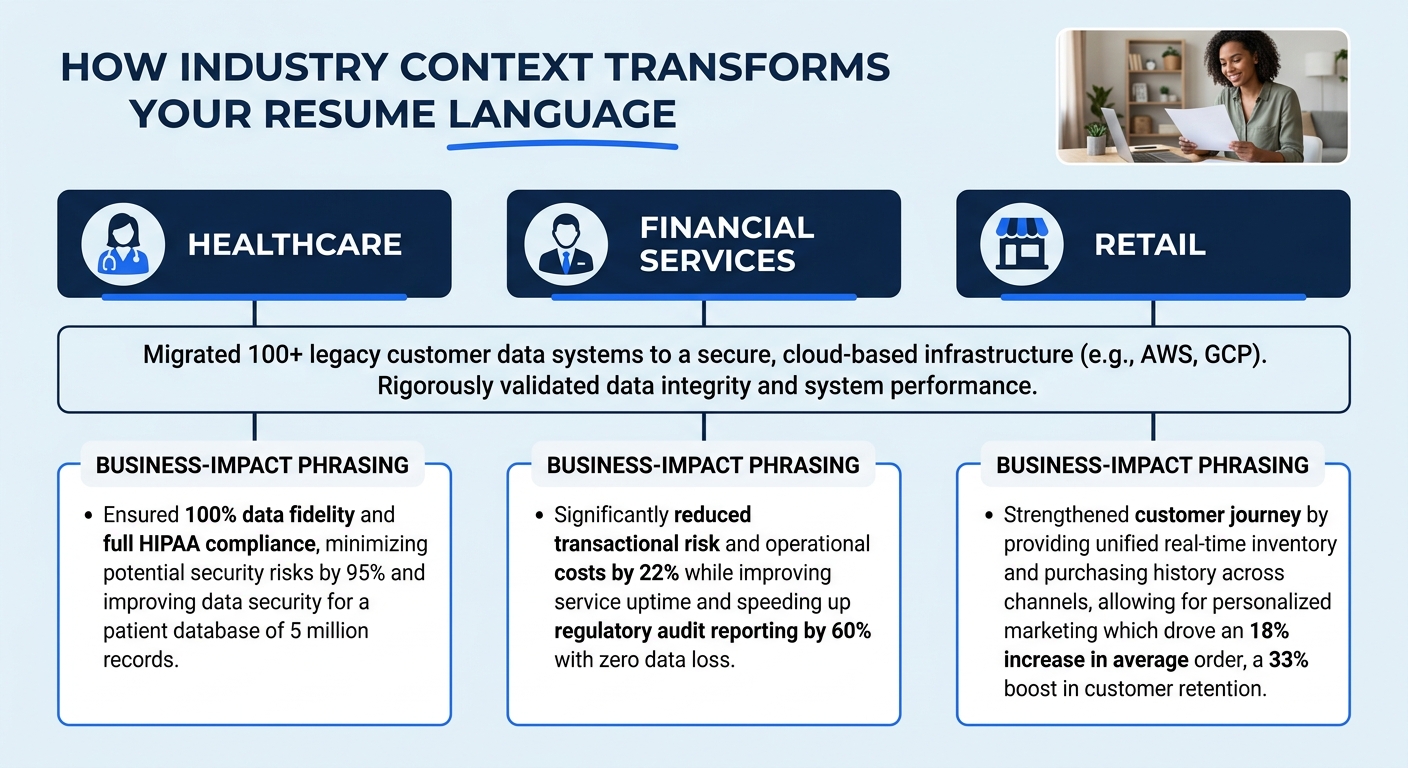
Here’s where IT role positioning gets genuinely tricky. The same data migration work carries different weight depending on the industry you’re targeting. Migrating patient records in a healthcare system is fundamentally a compliance story. Migrating transaction data for a financial services firm is a risk management story. Migrating product catalogs for a retailer is an operations and revenue story. Your resume needs to speak the language of the industry you’re applying to, not the language of the tools you used.
In healthcare, your bullets should reference HIPAA compliance, data integrity for electronic medical records, and audit readiness. In financial services, SOX compliance, secure data transfers, and regulatory reporting accuracy matter far more than which specific integration tool you ran. In retail or e-commerce, hiring managers care about system uptime during peak traffic periods, order data accuracy, and how quickly the migration let them sunset expensive legacy platforms. The technical work might be nearly identical across all three scenarios. The way you describe it should vary substantially depending on which posting you’re responding to.
This kind of specialized skills communication is where many data migration professionals stumble during career transitions. If you’ve spent five years migrating data in healthcare and you’re now applying to a fintech company, translating your experience into the new industry’s priorities becomes essential. The skills-based resume approach works well in this situation because it lets you organize your experience around capabilities rather than job titles that might lock you into one sector. And if you find yourself unsure how to position your experience for a completely different industry, working with professional career coaches who understand both the technical and business sides of IT hiring can save you weeks of guesswork and rejected applications.
One thing that catches data migration specialists off guard: the certification section needs context too. Listing “AWS Certified Solutions Architect” or “Talend Certified Data Integration Developer” tells a technical reviewer you passed an exam. Adding a parenthetical note about how you applied that certification in a real project (“applied to migrate three legacy data warehouses to AWS Redshift, consolidating $180K in annual licensing costs”) turns a credential line into another proof point of business value. Every section of your resume is an opportunity to demonstrate outcomes, not just qualifications.
Where the Framework Gets Uncomfortable
The advice above works cleanly when you have clear outcomes to point to. The uncomfortable truth is that many data migration projects don’t end with a tidy success metric. Migrations get delayed. Scope creeps beyond recognition. The business benefit won’t be measurable for another year. Sometimes you inherit a failing migration, stabilize it, and move on without anyone outside IT noticing what you prevented.
In these cases, the translation framework still applies, but it requires more honesty about what you actually accomplished. “Prevented” is a legitimate action verb. “Stabilized” tells a real story. “Identified and resolved 47 data mapping conflicts that were blocking go-live” describes exactly the kind of problem-solving that hiring managers value, even if the project itself wasn’t a headline success. The production resume quantification framework is helpful here because it pushes you to find measurable proof even in ambiguous situations where clean before-and-after numbers don’t exist.
What I remain less certain about is how far this translation should go. There’s a real risk of over-translating, of making your resume sound so polished and business-oriented that it misrepresents the actual hands-on technical depth of your work. A hiring manager who brings you in expecting a strategic data consultant and finds a deeply technical migration engineer has a mismatch problem, and so do you. The goal of technical resume translation isn’t to hide what you do. It’s to make what you do intelligible to people who allocate headcount budgets and approve interview slates. If your translated bullets still accurately describe your contributions and the hiring manager can picture you doing similar work at their company, the translation is working. If you read your own resume and think “that sounds like someone two levels above me,” you’ve drifted into inflation territory. The line between clarity and exaggeration is real, and it’s worth sitting with that discomfort for a while before you hit submit.