

 4.9
4.9 4.5
4.5Participants who completed deliberately monotonous tasks—copying telephone numbers from a directory—before taking a creative uses test produced significantly more creative responses than control groups in a 2014 experimental study by psychologists Sandi Mann and Rebekah Cadman, according to a June 17 Forbes analysis that positions workplace boredom as a strategic signal for career transitions rather than a distraction to eliminate.
TL;DR: Induced boredom directly improved creative test scores in controlled experiments, and career coaches now recommend intentional unstructured time—walks without podcasts, quiet commutes—to let mid-career professionals generate pivot ideas that traditional planning sessions miss.
Research Links Monotony to Measurable Creativity Gains
The Mann-Cadman study used a causal design: researchers induced boredom by assigning participants tasks like reading telephone numbers aloud, then measured creative output immediately afterward. The experimental group consistently outperformed controls on divergent-thinking assessments, suggesting that understimulation creates mental conditions that support novel connections between existing knowledge and unexplored possibilities, according to the Forbes report by Dr. Cheryl Robinson.
A separate 2025 study published in Current Psychology tracked 120 workers across 10 consecutive workdays and found that higher daily job disengagement correlated with increased burnout but not with daily intentions to quit. The finding suggests professional boredom reveals misalignment between worker capability and job requirements without automatically triggering exit planning—a gap that career strategists say leaves mid-career professionals cycling through dissatisfaction without actionable next steps.
The distinction matters for career changers. Burnout signals overload; boredom signals underutilization. “Restlessness asks, ‘Is this still growth, or just repetition?'” Robinson wrote, framing monotony as diagnostic rather than merely unpleasant.
Adjacent Fields and Portfolio Careers Emerge as Non-Linear Alternatives
Robinson’s analysis points to “adjacent fields, a portfolio career, a side skill turned into a service or a gradual transition” as outcomes when professionals create space to think beyond same-job-better-company pivots. The approach aligns with emerging resume strategy for career changers, who often struggle to translate transferable skills into ATS-friendly language that hiring managers in new industries recognize.
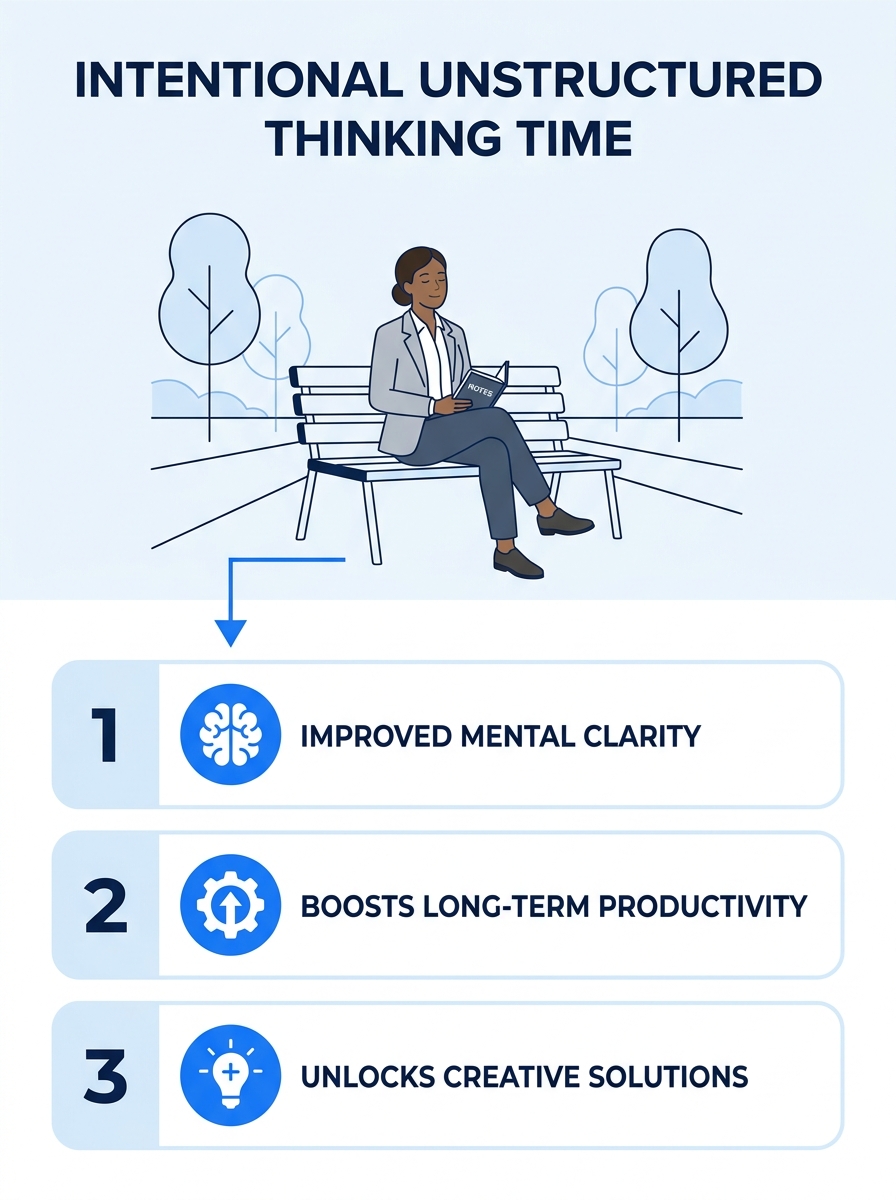
American Psychological Association research summarized in 2022 found that people consistently underestimate how engaging unstructured thought can be, and earlier evidence connected self-generated thinking with creative problem-solving. Robinson recommends creating unstructured time deliberately: walks without audio content, one screen-free lunch break per week, 20-minute notebook sessions with no agenda.
The method runs counter to productivity norms that treat idle time as waste. Michael Easter’s 2021 book The Comfort Crisis argues modern convenience eliminates the discomfort that drives adaptation, and Robinson extends the thesis to career stagnation: “A familiar job can become its own comfort trap. You know the systems, understand the politics and can predict which meetings should have been emails.”
Testing New Roles in Small Increments Before Full Transition
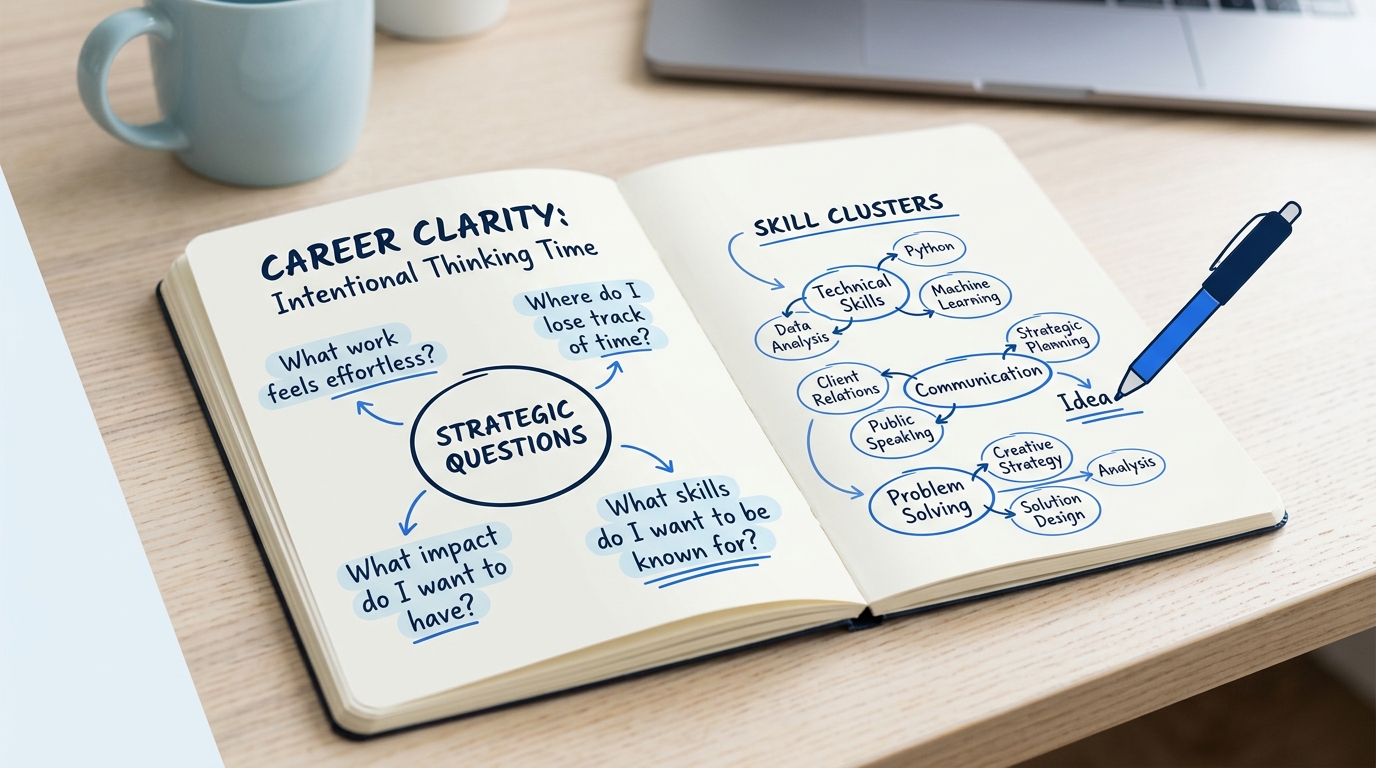
Robinson advises gathering evidence through low-stakes experiments rather than sudden industry leaps—a strategy that career pivot research shows can save professionals months of transition time when executed systematically. The Forbes piece suggests asking targeted questions during unstructured thinking periods: which past projects generated energy rather than obligation, which skills transfer to adjacent markets, which professional contacts work in roles that sound interesting.
The recommendations assume boredom operates as signal rather than character flaw. Robinson wrote that career ideas “often surface during a walk, a shower or a long commute rather than during a color-coded planning session,” because the brain needs relief from reactive mode to connect disparate information into coherent next moves.
Job searches in Q1 2026 took an average of 108 days to first offer, 30 percent longer than the prior quarter, meaning extended periods of professional uncertainty have become standard rather than exceptional. The timeline makes strategic thinking during the current-role boredom phase more valuable than rushed applications after resignation.
Strategy Implications
Career changers facing ATS systems calibrated for linear progression need documentation that frames exploration as strategic rather than unfocused. A resume that lists five unrelated short-term roles reads as instability; the same roles connected through a clear skill-building narrative—moving from client services to operations to project management as a deliberate path toward general management—passes both algorithmic screens and human review.
The boredom-as-catalyst framework gives mid-career professionals permission to acknowledge dissatisfaction earlier, before burnout forces reactive decisions. Creating structured reflection time—the walks, the quiet commutes Robinson recommends—generates pivot options that wouldn’t surface during regular business hours. For professionals building transferable skills narratives that avoid common career-change resume traps, those options become the raw material for positioning statements that explain the pivot to skeptical hiring managers.
The practical application: block one lunch hour per week for unstructured outdoor time, carry a pocket notebook, and resist filling every silence with content consumption. The creative output Mann and Cadman measured in laboratory conditions transfers to career planning when professionals treat understimulation as a tool rather than a problem to solve.