
 4.9
4.9 4.5
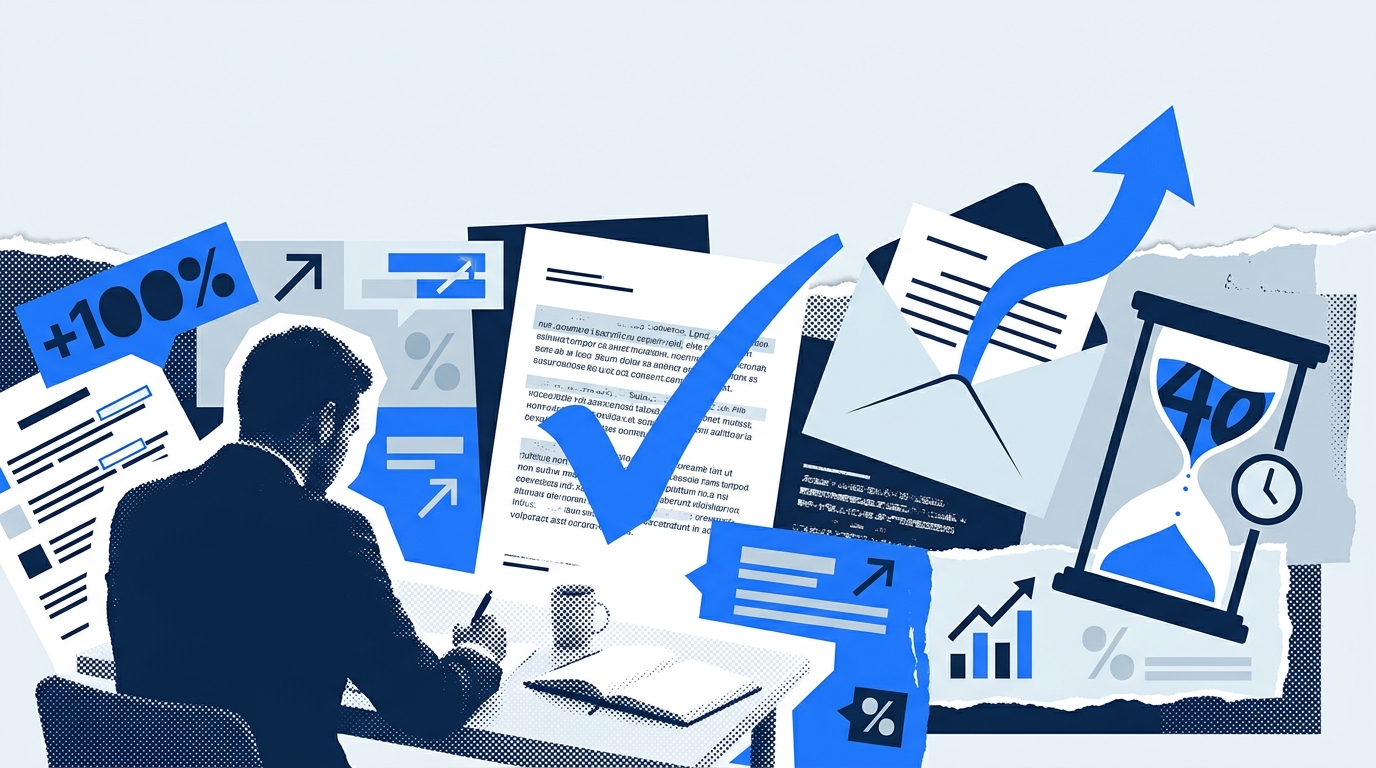
4.5The cover letter example sample below uses a four-paragraph format (hook, value pitch, evidence, close) that you can adapt to any job posting in a single sitting. Recruiter survey data shows 83% of hiring managers factor cover letters into their decisions, so the 40 minutes this process takes is time well spent.
TL;DR: Use a four-paragraph structure tailored to each job posting. Keep it under 400 words, lead with what you’ll contribute rather than what you want, and anchor every claim with a quantified result from your resume.
Before You Start
You need three things open on your screen before you type a word. First, the full job posting (the actual text, not a screenshot, so you can search it for repeated keywords). Second, your current resume, because you’ll pull specific numbers from it. Third, the company’s “About” page or a recent press release, which gives you the language they use to describe their own problems.
You don’t need design software. A plain Word document or Google Doc works. Microsoft offers free cover letter templates in Word for the web if you want a polished layout, but formatting matters far less than content. The full process takes about 40 minutes once you’ve done it twice.
One prerequisite that trips people up: you should match at least 60–70% of the job posting’s listed requirements before writing. If you’re below that threshold, no cover letter will close the gap. If you’re above it, this process will make your fit obvious to the reader within 30 seconds.
Step 1: Read the Job Posting Like a Hiring Manager
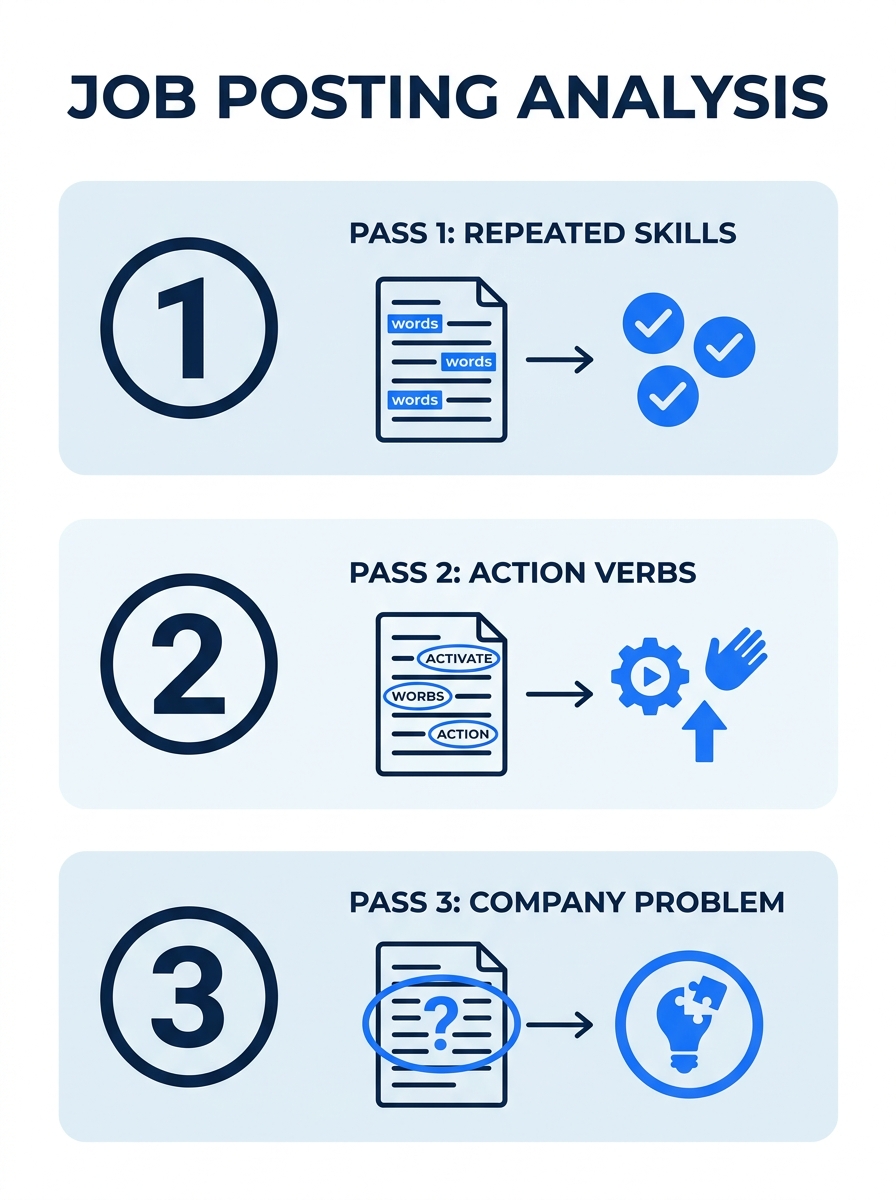
Open the job posting and read it three times. On the first pass, highlight every skill or qualification mentioned more than once; repetition signals priority. On the second pass, circle verbs: managed, built, reduced, improved. These tell you what the role actually does day-to-day. On the third pass, identify the company’s stated problem. Every job posting exists because someone needs a problem solved.
You’ll know this step worked when you can fill in one sentence: “This company needs someone who can [verb] their [specific problem] by [method].” If you can’t complete that sentence, you haven’t read the posting closely enough.
This step takes about 10 minutes and eliminates the “I don’t know what to write” paralysis that makes people skip cover letters entirely. And since ATS software eliminates up to 50% of candidates before a human ever sees anything, mirroring the posting’s exact keyword language is the difference between your letter reaching a recruiter and disappearing into a database.
Step 2: Write the Opening Hook
The first paragraph is 2–3 sentences. MIT’s career advising team recommends a direct approach: “State clearly in your opening sentence the purpose for your letter and a brief professional introduction.” No cute anecdotes. No “I’m excited to apply.” Name the role, name one relevant credential, and drop a referral name if you have one.
Here’s what a strong hook looks like:
I’m applying for the Marketing Manager position at Clearpath Solutions. With six years leading B2B content teams and a track record of growing organic traffic 140% year-over-year, I’d bring immediate depth to your demand-generation efforts.
That’s 39 words. It names the role, states a credential, and quantifies a result. Compare that to the generic version most applicants default to: “I’m writing to express my interest in the Marketing Manager position. I believe my skills and experience make me a strong candidate.” The second version says nothing. The first gives the hiring manager a reason to keep reading.
Step 3: Build a Value Pitch Around Their Problems
Paragraph two is where most cover letters collapse. Applicants describe their own career history instead of connecting experience to the company’s needs. UMBC’s career services office puts it directly: “Clearly describe ways you will contribute, not how you expect to benefit.”
Go back to the sentence you wrote in Step 1. Your second paragraph takes that sentence and expands it with 1–2 specific examples from your past work.
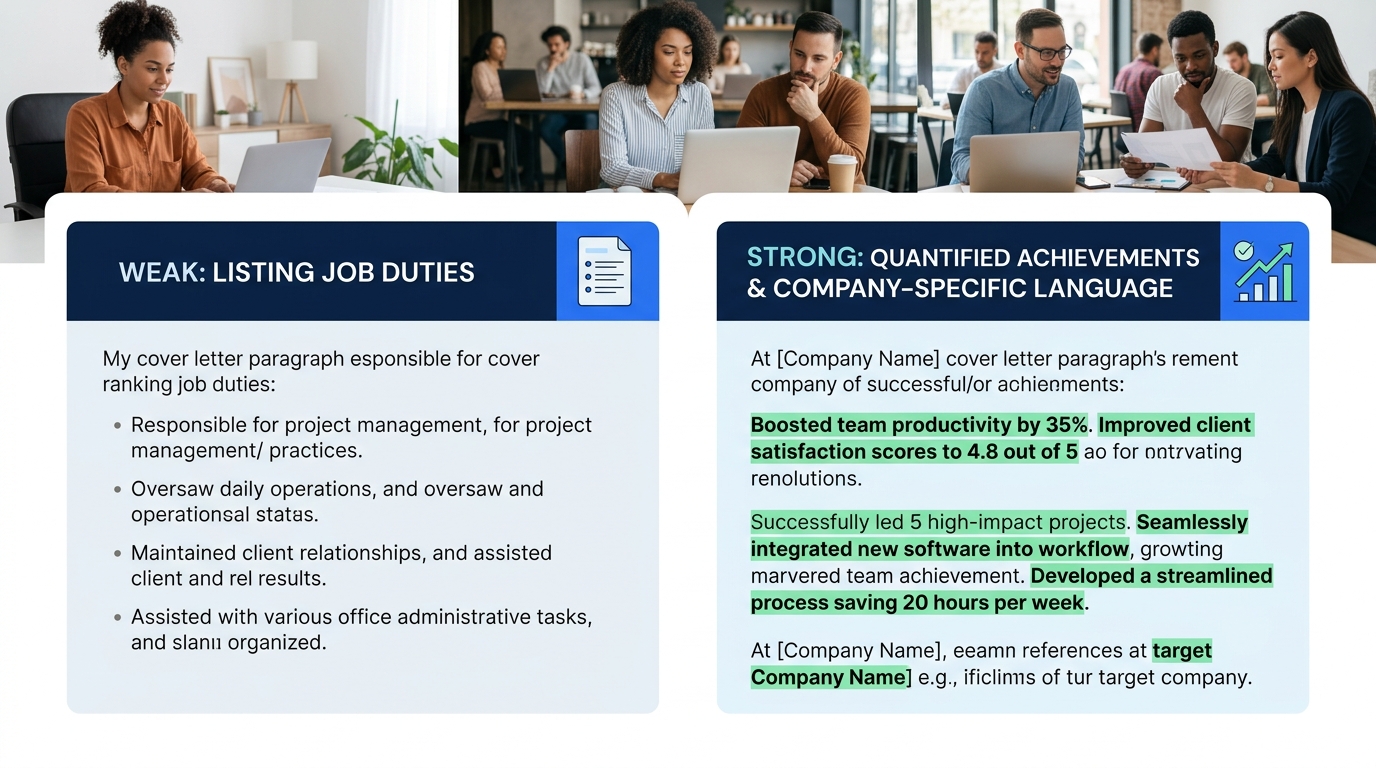
The problem-solution narrative format is 22 times more memorable than facts presented without context, according to cognitive research on storytelling in professional communication. So don’t write “I have experience with CRM implementation.” Write this instead: “At Ridgeline Health, I led a Salesforce migration for a 200-person sales team that cut data entry time by 35% in the first quarter.”
Tip: Keep this paragraph to 3–4 sentences. You’re making a promise about what you’ll do for the company, backed by what you’ve already done elsewhere. If you go longer, you’re writing a resume in prose form, and the hiring manager already has your resume.
Step 4: Prove It with Evidence
Paragraph three reinforces your value pitch with a second achievement or a different skill set from the posting. Think of it as your “and also” paragraph. If paragraph two showed you can solve their primary problem, paragraph three shows you bring additional value they weren’t expecting.
Pick a result from your resume that maps to a secondary requirement in the job posting. Use hard numbers: percentages, dollar amounts, team sizes, timelines. The hiring data shows 35.4% of new hires consistently submitted cover letters, meaning you’re already in a smaller, more serious pool by writing one at all. Make that effort count with specifics.
Here’s the example paragraph:
Beyond campaign execution, I’ve managed annual budgets up to $1.2M and built reporting dashboards that reduced our monthly analytics cycle from five days to eight hours. I’m comfortable presenting performance data to C-suite stakeholders and translating metrics into strategic recommendations.
That paragraph covers budget management, technical skills, and executive communication in three sentences. Each claim is verifiable against the resume you’ll attach.
Step 5: Close and Ask for the Interview
Paragraph four is your closing. It’s 2–3 sentences. Thank them for their time, express genuine interest in the specific company (not “a company like yours,” the actual company, by name), and ask directly for a conversation.
The University of Michigan’s Career Center notes that a cover letter “demonstrates a higher level of investment and enthusiasm for the position.” Your close is where that investment shows. Reference something specific about the company: a recent product launch, a value from their mission page, a challenge mentioned in the posting.
I’d welcome the opportunity to discuss how my experience aligns with Clearpath’s expansion into the mid-market segment. I’m available at your convenience and can be reached at (555) 234-5678 or [email protected]. Thank you for your time and consideration.
Sign off with “Sincerely” or “Best regards,” followed by your full name. No postscripts, no “P.S. I’m also great at…” additions.
Clearly describe ways you will contribute, not how you expect to benefit., UMBC Career Services
The Assembled Cover Letter Example Sample
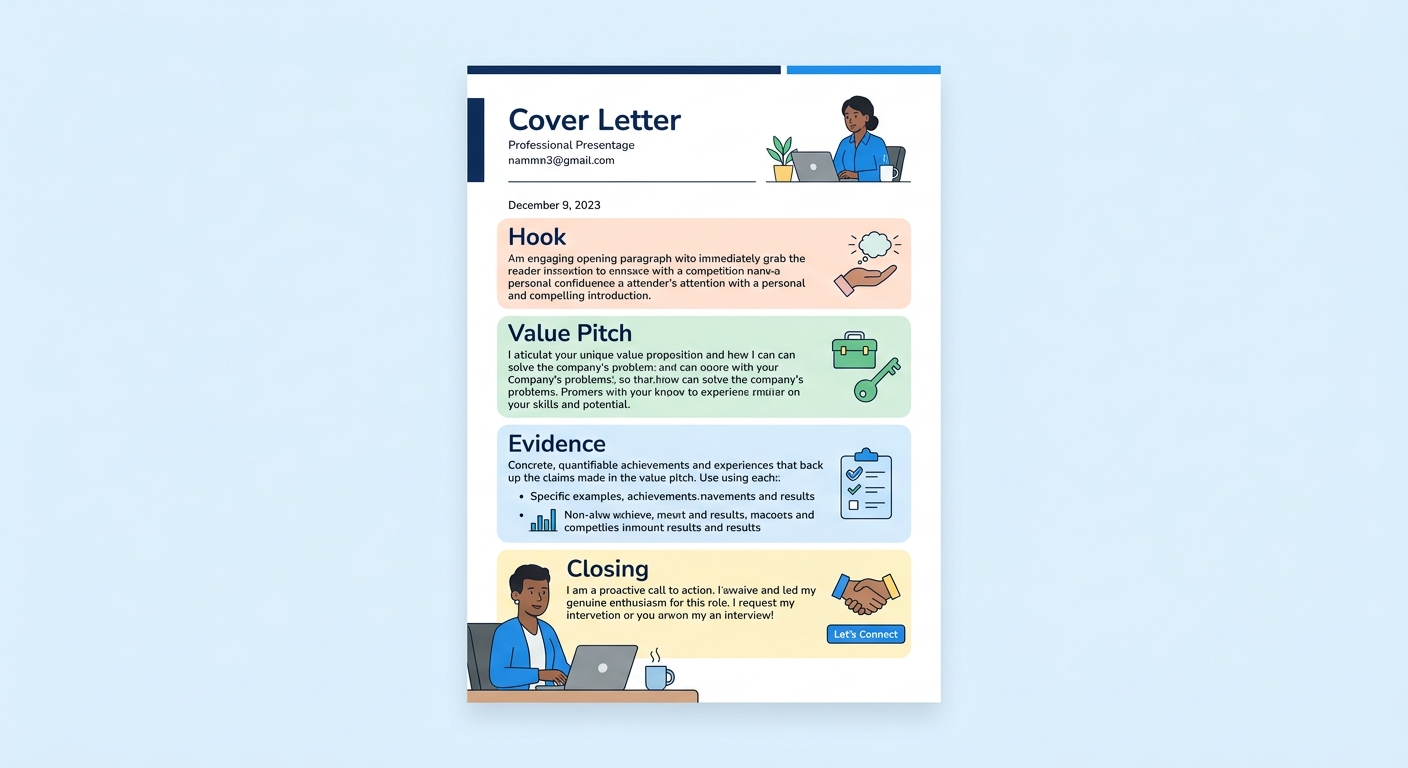
Here’s the full letter, all four paragraphs together. Total word count: 187 words.
Header: Your name, phone number, email, LinkedIn URL, and city/state. Mirror the header from your resume for visual consistency.
Greeting: “Dear [Hiring Manager Name],” and find the actual name on LinkedIn or the company website. The University of Michigan’s Career Center advises using a title if you can’t find a name (Hiring Manager, Internship Coordinator, Human Resources Director) but avoiding “To Whom It May Concern.”
Paragraph 1 (Hook): “I’m applying for the Marketing Manager position at Clearpath Solutions. With six years leading B2B content teams and a track record of growing organic traffic 140% year-over-year, I’d bring immediate depth to your demand-generation efforts.”
Paragraph 2 (Value Pitch): “At Ridgeline Health, I led a Salesforce migration for a 200-person sales team that cut data entry time by 35% in the first quarter. I see a similar opportunity in your posting’s emphasis on improving lead-to-close workflows.”
Paragraph 3 (Evidence): “Beyond campaign execution, I’ve managed annual budgets up to $1.2M and built reporting dashboards that reduced our monthly analytics cycle from five days to eight hours.”
Paragraph 4 (Close): “I’d welcome the opportunity to discuss how my experience aligns with Clearpath’s mid-market expansion. Thank you for your time and consideration.”
Sign-off: “Sincerely, Jane Doe”
If you want more cover letter variations across industries, browse Indeed’s full sample library organized by job title, or explore our own collection of cover letter examples that lead to interviews.
Common Mistakes and How to Fix Them
Problem 1: The letter reads like a resume in paragraph form. You’ll recognize this if every sentence starts with “I” and lists job duties without connecting them to the company’s needs. Fix it by returning to Step 3 and rewriting your value pitch around their problems. Our cover letter sample templates show the correct structure across different industries.
Problem 2: It’s too long. Survey data shows 66% of job seekers prefer cover letters that are half a page or less, and recruiters share that preference. If yours exceeds 400 words, cut your weakest paragraph (usually paragraph three) or trim each paragraph to its strongest sentence. Our sample cover letter guide shows what a properly scoped letter looks like at the right length.
Problem 3: It sounds like AI wrote it. With 77% of hiring managers already flagging resumes as AI-generated, a pattern we’ve covered in our piece on AI detection in hiring, your cover letter needs to sound human. Currently 11% of applicants use AI for drafting, but the ones who succeed edit heavily, adding personal details and company-specific references that language models don’t generate well. Read your finished letter aloud. If it sounds like a press release, rewrite it in your own speaking voice.
Where to Go From Here
The four-paragraph structure above works for any job posting in any industry. Once you’ve written two or three letters using this format, the process drops from 40 minutes to about 20. You’ll internalize the hook-pitch-evidence-close rhythm and spend most of your time on research rather than writing.
Your next move depends on where you are in the application process. If your resume needs the same specificity upgrade, the same principle applies: quantified achievements beat generic descriptions every time. If you’re already getting interviews but not landing offers, the bottleneck has shifted to your interview skills, and that’s a different set of muscles entirely.
One Reddit user on r/jobsearchhacks reported that a recruiter told them “my cover letter alone was enough to get me the interview.” That kind of result comes from treating the cover letter as a targeted pitch document rather than a formality you rush through. Every sentence earns its place by answering one question the hiring manager carries into every application review: why should I talk to this person?