

 4.9
4.9 4.5
4.5A cover letter writing guide published on DEV Community on September 8 identified nine commonly used phrases that hiring managers immediately recognize as generic template language, including “I am writing to apply for” and “To Whom It May Concern,” with each paired with alternatives that demonstrate company-specific research, according to the post.
TL;DR: A new guide published September 8 on DEV Community flags nine cover letter phrases recruiters instantly recognize as templates, offering specific replacements that demonstrate company research instead.
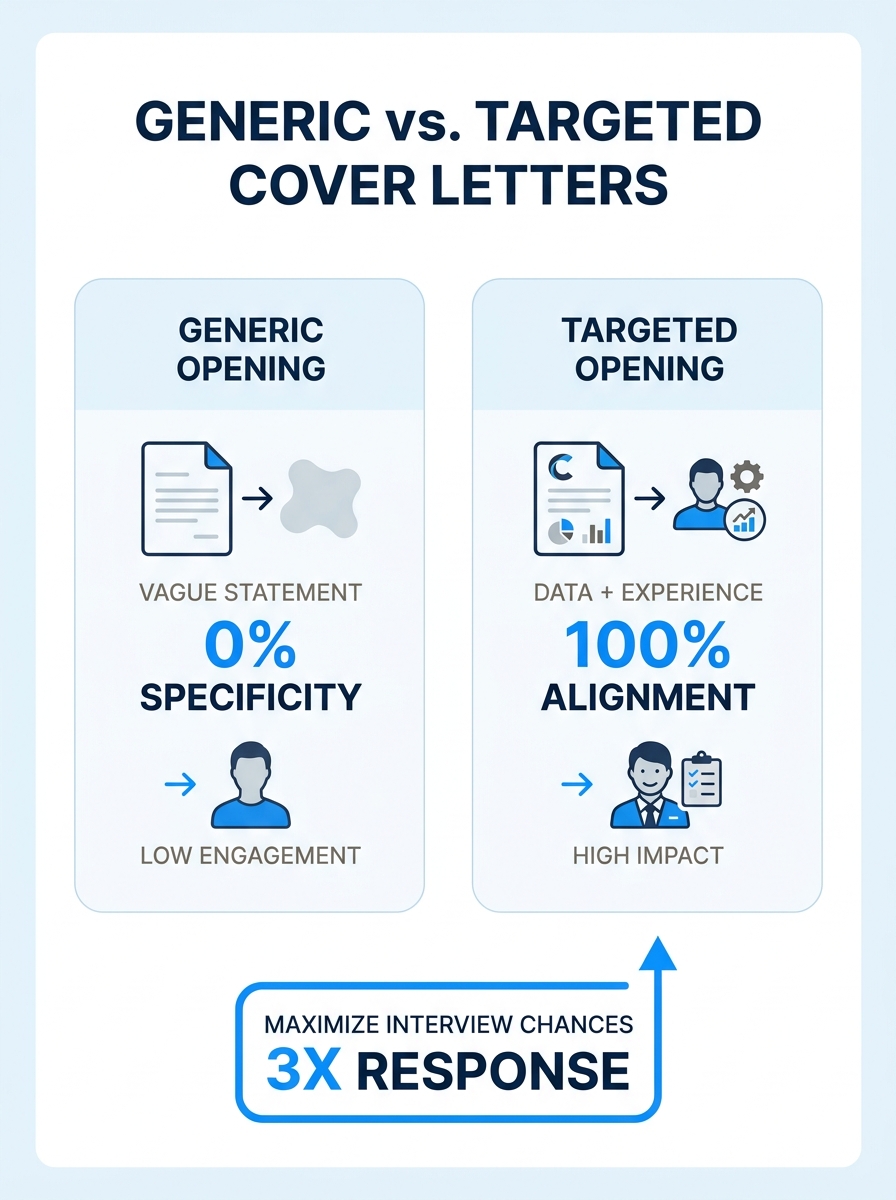
The guide frames each phrase as occupying space where a job-specific claim should appear. “One test catches every case: could this sentence appear, word for word, in a stranger’s cover letter?” the post states. “If it could, it isn’t doing any work.”
Opening Lines That Confirm What Recruiters Already Know
The phrase “I am writing to apply for the [role] position” ranked first on the list. The guide notes that the subject line, application form, and attached resume already confirm the candidate’s intent. “Your first sentence is the most valuable line in the letter, and this one spends it confirming something nobody was unsure about,” according to the post.
The suggested replacement: opening with a data point about the company paired with relevant experience. The example provided contrasts “I am writing to apply for the Marketing Coordinator position at Northwind” with “Northwind’s newsletter grew from 4,000 to 22,000 subscribers last year. I spent the last two years running that exact motion at a team about your size.”
Generic Greetings and Name Research
“Dear Sir or Madam” and “To Whom It May Concern” both register as form letters, the guide states. The post provides four name-finding methods: job posting signatures, LinkedIn’s “posted by” attribution, company team pages, and existing email signatures. When no name is findable, the guide recommends addressing the department directly, “Dear Northwind Design Team”, rather than defaulting to impersonal greetings.
The guide advises using full names when honorifics are uncertain. “It is always safe, and it is never the thing that costs you the interview,” the post states. “Guessing wrong is.”
Hedging Language That Weakens Claims
The phrase “I am confident that I would be a great fit” appears in the guide’s analysis of hedging language. The post identifies “I am confident,” “I believe,” and “I feel” as qualifiers that weaken rather than strengthen assertions. The recommended fix: delete the hedge entirely and state the evidence directly.
The before-and-after example replaces “I am confident that I have the skills needed to succeed in this role” with “I have shipped three design systems, two of them for teams smaller than yours.” The guide notes that removing hedges forces candidates to name specific accomplishments rather than make vague claims.
Sentence Structure and Trait Claims
Starting consecutive sentences with “I” creates a claiming pattern rather than a showing pattern, according to the post. The guide sets a practical limit: no more than two paragraphs in a row beginning with “I.” The fix involves making the work or result the sentence subject instead of the candidate.
Generic trait claims, “hard worker,” “team player,” “detail-oriented”, carry no information because no applicant would ever write the opposite, the guide states. The post provides a replacement framework: trait claims should become evidence statements. The example converts “I am detail-oriented and highly organized” into “I owned the release checklist for a 200-page docs site. We shipped 14 releases last year without a single broken link in production.”
Culture Fit and Resume References
The phrase “I would be a great fit for your company culture” signals surface-level research, the post states. The guide recommends citing specific company practices instead. The example replaces a generic culture claim with “You’ve written about keeping support and engineering in the same standup. That’s the setup where I’ve done my best work, most of what I fixed at Brightline came from sitting in on support triage.”
“As you can see from my resume” asks readers to cross-reference another document while wasting sentence space, according to the guide. The post frames cover letters as the format that can carry what resumes structurally cannot: context, motive, and the story behind a line item. The suggested alternative adds information rather than pointing to existing content.
Closing Lines That Occupy Prime Real Estate
“Thank you for your time and consideration” is harmless but wastes the final sentence, the guide states. “Politeness is not the problem, spending your closing line on it is,” the post notes. The guide recommends using closing sentences to propose next steps or reference work samples instead.
Reading Between the Lines
The guide’s framework rests on a single diagnostic: whether a sentence could appear in any applicant’s letter for any company. Phrases that pass that test reveal no job-specific research and occupy space where differentiation should live. The 94% of hiring managers who still expect cover letters, as reported in recent recruitment surveys, are scanning for signals that candidates researched the role beyond the job description. Template language, even when grammatically correct, signals the opposite.
The shift from trait claims to evidence statements mirrors broader changes in how recruiters evaluate applications. As AI-generated cover letters become more common, the phrases that hiring managers filter out first are precisely those that automated tools produce most easily: grammatically sound, universally applicable, and completely devoid of company-specific detail.