
 4.9
4.9 4.5
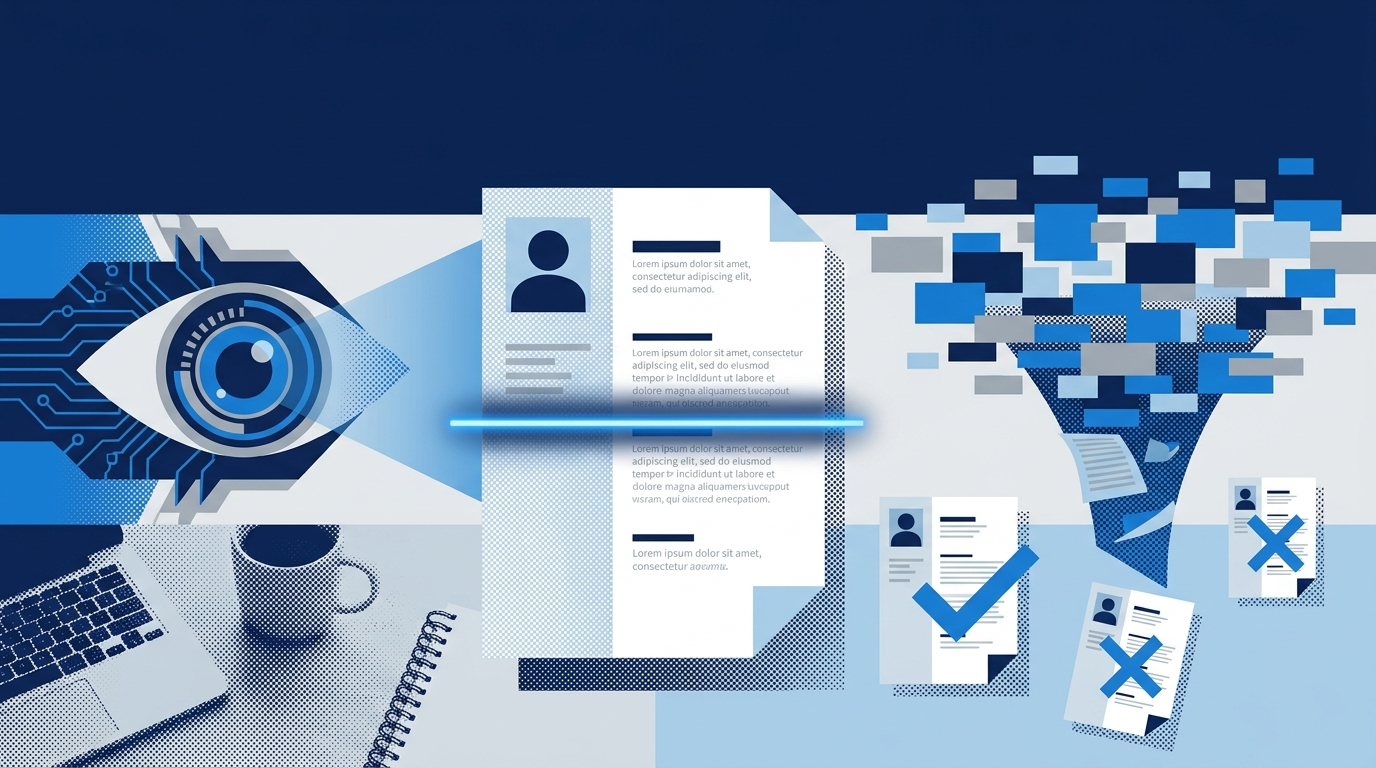
4.5Nearly 90 percent of employers now use artificial intelligence to rank or filter resumes before human review, according to World Economic Forum data cited in a June 15 Mashable report featuring career coach Dr. Jasmine Escalera. The shift comes as job postings on LinkedIn attract hundreds of applicants within hours, making manual first-round screening impractical for recruitment teams.
TL;DR: Nine in ten employers deploy AI screening systems to handle application volume before human recruiters see resumes, while over half of job seekers now use AI to write application materials—creating an arms race between automated filtering and automated writing.
The recruitment landscape has changed fundamentally in the 2026 labor market, Escalera told Mashable. “We know the job market is very flooded,” said Escalera, who advises resume platforms Zety and Bold. HR departments use AI as “a first-round filter” to identify which applicants match position requirements from pools that “no HR human could really go through on their own,” she explained.
More than half of job seekers now use AI to write resumes and cover letters, according to LinkedIn survey data cited in the report. The dual adoption—employers screening with AI, applicants writing with AI—has intensified competition rather than simplified it. “Everybody knows what a keyword is, everyone knows what skills they need to put on a resume, everybody can use AI to help generate the most stellar bullets,” Escalera noted in the interview.
What Passes AI Screening vs. Human Review
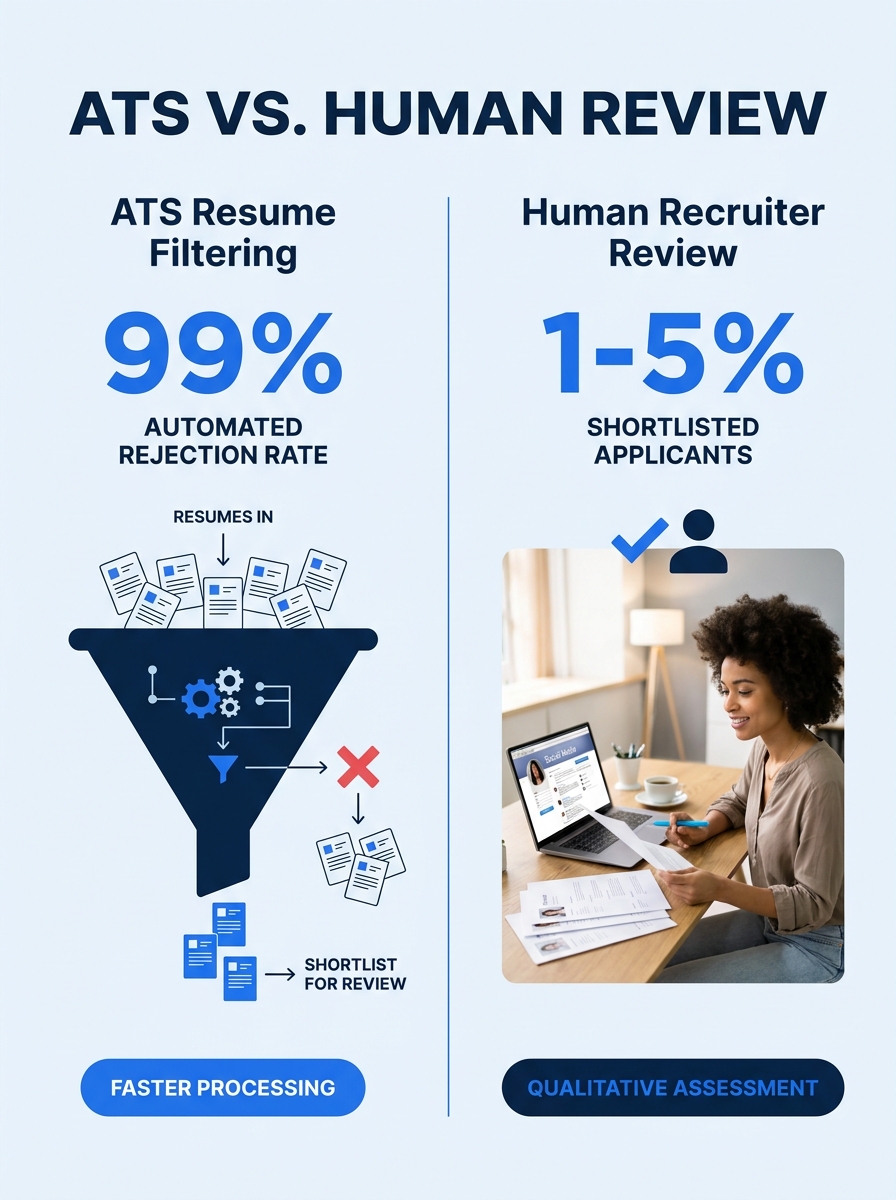
Applicant tracking systems filter for baseline qualifications—keywords, required skills, experience level—before forwarding candidates to human recruiters. Once resumes reach that second stage, however, evaluation criteria shift entirely. “They know the applicant pool is going to be stellar,” Escalera said, describing the mindset of recruiters reviewing AI-filtered candidates. “Now, what they’re looking for is differentiators.”
Those differentiators are elements AI cannot fabricate: specific project outcomes, company-specific context, storytelling that connects experience to the target role. The challenge for applicants is optimizing for two audiences with different priorities, according to the report.
The labor market backdrop makes AI screening more prevalent. The U.S. unemployment rate settled in the 4-5 percent range over the past few years, up from 3-4 percent in 2022-2024, the Washington Post noted in coverage the Mashable article referenced. Silicon Valley recorded over 123,000 layoffs this year, with generative AI cited as the primary driver, Forbes reported.
Resume AI Detection and Writing Tells
Whether employer screening systems flag AI-generated resumes remains unclear, Escalera acknowledged, as detection capabilities vary by platform. Certain patterns do emerge in AI-written application materials, however. “There are AI tells,” she said, describing “a lot of amplification of the experience” and excessive jargon that makes applicants “sound like you went to the moon.”
Resumes with “a lot of extra words and verbiage” signal automated writing to experienced recruiters. The fix, according to Escalera: use AI as support, not as a ghostwriter. “You have to go through and make sure this sounds like a human created it, there’s that human element to it, there’s storytelling involved,” she told Mashable.
Some job seekers have attempted to game ATS algorithms by embedding hidden keywords or prompts in resume files. Employers now deploy software that catches those tactics, the New York Times reported in coverage the Mashable article referenced. The ethical approach remains simpler: match resume content to job description requirements without obfuscation.
The Keyword Arms Race
Both sides of the hiring equation now operate with full knowledge of how ATS parsing works. Every applicant understands the need to mirror job posting language; every employer knows candidates will optimize for filters. The result is a baseline competence floor that makes differentiation harder.
“When I was a jobseeker back in the day,” Escalera recalled, describing pre-AI recruiting, applicants were told to “apply for a job on a Monday morning or even a Sunday night, so your application is at the top of the list.” Those timing games no longer matter when AI ranks all submissions by fit score rather than arrival order.
The new advantage lies in quantifiable outcomes. Escalera emphasized “stellar bullets… with quantifiable metrics” as table stakes in 2026 applications. Generic duty statements—”Responsible for client accounts”—fail both AI keyword matching and human recruiter interest. Specific results—project scope, revenue impact, team size, timeline compression—register with both audiences.
LinkedIn job postings now routinely draw “hundreds of applicants” within hours of publication, according to Escalera’s account of current market dynamics. That volume makes AI filtering a practical necessity rather than a cost-cutting preference for employers managing recruitment pipelines.
The Simplicity Strategy
Escalera’s core advice contradicts the impulse to overcomplicate. “Keep it simple when it comes to your resume,” she told Mashable, noting that human eyes will eventually review the document. Overstuffed keyword blocks that satisfy ATS algorithms alienate the recruiter who reads the shortlist.
The strategic balance: sufficient keyword density to pass automated screening, sufficient clarity and specificity to differentiate during human review. Resume builders increasingly incorporate dual-audience optimization, flagging both ATS compliance and readability issues.
Format choices matter less than applicants assume. The article did not address file type recommendations, but prior testing has shown platform-specific preferences for DOCX versus PDF extraction.
Why This Matters Now
Job seekers navigating the 2026 market face a documented two-stage filter—AI systems that rank keyword matches before human recruiters assess differentiation and cultural fit. Understanding this sequential evaluation changes how effective resumes are built: front-loading role-specific keywords satisfies algorithms, while concrete project outcomes and storytelling win human decision-makers.
The 90 percent employer adoption rate for AI screening means nearly every application now passes through automated ranking before reaching a recruiter’s desk. Optimization for both audiences—algorithmic and human—is no longer optional for candidates competing against hundreds of same-day applicants. The arms race Escalera describes, where both sides deploy AI tools, raises the baseline for what qualifies as a competitive application.
For professionals facing a labor market that Washington Post characterized as “staid,” with hiring anemic compared to post-COVID growth, resume strategy must account for the reality that AI filters applications first and humans decide second. The differentiators that matter in round two—quantified outcomes, company-specific context, narrative coherence—are exactly what generic AI-generated content fails to provide.