

 4.9
4.9 4.5
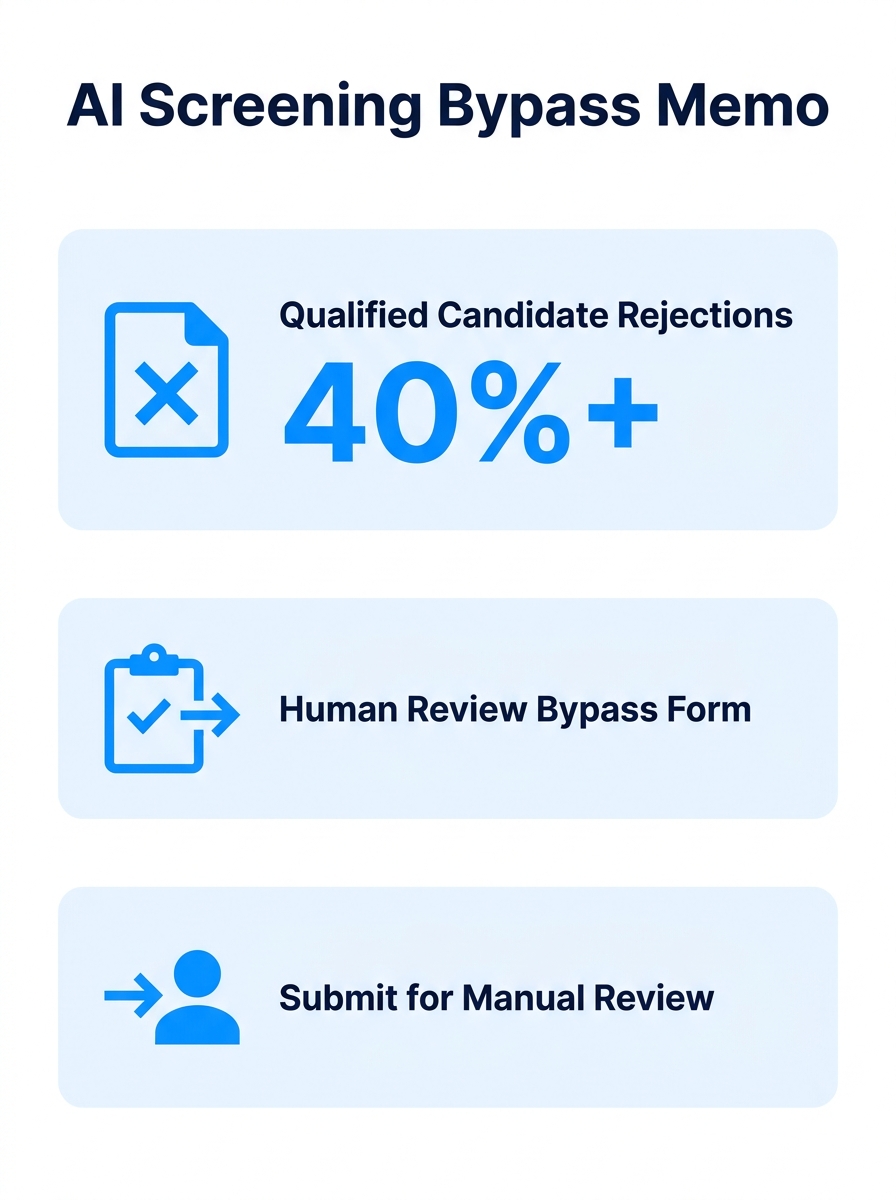
4.5Google DeepMind’s AGI Safety and Alignment Team distributed an internal human resources memo instructing job applicants to fill out a separate form to bypass the company’s automated resume screening system, according to a document viewed by Bloomberg on August 12, 2026. The memo acknowledges that Google’s AI-integrated hiring software carries a “non-trivial probability” of incorrectly filtering out qualified candidates or delaying their applications indefinitely.
TL;DR: Google DeepMind’s AGI Safety and Alignment Team created a special application form after discovering the company’s AI hiring system was discarding resumes from qualified applicants, according to an internal memo leaked August 12, 2026.
Internal Document Confirms AI Screening Failures
The memo, labeled “PLEASE DO NOT SHARE THIS DOC WIDELY,” instructs applicants to complete an additional form on top of their standard application to guarantee human review. “We have an applications system with a non-trivial probability your CV will be screened out incorrectly or take too long to reach us,” the document states, according to Bloomberg’s reporting. “Filling out this form makes sure that a real human on the team will get to see your application.”
The disclosure comes from Google’s flagship artificial intelligence research division, specifically the team responsible for AGI Safety and Alignment—the group tasked with ensuring AI systems behave as intended. The team’s need to engineer a workaround for its parent company’s hiring technology represents a direct acknowledgment that automated resume screening can eliminate qualified candidates before human recruiters review applications.
Google Spokesperson Disputes Characterization
A Google DeepMind spokesperson told Bloomberg the special form does not indicate system failure. “This team set up a special form to go past the recruiter review, and get their resumes direct to the people on the team,” the spokesperson said. “But there are no shortcuts to getting hired.”
The statement positions the form as a direct-to-hiring-manager channel rather than an acknowledgment of algorithmic screening errors. The spokesperson did not address the memo’s explicit language about “non-trivial probability” of incorrect CV rejection or the directive to ensure “a real human” reviews applications.
Automated Screening Systems Face Growing Scrutiny
The revelation adds to mounting evidence that applicant tracking systems and AI-powered resume screeners create barriers for qualified candidates. A Resume Genius survey of 1,000 U.S. hiring managers found 77 percent believe many resumes now appear AI-generated, complicating the already opaque automated screening process where algorithmic filters can reject applications based on formatting errors, missing keywords, or pattern-matching failures unrelated to candidate qualifications.
Google operates one of the technology industry’s most competitive hiring pipelines, processing millions of applications annually. The company has not disclosed which vendor supplies its applicant tracking system or how its AI-integrated screening tools evaluate resumes. The internal memo suggests the AGI Safety and Alignment Team encountered enough screening failures to justify creating a parallel application pathway exclusively for its own hiring needs.
The document did not specify how many qualified applicants the team believes were incorrectly filtered out before implementing the workaround form, nor did it indicate whether other Google divisions have created similar bypass mechanisms.
Strategy Implications
Job seekers applying to organizations using AI-powered resume screening face a documented risk of algorithmic rejection regardless of qualifications, a risk now confirmed by one of the world’s leading AI research labs. The Google DeepMind memo validates what many applicants have suspected: automated systems frequently misclassify or discard suitable candidates.
Three tactical adjustments can reduce screening-out risk. First, when possible, identify direct contact channels to hiring managers or team leads that bypass initial automated review—professional networks, referrals, and company-specific application portals often provide this access. Second, format resumes for machine parsing: single-column layouts, standard section headings (Experience, Education, Skills), and plain-text-compatible fonts improve ATS compatibility and reduce parse errors that trigger false rejections. Third, mirror job posting language precisely in resume keyword placement, as many screening algorithms score applications based on literal keyword matches rather than semantic understanding of equivalent experience.
The internal Google acknowledgment that “a real human” review was necessary to ensure fair evaluation underscores a broader tension: automated screening saves employer time but transfers risk to applicants who may never know algorithmic errors eliminated them from consideration. Until hiring systems demonstrate reliable accuracy, applicants should treat automated screening as an obstacle requiring deliberate technical optimization rather than a neutral evaluation of credentials.