
 4.9
4.9 4.5
4.5Thirteen human resources executives from Forbes Human Resources Council published cover letter guidance on September 1 emphasizing personalization and authenticity as AI-generated résumés flood hiring pipelines, with multiple council members highlighting the strategic value of cover letters for senior leadership roles despite declining use in standard applications, according to Forbes.
TL;DR: Forbes HR Council released 13 recommendations for cover letters in 2026, with executives from Navy Federal, Insperity, and other major employers stating that personalized letters help candidates stand out as automation homogenizes résumés.
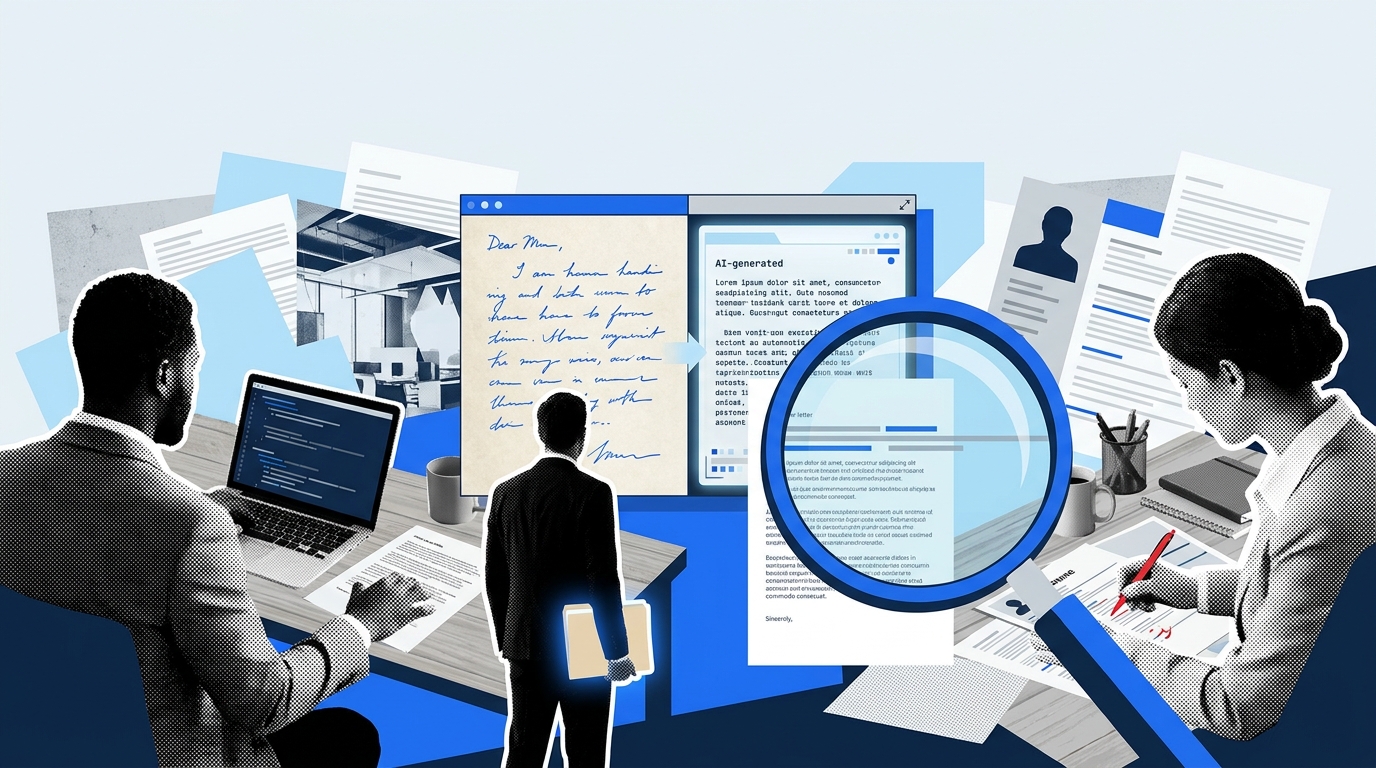
The council’s guidance arrives as hiring managers report increasing difficulty distinguishing candidates whose résumés use identical AI-generated phrasing and optimization patterns. The executives identified cover letters as one of the few remaining tools that reveal how candidates think and what they care about beyond bullet-point accomplishments.
The Strategic Shift in Cover Letter Use
Cover letters no longer function as standard application requirements across most roles, but several council members emphasized their continued value for specific categories. Natalie Grabher, an executive at USA Hall of Frames, stated that for most 2026 positions a cover letter is unnecessary because the résumé provides sufficient information. For executive and senior leadership roles, however, Grabher said she wants to understand a candidate’s vision: “What do they see in our company? Where do they see opportunities? What would they contribute beyond the job description?”
Sheena Minhas of ST Microelectronics offered similar guidance, recommending candidates skip cover letters for most applications but use them strategically for senior roles. Minhas specified that effective letters should run five lines maximum, addressing why the candidate chose the company, one relevant accomplishment, and what the candidate would fix first. “Just write it yourself. We can all tell when AI did,” Minhas said in the Forbes roundtable.
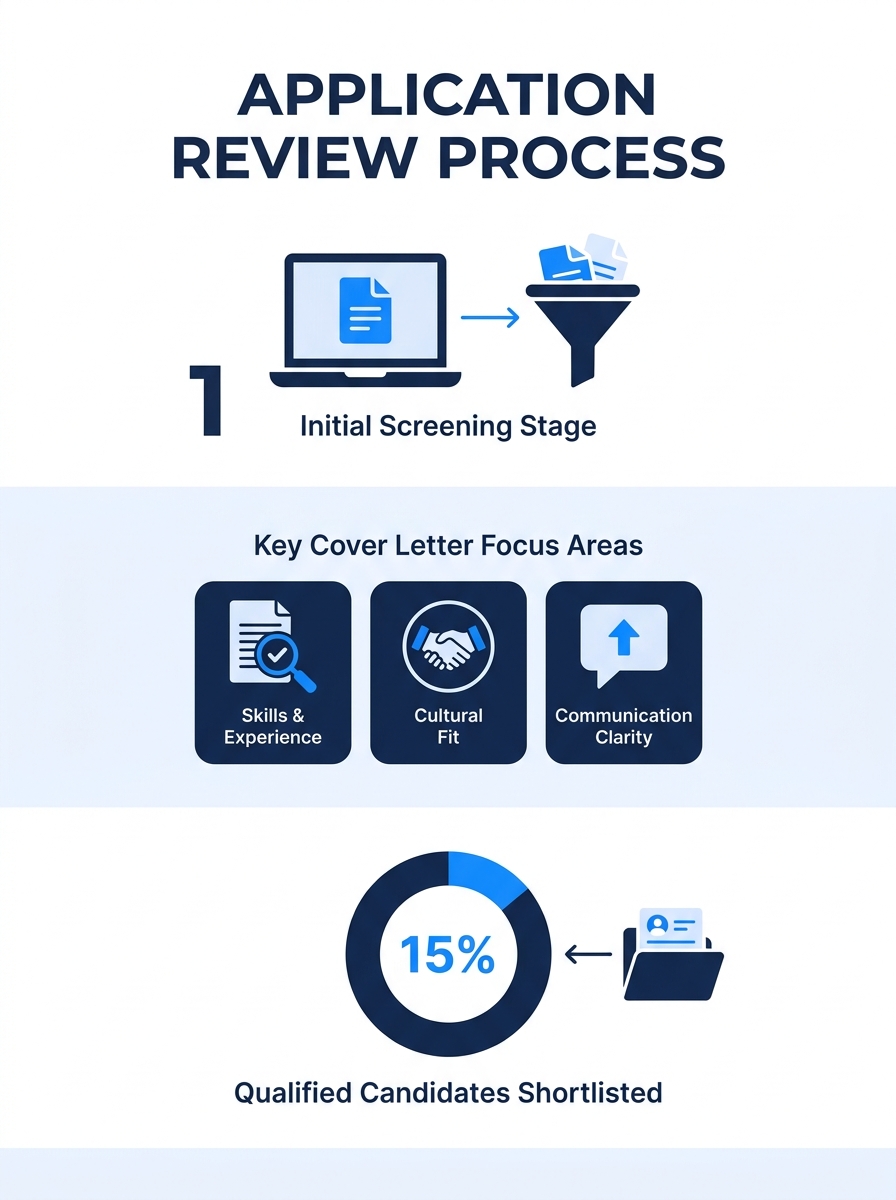
The executives’ positioning reflects a bifurcated hiring landscape where standardized roles rely on résumé screening while strategic positions require evidence of business understanding. Job seekers applying to roles with heavy automation may benefit from reviewing cover letter templates for different job types to understand when personalization delivers returns versus when it’s skipped entirely.
What HR Executives Want to See
Courtni Hughes-Bochenek of Zeller identified AI homogenization as the primary driver behind renewed cover letter value. “AI is homogenizing résumés—same phrasing, same structure, same optimization tricks at scale,” Hughes-Bochenek said, adding that well-crafted cover letters tell hiring teams “how someone thinks, what they care about and who they actually are behind the bullet points.”
Jonathan Westover of Future State University specified that effective letters demonstrate genuine knowledge of the company’s challenges and explain how the candidate’s experiences solve specific problems. Westover recommended skipping generic introductions and instead leading with impact, sharing a brief story that showcases relevant results. “Many applicants skip cover letters, so a strong one helps you stand out,” Westover said.
Britton Bloch, representing Navy Federal, drew a sharp distinction between letters that add evidence versus those that merely repeat résumé content. Bloch stated candidates should connect experience to employer-specific needs, demonstrate role understanding, and highlight one or two relevant outcomes. A strong letter, according to Bloch, explains “why this opportunity, why now and what distinctive value the candidate would bring.”
Nicky Hancock of AMS emphasized tailoring as the determining factor in cover letter effectiveness. While candidates may use AI to strengthen drafts, Hancock said authenticity, specific examples, and the candidate’s own voice ultimately set applications apart. The guidance aligns with earlier research showing tailored cover letters outperform generic submissions in callback rates, though the Forbes executives focused less on metrics and more on qualitative differentiation.
Sophia Okeke of The Center for Family Support recommended candidates focus on one story and tell it in their own words, asking a friend or mentor to read for flow and engagement before submission. Niki Jorgensen of Insperity offered similar advice, stating that genuine stories prove more memorable than lists of accomplishments: “Highlight why this opportunity matters and what you’ll bring to the role that’s uniquely yours.”
When to Skip the Cover Letter
Multiple council members acknowledged that many 2026 applications no longer warrant cover letters. Grabher stated flatly that for most positions the résumé alone tells hiring managers what they need to know, reserving cover letters exclusively for roles where candidates help shape organizational strategy and future direction.
Jon Lowe of DailyPay noted that while cover letters create human connection through storytelling, the reality is that people review applications at different stages of the hiring process. “Cover letters hinge on pulling on the heartstrings of people reading applications,” Lowe said, countering the narrative that all applications receive human review immediately.
Minhas was most direct about application volume realities, stating that for most applications “nobody’s reading it.” The ST Microelectronics executive reserved cover letter recommendations for senior roles where the CV demonstrates capability but the note demonstrates business understanding.
Sanja Licina of QuestionPro took a contrarian position, encouraging candidates to use every opportunity to distinguish themselves as “more human” in an automation-heavy environment. Licina recommended highlighting passion, purpose, and what candidates hope to achieve in the role, presenting stories that bring them to life beyond bulleted accomplishments. The split among council members reflects ongoing industry debate about whether cover letters represent a differentiation tool or an outdated requirement consuming candidate time.
What Happens Next
The Forbes guidance arrives as job seekers navigate conflicting advice about application customization, with some sources recommending detailed personalization for every submission while others suggest standardized templates to manage application volume. The council members’ emphasis on AI-detection suggests hiring managers have developed pattern recognition for machine-generated content, potentially disadvantaging candidates who rely heavily on automated tools.
The strategic-roles-only approach advocated by several executives may accelerate the two-tier application system already emerging across industries, where entry and mid-level roles screen primarily on skills and keywords while senior positions expect evidence of company research and vision alignment. Candidates applying to leadership positions should expect cover letters to carry more weight than résumé bullet points, while those targeting high-volume hiring may find the effort yields minimal return.
The council’s publication does not include specific examples of effective versus ineffective letters, leaving candidates to interpret the “authenticity” and “personalization” guidance without concrete models. Job seekers seeking structural templates may find clearer direction in existing cover letter template guides that provide before-and-after examples, though the Forbes executives’ warnings about homogenization suggest even well-executed templates risk appearing formulaic if widely adopted.