

 4.9
4.9 4.5
4.5April’s jobs report landed with 115,000 new positions added to the U.S. economy and unemployment holding steady at 4.3%. That’s the second consecutive month of stronger-than-expected hiring, and it creates a problem most job seekers haven’t accounted for: when employers add roles at this pace, application volume spikes even faster, and the AI-powered screening systems sitting between you and a human recruiter become ruthlessly selective.
The Dow Jones consensus had predicted only 55,000 new jobs for April. The actual figure came in at more than double that projection. Combined with March’s hiring surge, which Axios described as evidence of “a job market firming up,” the 2026 hiring environment looks categorically different from the anemic pace of 2025, when employers averaged roughly 15,000 new jobs per month. Stronger hiring sounds like good news for candidates. The downstream effect on resume competition strategy tells a more complicated story.
More Open Roles, More Applicants, Tighter Filters
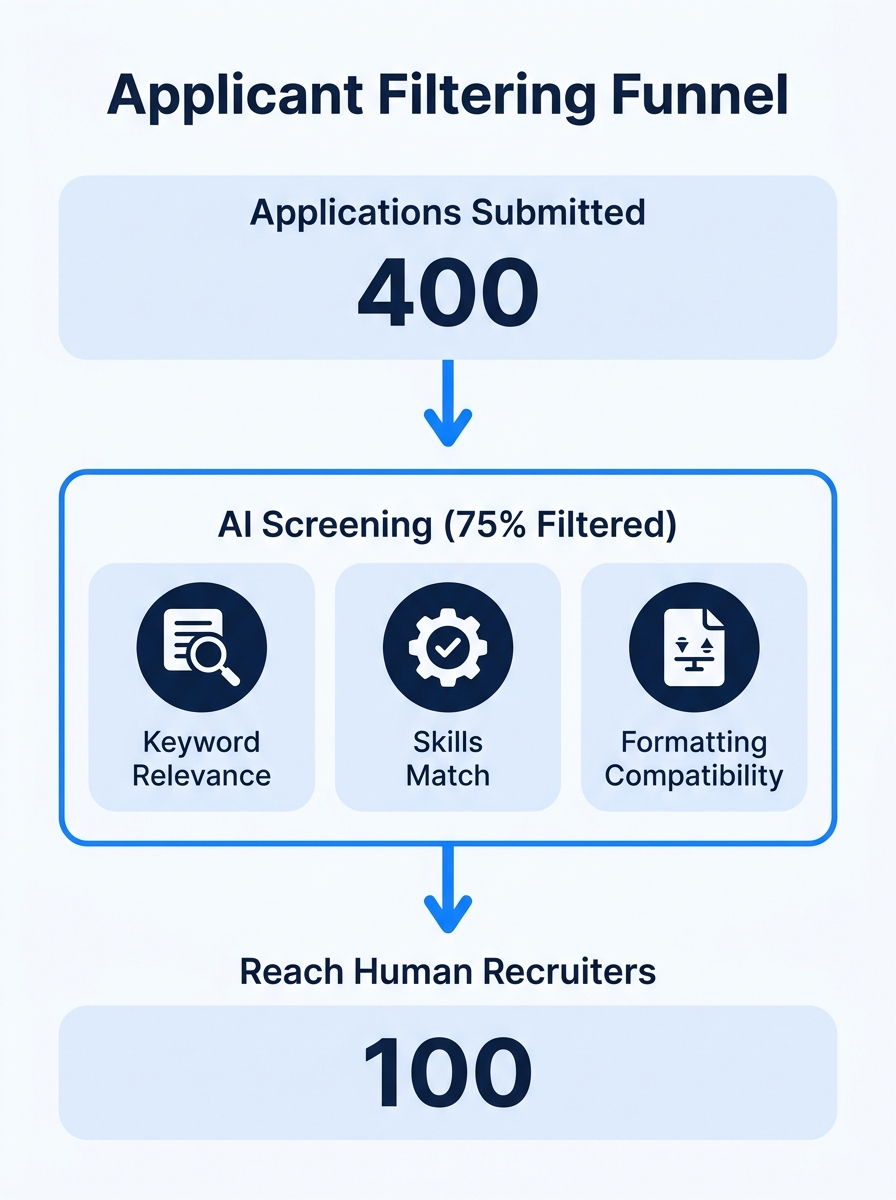
A growing job market doesn’t make it easier to get hired. It makes it easier to apply. And when hundreds of candidates flood each open requisition, employers lean harder on automated filtering to manage volume. According to LinkedIn’s 2025 Global Talent Trends report, over 90% of recruiters now use AI-powered screening tools. Those tools reduce the volume of applications passed to human recruiters by up to 75%, according to PitchMeAI’s analysis of current ATS filtering trends.
Think about what that 75% number means in practice. For a role that draws 400 applications, roughly 300 resumes never reach a human set of eyes. The screening algorithm decides who advances and who disappears. And these systems have grown considerably more sophisticated than the basic keyword-matching engines of a few years ago. With more than 200 different ATS platforms in active use, each with its own parsing and ranking rules, a single generic resume sent unchanged to 50 postings will perform inconsistently at best and get filtered at worst.
The recruiters who do see your resume aren’t spending long with it, either. Our earlier reporting found that recruiters now spend roughly 11 seconds per resume as AI filters reshape the screening process. In a market where hiring is surging and application volume is surging faster, that window is shrinking rather than expanding.
How the Screening Criteria Shifted in 2026
The old 2026 job market analysis playbook was straightforward: identify keywords from the job description, sprinkle them into your resume, and hope for a match. That approach still matters at a basic level, but the Society for Human Resource Management has confirmed that keyword matching alone no longer gets you through modern ATS gates. The systems are reading context now.
Here’s what changed. Modern ATS tools evaluate whether your keywords appear in meaningful contexts. Listing “project management” as a standalone skill in a skills section carries less weight than describing a specific project you managed, the team size, the budget, and the outcome. The algorithm is looking for evidence patterns: a skill mentioned alongside a quantified result, supported by a timeline or scope indicator.
This shift punishes generic resumes from two directions simultaneously. First, a resume that uses identical language across every application won’t match the specific phrasing and priorities of any particular job description. Second, a resume that lists skills without evidence of deployment reads as shallow to both the algorithm and the human who might eventually see it.
For a role that draws 400 applications, roughly 300 resumes never reach a human set of eyes.
If you’ve been struggling with this exact problem, our piece on how AI-enhanced bullet points can actually fail ATS systems digs into the formatting side of the equation. The short version: polished-sounding language that lacks specificity often scores worse than plainer writing that includes concrete details.
Five Resume Formats Pulling Ahead
The Interview Guys published an analysis identifying five resume formats that now dominate the 2026 hiring landscape: Skills-First, ATS-Optimized, Enhanced Chronological, Strategic Hybrid, and Visual-Strategic. Each one is designed for a different career stage and industry, but they share a common thread. All five prioritize evidence of capability over generic professional summaries.
The Skills-First format, which leads with a categorized skills section tied directly to accomplishments, has gained particular traction among career changers and candidates in skills-based hiring environments. And 85% of employers now report using skills-based hiring practices, meaning degree requirements are dropping while proof-of-competency requirements are rising. If your resume still leads with an objective statement or a vague summary like “Results-driven professional with 10+ years of experience,” you’re opening with precisely the kind of language that modern screening systems deprioritize.
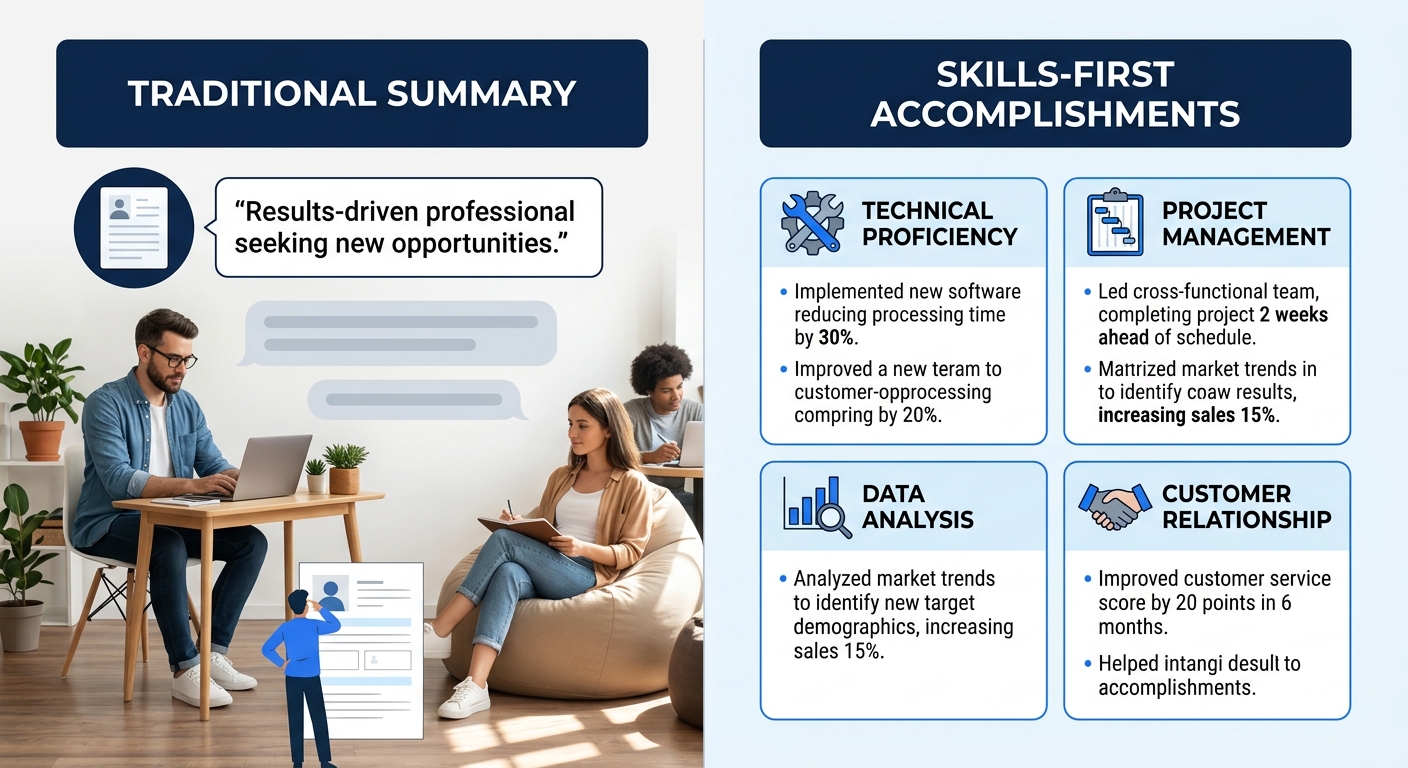
The practical difference between these modern formats and a traditional chronological resume comes down to how quickly a reader (human or algorithmic) can identify what you bring to the specific role. We’ve covered the mechanics of converting vague accomplishments into measurable outcomes that pass ATS in detail, and the principles apply well beyond developer roles.
The Customization Speed Problem
Here’s where the recruiter screening efficiency math gets uncomfortable. If you need to tailor every resume to every job posting, and each tailoring takes 30 to 45 minutes of manual work, you can realistically apply to maybe three or four positions per day with genuinely customized materials. Meanwhile, candidates using AI optimization tools can tailor a resume in two to three minutes and hit match rates around 75% on keyword-heavy roles, according to Jobscan’s current benchmarks.
You don’t have to use those tools. But you should understand that many of your competitors do, and that reality shapes the competitive landscape. A generic resume submitted alongside dozens of AI-optimized ones will consistently rank lower in automated scoring, regardless of whether your actual qualifications are stronger.
Tip: If you’re applying to more than five roles per week without adjusting your resume for each one, you’re almost certainly losing to candidates who are customizing. Even small adjustments — reordering bullet points to match the job description’s priorities, swapping in the exact phrasing the employer uses for a skill you possess — can meaningfully change your ATS score.
Our guide on using AI keyword analysis to match job descriptions without generic bloat walks through the one-click customization process step by step. The goal is speed without sacrificing specificity.
White-Collar Sectors Face a Different Equation
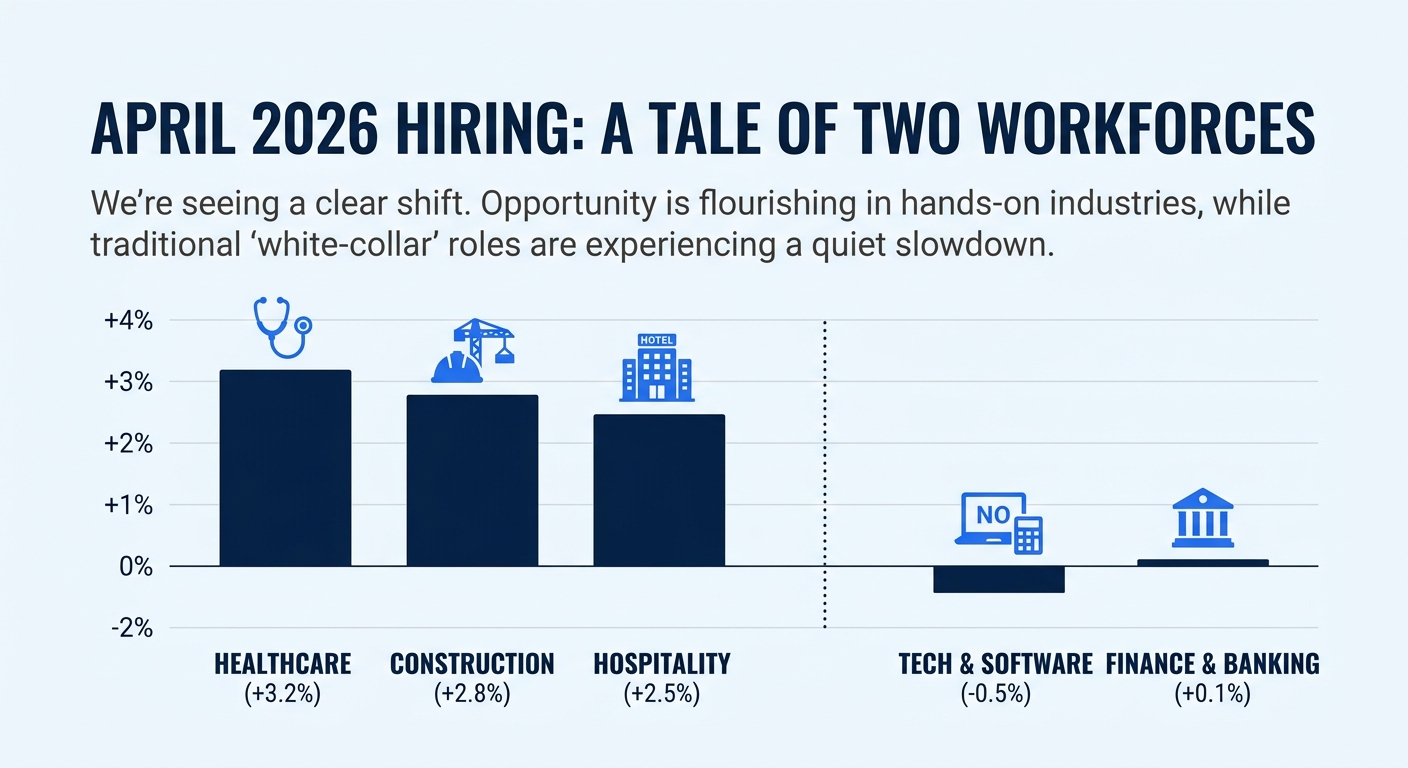
Fortune reported this week that the April jobs report revealed a split: America is hiring again at the strongest pace in over a year across most sectors, but white-collar roles continue to shed workers, and AI may be part of the reason. This creates a particularly intense competitive dynamic for office-based professionals. Fewer openings plus more displaced candidates equals a buyer’s market for employers, who can afford to be extremely selective about who makes it past the initial screen.
If you’re a white-collar professional navigating this environment, your resume needs to do more work than it’s ever done before. The document has to clear automated filters, survive an 11-second human scan, and differentiate you from a pool of experienced candidates who are all applying to the same shrinking set of roles. Generic statements about leadership, communication, and strategic thinking accomplish none of those objectives. Working with professional career coaches who specialize in interview preparation can help you identify which specific experiences to spotlight and how to frame them for maximum impact in a compressed screening window.
The Evidence-Based Resume Is the New Default
The generic objective statement is dead. The vague professional summary is dying. What’s replacing both is what hiring consultants are calling the “value proposition” opener: a two-to-three-sentence section at the top of your resume that states what you specifically deliver, backed by at least one quantified result.
Instead of “Experienced marketing professional seeking a challenging role in digital strategy,” the value proposition version reads something like: “B2B marketing manager who grew qualified pipeline by 340% over 18 months at a mid-market SaaS company through paid search restructuring and ABM program launch.” Both sentences describe the same person. One tells a recruiter nothing useful. The other tells them exactly why they should keep reading.
This shift toward evidence-based content means your resume bullet points need numbers, scope indicators, or at least clearly described outcomes wherever possible. If you work in a role where hard metrics are scarce, our piece on crafting resume bullets for roles without traditional metrics offers specific techniques for quantifying impact when you don’t have revenue figures or percentage improvements to cite.
The Open Questions as Hiring Keeps Climbing
Several things remain genuinely uncertain as this hiring surge continues. USA Today’s analysis noted that while the headline numbers look strong, some subtler indicators of labor market health have been more worrying. The Fed’s next moves on interest rates, the ongoing effects of geopolitical instability on inflation, and whether white-collar displacement accelerates or stabilizes will all shape hiring conditions through the rest of 2026.
What we can say with confidence right now is that the combination of rising job volume, rising application volume, and increasingly sophisticated AI screening has created an environment where a one-size-fits-all resume performs worse than it ever has. The candidates getting through the 75% filter and into the 25% that reaches a human reader are the ones who treat each application as a distinct argument for why they belong in that specific role.
That takes more time per application. It requires understanding what the ATS is looking for and how to satisfy it without producing robotic, keyword-stuffed content. And it means accepting that the resume you used successfully three years ago probably needs a structural overhaul, not a light refresh. The job market is giving candidates more opportunities than it did in 2025. The screening systems are ensuring that only the best-prepared candidates can actually reach them.