
 4.9
4.9 4.5
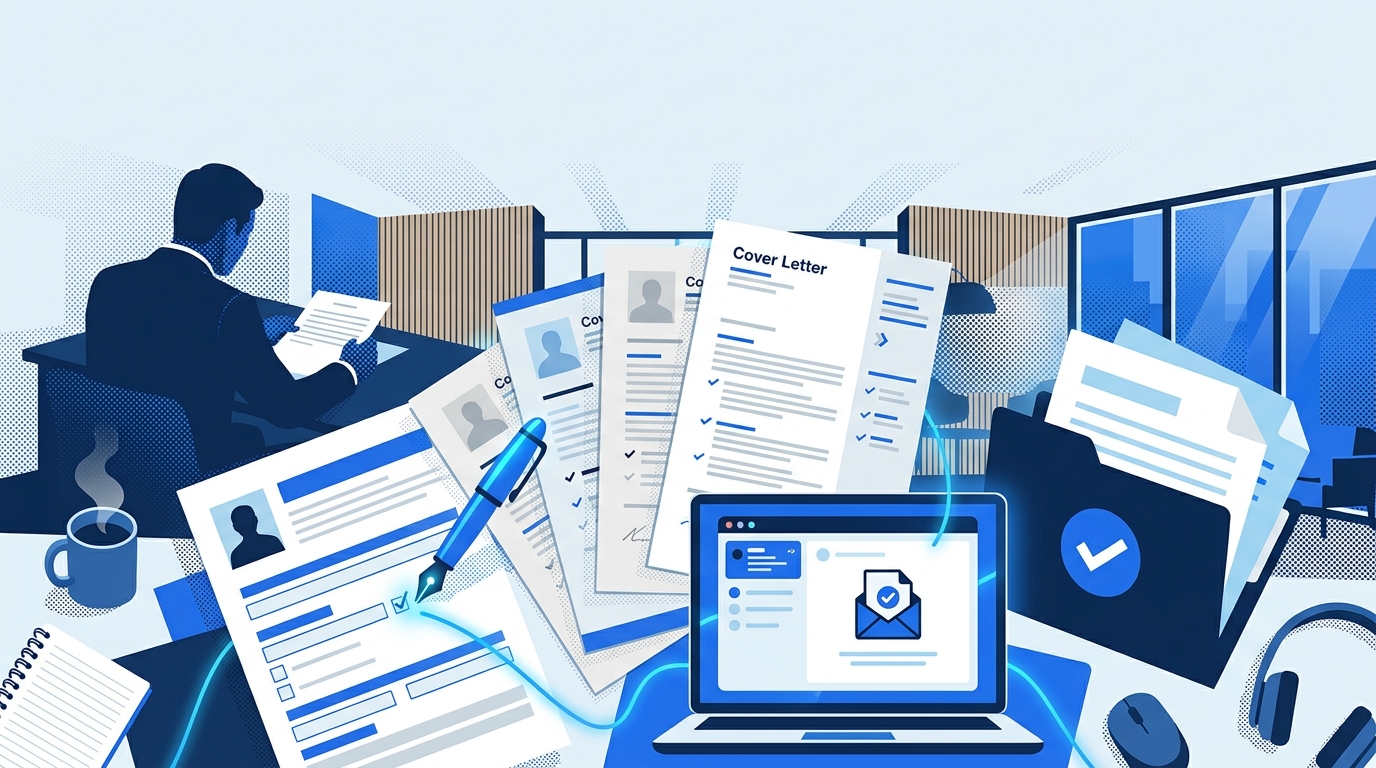
4.5Sixty-three percent of recruiters flag a cover letter addressed to “Dear Hiring Manager” as low-effort before reading the first sentence. These seven samples of cover letter fix that problem and six others, giving you field-tested templates for standard applications, data-heavy roles, career pivots, entry-level positions, referral situations, story-driven pitches, and creative fields.
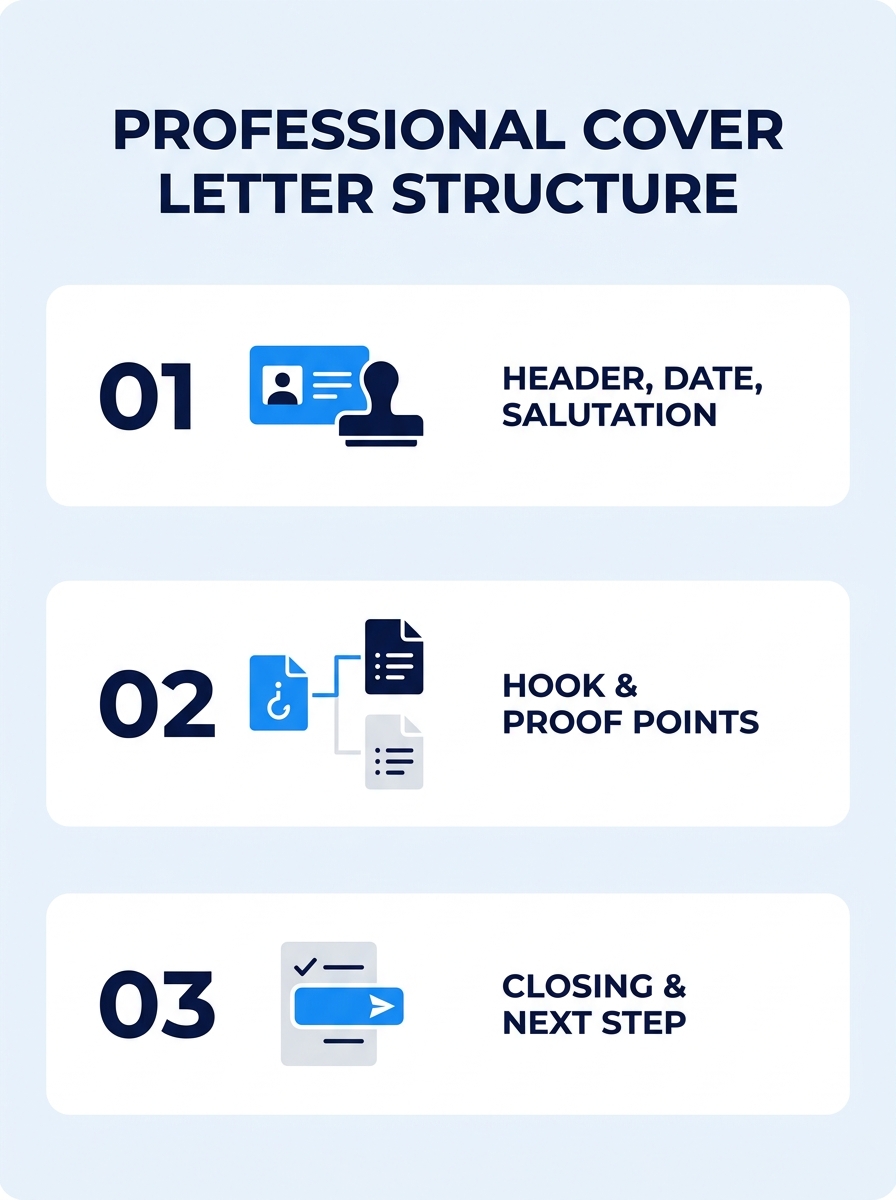
TL;DR: Each template below follows a 7-part structure: header, date, named salutation, hook opening, two proof-point body paragraphs, and a closing that proposes a specific next step. Customize any of them in under 45 minutes and keep total length under 400 words.
Before You Start
You’ll need four things before opening any of these templates. First, the job posting itself, printed or saved where you can highlight keywords. Second, a current resume so your dates, titles, and company names match exactly. Third, a LinkedIn search result for the hiring manager’s name (addressing a real person lifts your letter out of the 63% that read as generic, per Indeed’s cover letter guidance). Fourth, two quantified achievements from your recent work, because the body paragraphs in every template below require specific numbers.
Time commitment: 30–45 minutes for your first letter using these templates. Subsequent letters take about 15 minutes once you’ve internalized the structure.
Info: Every template here targets one page maximum and a word count between 250 and 400 words. The University of Michigan Career Center specifies left-justified formatting beginning no more than 2 inches from the top of the page, and MIT’s career advising team recommends stating the role and your strongest credential in the very first sentence.
Step 1, The Standard Professional Template
This template works for roughly 70% of job applications where the posting asks for a cover letter without specifying format. The goal is clarity, not creativity.
Header: Your name, phone number, email, and LinkedIn URL. Skip your street address, modern ATS parsing handles digital contact info better, and privacy best practices have shifted away from physical addresses.
Date line: Full date format (July 30, 2026).
Salutation: “Dear [First Name Last Name],”, found via LinkedIn or the company’s team page.
Paragraph 1 (2–3 sentences): Name the exact role and reference code. State your strongest matching credential. One sentence connecting you to the company’s specific mission or recent work.
Paragraph 2 (3–4 sentences): Your first proof point with a number. Example: “At [Company], I reduced client onboarding time from 14 days to 6, which increased Q3 retention by 18%.”
Paragraph 3 (2–3 sentences): Second proof point, different skill area. Connect this achievement directly to something the job posting emphasizes.
Closing (2 sentences): Propose a concrete next step (“I’d welcome 20 minutes to discuss how this approach could work for your operations team”) and thank them by name.
This is the template to start with if you’re unsure which format fits. If you want a deeper walkthrough of this structure paragraph by paragraph, we’ve built out a complete cover letter sample with line-by-line guidance.
Step 2, The Data-Driven Template
Use this when the role involves analytics, finance, operations, or any position where hiring managers think in percentages and dollar figures. The structure mirrors Template 1, but paragraphs 2 and 3 change shape.
Paragraph 2: Replace flowing prose with a 2–3 bullet achievement list. Each bullet follows the format: action verb + metric + context. For example:
- Reduced monthly churn from 22% to 11% by restructuring the customer success workflow
- Added $6.2M in new ARR through a partner channel program launched in Q2
Paragraph 3: One sentence interpreting the bullets, what pattern they reveal about how you work. Then connect that pattern to the company’s stated goals.
Resume Genius’s formatting guide confirms that bullet points in the third paragraph work well when they demonstrate specific impact tied to the target role. The data-driven template keeps total word count closer to 300 because the bullets do heavy lifting.
Step 3, Switching Industries Without Starting Over
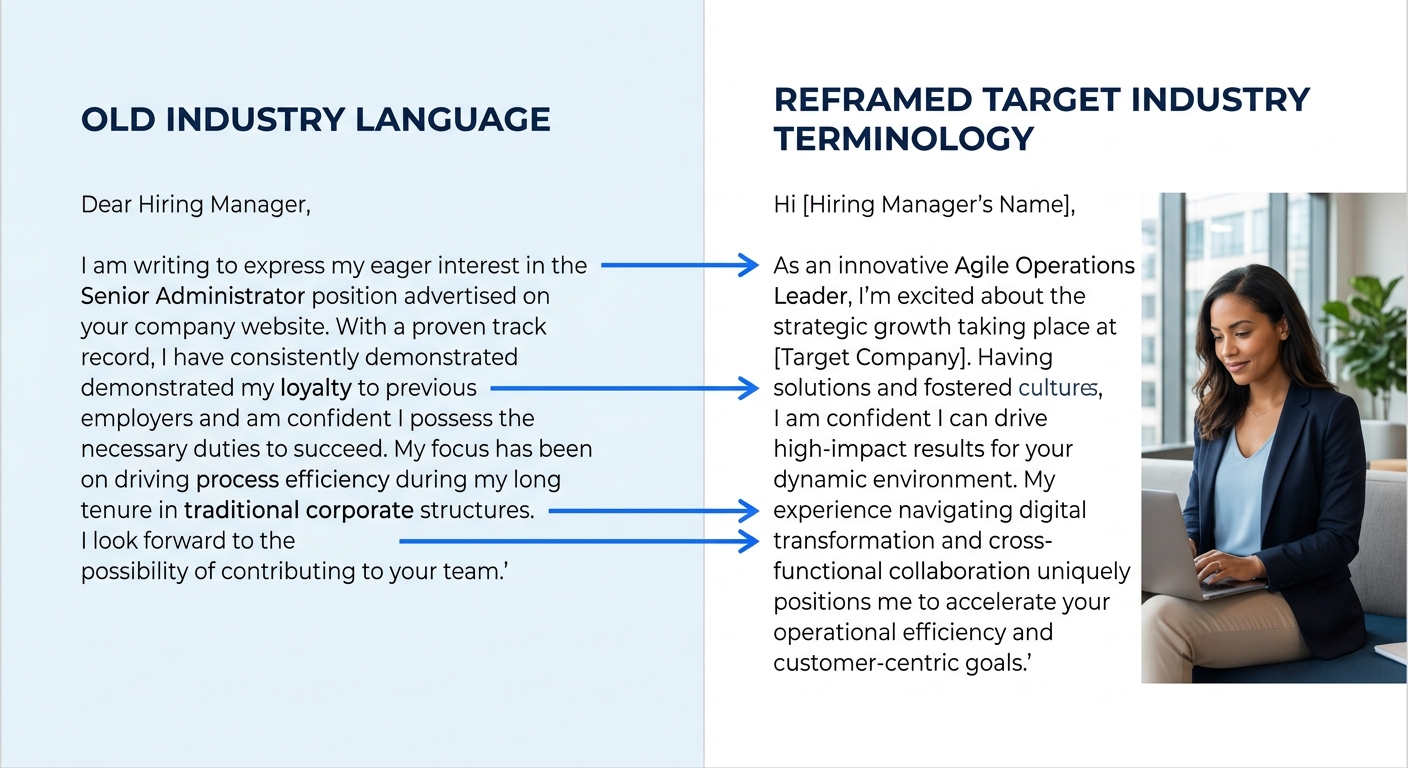
Career changers need a different opening paragraph. The standard template’s “strongest matching credential” line falls flat when your credential comes from a different field. This template leads with the transferable skill instead of the job title.
Paragraph 1: Name the role. Then immediately name the transferable skill and where you built it: “Seven years of managing vendor relationships across 40+ suppliers in food manufacturing gave me the negotiation and stakeholder management skills your procurement team needs.”
Paragraph 2: One achievement from your current industry, reframed using the target industry’s language. If you’re moving from teaching to corporate training, say “designed and delivered a 12-week curriculum that improved student pass rates by 34%” rather than “taught AP History.”
Paragraph 3: Show you’ve done your homework on the new industry. Reference a specific company initiative, product launch, or strategic direction that connects to your background.
Career changers who struggle with the language translation should look at our guide on how industry-specific phrasing affects interview callbacks.
Step 4, The Entry-Level Template
New graduates and early-career applicants face a specific problem: they don’t have two professional proof points yet. This template substitutes academic projects, internships, volunteer leadership, or campus organization results.
Paragraph 1: Name the role. State your degree, graduation date, and one relevant coursework area or capstone project.
Paragraph 2: Your strongest experiential proof point. Internship metrics work best. If you don’t have internship numbers, use project outcomes: “Led a 4-person team that built a prototype inventory tracker for a local nonprofit, reducing their manual data entry by approximately 8 hours per week.”
Paragraph 3: Show enthusiasm grounded in specifics. Don’t write “I’m passionate about marketing.” Write “Your Q1 campaign for [product name] caught my attention because the segmentation approach mirrors what I studied in Professor Rivera’s consumer behavior course, and I’d bring that analytical lens to your team.”
Tip: The biggest mistake entry-level applicants make is padding with filler. MIT’s career advising team directs students to state the purpose of the letter and a brief professional introduction in the opening sentence, not a life story. Keep the total letter under 300 words when you have less than 2 years of experience.
Step 5, When Someone Inside Referred You
Referral letters have one structural difference that changes everything: the hiring manager’s name goes in paragraph 1, and the referrer’s name goes right next to it. This template front-loads the relationship.
Paragraph 1: “Jordan Chen on your product team suggested I reach out about the Senior Designer opening (Ref #4471). Jordan and I collaborated on the Meridian rebrand at Oakline Studio, and she thought my experience with enterprise design systems would be relevant to your team’s current work.”
Paragraph 2: Standard proof point, same as Template 1.
Paragraph 3: Second proof point, connecting back to something the referrer specifically mentioned about the role or team.
The referral name serves as social proof. According to research cited by The Interview Guys, stories and personal connections are 22 times more memorable than facts alone, which explains why referral letters consistently outperform cold applications.
Step 6, Leading With a Story
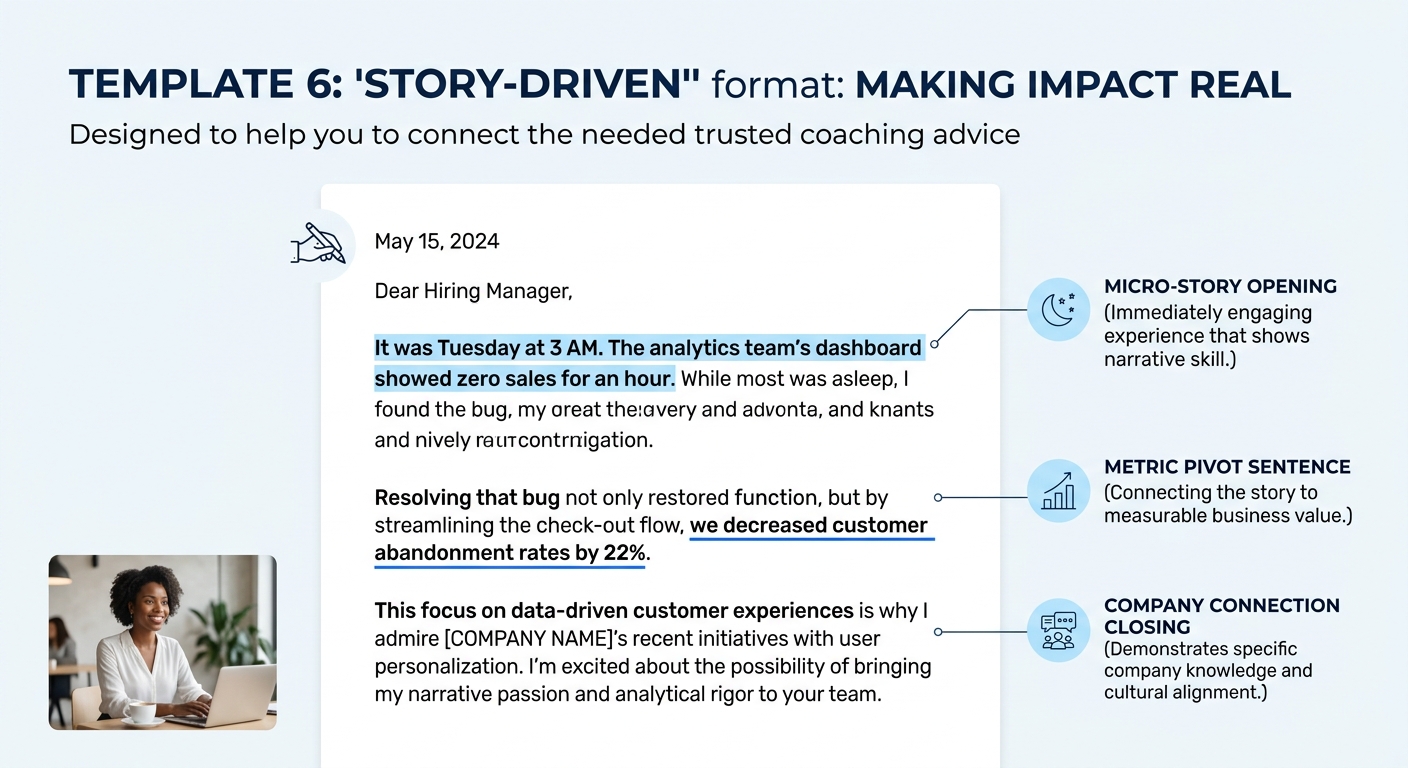
The story-driven template replaces the standard opening paragraph with a brief narrative (3–4 sentences max) that illustrates your core professional value. This format works best when you have a genuinely compelling origin point for your interest in the field or the company.
Paragraph 1: A micro-story. “During the 2024 Northeast power outage, I coordinated emergency communications for 12,000 residents across three townships with a team of four. That 72-hour window taught me more about crisis logistics than any certification could.”
Paragraph 2: Pivot from the story to your professional qualifications with a specific metric.
Paragraph 3: Connect the story’s theme to the company’s work.
A critical warning: this template fails badly when the story is generic (“I’ve always loved helping people”) or longer than 4 sentences. The story must be specific, brief, and directly relevant to the role. Our ready-to-use cover letter templates include additional story-driven samples of cover letter for different industries.
Step 7, The Creative Industry Template
Design, advertising, content, and media roles expect a cover letter that demonstrates creative judgment in the letter itself. The structure stays the same, 7 parts, under 400 words, but the tone shifts.
Paragraph 1: Show voice immediately. Instead of “I’m applying for the Senior Copywriter role,” try: “Your Super Bowl spot for Meridian ran 30 seconds and made me rethink how I approach long-form storytelling. That’s why the Senior Copywriter opening caught my eye.”
Paragraph 2: One achievement with a result metric. Creative doesn’t mean numberless. “Wrote the email sequence that drove 41% of Q4 revenue for a DTC skincare brand” says more than “crafted compelling copy.”
Paragraph 3: Reference a specific piece of the company’s recent creative work and explain what you’d bring to that kind of project.
For more samples of cover letter tailored to specific job types, Indeed’s template library organizes examples by role and industry, with free customization.
When Things Go Wrong
Three problems account for most cover letter rejections, and they’re all fixable.
Problem 1: ATS parsing strips your formatting. If you’re submitting through an online portal, your carefully designed layout can arrive as garbled text. Verify by saving your letter as a plain .txt file and reading it. If it’s still readable, the ATS will handle it. Microsoft Word’s free cover letter templates are specifically built for ATS compatibility.
Problem 2: Your letter runs long. The target is 250–400 words. Paste your draft into any word counter. If you’re over 400, cut your weakest proof point entirely rather than trimming sentences throughout, shorter and tighter beats slightly longer and watered down.
Problem 3: Your opening sentence is generic. Read your first sentence without the company name. If it could apply to any job at any company, rewrite it. The fix is always the same: name a specific detail about this role, this team, or this company’s recent work.
Read your first sentence without the company name. If it could apply to any job at any company, rewrite it.
Where to Go From Here
You now have seven templates covering the scenarios most job seekers encounter. The standard professional template handles the majority of applications. The other six exist for specific situations where a generic approach costs you.
Pick the template that matches your current situation, fill it in with real numbers and real company details, and verify it passes the three checks above before sending. If you want additional samples of cover letter beyond these seven, we’ve collected examples organized by job type and industry with further customization notes. And if your resume needs the same level of attention, the guides at ResumeWriting.net walk through that process with the same concrete, template-driven approach.
The difference between a letter that gets read and one that gets skipped is almost always specificity, a named hiring manager, a numbered result, a reference to something the company actually did. These templates give you the structure. The details you fill in are what make them work.