


 4.9
4.9 4.5
4.5Dr. Kyle Elliott, a tech career coach and Forbes Coaches Council member, published a three-step LinkedIn optimization framework on September 18, 2026, designed to increase inbound recruiter messages for job seekers navigating the platform’s 1.3 billion-member base, according to Forbes.
TL;DR: A career coach documented a LinkedIn profile optimization system that increased one client’s weekly recruiter outreach from two messages to seven by restructuring profile content for recruiter search algorithms rather than hiring managers.
Elliott’s framework addresses a fundamental mismatch between how job seekers write LinkedIn profiles and how recruiters search for candidates. The guidance emerged from Elliott’s dual role coaching tech executives and training HR and talent acquisition leaders, providing insight into both sides of the recruiting equation.
Client Results Drive Framework Development
Elliott worked with a client conducting their first job search in nearly a decade. Before profile optimization, the client received one to two recruiter outreach messages per week. After implementing the framework, weekly recruiter messages increased to six or seven, according to Elliott’s published account.
The framework centers on three sequential steps: writing profile content from a recruiter’s perspective, distributing keywords throughout the profile rather than concentrating them in the Skills section, and withholding enough detail to motivate recruiter contact rather than mirroring a full resume.
LinkedIn processes approximately 8,200 job applications per minute across its platform, Elliott noted, citing LinkedIn’s pressroom data. The volume creates competition that makes inbound recruiter contact strategically valuable for job seekers.
Keyword Strategy Targets Recruiter Search Behavior
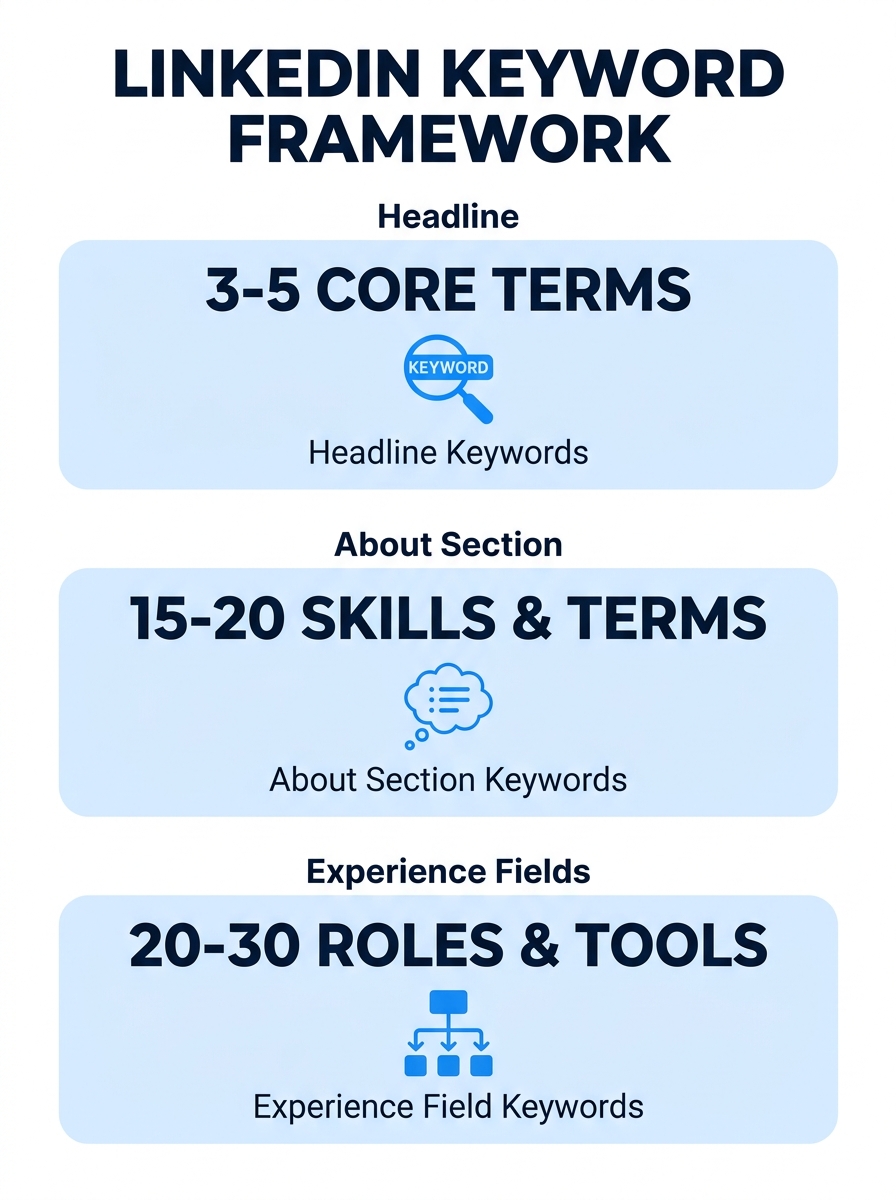
The framework’s first step requires job seekers to compile a list of 10 to 20 keywords or phrases recruiters would enter when sourcing candidates. Elliott noted that engineering leaders often describe their work as “scaling distributed systems and driving platform reliability,” while recruiters sourcing the same role search for terms like “VP of Engineering” and “AI transformation.”
“While both descriptions are technically accurate, you’ll likely only surface in a headhunter’s search if you include the second set of keywords,” Elliott wrote in the Forbes Coaches Council post.
The second step distributes those keywords across the LinkedIn profile. Elliott reported that recruiters and executive headhunters consistently told him they find candidates through keyword searches and that the Skills section rarely factors into their sourcing process. The framework prioritizes the headline field, the tagline appearing beneath a member’s name, because that text determines whether a recruiter clicks through after a profile surfaces in search results.
Additional context on broader LinkedIn job seeking strategy covers how profile optimization fits into a complete platform approach.
Information Withholding Creates Outreach Motivation
The third framework step instructs job seekers to withhold information rather than duplicating their resume on LinkedIn. Elliott identified three reasons for this approach: recruiters need a reason to contact the candidate, comprehensive profiles dilute positioning in a market where recruiters seek exact matches, and full disclosure risks posting confidential or proprietary information on a public platform.
Elliott advised clients to remove details recruiters cannot find publicly on company websites or in shareholder reports. Sensitive figures can be masked by replacing them with placeholders like “XX%” or “$XXM,” according to the framework.
The approach maintains resume customization flexibility. “You should aim to share enough that recruiters find your profile and feel intrigued enough to reach out while still leaving them a reason to request your résumé with additional details,” Elliott wrote.
Elliott recommended treating LinkedIn profiles as living documents requiring updates every few months as professional goals and achievements evolve. The framework functions as one component of a job search strategy that also includes targeting specific companies and building relationships with decision-makers at prospective organizations.
What This Means for Job Seekers
Job seekers optimizing their LinkedIn presence should recalibrate their profile writing approach to match recruiter search behavior rather than hiring manager expectations. The distinction between technical accuracy and searchable language determines whether a profile surfaces in recruiter queries, an engineering leader’s accurate description of distributed systems work may not contain the “VP of Engineering” keyword a recruiter enters.
The data point showing weekly recruiter messages increasing from two to seven suggests measurable return on profile optimization effort. Job seekers conducting active searches can use the 10-to-20 keyword exercise to audit whether their current profile matches the terms recruiters would actually enter, then redistribute those terms across headline, About section, and experience descriptions.
The withholding strategy reverses a common instinct to maximize profile completeness. Recruiters viewing a profile but never messaging may indicate the profile answers all their questions, eliminating contact motivation. Strategic information gaps, combined with keyword optimization, create both discoverability and a reason for recruiters to initiate conversation.